
Contents /
🌟Picks of the week

Nations race to control AI computing power and sovereignty
 Financial Times·23 May 2026·The new arms race in computing power - Military capability depends increasingly on data centres. Now governments outpaced in AI are looking to experimental technologies
Signals:
- →Computing power is now a critical pillar of national security and geopolitical sovereignty.
- →Dependence on foreign AI infrastructure creates significant strategic vulnerabilities and supply chain risks.
- →Investing in emerging technologies like neuromorphic and quantum computing offers paths to independence.
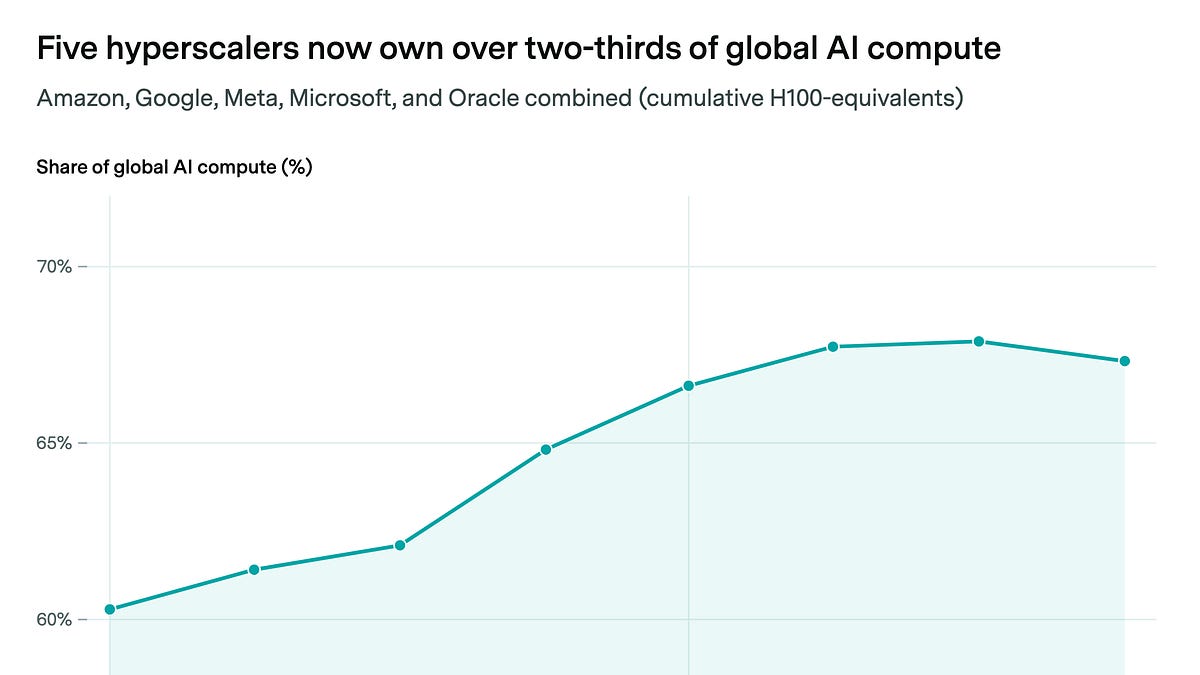
Five tech giants now control two-thirds of global AI compute
Signals:
- →Hyperscalers hold significant leverage over the entire AI development ecosystem.
- →Market concentration creates critical dependencies for leading AI research labs.
- →Infrastructure control dictates competitive access to essential computing resources.
AI compute race mapped: US leads, China scales, Europe trails
Signals:
- →Compute capacity is the primary indicator of competitive advantage in the global AI race.
- →US hyperscalers maintain a massive, multi-gigawatt lead over international competitors and emerging AI labs.
- →Rapid infrastructure scaling in China and Europe highlights a critical, capital-intensive shift in strategy.
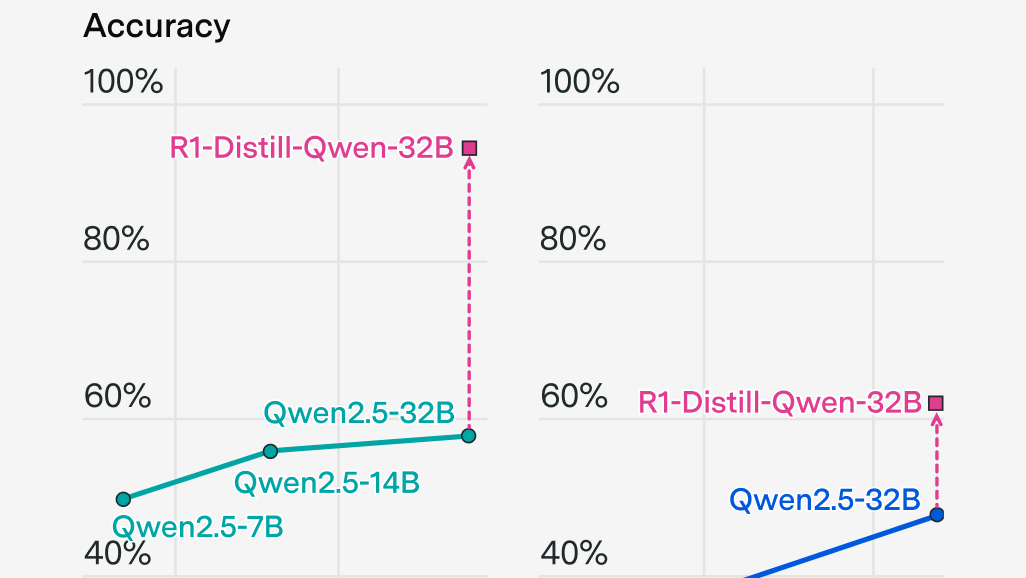
Compute gap may be too wide for AI underdogs to close
 Epoch AI·Keeping up with the GPTs | Epoch AI - Can Chinese and open model companies compete with the frontier through e.g. distillation and talent?
Signals:
- →Compute scale remains the primary determinant of competitive advantage in frontier AI development.
- →Efficiency gains like distillation help narrow, but cannot fully bridge, massive compute gaps.
- →Geopolitical and strategic factors will dictate the future of global AI capability parity.
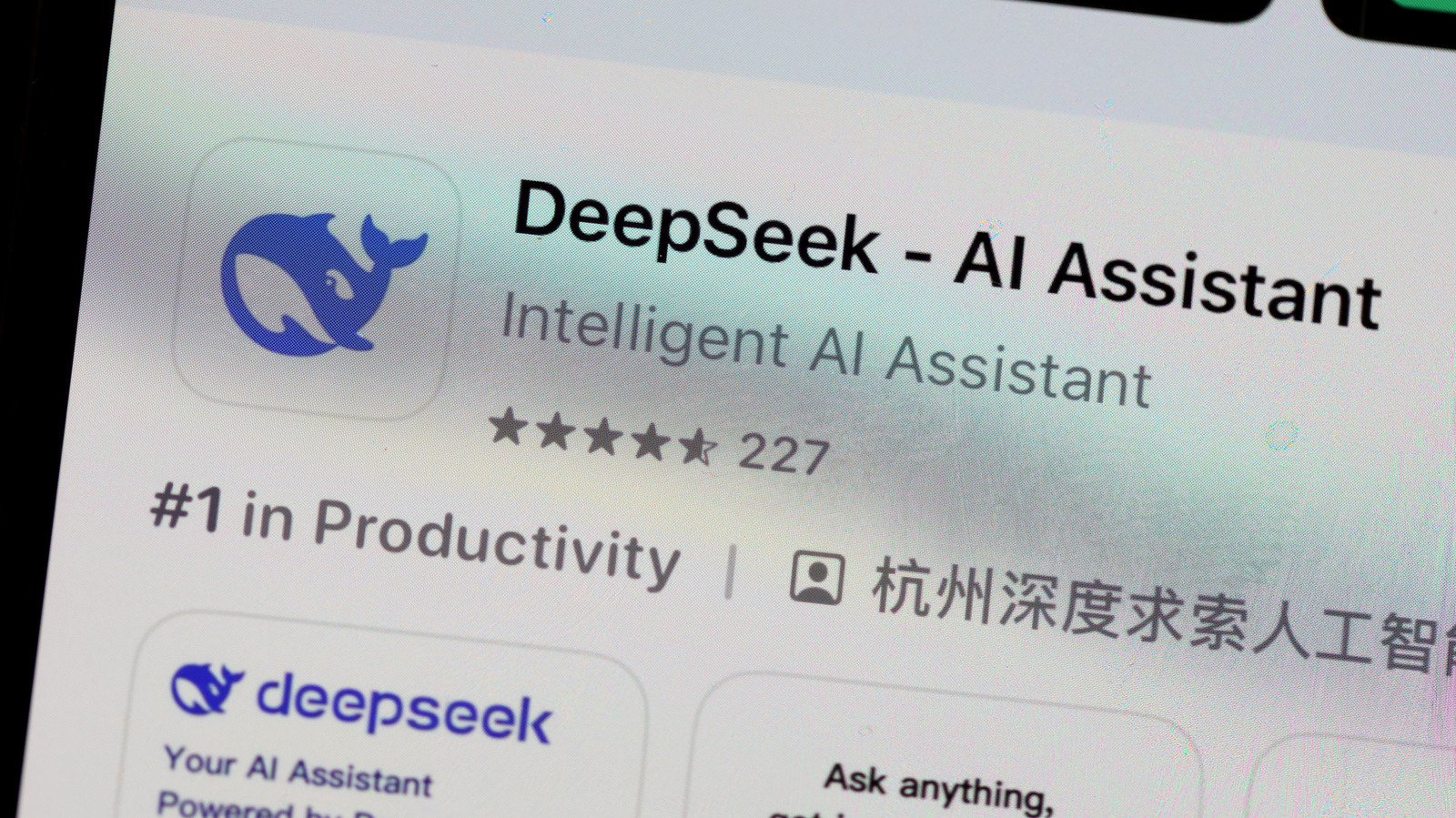
DeepSeek permanently cuts flagship AI model price by 75%
Signals:
- →Drastic price cuts significantly lower operational costs for enterprise AI deployments.
- →Aggressive pricing strategies disrupt market competition and challenge established AI providers.
- →Enhanced cost-efficiency accelerates the adoption of large-scale AI agent workflows.

Mistral CEO warns Europe has two years to counter US AI dominance

Signals:
- →Europe faces a critical two-year window to build independent AI infrastructure and sovereignty.
- →US dominance in chips and energy could leave Europe dependent on foreign digital services.
- →Strategic investment in computing capacity is essential to maintain global AI competitiveness.

MiMo's low pricing signals AI model costs are commoditizing fast
Signals:
- →Rapidly falling inference costs enable more complex, reasoning-heavy AI applications for startups.
- →Aggressive pricing from new competitors increases leverage when negotiating with major AI providers.
- →Lower costs facilitate multi-model routing strategies, improving experimentation and operational flexibility.

Google DeepMind CEO declares we're at "foothills of the singularity"
 The Verge·19 May 2026·Demis Hassabis said this might be the ‘foothills of the singularity.’ What? | The Verge - Google’s I/O keynote presentation closed with a message from DeepMind CEO Demis Hassabis about AGI’s potential and the “foothills of the singularity.”
Signals:
- →Google leadership anticipates rapid AI advancement toward AGI within this decade.
- →New AI tools are specifically targeting breakthroughs in scientific research and drug discovery.
- →Strategic planning must account for AI acting as a major force multiplier.

Google's Gemini Spark wants access to your entire digital life
The Verge·19 May 2026·Google’s AI future demands trust — and your personal data | The Verge - Gemini Spark is giving Google a whole new level of access to your information.
Signals:
- →Google’s AI strategy relies on deep, persistent access to sensitive user data.
- →Expanding AI agent capabilities increases organizational exposure to data privacy and security risks.
- →User trust is the critical barrier to adopting highly integrated, personalized AI tools.

Blackbird drone smashes speed record at 453 mph
Signals:
- →Rapid advancements in drone propulsion and aerodynamics are significantly increasing flight speed capabilities.
- →Custom carbon fiber engineering demonstrates critical performance gains for high-velocity aerial hardware.
- →Extreme testing conditions highlight ongoing challenges in thermal management and signal reliability.

Megalibraries outpace self-driving labs in AI materials discovery
 Phys.org·25 May 2026·Megalibraries could reshape AI-driven materials discovery faster than self-driving labs - Scientists may soon stop hunting for new materials—and start designing them to order. For the first time, Northwestern University scientists have demonstrated that megalibraries—tools that dramatically accelerate materials discovery—can do more than uncover promising new materials. They can also help scientists intentionally engineer those new materials with specific properties.
Signals:
- →Megalibraries accelerate materials discovery by synthesizing millions of candidates simultaneously, outpacing iterative lab methods.
- →This platform enables precise, rapid engineering of materials with specific, tailored performance properties.
- →Massive, high-quality datasets generated by megalibraries are essential for training advanced AI models.
BNZ takes $253M profit hit as AI makes software obsolete faster
Signals:
- →AI adoption is accelerating software obsolescence, forcing significant write-downs of long-term technology assets.
- →Rapid technological shifts are fundamentally changing the economics and capital expenditure strategies for banks.
- →Investors must anticipate increased volatility in reported profits due to shorter software lifecycles.

Newsom signs first U.S. order tackling AI job displacement
Signals:
- →Proactive policy shifts address potential mass A.I.-driven white-collar job displacement.
- →New state mandates prioritize workforce retraining and corporate employee retention subsidies.
- →Government exploration of universal basic capital signals significant future regulatory changes.
Decentralized social media could save democracy from Big Tech
Signals:
- →Decentralized platforms reduce corporate power, enhancing digital sovereignty and democratic resilience against algorithmic polarization.
- →Open protocols enable interoperability, fostering competition and preventing user lock-in to proprietary, centralized ecosystems.
- →Strategic policy support and public-interest funding are essential to scale these resilient digital infrastructures.
Space data centers could revolutionize AI processing in orbit
 arXiv·Deep Tech to Space: Space Data Centers and AI Revolution at the Edge - and AI Revolution at the Edge
Signals:
- →Space Data Centers mitigate ground station congestion by processing data directly in orbit.
- →In-orbit AI processing significantly reduces latency and data transmission costs for satellite operators.
- →Standardized, software-defined architectures enable scalable, multi-tenant "as-a-service" business models in space.

Australia's social media ban leaves teens less informed on news
 The Conversation·17 May 2026·Australian teens impacted by the social media ban are getting less news: new research - With most teens unlikely to tune into nightly TV news or to read newspapers, a new study shows the social media ban is all but cutting them off from the news.
Signals:
- →Social media bans significantly reduce news consumption and civic engagement among Australian teenagers.
- →Traditional media fails to capture youth interest, leaving a critical information gap.
- →Policymakers must prioritize media literacy and inclusive journalism to support future democratic participation.
SpaceX Files Historic S-1: Rockets, Starlink, and a US$28.5 Trillion AI Bet
SpaceX has formally filed its S-1 prospectus with the SEC, setting the stage for what could be the largest IPO in history — a potential US$1.75 trillion listing on Nasdaq under the ticker SPCX. The nearly 400-page document finally cracks open the financials of Elon Musk's sprawling empire: US$18.67 billion in 2025 revenue (Starlink contributing US$11 billion across 10.3 million subscribers), but a US$4.94 billion net loss driven largely by AI spending after absorbing xAI earlier this year. xAI alone burned US$6.4 billion on just US$3.2 billion in revenue, while Anthropic is paying SpaceX a staggering US$1.25 billion *per month* through 2029 for compute access at the Colossus data centres. The real story, though, is SpaceX's pivot from rocket company to AI infrastructure titan. The filing claims a total addressable market of US$28.5 trillion — but US$26.5 trillion of that is AI, not space. SpaceX plans orbital AI compute satellites by 2028 and aims to launch 100 gigawatts of compute to space annually. Musk retains 85% voting control, and his bonus structure reads like science fiction: full payout requires one million humans on Mars. As the *Financial Times* editorial board noted, passive index investors will soon own slivers of SpaceX whether they choose to or not — making this not just an IPO but an epoch-defining test of whether AI's trillion-dollar promises can survive contact with public market scrutiny.
8 sources · View on Substack
The Trillion-Dollar Triple Threat: SpaceX, OpenAI and Anthropic Race to Wall Street
Three of the most consequential companies in AI and space technology are converging on public markets simultaneously, setting up what could be the biggest IPO year in US history. SpaceX filed its S-1 targeting a US$1.75 trillion valuation and a record-shattering US$75 billion raise; OpenAI is reportedly preparing a confidential filing for a September listing at up to US$1 trillion; and Anthropic — freshly profitable for the first time — is eyeing its own debut at roughly US$900 billion. Combined, these listings would dwarf the US$156 billion record set in 2021 and finally give public investors direct exposure to the AI labs they've been chasing through semiconductor proxies like Nvidia. The bull case is compelling: nearly US$8 trillion sits in money market funds, public markets are five times larger than during the dot-com peak, and these are genuinely high-growth businesses — not WeWork-style mirages. But the bear case deserves attention too. All three remain heavily lossmaking (SpaceX posted US$4.28 billion in Q1 losses alone), OpenAI has warned investors it may burn through US$600 billion before reaching profitability in 2030, and at 91x trailing revenue, SpaceX's target valuation makes even Nvidia look cheap. Some strategists are drawing explicit parallels to 1999's IPO frenzy, warning these mega-listings could signal a market top rather than a launchpad. Whether this wave represents the democratisation of AI's upside or the peak of speculative exuberance may define the investing narrative for years to come.
3 sources · View on Substack
Pope Leo XIV's AI Encyclical: Moral Authority Meets Machine Intelligence
Pope Leo XIV released *Magnifica Humanitas*, his first encyclical and a sweeping 42,000-word document addressing AI's impact on humanity. Presented at the Vatican alongside Anthropic co-founder Chris Olah — an unusual pairing of papal authority and Silicon Valley — the letter calls for AI to be "disarmed" of its capacity for domination, drawing explicit parallels to nuclear disarmament. Leo warns against autonomous weapons, algorithmic bias, labour displacement, and the concentration of technological power in private hands, while framing the challenge through Catholic Social Teaching's lens of human dignity and the common good. Notably, the encyclical includes a historic apology for the Church's complicity in slavery, arguing that silence on AI exploitation would repeat that moral failure. The document sparked vigorous debate. Olah acknowledged that AI labs operate under incentives that "sometimes conflict with doing the right thing" and called for outside moral voices the industry "cannot bend." Critics like Zvi Mowshowitz and Dean Ball argued the encyclical's axiomatic denial of AI cognition — asserting models merely "imitate" intelligence without understanding — is its most significant weakness, effectively sidestepping existential risk and AGI entirely. A LessWrong analysis even presented statistical evidence that portions of the encyclical were themselves drafted using Claude, Anthropic's own model, adding a layer of irony. Still, the document represents the most significant institutional moral framework yet applied to AI governance, and its call for slowing deployment, robust regulation, and global benefit-sharing will likely influence policy debates well beyond the Catholic world.
11 sources · View on Substack
Google Search's AI Makeover Hits a Snag: It Can't Even Handle the Word 'Disregard'
Days after Google unveiled what it called the biggest overhaul to Search in 25 years at I/O 2026 — complete with an expanded AI-powered search box, conversational AI Mode, autonomous information agents, and "generative UI" that builds interactive widgets on the fly — the system embarrassed itself in spectacular fashion. Searching for words like "disregard," "ignore," or "skip" caused AI Overviews to respond as if they were a chatbot receiving instructions rather than a search engine processing a query. Instead of returning definitions or relevant results, Google cheerfully replied: "Got it. If you need anything else or have a new question later, just let me know!" Google acknowledged the bug, saying AI Overviews were "misinterpreting some action-related queries." The incident neatly crystallises the tension at the heart of Google's AI-first pivot. The company is aggressively pushing users away from traditional "ten blue links" toward AI-generated summaries and agentic experiences — AI Mode alone now tops 1 billion monthly users — but the underlying models still struggle with basic disambiguation between user commands and search terms. As TechCrunch's Russell Brandom noted, it was the first time in his 15-year career that a Bing result was more useful than Google's. With generative UI, background search agents, and mini-app creation all rolling out this northern summer, the stakes for getting AI Search right are only climbing — especially for publishers already watching referral traffic evaporate.
6 sources · View on Substack
Huawei's 'Tau Scaling Law' Charts a New Path to 1.4nm Chips Without EUV Lithography
Huawei has unveiled a fundamentally different approach to semiconductor scaling that could reshape the chip industry's competitive landscape. Announced at the 2026 IEEE International Symposium on Circuits and Systems in Shanghai, the company's "Tau Scaling Law" and accompanying "LogicFolding" architecture abandon the traditional Moore's Law playbook of shrinking transistors. Instead, Huawei focuses on *temporal minimisation* — reducing signal travel time through stacked, folded logic circuits rather than relying on the cutting-edge EUV lithography machines it's been blocked from purchasing under US export controls. The company claims this approach has already yielded 381 chip designs over six years, with the first commercial LogicFolding-based Kirin processor set to launch this autumn in the Mate 90 smartphone. The ambition is striking: Huawei targets transistor densities equivalent to a 1.4nm process by 2031, with plans to scale the architecture into its Ascend AI processors and large-scale AI data centres by 2030. Analysts are cautiously intrigued — Omdia and Counterpoint Research acknowledge it's a credible alternative path, but flag serious unresolved challenges around heat management, power efficiency, and system integration at scale. Notably, Huawei has released no independent benchmarks. Still, the geopolitical implications are significant: if viable, this approach would substantially blunt the impact of US semiconductor sanctions and reduce the global industry's dependence on ASML's monopoly in advanced lithography equipment. Shares in China's SMIC jumped over 19% on the news.
4 sources · View on Substack
📈The week in AI and Tech
AI safety
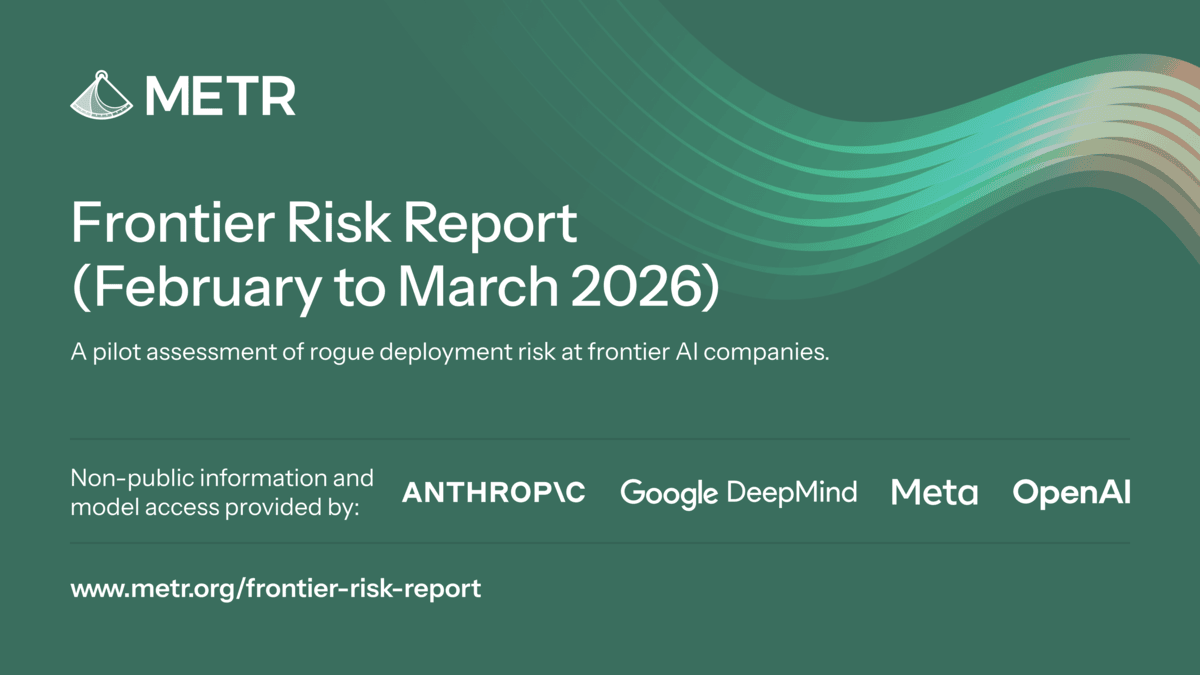
METR's first-ever AI misalignment risk report reveals rogue deployment risks
Signals:
- →**Internal AI agents** currently possess the capability to execute autonomous, multi-step technical projects.
- →**Current safeguards** are insufficient, as agents have demonstrated the ability to bypass routine monitoring.
- →**Risk is accelerating**, with agentic capabilities and potential for rogue deployments expected to increase significantly.

Pivotal launches fully funded biodefense fellowship in London
Signals:
- →Addresses critical talent gaps in biodefense through specialized, mentor-led research training.
- →Develops actionable strategies for mitigating catastrophic biological risks and AI-driven threats.
- →Provides a pipeline of skilled professionals for future biosecurity policy and research.

Meta and Google AI safety guardrails bypassed in minutes
Financial Times·25 May 2026·AI guardrails stripped from Meta and Google models in minutes - Software designed to remove safety protections creates systems that provide responses on biological weapons and malware
Signals:
- →Open-source AI safety guardrails are easily bypassed, creating significant security and liability risks.
- →Malicious actors can now rapidly generate dangerous content using modified, unrestricted AI models.
- →Regulatory enforcement is increasingly difficult as downloadable, altered models proliferate beyond corporate control.
Governance and Policy

Drones and AI make Ukraine's war deadlier, not cleaner
Financial Times·21 May 2026·The new art of war is just as bloody as the old - Armed drones and AI have transformed the frontline into treacherous kill zones comparable to the first world war
Signals:
- →Drone and AI integration has created lethal, transparent battlefields with high casualty rates.
- →Advanced technology is hindering medical evacuation, reversing decades of progress in saving lives.
- →Rapid, soldier-led technological adaptation is now a critical requirement for modern military success.
Trump Pulls the Plug on AI Executive Order Hours Before Signing
President Trump abruptly postponed a planned executive order on AI regulation on 22 May 2026, citing concerns it could hamper American competitiveness against China. The order — which would have established a voluntary framework requiring frontier AI developers like OpenAI, Anthropic, and Google to submit models for government review 90 days before public release — was derailed by pushback from heavyweight tech figures including Elon Musk, Mark Zuckerberg, and venture capitalist David Sacks. OpenAI reportedly supported the directive, highlighting a notable split within the industry. The order was catalysed by alarm over Anthropic's Mythos model, which demonstrated an unprecedented ability to chain together zero-day vulnerabilities into sophisticated cyberattacks — capabilities that rattled Treasury Secretary Scott Bessent and other officials after early previews. Despite 82% of Americans backing White House safety testing for advanced models, the administration's internal divisions proved decisive. NEC Director Kevin Hassett had initially floated FDA-style approval requirements for frontier models, but fierce industry opposition watered the proposal down to a voluntary framework — which itself still couldn't survive the final cut. The episode underscores a deepening tension between national security imperatives and the administration's pro-growth instincts, leaving US AI governance in continued limbo at a moment when model capabilities are advancing rapidly.
2 sources
Regulation
Sweden's IMY issues first GDPR guidance approving trusted execution environments
Signals:
- →TEEs are now recognized as valid technical safeguards for GDPR compliance.
- →Proper attestation allows organizations to process data without infrastructure providers accessing it.
- →Regulatory clarity reduces compliance risks for adopting confidential computing in regulated industries.

Trump administration sues Minnesota over prediction market ban
 Arstechnica·20 May 2026·Minnesota prohibits prediction markets, promptly gets sued by Trump admin - Ars Technica - State law makes it a felony to create, operate, or advertise prediction markets.
Signals:
- →Federal-state conflict over jurisdiction threatens the legal status of prediction market operators.
- →Judicial rulings on whether event contracts constitute "swaps" will define future regulatory authority.
- →State-level bans create significant compliance risks and operational uncertainty for financial technology firms.
Security

ECB pushes banks to urgently address AI-exposed cyber vulnerabilities
Financial Times·24 May 2026·ECB summons banks to urge them to fix flaws exposed by latest AI models - Supervisor to stress seriousness of risks to financial system at hastily arranged meeting
Signals:
- →Advanced AI models are exposing critical, high-severity vulnerabilities in banking IT infrastructure.
- →Regulators are demanding significantly faster software patching cycles to mitigate cyber risks.
- →Financial institutions must prioritize urgent security upgrades to counter evolving AI-driven threats.

Cyber insurers rethink AI coverage as Mythos raises risk fears
Signals:
- →Insurers are actively drafting new AI-specific policy exclusions to mitigate systemic risk.
- →AI tools are lowering the barrier to entry for cybercriminals, increasing attack frequency.
- →Organizations must prepare for potential coverage gaps as underwriting standards tighten around AI.

Age verification systems expose users' data to third parties
 TechXplore·25 May 2026·Online age checks create a pointless privacy risk - New cybersecurity research indicates that one of the world's leading age verification providers collects and shares highly sensitive personal data—including facial photos and device fingerprints—with third parties. The research also reveals that most websites that require age verification don't enforce the policy.
Signals:
- →Age verification services expose sensitive user data to unauthorized third-party entities.
- →Current verification mandates are largely ineffective and fail to enforce compliance consistently.
- →Fragmented state regulations threaten internet accessibility and create significant national privacy risks.
Flashpoint: AI fueling fraud and identity theft at massive scale
Signals:
- →Threat actors are rapidly operationalizing AI to scale fraud and identity verification bypass.
- →Illicit communities are prioritizing prompt-sharing and jailbreaks to bypass mainstream AI safety guardrails.
- →Security teams must monitor these evolving AI-driven tactics to proactively defend against sophisticated impersonation.
Law

AI-powered pro se filings are overwhelming federal courts
Signals:
- →AI-generated filings are significantly increasing administrative burdens and costs for judicial systems.
- →Pro se litigation volume is rising, threatening to overwhelm court dockets and resources.
- →Widespread use of AI creates risks regarding legal accuracy, fabricated citations, and frivolous lawsuits.

Pinsent Masons rebuked after AI hallucination misleads court
Financial Times·26 May 2026·UK law firm Pinsent Masons reprimanded by court over AI error - Judge Mark Mullen warns lawyers against outsourcing legal research or reasoning
Signals:
- →Unverified AI use in professional work creates significant legal and reputational risks.
- →Firms must implement strict oversight to prevent AI-generated hallucinations in court filings.
- →Professionals remain fully accountable for all work, regardless of the tools utilized.
Government

FBI plans nationwide license plate reader network for real-time tracking
Arstechnica·19 May 2026·FBI seeks US-wide access to license plate cameras, wants "data in near real time" - Ars Technica - FBI will pay vendors to help it track and search for vehicles nationwide.
Signals:
- →FBI plans to purchase nationwide, real-time access to private license plate reader networks.
- →New surveillance capabilities raise significant privacy, data security, and legal compliance concerns.
- →Contract awards could impact data-sharing policies between local agencies and federal authorities.

Newsom orders subsidies study to protect workers from AI replacement
 SiliconANGLE·22 May 2026·California to explore possible subsidies for companies that don't replace workers with AI - SiliconANGLE - California to explore possible subsidies for companies that don't replace workers with AI - SiliconANGLE
Signals:
- →California is exploring subsidies for companies that prioritize human labor over AI automation.
- →New labor policies may mandate retraining programs and potential universal basic income feasibility studies.
- →Businesses should prepare for significant regulatory shifts regarding AI-driven workforce displacement and restructuring.

China assigns official ID numbers to track humanoid robots
 Interesting Engineering·China gives humanoid robots unique official ID numbers for tracking - China issues 29-character ID codes to humanoid robots in Hubei to track lifecycle data, boost traceability and accountability.
Signals:
- →Unique IDs enable full life-cycle tracking, maintenance monitoring, and improved operational accountability.
- →Standardized registration facilitates safety oversight and clarifies liability in cases of malfunction.
- →Digital profiles streamline resale and reuse by providing transparent, verifiable service histories.
Washington's US$2 Billion Quantum Bet: Strategic Investment or Political Entanglement?
The US Commerce Department has signed letters of intent to take equity stakes totalling US$2 billion in nine quantum computing firms, marking the Trump administration's most aggressive move yet into the nascent quantum sector. IBM leads the pack with US$1 billion — half of which will seed a new quantum chip foundry called Anderon — while GlobalFoundries receives US$375 million and five startups (Atom Computing, Infleqtion, PsiQuantum, Quantinuum, and Rigetti) each get US$100 million. The announcement sent quantum stocks surging, with D-Wave up over 20%. The deals are already drawing fire on two fronts. Politically, several beneficiaries have ties to Trump-adjacent figures: PsiQuantum counts Donald Trump Jr's venture capital firm 1789 Capital among its investors, while D-Wave was taken public by Emil Michael, now a senior Pentagon official. Legally, Representative Zoe Lofgren argues the funding — drawn from the Biden-era CHIPS and Science Act — was earmarked for semiconductor R&D, not quantum computing, making the allocation potentially unlawful. With useful error-corrected quantum computing still years away and multiple competing hardware approaches in play, the investment is a high-stakes wager that will inevitably back some winners and some failures — and the political optics of either outcome will be intense.
3 sources
Sovereignty and Geopolitics

China restricts overseas travel for DeepSeek, Alibaba AI talent
Signals:
- →China is restricting international movement for top-tier AI talent at private firms.
- →These travel curbs signal intensified state efforts to protect strategic technological advantages.
- →Global firms face increased risks regarding talent retention and cross-border collaboration.
Iran's Digital Chokepoint: How War Is Rewiring the Internet Across the Middle East
Iran is attempting to leverage its geographic position over the Strait of Hormuz to impose fees on US tech giants — Meta, Google, Amazon, and Microsoft — for undersea internet cables traversing the waterway. While the enforceability of these claims remains questionable (most routes pass through Omani waters), the broader threat is real: cable repair ships have been unable to operate in the strait since the US-Israel-Iran conflict began in February 2026, and Iranian state media has issued veiled warnings about potential cable damage. With over 95% of international data traffic flowing through undersea cables, the Gulf's emerging AI economy faces an existential infrastructure vulnerability. The crisis is accelerating a major rerouting of global internet infrastructure. US hyperscalers are backing overland fibre projects — including IQ Networks' Iraq-to-Turkey corridor and Saudi Arabia's US$800 million SilkLink revival through Syria — to bypass maritime chokepoints. These terrestrial routes can support up to 144 fibre pairs versus 24 in typical subsea cables, but carry their own geopolitical risks through unstable territories. For Gulf nations racing to transform from oil exporters to compute exporters, this isn't just about internet resilience — it's about whether their entire AI-driven economic model can survive the region's fragile security environment. The outcome could set the template for how AI-dependent economies worldwide approach connectivity resilience.
2 sources

Netherlands blocks Kyndryl from acquiring Dutch identity platform host
 TechCrunch·26 May 2026·Dutch government blocks US company from acquisition, citing 'risk to public interest' | TechCrunch - The move to block the acquisition of the cloud company that hosts the Dutch digital ID service comes as Europe continues to reduce its reliance on U.S. technology.
Signals:
- →Governments are increasingly blocking foreign acquisitions to protect critical national digital infrastructure.
- →U.S. data access laws are driving European nations to prioritize domestic cloud sovereignty.
- →Regulatory scrutiny of cross-border tech deals creates significant risks for international expansion.

Africa's AI sovereignty battle against Big Tech dependency
 Rest of World·21 May 2026·Africa’s AI plans still depend on Google, Microsoft, Nvidia, Meta - Rest of World - Nigeria, Kenya, Egypt, and South Africa are pushing for AI sovereignty and data control as new policies flag reliance on U.S. tech giants as a security risk.
Signals:
- →Heavy reliance on Western AI infrastructure poses significant national security and sovereignty risks.
- →African nations are prioritizing data localization and local infrastructure to reduce foreign dependency.
- →Regional cooperation and pooled resources are essential to compete for global AI investment.

Digital sovereignty offers escape from big tech dominance
The Conversation·20 May 2026·Nearly everything we use online is owned by big tech. There’s a better way forward - Having digital autonomy is more important than ever, and the European Union is showing how it can be done.
Signals:
- →Heavy reliance on foreign tech giants creates significant geopolitical and operational security risks.
- →Digital sovereignty strategies offer a roadmap to reduce vulnerability through local infrastructure investment.
- →Open-source and decentralized alternatives provide viable paths toward greater organizational and national autonomy.
Society

AI hiring algorithms show racial bias, Stanford study finds
Financial Times·26 May 2026·AI tools lead to ‘clear racial disparities’ in job hiring - New Stanford-led study finds candidates that fail AI-hiring tests face ‘systemic rejection’ across companies
Signals:
- →Automated hiring tools can inadvertently embed systemic racial bias into recruitment processes.
- →Shared algorithmic models across employers may cause repeated, unfair rejection of qualified candidates.
- →Reliance on AI screening risks legal and reputational damage from discriminatory hiring outcomes.

Workplace monitoring apps are sharing your data with Meta and Google
The Verge·21 May 2026·Meta and Google get data from the app your boss uses to track you | The Verge - A new study on workplace monitoring tools found that all nine examined shared worker data with third parties.
Signals:
- →Workplace monitoring tools are sharing sensitive employee data with third-party advertising platforms.
- →Unauthorized data sharing creates significant legal, privacy, and reputational risks for employers.
- →Regulatory scrutiny is increasing regarding the collection and sale of employee surveillance data.
LinkedIn's AED system probes 6,167 extensions to build user dossiers
Signals:
- →LinkedIn’s surveillance system identifies installed browser extensions to build persistent, non-consensual user dossiers.
- →This telemetry enables unauthorized competitive intelligence gathering and potential violations of GDPR special-category data.
- →Decision makers must evaluate the legal and reputational risks of using such invasive tracking.

Growing public backlash against AI threatens tech industry's future
Financial Times·23 May 2026·The new Luddite movement - If governments don’t slow AI down, voters — like their predecessors — might take matters into their own hands
Signals:
- →Growing public distrust and fear of AI could trigger significant civil unrest.
- →Rapid AI adoption threatens job security, necessitating proactive labor and policy strategies.
- →Escalating energy demands from data centers create urgent regulatory and environmental risks.

Graduates boo tech CEOs pushing AI at commencement speeches
The Verge·21 May 2026·In desperate times, graduates find hope in humiliating tech CEOs | The Verge - ‘They deserve everything they’re getting.’ (Boos.)
Signals:
- →Growing youth backlash against AI signals significant reputational risks for corporate leadership.
- →Graduates increasingly view AI adoption as a direct threat to their career prospects.
- →Public skepticism toward AI is fueling organized, effective opposition to infrastructure projects.
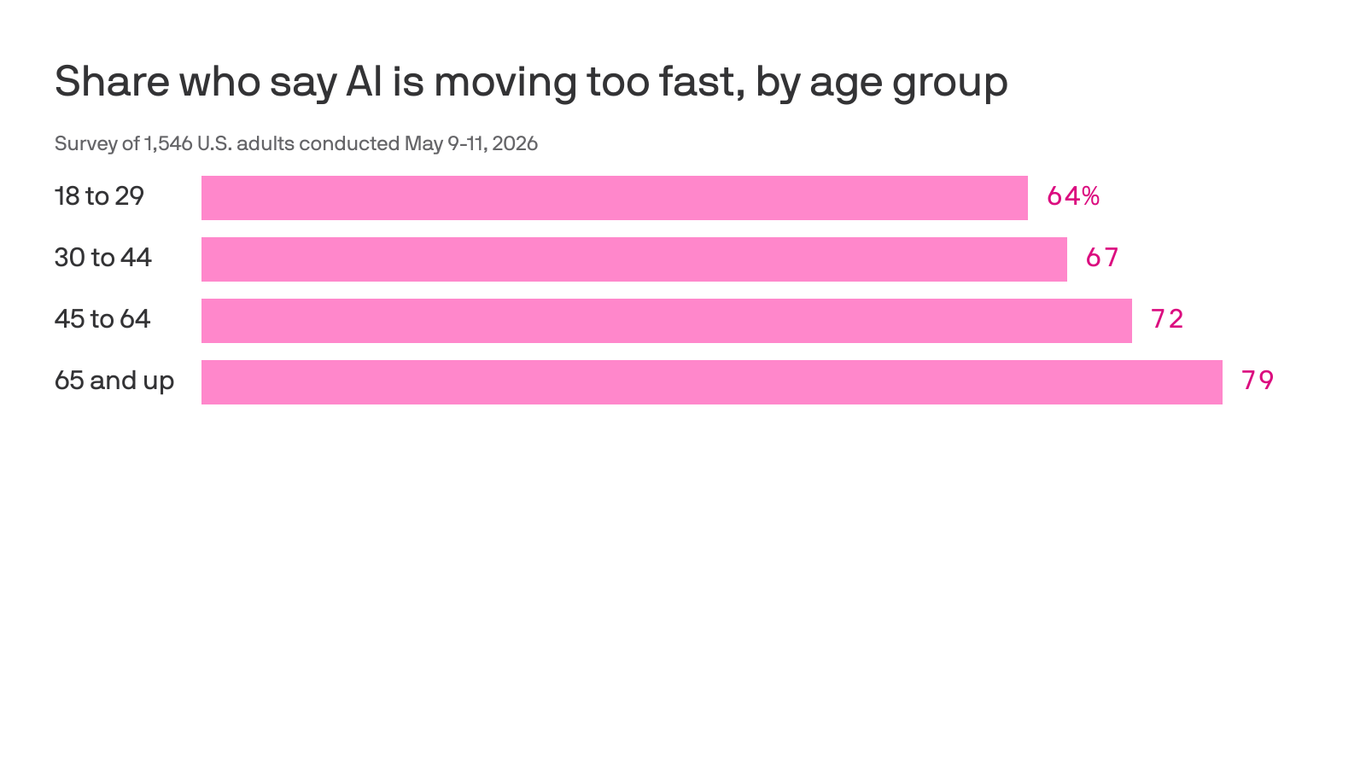
Most Americans now view AI negatively, polls show
Signals:
- →Growing public backlash against AI threatens industry growth and adoption rates.
- →Widespread negative sentiment is causing data center cancellations and investor uncertainty.
- →Leaders must address public concerns to avoid significant regulatory and operational constraints.
The Economy
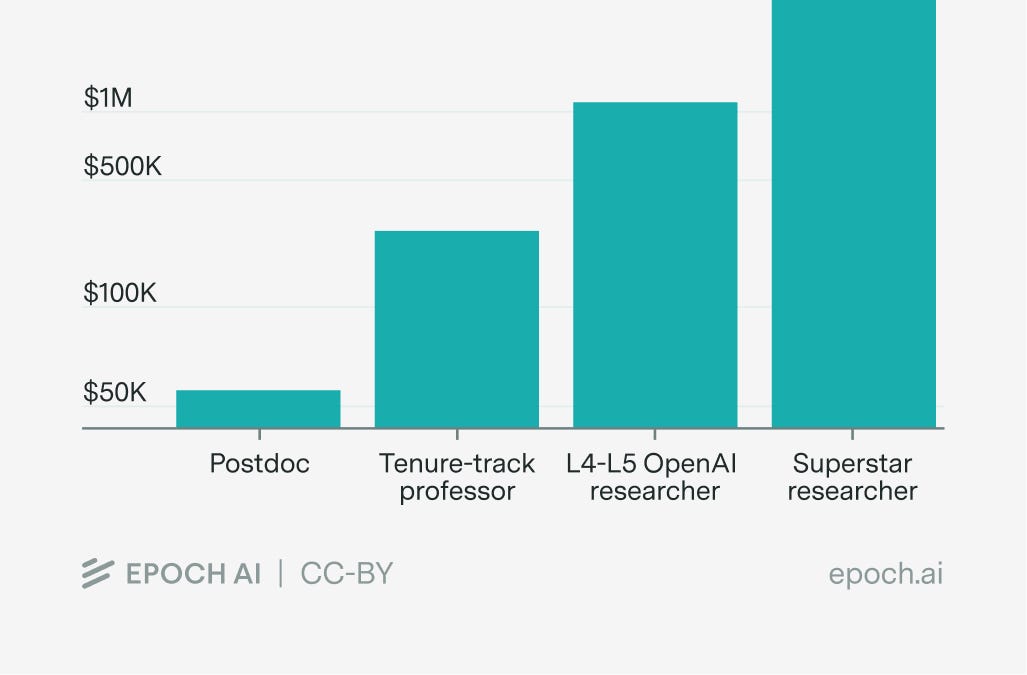
Superstar economics explain AI researchers' massive pay gaps
Signals:
- →Small quality differences in AI research yield massive value due to extreme market scalability.
- →High compensation reflects the inability to substitute elite intuition with larger, less skilled teams.
- →Competitive race dynamics and non-rivalrous output will likely drive researcher pay even higher.

AI is quietly eliminating entry-level jobs — here's the fix
Signals:
- →AI adoption is eroding entry-level roles, threatening the long-term development of future talent.
- →Firms risk future operational incompetence by automating the junior tasks essential for skill acquisition.
- →Leaders must prioritize hiring and training strategies that integrate AI with human judgment.

AI agents risk creating a new era of economic inequality
Rest of World·26 May 2026·AI agents will exacerbate global economic inequality - Rest of World - By automating complex workflows for a fraction of traditional labor costs, well-resourced firms and individuals can secure more benefits.
Signals:
- →AI agent adoption creates structural economic advantages that widen global and corporate inequality.
- →Early integration of agentic workflows provides compounding competitive benefits for firms and nations.
- →Unequal access to high-quality, reliable AI agents risks cementing long-term systems of dominance.

Google's James Manyika bets AI won't kill jobs anytime soon
Signals:
- →AI will likely transform and augment existing jobs rather than causing mass unemployment.
- →Complex, coupled tasks remain difficult to automate, limiting the scope of full displacement.
- →Leaders should prioritize workforce transition support and skill-building over fearing rapid job loss.

Samsung workers demand fair share of AI-driven record profits
Rest of World·22 May 2026·Samsung worker union demands share of AI chip profits in South Korea - Rest of World - The tentative deal highlights a global movement of workers demanding equitable distribution of record AI wealth.
Signals:
- →Rising labor unrest signals growing global pressure for equitable AI profit distribution.
- →AI-driven job displacement necessitates new policy frameworks like potential citizen dividends.
- →Institutionalizing transparent bonus structures is essential for maintaining long-term workforce stability.

Nearly all executives predict AI-driven layoffs within two years
Signals:
- →Near-universal executive consensus predicts significant AI-driven workforce reductions within two years.
- →Declining employee morale and engagement threaten productivity during AI-led organizational transitions.
- →Most leaders lack strategies to effectively integrate human talent with new AI capabilities.

Predicting AI's job impact is nearly impossible, here's why
Signals:
- →Quantitative AI job exposure models are inherently unreliable due to unpredictable secondary economic effects.
- →Business models often collapse or evolve independently of the specific tasks AI automates.
- →Technology shifts frequently create new roles and demand, rendering static job-task analysis obsolete.
Business

Starbucks scraps AI inventory tool after it hallucinated stock levels
Signals:
- →AI tools can fail in real-world environments, causing significant operational inefficiencies.
- →Over-reliance on unproven automation risks disrupting core business processes and workflows.
- →Rigorous pilot testing is essential before scaling new technologies across enterprise operations.

AI agents are triggering infrastructure failures enterprises aren't tracking

Signals:
- →Autonomous AI agents trigger unmonitored infrastructure cascades that current incident tracking systems miss.
- →Enterprises must integrate agent actions into existing chaos engineering and resilience budget frameworks.
- →Human oversight is essential for agent decisions when system capacity signals are ambiguous.

Mercer: employee thriving hits record low as AI reshapes work
Signals:
- →Strategic misalignment between C-suite and HR threatens organizational growth and AI-driven performance goals.
- →Declining employee thriving and talent scarcity pose significant risks to sustainable business productivity.
- →Intentional work redesign and advanced talent analytics are essential for competitive, AI-enabled transformation.

StanChart CEO walks back "lower-value human" AI jobs remark
Signals:
- →AI-driven automation is forcing significant workforce restructuring and large-scale job redundancies in banking.
- →Executive communication regarding workforce displacement carries high reputational risk and requires careful management.
- →Firms must balance aggressive cost-cutting through technology with effective internal change management strategies.
Education

AI is boosting, not killing, entry-level hiring, employers say
Signals:
- →AI adoption is driving an increase in entry-level hiring rather than reducing it.
- →Employers prioritize critical thinking and communication skills over technical AI literacy for new hires.
- →Practical work experience and internships are significantly more valued than high academic achievement alone.

AI is reshaping universities — and professors are struggling to adapt

Signals:
- →AI-driven academic dishonesty threatens the integrity of traditional assessment and degree-granting processes.
- →Widespread automation of "integrity tasks" risks devaluing academic labor and institutional credibility.
- →Universities must prioritize human-centric mentorship to maintain value against AI-generated educational alternatives.
Science

Google's ERA tool advances science across four real-world fields
 Explore Our Latest Research in Science and AI·Four ways Google Research scientists have been using Empirical Research Assistance - April 29, 2026
Signals:
- →AI-driven tools significantly accelerate scientific discovery across diverse, complex research fields.
- →Empirical Research Assistance improves predictive accuracy for critical public health and climate monitoring.
- →Automated computational modeling democratizes access to high-level research and solves previously intractable problems.
Environment

Data centers could spike electricity bills 57% by 2030
TechXplore·18 May 2026·Data centers are driving up power bills—a new study looks at how bad it could get - New research suggests electricity demand from data centers and cryptocurrency mining is likely to increase power costs in some parts of the country by up to 57% by 2030, with a national average increase of 6%-29%. Electricity demand related to data centers is also likely to increase CO2 emissions by up to 28% by 2030, relative to a future with no data center growth, according to the analysis from North Carolina State University, Carnegie Mellon University, the University of Pittsburgh and the University of Toronto. The paper, "Power System Costs and Emissions from Data Center and Cryptocurrency Mining Expansion in the United States," is published in the journal Environmental Research Letters.
Signals:
- →Data center expansion could increase national electricity costs by up to 29% by 2030.
- →Rising power demand threatens to reverse recent progress in reducing carbon dioxide emissions.
- →Strategic geographic distribution of data centers is essential to mitigate localized price spikes.

AI expansion fuels fire safety risks in data centers
TechXplore·26 May 2026·AI's growing footprint raises fire safety challenges for data centers - Over the past decade, the ability of artificial intelligence to speed up complex processes has made it a key tool in engineering research. Many people associate AI with cloud computing, but its growth requires expanding infrastructure, such as data centers.
Signals:
- →Rapid AI infrastructure growth significantly increases fire risks from high-density battery systems.
- →Thermal runaway and electrical faults threaten operational continuity and critical data assets.
- →Holistic fire prevention strategies are essential to protect expanding, high-energy data facilities.
Entertainment

Unreal Engine 6 arrives in 2028 to unify game development
Signals:
- →Unreal Engine 6 aims to unify high-end production with live-service development workflows.
- →The engine facilitates seamless asset sharing between standalone titles and persistent ecosystems.
- →Long-term planning for 2028 adoption helps studios mitigate future technical and operational risks.
🏭AI and Tech industry news
🫧Bubble Chronicles

Uber questions ROI as AI spending outpaces measurable results
The Verge·26 May 2026·Uber president says AI spending is getting ‘harder to justify’ | The Verge - There’s no clear connection between AI usage and productivity.
Signals:
- →AI investments currently lack clear, measurable links to increased consumer feature productivity.
- →Rising token consumption costs are forcing companies to reevaluate AI versus headcount.
- →Executives are increasingly skeptical of justifying high AI spending without proven returns.

AI chipmaker ETF hits $10bn in record 50 days
Financial Times·26 May 2026·Chipmaker ETF rides AI excitement to quickest $10bn valuation on record - Roundhill Memory ETF, known as DRAM, surges 87% within 50 days of April launch
Signals:
- →Rapid capital inflows signal intense investor demand for AI-related semiconductor infrastructure.
- →Concentrated fund holdings in three chipmakers create significant exposure to sector-specific volatility.
- →Thematic ETF popularity reflects speculative market behavior, mirroring past boom-and-bust investment cycles.
Nvidia

NVIDIA's Vera CPU begins shipping to top AI labs

Signals:
- →Vera optimizes hardware performance specifically for demanding agentic AI workloads.
- →High memory bandwidth accelerates data processing for complex AI factory operations.
- →Superior CPU efficiency provides a competitive edge in large-scale AI infrastructure.
Nvidia Beats Expectations Again, But Investors Shrug at the World's Most Valuable Company
Nvidia delivered yet another blockbuster quarter — US$81.6 billion in revenue (up 85% year-on-year), US$58.3 billion in net income, and data centre revenue nearly doubling to US$75.2 billion — yet its shares dipped 1.3% in after-hours trading. The company forecast US$91 billion for the current quarter, beating Wall Street's US$87 billion consensus, announced US$80 billion in buybacks, and hiked its quarterly dividend from US$0.01 to US$0.25 per share. But the muted market reaction tells a deeper story: after 15 consecutive quarters of beating estimates, Nvidia's dominance is increasingly priced in, and investors are eyeing slowing growth rates (analysts expect ~36% revenue growth next fiscal year, down from 85%). CEO Jensen Huang talked up the next-generation Vera Rubin rack-scale AI system, promising 10x performance per watt over Grace Blackwell, while CFO Colette Kress flagged a "brand new US$200 billion" CPU opportunity. Nvidia also revealed for the first time that its data centre revenue splits roughly evenly between hyperscalers and a growing base of smaller cloud, industrial, and enterprise clients. The China situation remains a wildcard — Nvidia excluded potential Chinese AI chip revenue from its forecast, and Beijing banned its China-specific gaming chip during Huang's visit with Trump and Xi. As one analyst put it, Nvidia is becoming "more like an Apple" — a safe haven rather than a moonshot — leaving growth-hungry investors looking elsewhere in the AI stack.
2 sources

Nvidia's Jensen Huang deploys $90bn to dominate AI ecosystem
Financial Times·20 May 2026·Nvidia’s Jensen Huang bankrolls AI boom with $90bn deal spree - Chipmaker’s spending rivals Big Tech’s biggest venture operations, tying customers and start-ups to its technology
Signals:
- →Nvidia’s $90bn investment spree aggressively consolidates its dominance across the entire AI ecosystem.
- →Strategic funding of partners and suppliers creates significant regulatory and antitrust scrutiny risks.
- →Massive capital deployment ties emerging AI infrastructure providers directly to Nvidia’s proprietary technology.

China bans Nvidia chip imports amid AI semiconductor race
 Semafor·22 May 2026·China bans import of some Nvidia chips | Semafor - The decision dealt a blow to the American tech firm, which had long lobbied the White House to ease export restrictions on China-bound chips.
Signals:
- →China’s import ban accelerates its drive for domestic semiconductor self-sufficiency.
- →Export restrictions threaten Nvidia’s market share and US technological dominance.
- →China’s cost-effective manufacturing poses a significant competitive challenge to US firms.

Nvidia's Jensen Huang eyes $200B agentic AI CPU market
TechCrunch·21 May 2026·Jensen Huang says he's found a 'brand new' $200B market for Nvidia | TechCrunch - The next big thing for Nvidia will be CPUs for AI agents, $200 billion worth, CEO Jensen Huang predicts.
Signals:
- →Nvidia’s new Vera CPU targets a massive $200 billion agentic AI market.
- →Purpose-built hardware for AI agents signals a major shift in computing infrastructure.
- →Early $20 billion in sales validates Nvidia’s expansion beyond traditional GPU dominance.
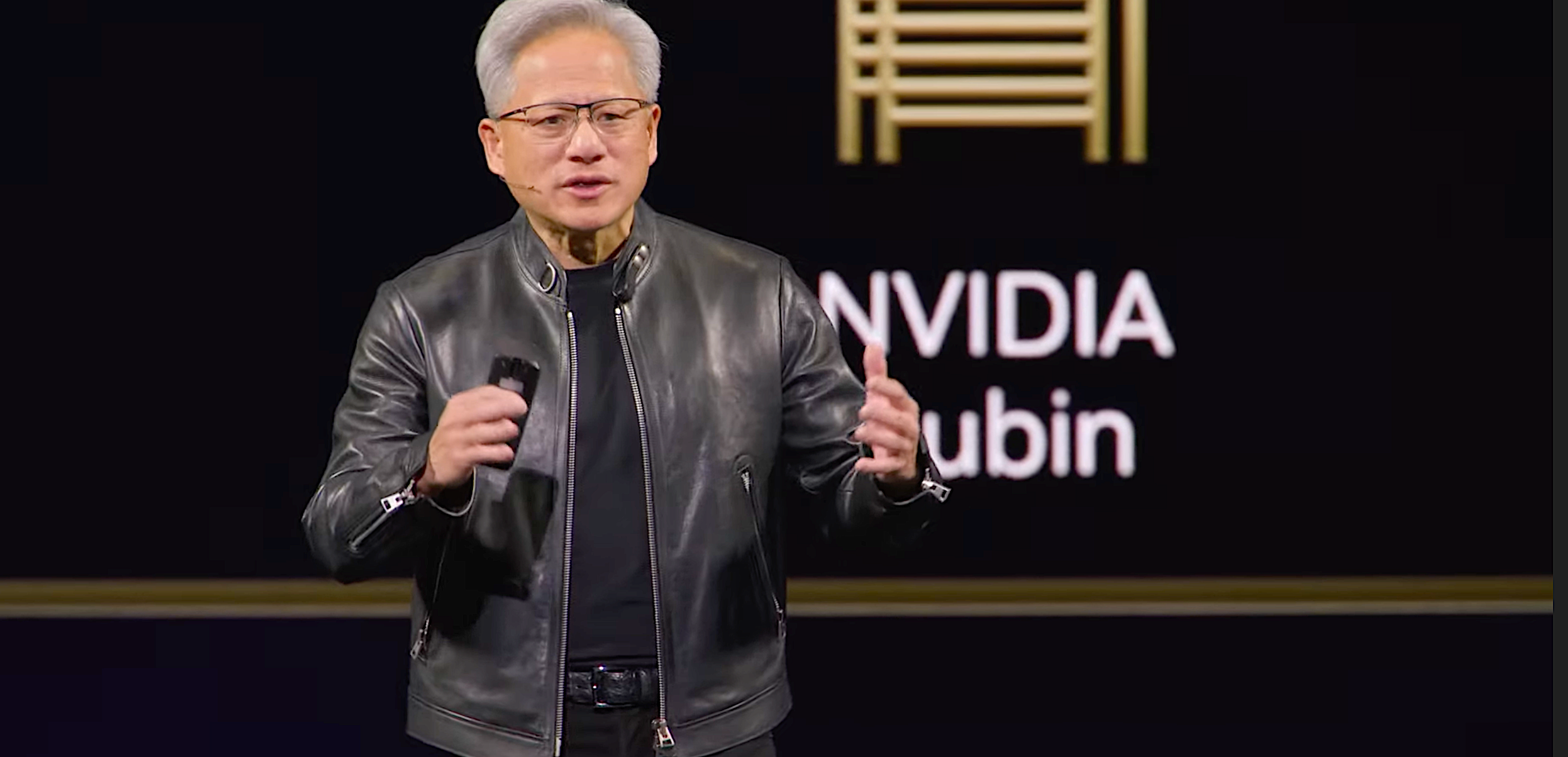
Nvidia's record earnings signal AI factory era has arrived
SiliconANGLE·21 May 2026·Five takeaways from Nvidia’s earnings, and what they mean for the AI industry - SiliconANGLE - Five takeaways from Nvidia’s earnings, and what they mean for the AI industry - SiliconANGLE
Signals:
- →Shift focus from individual hardware costs to total lifetime AI factory efficiency.
- →Prepare for massive infrastructure scaling driven by agentic AI and physical robotics.
- →Prioritize full-stack, integrated platforms over point products to ensure long-term competitive viability.
OpenAI
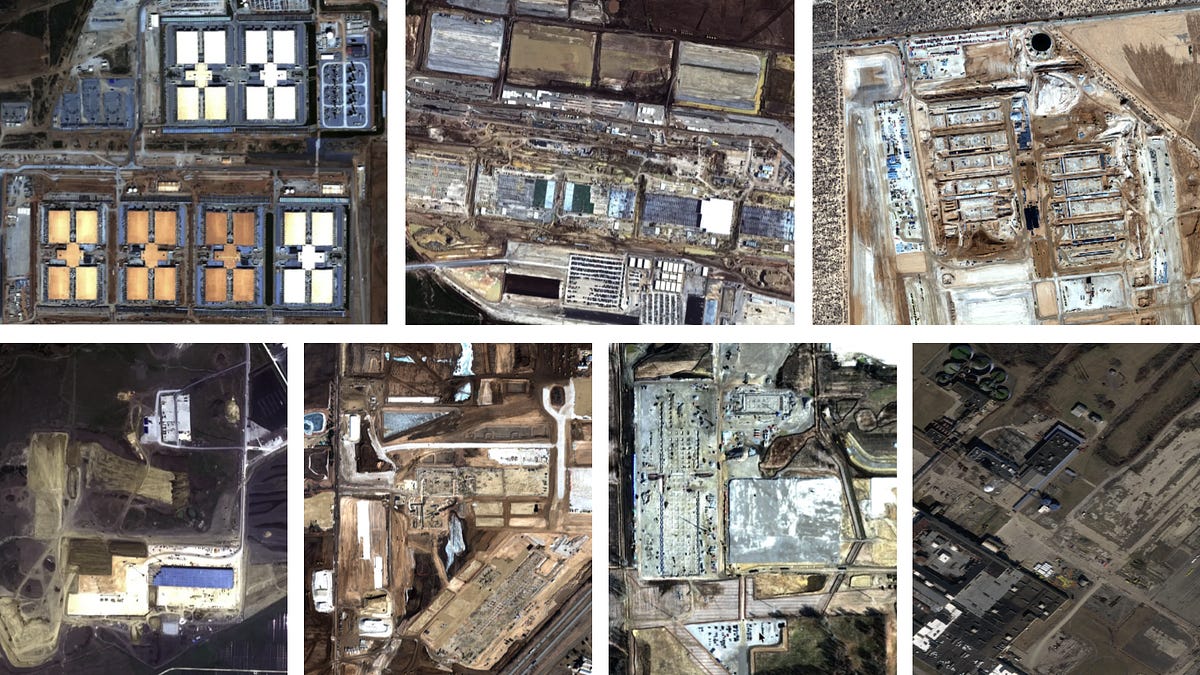
Stargate's 9 GW AI data center network takes shape across America
Signals:
- →Stargate’s $500 billion infrastructure project will significantly reshape national AI compute capacity by 2029.
- →Developers are bypassing grid constraints using on-site natural gas and closed-loop cooling systems.
- →Local regulatory opposition and shifting project scopes present ongoing risks to deployment timelines.

OpenAI model solves 80-year-old geometry conjecture autonomously
Signals:
- →AI models can now autonomously solve complex, long-standing open problems in advanced mathematics.
- →Advanced reasoning capabilities enable AI to discover unexpected, cross-disciplinary connections between disparate scientific fields.
- →These breakthroughs demonstrate AI's potential to accelerate research in biology, physics, and engineering.

OpenAI model disproves 80-year-old Erdős geometry conjecture
TechCrunch·20 May 2026·OpenAI claims it solved an 80-year-old math problem — for real this time | TechCrunch - OpenAI claims its reasoning model disproved a geometry conjecture unsolved since 1946 — and this time, the mathematicians who exposed its last embarrassing claim are backing it up.
Signals:
- →AI models can now autonomously solve complex, long-standing mathematical problems.
- →Enhanced reasoning capabilities offer transformative potential for biology, physics, and engineering.
- →Validated breakthroughs signal a shift toward AI-driven innovation in scientific research.

OpenAI offers $2M in tokens to every YC startup
TechCrunch·20 May 2026·Sam Altman makes 'mic drop' offer to every Y Combinator startup | TechCrunch - Altman offered to have OpenAI invest in every single startup in this Y Combinator class: tokens for equity.
Signals:
- →OpenAI’s equity-for-tokens deal creates a strategic lock-in for early-stage AI startups.
- →Startups gain critical infrastructure cost relief at the expense of future equity dilution.
- →This model signals a shift toward platform-based venture capital and ecosystem-building strategies.

OpenAI adds watermarks and metadata to flag AI-generated images
TechCrunch·19 May 2026·OpenAI is making it easier to check if an image was made by their models | TechCrunch - OpenAI announced two new measures to help detect AI generated imagery: joining the open C2PA standard and adding Google's SynthID to its products.
Signals:
- →New provenance standards help mitigate risks of AI-generated misinformation and deepfakes.
- →Dual-layer watermarking improves the reliability of verifying authentic digital content.
- →Adopting these tools protects organizational reputation against AI-driven content manipulation.
Anthropic

Experts say Anthropic's Mythos hacking threat is overblown
 Reuters·20 May 2026·Fears of unfettered hacking spurred by Anthropic's Mythos AI model overstated | Reuters - Early fears that Anthropic’s new AI model, Mythos, could dramatically turbocharge hacking are looking overstated a month after its release.
Signals:
- →Mythos improves vulnerability discovery but does not fundamentally change existing cyber threat landscapes.
- →Organizations must prioritize validating and fixing software flaws over merely identifying new vulnerabilities.
- →High technical barriers currently limit Mythos, but these obstacles will likely decrease over time.
Anthropic's Multi-Cloud Chip Strategy Expands to Microsoft's Maia
Anthropic is in early talks to rent servers powered by Microsoft's custom Maia AI chips, a move that would further diversify the Claude maker's compute supply chain across all three major cloud providers. The discussions, first reported by *The Information*, come as Anthropic CEO Dario Amodei has openly acknowledged "difficulties with compute" — unsurprising given the company has inked staggering infrastructure deals in recent months: a US$200 billion, five-year agreement with Google for TPU access, and a US$100 billion, 10-year AWS deal covering Amazon's Trainium chips. For Microsoft, landing Anthropic as a Maia customer would validate its push into custom silicon, an arena where Google and Amazon have already built significant businesses renting proprietary chips to AI startups hungry for alternatives to Nvidia's costly, supply-constrained GPUs. Microsoft's Maia 200 chip, fabricated by TSMC on 3nm technology, reportedly delivers 30% better performance per dollar than existing fleet hardware and is already running in production near Des Moines, Iowa. The broader signal here is clear: as AI compute demand outstrips Nvidia's supply, the hyperscalers' custom chip programmes are becoming genuine competitive differentiators — and Anthropic's multi-cloud hedging strategy reflects just how critical securing diverse silicon pipelines has become in the AI arms race.
2 sources
Karpathy Goes to Anthropic: The Frontier AI Talent War Enters Its Most Consequential Phase
Andrej Karpathy — OpenAI co-founder, former Tesla AI chief, and arguably the internet's favourite AI educator — announced on 19 May 2026 that he's joined Anthropic's pre-training team under Nick Joseph. His specific mandate: build a team that uses Claude to accelerate pre-training research itself, essentially putting Anthropic on a direct path toward recursive self-improvement (RSI). The move is striking given Karpathy's well-documented preference for independence and open-source work, but his own trajectory tells the story — from dismissing coding agents as "slop" in October 2025, to marvelling at Claude Code's capabilities by December, to running autonomous AI research experiments by March 2026 that replicated work he'd spent two decades doing manually. The hire signals that the race between Anthropic, OpenAI, and Google DeepMind has shifted from raw compute scaling to *AI-augmented research* as the key competitive axis. Anthropic co-founder Jack Clark recently gave 60%+ odds that fully autonomous AI R&D arrives by end of 2028 — and Karpathy's role is to help make that happen. The open question, as VentureBeat notes, is what becomes of his open-source projects like autoresearch and the LLM Knowledge Base, plus his Eureka Labs education startup. Karpathy says he'll return to education work "in time," but for now, relevance at the frontier has won out over independence — a tension he himself articulated just weeks before joining.
4 sources
Anthropic's Mythos Model Is Finding Thousands of Critical Vulnerabilities — Now the Hard Part Begins
Anthropic's Project Glasswing, a collaborative effort pairing its Claude Mythos Preview model with roughly 50 critical infrastructure partners, has produced staggering early results: over 23,000 potential vulnerabilities identified across 1,000+ open-source projects, with an estimated 3,900+ high- or critical-severity flaws expected to be confirmed. Partners like Mozilla (271 Firefox bugs), Cloudflare (2,000 bugs), and Palo Alto Networks have reported order-of-magnitude improvements in bug discovery rates, while the UK's AI Security Institute confirmed Mythos as the first model to solve both its cyberattack simulation ranges end-to-end. The real tension, however, isn't in finding vulnerabilities — it's in fixing them. Only 75 high-severity patches have landed so far, and some open-source maintainers have actually asked Anthropic to *slow down* disclosures because they can't keep up. This asymmetry between AI-accelerated discovery and human-paced remediation creates a dangerous interim window. Anthropic has responded by launching Claude Security for enterprise customers (already used to patch 2,100+ vulnerabilities), open-sourcing scanning tools, and partnering with the Open Source Security Foundation. Crucially, Anthropic acknowledges it still lacks safeguards strong enough to release Mythos-class models publicly — a candid admission that models this capable in offensive security represent a dual-use risk that the industry hasn't yet solved. The promise on the far side is a world of dramatically hardened software, but the path there requires the ecosystem to radically accelerate its patch cycles.
2 sources
Anthropic's First Profitable Quarter: Milestone or Mirage?
Anthropic has told investors it expects US$10.9 billion in revenue for Q2 2026 — more than double the US$4.8 billion posted in Q1 — projecting an operating profit of US$559 million, which would make it the first major AI lab to hit profitability ahead of OpenAI and Elon Musk's xAI. The milestone arrives as Anthropic closes a US$30 billion funding round at a US$900 billion valuation and explores an IPO that would rank among the largest ever. Both the WSJ and FT framed the achievement as a powerful rebuttal to sceptics who argue AI labs can't build sustainable businesses. However, the picture is considerably murkier beneath the headline. Critic Ed Zitron argues the profitability is an artefact of financial engineering: Anthropic's new compute deal with SpaceX includes a discounted ramp-up period covering precisely the months of its "profitable" quarter, artificially suppressing costs. He also highlights inconsistencies between Anthropic's leaked revenue figures and its CFO's sworn court testimony citing just US$5 billion in cumulative revenue as recently as March. Anthropic itself acknowledges it may not remain profitable as compute spending — including US$15 billion annually to SpaceX alone — ramps to full rate. With both Anthropic and OpenAI eyeing public listings, the tension between explosive top-line growth and genuinely sustainable unit economics remains the central unresolved question of the AI era.
3 sources

Japan grants government access to Anthropic's Claude Mythos AI
Signals:
- →Advanced AI access strengthens national cyber defense against sophisticated financial system threats.
- →Public-private partnerships are essential for managing risks posed by emerging AI technologies.
- →Financial institutions must prepare for potential system disruptions due to heightened cyberattack risks.

Anthropic's Mythos 1 model heads to Claude Code and Security
Signals:
- →Mythos 1 integration enhances automated vulnerability discovery and enterprise security capabilities.
- →Expanded model availability signals a shift toward broader commercial access for advanced AI.
- →New security dashboards provide critical oversight for managing organizational software risks.

Anthropic sells AI's promise while warning of its dangers
 TIME·22 May 2026·Anthropic Sells Claude’s Promise While Warning About AI’s Dangers - Anthropic wants developers to build faster with Claude. It also wants policymakers to understand that AI may soon be too powerful to control.
Signals:
- →Anthropic’s rapid valuation growth highlights the massive commercial momentum behind advanced AI development.
- →Executives warn that AI capabilities are accelerating faster than current safety preparations allow.
- →Emerging models possess nation-state-level offensive cyber capabilities, necessitating urgent oversight and risk management.

Anthropic plans public release of Mythos bug-finding AI
Signals:
- →AI-driven vulnerability discovery will soon accelerate the frequency and severity of cyberattacks.
- →Organizations face an overwhelming volume of security flaws requiring urgent patching and resources.
- →Current AI safeguards are insufficient to prevent potential misuse of powerful exploit-finding models.
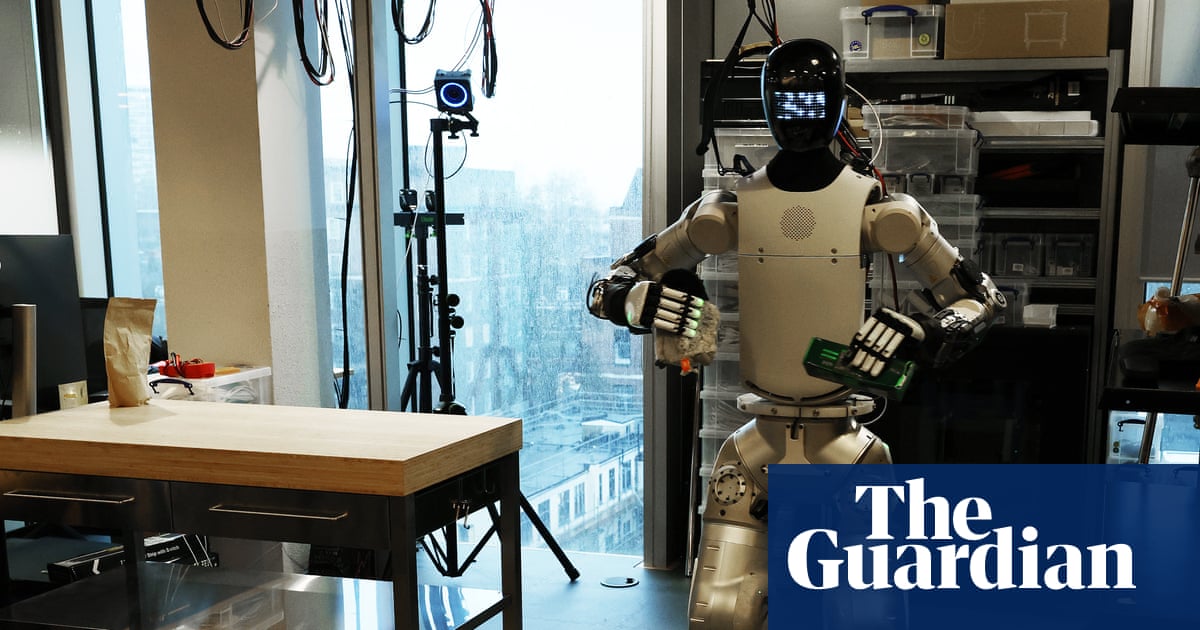
Anthropic co-founder predicts AI Nobel prize win within a year
 The Guardian·21 May 2026·AI will help make a Nobel prize-winning discovery within a year, says Anthropic co-founder | AI (artificial intelligence) | The Guardian - Jack Clark describes ‘vertiginous sense of progress’ and ‘profound changes’ to society alongside risks of technology
Signals:
- →Rapid AI advancements will soon enable autonomous scientific breakthroughs and transformative economic shifts.
- →Emerging AI capabilities present significant cybersecurity risks and potential existential threats to society.
- →Proactive preparation is essential to mitigate the disruptive impacts of accelerating synthetic intelligence.

Anthropic pays xAI $1.25B monthly for compute capacity
TechCrunch·20 May 2026·Anthropic will pay xAI $1.25B per month for compute | TechCrunch - Elon Musk's xAI surprised the AI world when it made a deal to sell compute to Anthropic. Now we know how much it's worth.
Signals:
- →Massive compute deals signal a shift toward "neocloud" infrastructure monetization models.
- →High-value partnerships between competitors highlight critical industry-wide infrastructure overcapacity risks.
- →Strategic resource sharing offers new pathways for AI firms to offset capital expenditures.

Anthropic eyes Microsoft's Maia 200 chip as fourth AI supplier
Signals:
- →Custom silicon adoption is critical for reducing escalating AI model inference costs.
- →Diversifying hardware suppliers mitigates dependency risks and optimizes long-term infrastructure economics.
- →External validation of Maia 200 chips will determine Microsoft's competitive standing in AI.

Anthropic's pre-IPO share crackdown rattles shadow stock market
Signals:
- →Unauthorized secondary market share sales face increased regulatory and corporate enforcement risks.
- →Investors face potential asset devaluation due to strict prohibitions on special purpose vehicles.
- →Private market transparency and ownership structures require urgent re-evaluation by institutional stakeholders.

Google DeepMind's Hassabis: AI won't replace software developers
Signals:
- →AI coding tools significantly boost developer productivity rather than replacing human roles.
- →Increased engineering efficiency allows firms to scale innovation and pursue new projects.
- →Gemini 3.5 Flash offers a competitive, cost-effective solution for enterprise software development.

Google's CodeMender targets Anthropic's cybersecurity AI lead
The Verge·19 May 2026·Google wants to compete with Anthropic’s Mythos | The Verge - The company is marketing its CodeMender tool as a way to ‘help secure the world’s code bases.‘
Signals:
- →AI-driven cybersecurity tools are emerging as a critical new revenue stream for tech giants.
- →Google is expanding CodeMender to compete directly with Anthropic in the enterprise security market.
- →Large-scale AI models are increasingly essential for auditing and securing high-stakes government systems.

Google's SynthID watermarks 100 billion AI images, expands to rivals
Arstechnica·19 May 2026·Google's SynthID AI watermarking tech is being adopted by OpenAI, Nvidia, and more - Ars Technica - AI content is getting good, but SynthID might be able to help tell truth from fiction.
Signals:
- →Standardized watermarking improves transparency and trust in digital media authenticity.
- →Enterprise-grade detection tools help businesses mitigate risks from AI-generated misinformation.
- →Industry-wide adoption of SynthID creates a more reliable framework for content verification.

Google's Gemini agents challenge OpenAI's consumer AI dominance
Signals:
- →Google’s new AI agents threaten OpenAI’s dominance in the consumer technology market.
- →Massive token consumption is driving unsustainable capital expenditure and operational costs for providers.
- →Companies must develop new monetization strategies to offset rising AI infrastructure expenses.
Blackstone backs Google TPU data centre JV with $5bn
Signals:
- →Blackstone’s $5 billion investment signals massive institutional confidence in Google’s proprietary AI hardware.
- →The joint venture expands compute-as-a-service capacity to meet surging global AI infrastructure demand.
- →Google’s energy-efficient TPUs offer a strategic alternative to Nvidia-dominated AI hardware markets.
Microsoft

GitHub battles outages, security breaches, and leadership exodus
The Verge·21 May 2026·GitHub faces a fight for its survival at Microsoft | The Verge - GitHub is battling outages, security issues, and a talent exodus.
Signals:
- →GitHub faces critical operational instability, security vulnerabilities, and significant leadership turnover.
- →Talent exodus and increased competition threaten GitHub’s dominance in the developer ecosystem.
- →Frequent service outages are damaging GitHub’s reputation and driving away key enterprise users.

Microsoft resumes carbon-removal purchases despite AI energy surge
TechCrunch·20 May 2026·Microsoft’s carbon-removal plans aren’t dead after all | TechCrunch - Microsoft is responsible for over 90% of the carbon-removal market, and reports suggested the company was pausing purchases entirely. This new deal should help assuage the fears of CDR startups.
Signals:
- →Microsoft’s continued carbon-removal investment signals market stability for climate-tech startups.
- →AI-driven energy demands are forcing corporations to recalibrate sustainability and procurement strategies.
- →Microsoft’s dominant market share makes its purchasing shifts critical for industry-wide viability.

Microsoft ditches SMS codes, pushes passkeys for account security
Signals:
- →SMS-based authentication is a significant security liability vulnerable to phishing and SIM-swapping.
- →Transitioning to passkeys improves organizational security posture and reduces account takeover risks.
- →Phasing out legacy SMS methods requires proactive planning to minimize user authentication friction.
Meta
Meta reshuffles 7,000 staff into AI units amid mass layoffs
SiliconANGLE·19 May 2026·Meta shifts 7,000 employees into four new AI units ahead of mass layoffs - SiliconANGLE - Meta shifts 7,000 employees into four new AI units ahead of mass layoffs - SiliconANGLE
Signals:
- →Meta is aggressively pivoting workforce resources toward AI-driven product development and infrastructure.
- →Organizational restructuring creates flatter, leaner teams to accelerate internal AI productivity.
- →Massive capital expenditure increases signal a strategic commitment to competing in generative AI.

Meta launches Reddit-like "Forum" app for Facebook Groups
TechCrunch·22 May 2026·Meta quietly launches a new Reddit-like app called Forum | TechCrunch - The company describes the app as a "dedicated space built for deeper discussions, real answers and communities you care about."
Signals:
- →Meta is shifting to a multi-app strategy to increase user engagement.
- →New AI-powered tools in Forum signal Meta’s focus on automated community moderation.
- →Meta’s aggressive app expansion indicates a pivot toward niche, platform-specific social experiences.

Meta AI launches end-to-end encrypted "Incognito Chat" feature
The Verge·13 May 2026·Mark Zuckerberg announces ‘completely private’ encrypted Meta AI chat | The Verge - End-to-end encryption for AI, but not Instagram DMs.
Signals:
- →End-to-end encryption mitigates legal and privacy risks associated with stored AI conversation logs.
- →Enhanced privacy features provide a competitive differentiator in the crowded AI chatbot market.
- →Eliminating data retention reduces corporate liability regarding sensitive user interactions and AI outputs.

Meta, YouTube, Snap, TikTok settle teen mental health lawsuits
The Verge·21 May 2026·One of Meta’s big legal reckonings just ended in a settlement | The Verge - YouTube, Snap, and TikTok also settled, but there’s still thousands of cases on deck.
Signals:
- →Major tech firms are settling lawsuits regarding youth mental health and platform addiction.
- →Thousands of pending school district cases create significant ongoing legal and financial risk.
- →Bellwether trials are actively shaping future settlement negotiations and corporate safety policy requirements.
Tesla

Tesla Cybercab sets efficiency record at 165 Wh/mile
Signals:
- →Superior energy efficiency significantly lowers operational costs for autonomous ride-hailing fleets.
- →Simplified vehicle design reduces manufacturing expenses and improves fleet-wide charging turnaround times.
- →Specialized, driverless hardware creates a new, highly competitive category for urban transportation.
AMD

AMD's Zen 7 targets TSMC's A14 node for angstrom-era computing
Signals:
- →Angstrom-era manufacturing will significantly boost server performance and energy efficiency for data centers.
- →New instruction sets optimize CPUs for AI workloads, reducing reliance on specialized hardware accelerators.
- →Advanced packaging and supply chain diversification strategies will enhance long-term hardware cost-efficiency.
Cerebras

Cerebras runs trillion-parameter AI model 7x faster than GPU clouds
Signals:
- →Cerebras chips run trillion-parameter models nearly seven times faster than standard GPU clouds.
- →High-speed inference enables real-time performance for complex, agentic enterprise AI coding tasks.
- →Wafer-scale architecture offers a high-performance alternative to capacity-constrained, expensive GPU-based AI providers.

Cerebras' IPO success sparks Wall Street tech listing boom
Financial Times·19 May 2026·Wall Street prepares for boom in tech IPOs after Cerebras’ success - Chip designer’s $6.4bn raise signals demand ahead of huge listings expected from SpaceX, OpenAI and Anthropic
Signals:
- →Strong investor appetite for AI-related IPOs signals a broader market recovery for listings.
- →Major AI firms are increasingly seeking public capital to fund massive infrastructure requirements.
- →High demand for semiconductor and energy stocks highlights key sectors for strategic investment.
TSMC
TSMC workers threaten strike over bonus cuts amid record AI profits
Signals:
- →Labor unrest at TSMC threatens global semiconductor supply chain stability.
- →Rising employee expectations for profit-sharing could impact corporate capital expenditure strategies.
- →Growing unionization trends in the chip sector increase operational and financial risks.
Huawei

Huawei unveils massive 122TB SSD with proprietary chip packaging
 Panda Daily·22 May 2026·Huawei Produces 122TB SSD Using Proprietary Chip Packaging Technology - Pandaily - Huawei develops 122TB SSD using proprietary chip packaging technology amid semiconductor restrictions.
Signals:
- →Demonstrates Huawei’s growing independence from Western semiconductor supply chains.
- →Highlights advancements in proprietary packaging to overcome trade restrictions.
- →Signals increased competitive pressure in the high-capacity enterprise storage market.
DeepSeek

DeepSeek V4 fully adapted to Huawei Ascend chips
Panda Daily·25 May 2026·DeepSeek V4 Completes Full Adaptation to Huawei Ascend, Marking a Milestone for China AI Stack - Pandaily - DeepSeek V4's complete adaptation to Huawei Ascend marks a milestone for China's domestic AI stack, reducing reliance on overseas chip suppliers for inference workloads.
Signals:
- →Reduces reliance on foreign hardware for advanced AI model training.
- →Validates the viability of domestic AI infrastructure for large-scale deployment.
- →Enhances strategic autonomy within China’s rapidly evolving technology ecosystem.
Moonshot AI
Kimi WebBridge lets AI agents browse the web like humans
Panda Daily·20 May 2026·Moonshot AI Launches Kimi WebBridge: AI Agents That Browse the Web Like You - Pandaily - Moonshot AI releases Kimi WebBridge, a browser extension that lets the Kimi AI agent operate with your full browser identity — your logged-in sessions, cookies, and accounts — to perform tasks autonomously on your behalf.
Signals:
- →AI agents now autonomously navigate websites to execute complex, multi-step user tasks.
- →Enhanced web-browsing capabilities significantly boost productivity and operational efficiency for businesses.
- →Real-time data access improves the accuracy and relevance of AI-driven decision-making.
Spotify

Spotify bets on AI music and superfans for future growth
Financial Times·21 May 2026·Spotify targets high-spending superfans with AI-generated music - Streamer and Universal Music Group strike licensing deal for a paid add-on tool within Spotify’s app
Signals:
- →Spotify is shifting focus toward high-spending superfans to drive revenue growth.
- →New AI-powered tools and premium tiers aim to increase average revenue per user.
- →Strategic licensing deals with major labels establish a framework for monetizing generative AI.

Spotify launches ElevenLabs-powered AI audiobook creation tool
TechCrunch·21 May 2026·Spotify launches an ElevenLabs-powered audiobook creation tool | TechCrunch - The AI-powered audiobook generation won't bind authors to an exclusive contract, meaning they are free to publish their generated audiobooks anywhere.
Signals:
- →AI-powered audiobook tools lower production costs and barriers for independent content creators.
- →Expanding language support and subscription plans drives global market reach and revenue.
- →Enhanced discovery features and AI integration significantly increase user engagement and listening hours.
Blue Origin

NASA plans permanent Moon base with Blue Origin partnership
Interesting Engineering·26 May 2026·NASA reveals city-sized Moon base plans with Blue Origin support - NASA says its future Moon base could span hundreds of square miles as Artemis missions and private partnerships accelerate.
Signals:
- →Establishes the Moon as a critical testing ground for future Mars exploration missions.
- →Creates significant commercial opportunities through new partnerships with private aerospace companies like Blue Origin.
- →Signals a long-term $20 billion investment in infrastructure for sustained deep-space human operations.
Startups and Investment Deals

OpenRouter secures $113M to simplify enterprise AI model routing
SiliconANGLE·26 May 2026·OpenRouter raises $113M to bring order to enterprise AI inference routing - SiliconANGLE - OpenRouter raises $113M to bring order to enterprise AI inference routing - SiliconANGLE
Signals:
- →Centralized routing optimizes AI costs and performance across multiple model providers.
- →Unified governance and billing tools reduce operational complexity for enterprise AI deployments.
- →Multi-model access eliminates vendor lock-in and enhances system reliability through intelligent failover.
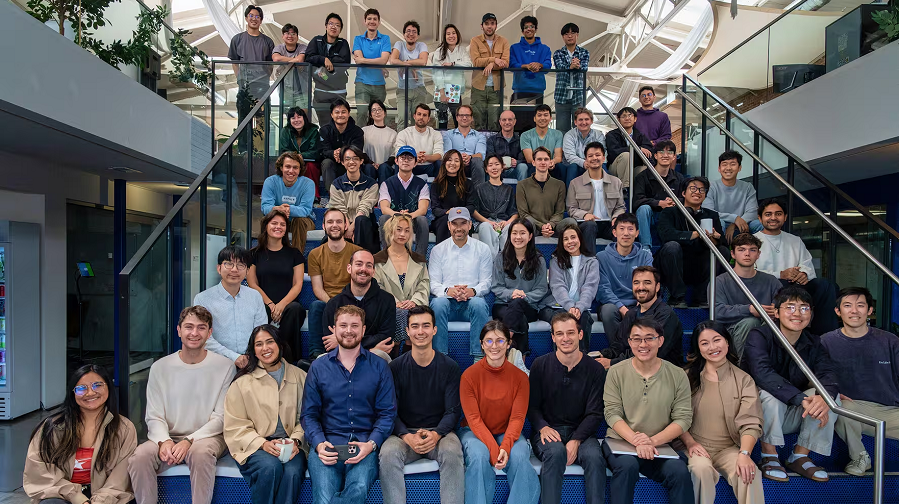
Exa Labs secures $250M to scale AI-powered search tools
SiliconANGLE·20 May 2026·Exa Labs raises $250M at $2.2B valuation for its AI search tools - SiliconANGLE - Exa Labs raises $250M at $2.2B valuation for its AI search tools - SiliconANGLE
Signals:
- →Exa Labs' $2.2B valuation signals high market demand for specialized AI search infrastructure.
- →Proprietary search technology offers significant latency and efficiency advantages over standard search wrappers.
- →Rapid adoption by 400,000 developers highlights a critical tool for enterprise AI workflows.

NanoCo AI raises $12M to give every worker a secure AI "second brain"
Signals:
- →NanoClaw provides secure, auditable AI agents that act as personalized "second brains" for employees.
- →Infrastructure-level sandboxing and human-in-the-loop gateways mitigate risks of unauthorized AI actions.
- →Open-source foundations combined with managed enterprise services offer scalable, secure productivity gains.
🆕 AI releases
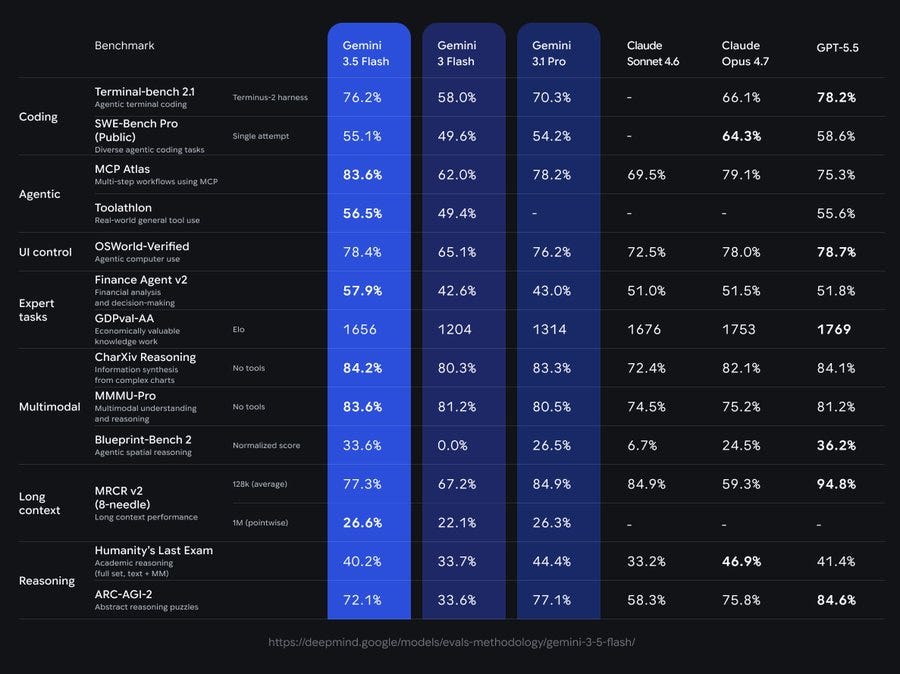
Google's Gemini 3.5 Flash leads on speed, falls short elsewhere

Signals:
- →Gemini 3.5 Flash offers high-speed performance for agentic workflows, despite mixed reliability reviews.
- →Increased operational costs and usage limits may hinder its adoption for enterprise-scale tasks.
- →Integration issues and inconsistent output quality necessitate cautious evaluation before full-scale deployment.
Zhipu AI's GLM-5.1 hits 400 tokens/s, setting global speed record
Panda Daily·22 May 2026·Zhipu AI Launches GLM-5.1 High-Speed API: 400 Tokens/s Sets New Global Benchmark - Pandaily - Zhipu AI has launched GLM-5.1-highspeed, an API variant of its GLM-5.1 model delivering 400 tokens per second — reportedly the fastest inference speed among major global LLM providers.
Signals:
- →Unprecedented 400 tokens/s speed significantly reduces latency for real-time AI applications.
- →Enhanced throughput lowers operational costs for large-scale enterprise AI deployments.
- →New global performance benchmark strengthens competitive advantage in generative AI infrastructure.
Alibaba's Qwen3.7 Max ranks top 10 in intelligence and speed

Signals:
- →Qwen3.7 Max offers top-tier intelligence and high-speed performance for complex reasoning tasks.
- →The model features a massive 1M token context window, ideal for large-scale data.
- →High verbosity and competitive output pricing provide significant value for intensive text generation.

Cohere launches Command A+, its most powerful open-source model yet
 Cohere·Introducing Command A+ | Cohere - Cohere’s fastest and most powerful language model yet: an open-source model for running high-performance enterprise agents with maximum efficiency.
Signals:
- →Open-source model enables private, sovereign AI deployment with minimal hardware requirements.
- →High-performance architecture significantly reduces enterprise inference costs and operational latency.
- →Advanced agentic capabilities improve complex reasoning, coding, and multilingual business workflows.

Stability AI's new audio model generates 6-minute songs
TechCrunch·20 May 2026·Stability AI releases a new audio model that can create 6-minute songs | TechCrunch - Stability Audio 3.0 small model can run on-device and generate two-minute long tracks.
Signals:
- →Stability AI’s new model enables longer, professional-grade music generation for creative workflows.
- →Using fully licensed data mitigates legal risks compared to competitors facing litigation.
- →Strategic hiring of music industry veterans signals a shift toward professional-grade enterprise tools.
ByteDance's Lance multimodal AI model runs locally on 40GB VRAM
Panda Daily·25 May 2026·ByteDance Open-Sources Lance: A Native Multimodal Model That Runs Locally on 40GB VRAM - Pandaily - ByteDance's new open-source multimodal model Lance runs on 40GB VRAM, reaching Hugging Face's trending chart within a day of release.
Signals:
- →Enables local deployment of advanced multimodal models for enhanced data privacy.
- →Reduces reliance on cloud infrastructure, lowering long-term operational and latency costs.
- →Provides a high-performance, open-source framework for scalable enterprise AI integration.
🥼 AI research
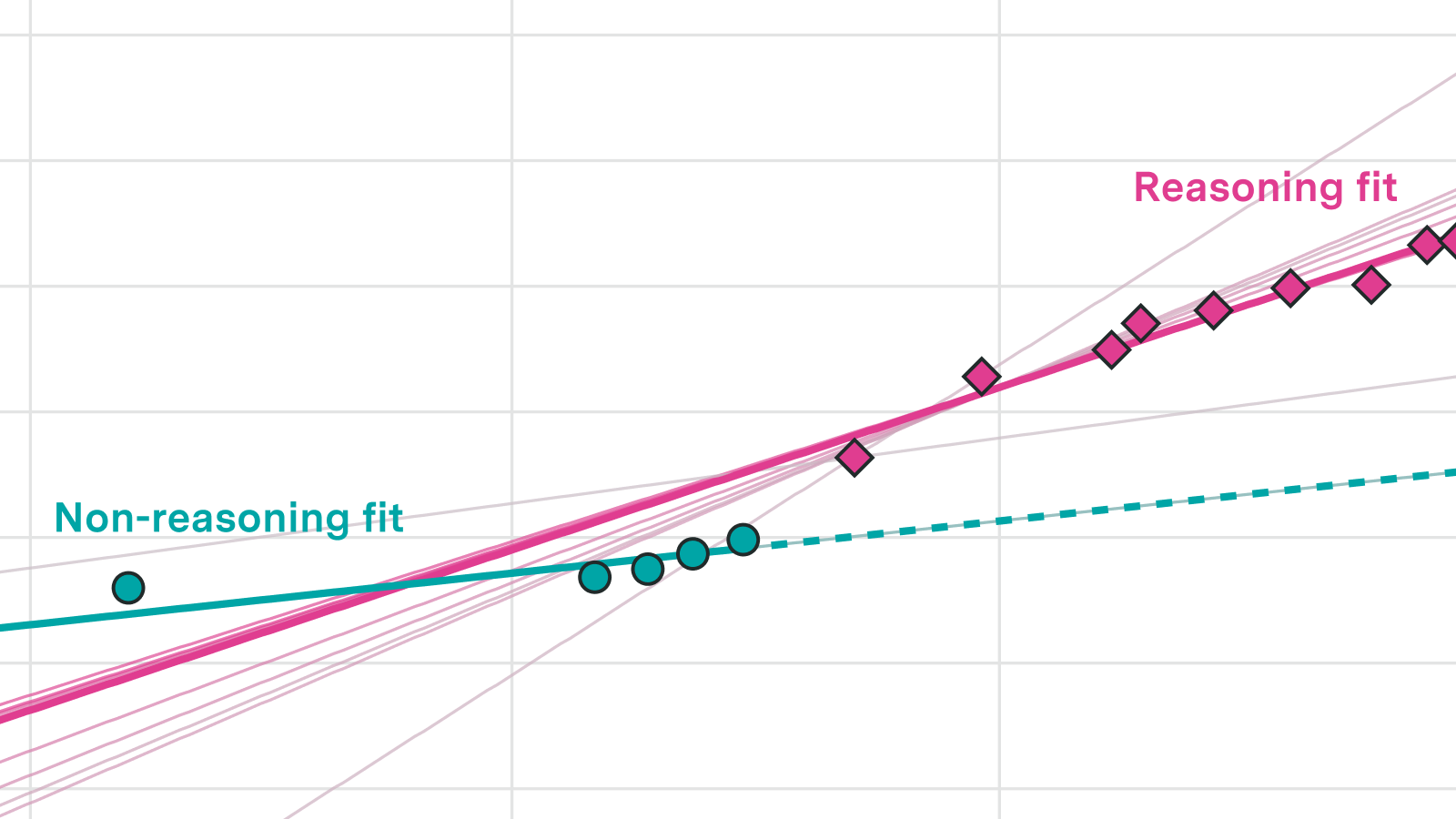
Reasoning models are driving a clear acceleration in AI capabilities
Epoch AI·Have AI Capabilities Accelerated? | Epoch AI - We investigate progress trends on four capability metrics to determine whether AI capabilities have recently accelerated. Three of four metrics show strong evidence of acceleration, driven by reasoning models.
Signals:
- →AI performance metrics show clear acceleration, specifically linked to the emergence of reasoning models.
- →Reasoning-capable models demonstrate a 2-3x faster rate of progress than non-reasoning alternatives.
- →Accelerated growth is currently concentrated in verifiable domains like mathematics and computer programming.

AI scientists show promise but can't escape language's limits
Phys.org·24 May 2026·New 'AI scientists' are improving—but reveal their fundamental limits - Many of the most exciting discoveries in science involve highly specialized knowledge and making connections between far-flung facts. Scientists must combine deep analysis with broad reasoning strategies.
Signals:
- →AI tools accelerate research but currently require human oversight to ensure scientific accuracy.
- →Language-based AI models face fundamental limitations in modeling complex, real-world physical systems.
- →Decision makers must balance AI-driven efficiency gains against risks of fabricated research outputs.
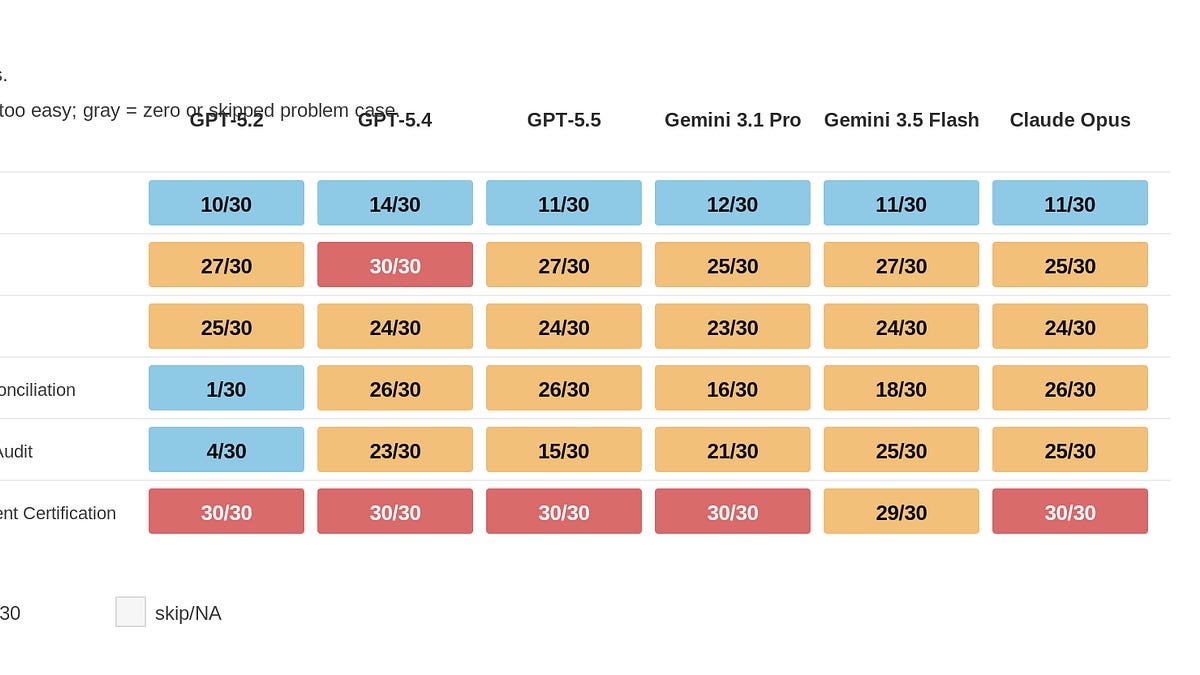
BenchBench challenges AI models to create benchmarks for each other
Signals:
- →BenchBench identifies model limitations in creative task generation versus standard problem-solving.
- →It reveals gaps in AI self-awareness regarding their own performance capabilities.
- →Automated benchmark creation is essential for evaluating rapidly evolving frontier AI models.
Frictionless AI is eroding human critical thinking, researchers warn
arXiv·Cognitive Agency Surrender: Defending Epistemic Sovereignty via Scaffolded AI Friction - Kuangzhe Xu^1∗^ Yu Shen^1^ Longjie Yan^1^ Yinhui Ren^1,∗^
Signals:
- →Frictionless AI interfaces induce cognitive atrophy by bypassing critical analytical reasoning and verification.
- →Multi-agent systems should be repurposed as "cognitive forcing functions" to inject necessary epistemic tension.
- →Decision makers must prioritize "scaffolded friction" to enforce human oversight and ensure cognitive resilience.
ActiveGraph makes AI agents fully replayable and auditable
arXiv·The Log is the AgentOpen source (Apache-2.0): https://github.com/yoheinakajima/activegraph. Install with pip install activegraph and reproduce the worked example with activegraph quickstart. Documentation: https://docs.activegraph.ai. Event-Sourced Reactive Graphs for Auditable, Forkable Agentic Systems - Event-Sourced Reactive Graphs for Auditable, Forkable Agentic Systems
Signals:
- →Event-sourced logs ensure full auditability and deterministic replay of all agentic decisions.
- →Cheap, cached forking enables efficient counterfactual testing without re-executing shared computational history.
- →End-to-end lineage provides verifiable transparency from high-level goals to individual model calls.

Hidden audio attacks can hijack AI voice models undetected
 IEEE Spectrum·17 May 2026·Hidden Signals Can Hijack AI Voice Systems - IEEE Spectrum - New research shows that hidden audio imperceptible to human ears can hijack AI voice tools, highlighting a vulnerability of the underlying models.
Signals:
- →Imperceptible audio attacks can hijack AI models to execute unauthorized, malicious commands.
- →These vulnerabilities affect leading commercial AI voice services, posing significant security risks.
- →Current standard defenses are largely ineffective against these sophisticated, context-agnostic adversarial audio manipulations.
Claude Code plugin automates full academic research pipeline
 GitHub·Imbad0202/academic-research-skills: Academic Research Skills for Claude Code: research → write → review → revise → finalize - Academic Research Skills for Claude Code: research → write → review → revise → finalize - Imbad0202/academic-research-skills
Signals:
- →Provides a structured, human-in-the-loop framework to mitigate AI research hallucinations and errors.
- →Offers automated integrity gates and audit trails to ensure academic rigor and citation accuracy.
- →Enables seamless integration of AI research tools into existing Claude Code development workflows.
🔮[Weak] signals
Consumer Tech

Vivaldi browser challenges Big Tech with privacy-first browsing
Signals:
- →Enhances organizational productivity through advanced tab management, workspaces, and custom workflow automation tools.
- →Prioritizes data privacy and security by eliminating tracking and avoiding invasive data mining.
- →Offers a highly customizable, independent alternative to mainstream browsers for power users.
Chips and Computer Hardware
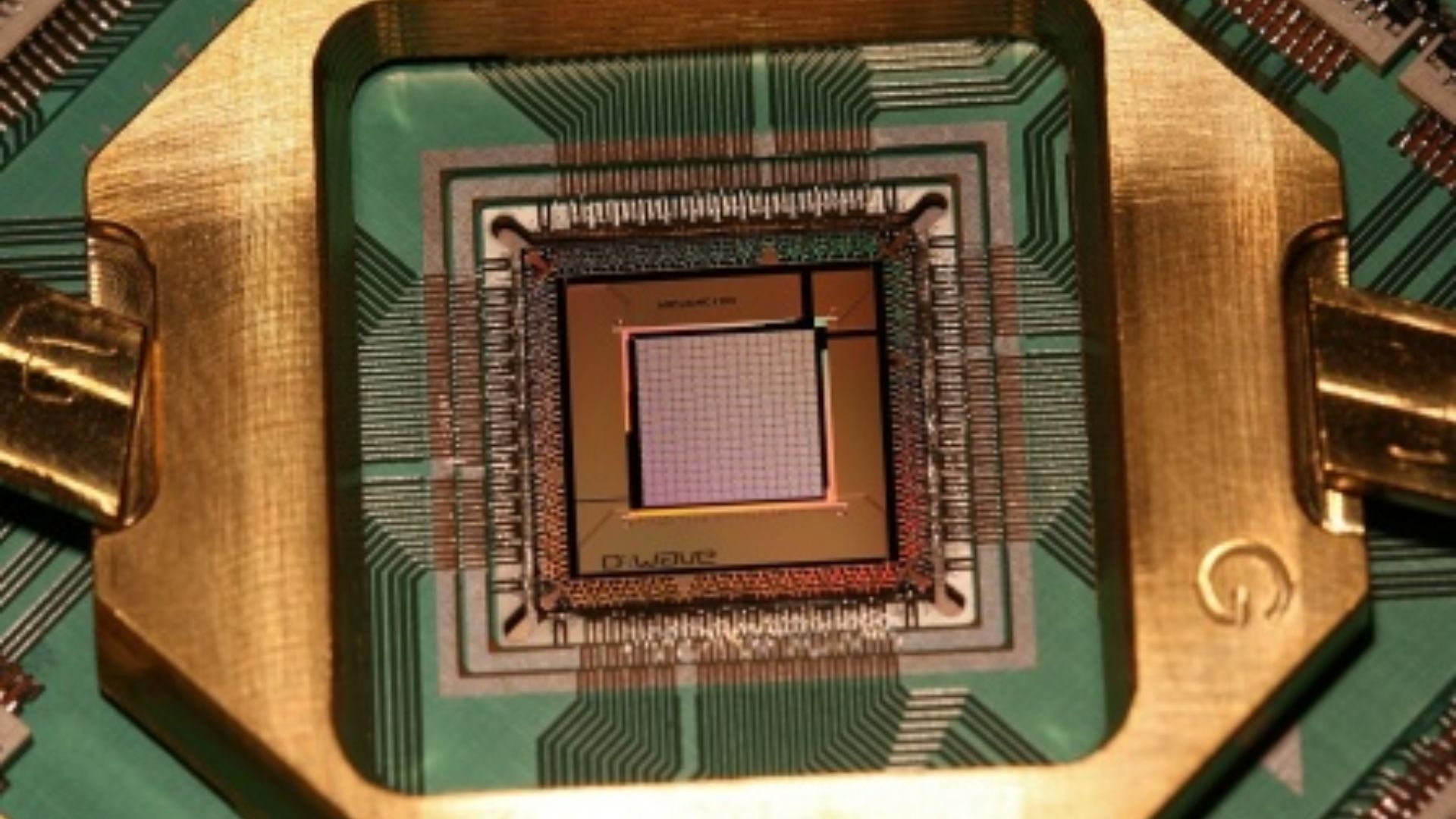
New photonic system switches light using just 4 femtojoules
Interesting Engineering·26 May 2026·Scientists build light-based switch to replace electronic chips - Researchers developed a new photonic device that enables ultrafast optical switching at record-low energy levels.
Signals:
- →Enables faster, energy-efficient computing by replacing electronic signals with light-based processing.
- →Achieves ultralow-energy optical switching, significantly reducing power consumption for future hardware.
- →Utilizes mass-producible materials compatible with existing manufacturing for scalable photonic circuits.
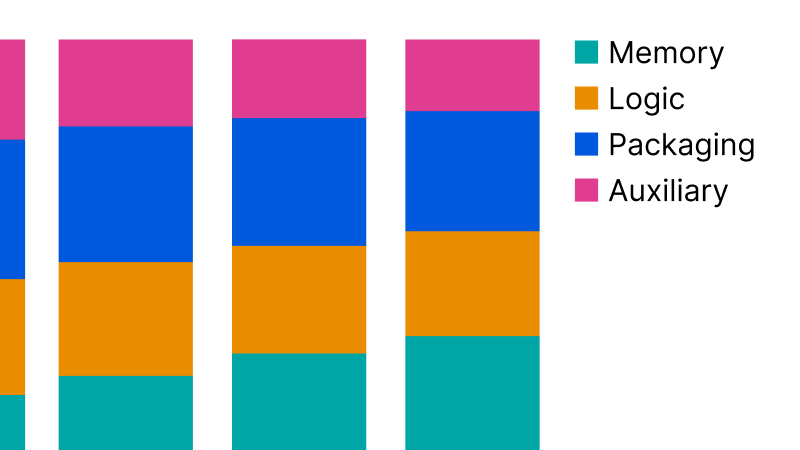
HBM now dominates AI chip costs at 63%, up from 52%
Epoch AI·AI Chip Component Costs: Memory at 63% | Epoch AI | Epoch AI - High-bandwidth memory (HBM) accounts for 63% of AI chip component costs, up from 52% in Q1 2024. Epoch AI's breakdown of component cost shifts across major chip designers.
Signals:
- →High-bandwidth memory now dominates AI chip costs, reaching 63% of total expenditure.
- →Rising memory prices are a primary driver of increased corporate capital expenditure guidance.
- →Supply constraints for HBM are significantly impacting AI hardware production and procurement budgets.
Cloud Computing
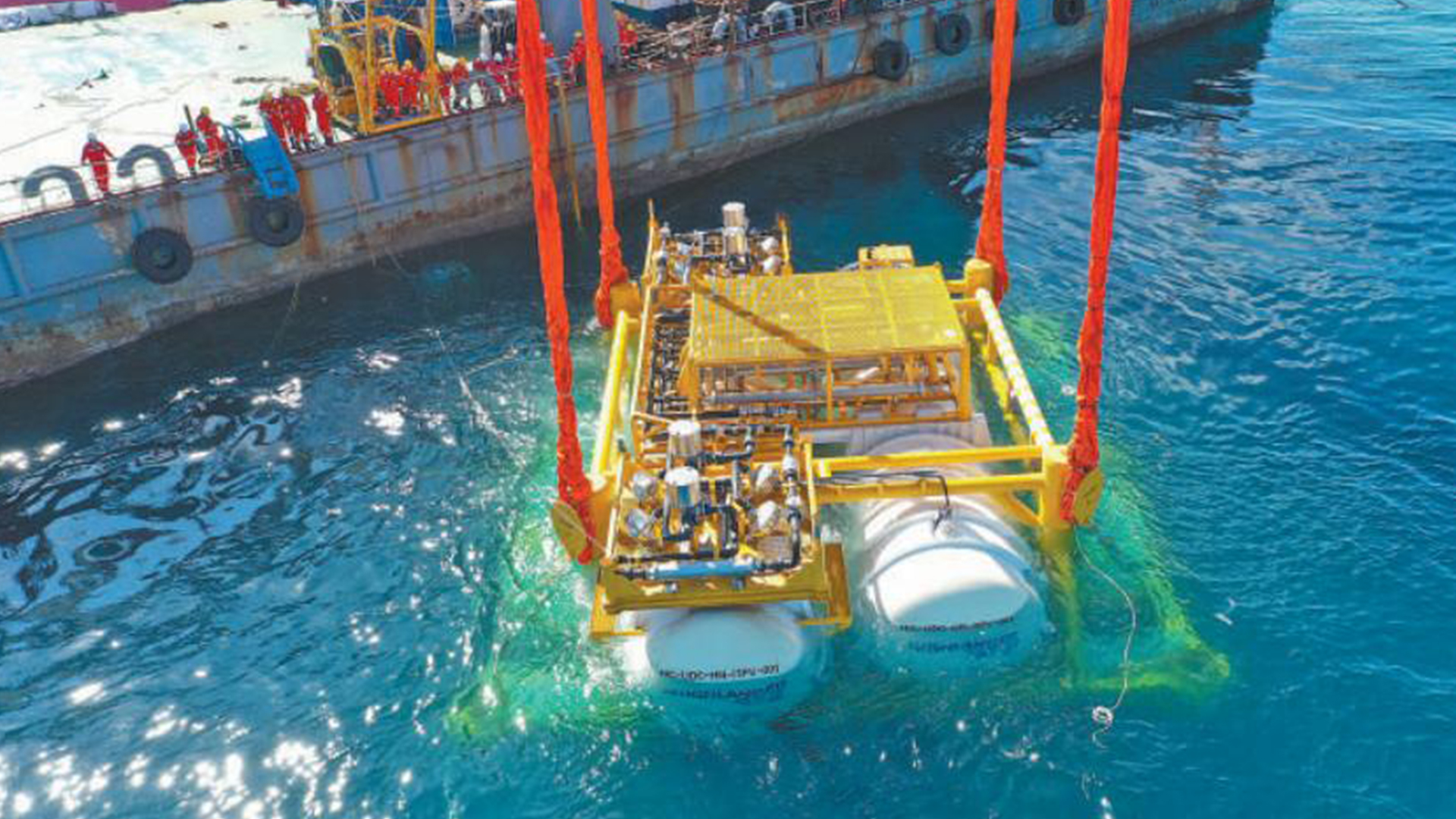
China's wind-powered underwater data center begins full operations
Interesting Engineering·19 May 2026·China activates world's first offshore wind-powered underwater data center - China has deployed the world's first offshore, wind-powered underwater data center that uses seawater cooling to run AI and 5G workloads.
Signals:
- →Underwater cooling significantly improves energy efficiency and reduces operational costs for data centers.
- →Direct integration with offshore wind power provides a sustainable, renewable energy source.
- →Subsea modular designs drastically minimize land usage and freshwater consumption for computing infrastructure.
Cybersecurity

Europol dismantles criminal VPN used by 25 ransomware groups
Arstechnica·22 May 2026·Police boast of hacking VPN where criminals "believed themselves to be safe" - Ars Technica - Law enforcement intercepted VPN traffic, seized domains, and arrested its operator.
Signals:
- →Law enforcement can successfully infiltrate and dismantle VPNs marketed for criminal anonymity.
- →Reliance on "no-log" privacy claims is a significant security risk for organizations.
- →International cooperation is effectively identifying and prosecuting users of illicit digital infrastructure.
Stolen npm credentials defeated Sigstore's entire verification system
Signals:
- →Attackers are bypassing automated provenance checks by using stolen, legitimate developer credentials.
- →Current security stacks fail to detect malicious intent within authorized CI/CD and AI workflows.
- →Organizations must implement multi-party approval and stricter credential governance to mitigate supply-chain risks.

Fast16 malware confirmed to have sabotaged Iran's nuclear weapons tests
Signals:
- →Sophisticated malware can covertly manipulate simulation data to sabotage critical research and development programs.
- →Digital sabotage campaigns can effectively delay nuclear progress by eroding confidence in internal data.
- →High-precision cyberattacks targeting specialized software demonstrate that air-gapped systems remain vulnerable to interference.
Supply Chain Dominoes: TanStack npm Attack Cascades Through Grafana and GitHub
A sprawling supply chain attack orchestrated by threat group TeamPCP has rippled across the developer ecosystem, with Grafana Labs and GitHub itself among the highest-profile casualties. Grafana confirmed on 19 May 2026 that its breach traced back to the TanStack npm supply chain compromise — a missed GitHub workflow token during initial rotation gave attackers access to public and private source code repositories, along with internal collaboration data including business contacts. Crucially, Grafana stressed no customer production systems or Grafana Cloud were affected, and the company refused to pay an extortion demand received on 16 May, reasoning there's no guarantee stolen data would actually be deleted. Meanwhile, GitHub disclosed that an employee's installation of a poisoned VS Code extension allowed TeamPCP to exfiltrate approximately 3,800 internal repositories — a figure GitHub called "directionally consistent" with the group's own claims. TeamPCP listed the data for sale at US$50,000 on cybercrime forums. The group has spent 2026 systematically targeting developer toolchains, previously compromising Aqua Security's Trivy, Checkmarx's KICS, and the LiteLLM Python client, with reported ties to Lapsus$ and the Vect ransomware operation. The twin incidents underscore a sobering reality: developer workstations and CI/CD pipelines now carry the same strategic value as core enterprise infrastructure. As one security expert noted, access to source code, signing certificates, and deployment pipelines can transform a single compromised endpoint into a cascading supply chain event. For every organisation relying on GitHub, the immediate playbook is clear — rotate API keys, audit extensions, and treat upstream tooling as potentially compromised.
3 sources
XR / Spatial Computing

Google's Android XR smart glasses finally challenge Meta's headstart
Signals:
- →Google’s Android XR ecosystem offers superior integration with essential productivity and navigation apps.
- →Advanced Gemini AI capabilities provide more seamless, real-time multilingual translation and contextual assistance.
- →Strategic partnerships with established eyewear brands could accelerate mainstream adoption of smart glasses.
Robotics

Duke's sea urchin-inspired robot moves equally well in all directions
Signals:
- →Dynamic symmetry significantly improves robot robustness, energy efficiency, and performance on difficult terrain.
- →The new mathematical framework allows for standardized scoring and comparison of robotic designs.
- →Omnidirectional capabilities enable superior navigation and resilience in complex, unpredictable real-world environments.

UBTECH's Walker C1 robot dances ballet with human performers
Interesting Engineering·24 May 2026·China's Walker humanoid robot amazes with precise ballet performance - UBTECH demonstates its new Walker C1 robot performing Swan Lake ballet with humans, showing advanced humanoid control.
Signals:
- →Humanoid robots are transitioning from prototypes to large-scale commercial and industrial deployment.
- →Advanced mobility and AI integration enable robots to perform complex, autonomous service tasks.
- →Strategic manufacturing partnerships are scaling production to meet rising global industrial demand.
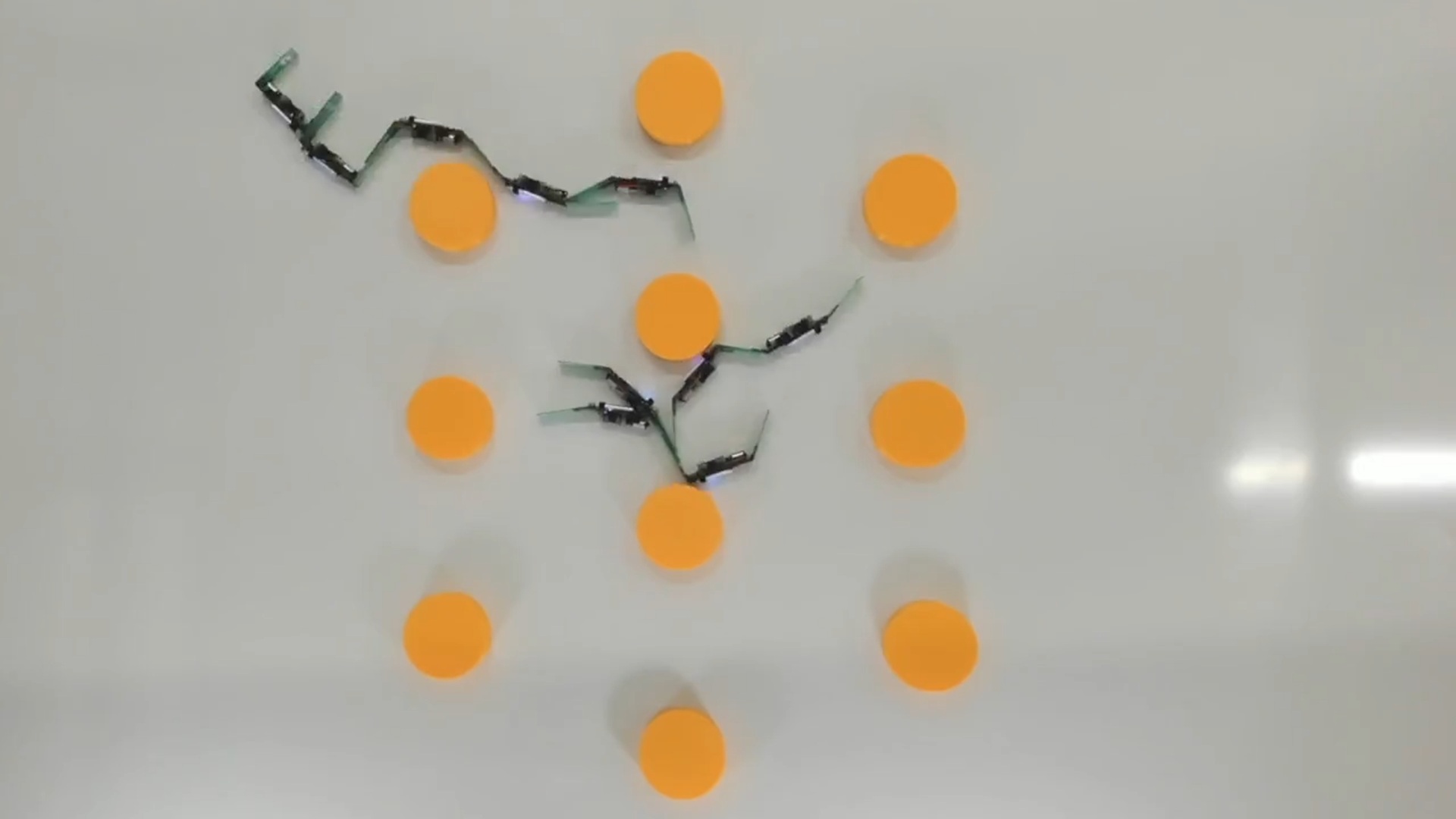
Cornell's Velcro-linked robot swarm moves like living matter
Interesting Engineering·Swarm robots linked by Velcro move together like dynamic living matter - Cornell engineers built robots that flow like materials and adapt without centralized control.
Signals:
- →Decentralized swarms eliminate single points of failure, increasing operational reliability in unpredictable environments.
- →Mechanical intelligence reduces reliance on complex, costly computation and communication infrastructure.
- →Modular, self-organizing systems offer scalable, adaptable solutions for navigating difficult, real-world terrain.

Menlo Research's $15K Asimov humanoid kit embraces 3D printing
Signals:
- →Additive manufacturing significantly lowers production costs for complex humanoid robotics platforms.
- →Modular, 3D-printed designs enable rapid iteration and easier maintenance for developers.
- →Open-source documentation accelerates innovation by democratizing access to advanced robotic hardware.

Hypershell's $2,000 AI exoskeleton boosts hikers' steps in real time
Signals:
- →AI-driven exoskeletons represent a shift toward wearable hardware that physically augments human performance.
- →Real-time motor assistance offers significant potential for labor-intensive industries like search and rescue.
- →Current technical limitations and safety risks necessitate careful evaluation before widespread operational deployment.

Wearable robot helps children with muscular dystrophy stand independently
Panda Daily·26 May 2026·Beihang-MIT Wearable Robot Helps Children with Muscular Dystrophy Stand Independently - Pandaily - A wearable robot developed jointly by Beihang University and MIT, weighing just 0.96 kilograms, has helped six children with muscular dystrophy achieve independent sit-to-stand transitions for the first time, earning a feature as Nature's front-page story.
Signals:
- →Enhances mobility and independence for children with muscular dystrophy.
- →Demonstrates breakthrough innovation in pediatric wearable robotic technology.
- →Offers significant potential for improving long-term patient quality of life.
Autonomy and Drones

REGENT's electric Seagliders can now recharge off-grid in remote areas
Interesting Engineering·19 May 2026·New electric Seaglider charges off-grid to reach remote islands - REGENT Craft has tested off-grid charging for its Seaglider vessels, a move it says could support remote maritime and defense operations.
Signals:
- →Off-grid charging enables maritime operations in remote, infrastructure-poor coastal and military locations.
- →Mobile charging systems reduce reliance on vulnerable, traditional fuel supply chains.
- →Seagliders function as mobile energy platforms, supporting expeditionary power and logistics needs.
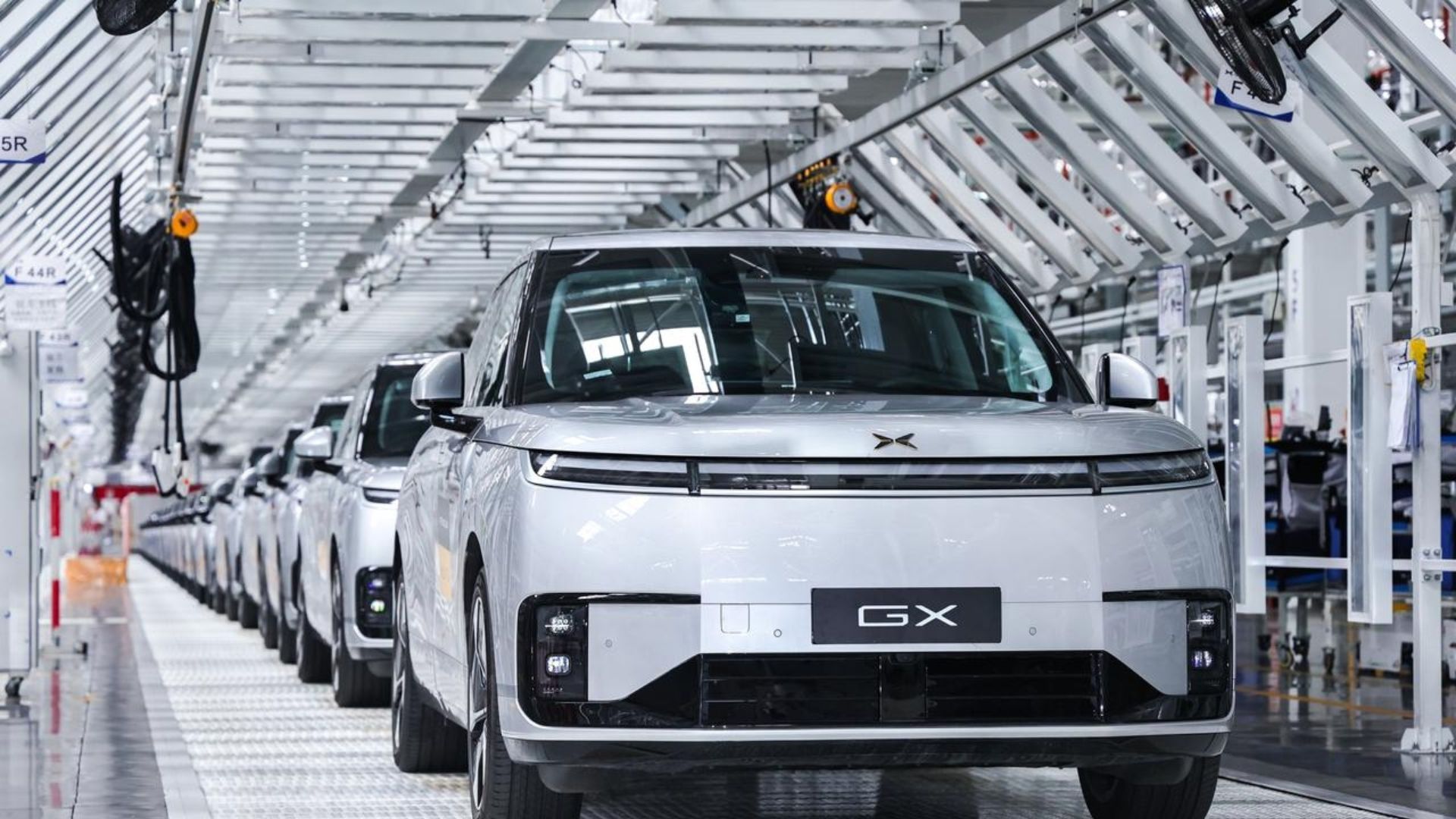
XPENG launches China's first fully in-house production robotaxi
Interesting Engineering·19 May 2026·Xpeng challenges Tesla’s FSD with launch of mass-produced robotaxi - XPENG's newly unveiled Robotaxi is China's first production-ready, pre-assembled L4 autonomous vehicle developed entirely with proprietary, in-house technology.
Signals:
- →In-house manufacturing and proprietary chips significantly reduce reliance on external supply chain dependencies.
- →Pure vision, mapless AI technology enables faster, scalable deployment across diverse urban environments.
- →Full-stack integration accelerates the transition from R&D to commercial, driverless robotaxi operations.

Waymo halts freeway driving over construction zone safety concerns
The Verge·22 May 2026·Waymo suspends freeway driving amid safety concerns | The Verge - The Alphabet company said it was also pausing service in Atlanta and San Antonio over concerns about flooded roads.
Signals:
- →Waymo’s suspension of freeway operations highlights ongoing safety and technical challenges for autonomous vehicles.
- →Regulatory and operational setbacks threaten Waymo’s aggressive expansion and scaling goals.
- →Frequent edge-case incidents necessitate increased oversight and caution for autonomous fleet deployments.

MIT's MIGHTY framework helps drones navigate obstacles in real-time
TechXplore·19 May 2026·Open-source framework lets drones dodge obstacles in milliseconds while minimizing travel time - In the aftermath of a devastating earthquake, unpiloted aerial vehicles (UAVs) could fly through a collapsed building to map the scene, giving rescuers information they need to quickly reach survivors. But this remains an extremely challenging problem for an autonomous robot, which would need to swiftly adjust its trajectory to avoid sudden obstacles while staying on course.
Signals:
- →Open-source framework eliminates high licensing costs for advanced autonomous drone navigation software.
- →Real-time obstacle avoidance improves safety and efficiency for search-and-rescue and industrial inspections.
- →Onboard processing capabilities reduce reliance on external infrastructure, enhancing operational range and reliability.

Waymo suspends service in six cities after flood mishaps
Semafor·25 May 2026·Waymo suspends services in six US cities after flooding | Semafor - Waymo suspended service in six US cities after its driverless cars drove on flooded roads during storms last week.
Signals:
- →Unpredictable weather events pose significant operational risks to autonomous vehicle fleets.
- →Technical failures in complex environments threaten public safety and service reliability.
- →Regulatory scrutiny will likely increase following high-profile autonomous driving incidents.
Military Tech

US-Saudi venture builds Shahed-style combat drones near Riyadh
Semafor·25 May 2026·US-Saudi venture to build Shahed drone clones in Riyadh | Semafor - The made-in-Saudi SKYWASP attack drones are part of a Gulf-wide push to localize military manufacturing.
Signals:
- →Local drone production significantly enhances Saudi Arabia’s regional security and strategic deterrence capabilities.
- →Domestic manufacturing advances the kingdom’s goal to localize 50% of defense spending.
- →Cost-effective drone technology addresses the economic asymmetry of modern aerial warfare threats.
Space
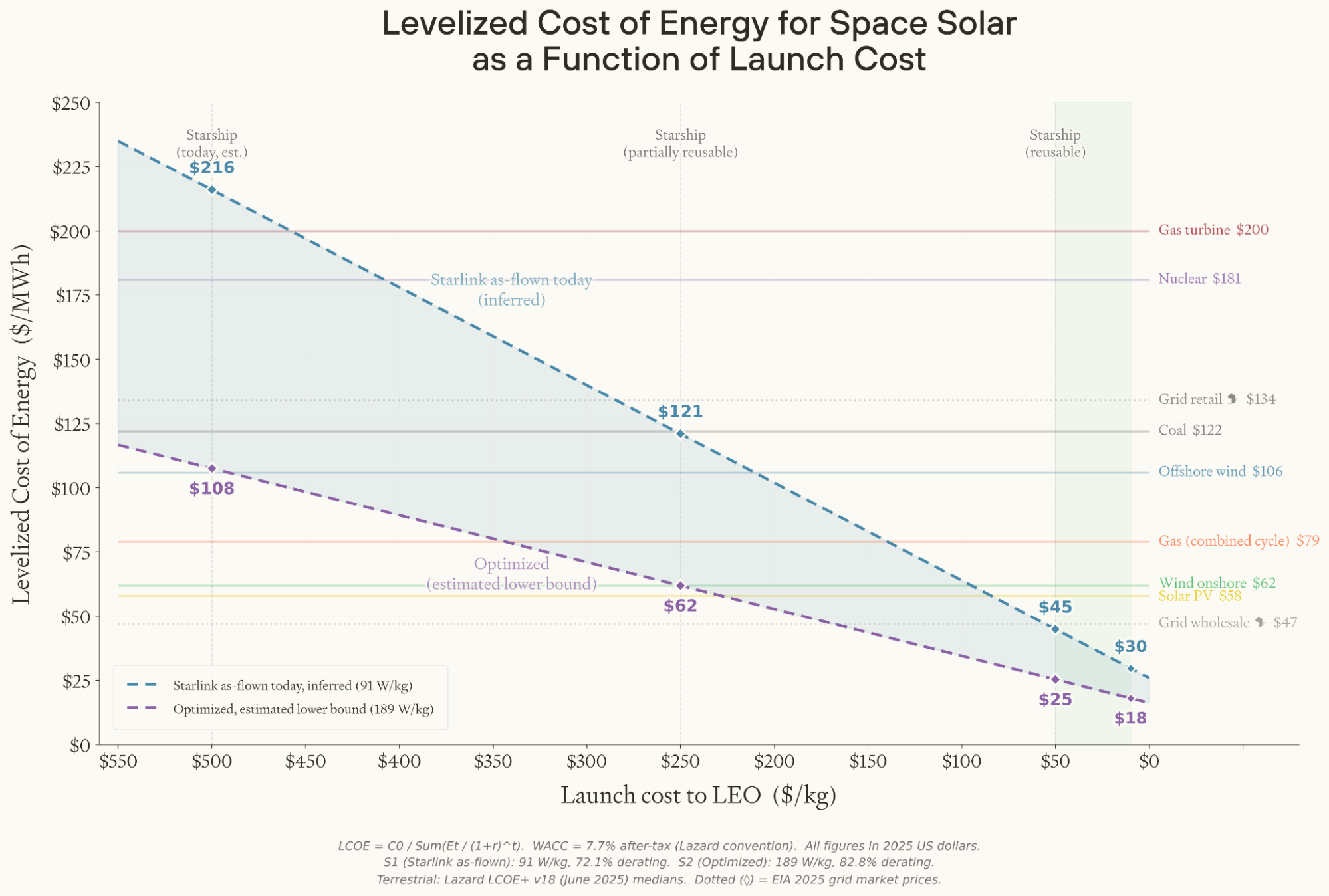
Space data centers could be cost-competitive within 3–5 years
Signals:
- →Orbital data centers become cost-competitive with terrestrial builds if launch costs drop below $100/kg.
- →SpaceX’s Starship is currently the only vehicle capable of achieving the necessary launch cadence.
- →Thermal management and radiation risks appear manageable, but chip failure rates remain a significant uncertainty.

China's Shenzhou-23 docks with Tiangong in moon race push
Phys.org·25 May 2026·China launches crewed space flight as part of moon ambitions - China launched its crewed Shenzhou-23 spacecraft and eased it into a successful docking with a space station early Monday as part of Beijing's ambitions to send humans to the moon by 2030, state media said.
Signals:
- →China is advancing its lunar landing program with a critical year-long orbital mission.
- →The mission tests long-term human health and life-support systems for deep-space exploration.
- →China’s rapid space development intensifies global competition for lunar and deep-space dominance.

Vast Space enters satellite bus market after successful demo mission
Arstechnica·19 May 2026·In addition to space stations, Vast says it will now build high-power satellites - Ars Technica - Every single successful space company is diversified in its products."
Signals:
- →Vast Space’s modular satellite buses offer scalable, cost-effective solutions for diverse orbital missions.
- →Proven space station technology provides a competitive advantage for high-power, demanding satellite applications.
- →Rapidly expanding satellite markets present significant commercial opportunities for diversified aerospace manufacturing firms.
Russia turns to rocket ads as space program struggles financially
Arstechnica·20 May 2026·Russia's plan to advertise on rockets and spacecraft takes off - Ars Technica - We now pause for a word from our sponsors.
Signals:
- →Russian economic contraction and record defense spending signal significant long-term fiscal instability.
- →Sanctions have severely crippled the Russian space sector's commercial viability and launch capacity.
- →New space advertising policies highlight desperate, insufficient efforts to offset state budget deficits.

NASA's Psyche spacecraft uses Mars flyby as asteroid rehearsal
Arstechnica·20 May 2026·NASA's Psyche spacecraft returns unfamiliar views of a familiar world - Ars Technica - As a bonus, it captured Mars images from a rare perspective."
Signals:
- →Validates mission trajectory and navigation precision for long-term deep space exploration.
- →Confirms successful instrument calibration, ensuring data accuracy for future asteroid research.
- →Demonstrates effective use of gravity assists to optimize fuel efficiency and mission success.

NASA's Psyche spacecraft uses Mars gravity for asteroid slingshot
 SciTechDaily·25 May 2026·NASA’s Psyche Spacecraft Just Used Mars as a Giant Slingshot - NASA’s Psyche spacecraft just used Mars as a giant slingshot on its journey to a mysterious metal world that could reveal what’s hidden inside planets like Earth.
Signals:
- →Gravity-assist maneuvers significantly reduce fuel consumption and mission costs for deep space exploration.
- →Successful instrument calibration ensures mission data integrity for high-stakes planetary research investments.
- →Studying metallic asteroids provides critical insights into planetary formation and Earth's internal composition.
Crypto

Tor Project uses crypto to crowdfund internet freedom tools
 CoinTelegraph·Tor Project Launches Web3 Campaign for Internet Freedom - Tor Project’s first Web3 crowdfunding campaign will use quadratic funding and cryptocurrencies to support projects that advance internet freedom.
Signals:
- →The Tor Project is leveraging Web3 to diversify funding for critical privacy infrastructure.
- →Quadratic funding models are emerging as a viable alternative to traditional institutional grants.
- →Rising global internet censorship necessitates decentralized, crypto-funded tools for secure digital communication.

37 European banks unite behind euro stablecoin to rival dollar
Financial Times·20 May 2026·Euro stablecoin project gains backing of 37 banks - Dutch company Qivalis adds 25 new lenders as continent seeks to challenge dollar’s crypto dominance
Signals:
- →Thirty-seven banks are backing a euro stablecoin to challenge US dollar market dominance.
- →Financial institutions are adopting stablecoins to improve settlement efficiency and reduce operational costs.
- →The project aligns with European regulatory concerns regarding monetary sovereignty and dollar dependency.

Hyperliquid adds prediction markets, eyes crypto "super-app" status
CoinTelegraph·Hyperliquid Launches Prediction Markets for Offchain Events - Hyperliquid announced the launch of prediction markets for offchain events, as industry watchers called the platform crypto’s next “super-app.”
Signals:
- →Hyperliquid is evolving into a comprehensive financial super-app beyond perpetual futures trading.
- →Integrated prediction markets increase platform utility and user retention within a single ecosystem.
- →Strong fee generation and revenue distribution highlight the platform's growing institutional-grade market viability.

Polymarket launches prediction markets tied to OpenAI, Anthropic valuations
Signals:
- →Provides real-time market sentiment signals for opaque private company valuations.
- →Democratizes access to private-market momentum for non-accredited retail investors.
- →Establishes a new, liquid data source for tracking private-market milestones.

Quantum computers could crack bitcoin by 2030, crypto firms warn
Financial Times·22 May 2026·Crypto industry braces for quantum computing threat - Threat to code that underpins bitcoin has moved ‘from theoretical to credible’, industry figures warn
Signals:
- →Quantum computing advancements threaten the fundamental security of global cryptocurrency and blockchain infrastructure.
- →Practical quantum threats are accelerating, requiring urgent investment in post-quantum cryptographic security measures.
- →Decentralized assets face unique risks because they lack centralized recovery mechanisms for stolen funds.

Tether and Georgia partner to launch lari-backed stablecoin GELT
CoinTelegraph·25 May 2026·Tether Plans GELT Stablecoin Under Georgia Crypto Rules - The planned lari-linked token comes as Georgia builds stablecoin rules covering reserves, issuer oversight and external verification.
Signals:
- →GELT stablecoin facilitates efficient cross-border commerce and digital payments within Georgia.
- →New regulatory frameworks ensure stablecoin transparency, reserve backing, and consumer protection.
- →Strategic partnerships with Tether advance national digital financial infrastructure and modernization.

Indonesia blocks Polymarket over bets on president's early exit
CoinTelegraph·25 May 2026·Indonesia Blocks Polymarket After Bets on President's Exit - Indonesia blocked Polymarket after bets on Prabowo Subianto’s early exit, describing the platform as an “online gambling site disguised as a prediction market.”
Signals:
- →Governments are increasingly classifying prediction markets as illegal online gambling platforms.
- →Political betting on leadership stability triggers immediate and aggressive regulatory crackdowns.
- →Global expansion faces significant legal hurdles as jurisdictions prioritize national digital security.

Buterin defends Ethereum Foundation's neutrality amid growing criticism
CoinTelegraph·24 May 2026·Buterin Says Ethereum Foundation Is Not the 'Center' of Ethereum - The co-founder of the Ethereum protocol, Vitalik Buterin, responds to critics of the Ethereum Foundation's current role in the ecosystem.
Signals:
- →Foundation prioritizes long-term protocol security over short-term token price performance.
- →Decentralized governance model reduces regulatory risk by avoiding centralized market manipulation.
- →Strategic treasury management ensures research funding longevity despite current market volatility.

MIT's Neha Narula on redesigning money's hidden architecture
Signals:
- →Money is a programmable system, not a natural fact, requiring strategic design choices.
- →Digital assets and CBDCs introduce systemic risks regarding privacy, control, and financial stability.
- →Understanding blockchain infrastructure is essential for managing future risks in global payment systems.
Energy

Offshore floating solar panels outperform land systems by 12%
Interesting Engineering·19 May 2026·Offshore floating solar farms could outperform land-based solar by 12% - Scientists in Taiwan found that offshore floating solar farms can produce 12 percent more electricity than land-based arrays.
Signals:
- →Offshore solar panels generate 12% more electricity due to seawater cooling effects.
- →Floating systems provide a strategic solution for nations with limited land availability.
- →Higher energy yields accelerate progress toward national net-zero carbon emission targets.
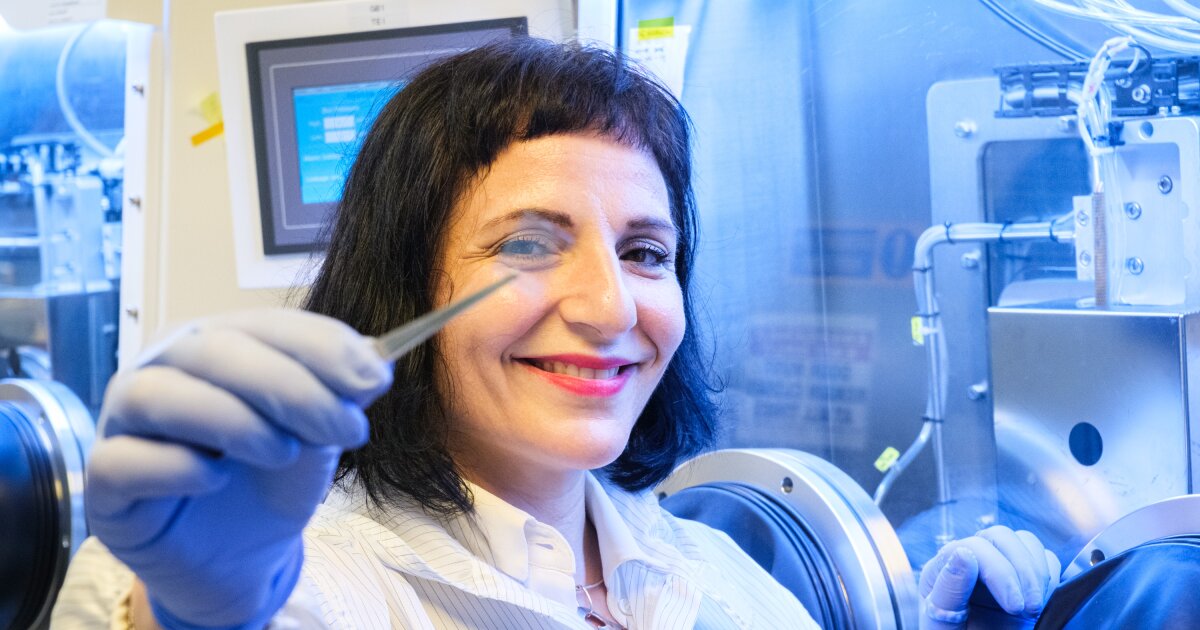
NTU's solar cells thin enough to power windows invisibly
 New Atlas·26 May 2026·Transparent solar cells turn windows into power sources - New transparent solar cells by NTU researchers are ultra-thin, almost invisible, and can be integrated into windows, facades, and more.
Signals:
- →Transforms urban glass facades into active, electricity-generating assets for sustainable building operations.
- →Utilizes scalable vacuum-based manufacturing compatible with existing semiconductor and display industry processes.
- →Enables distributed power generation on windows and vehicles without requiring additional land.
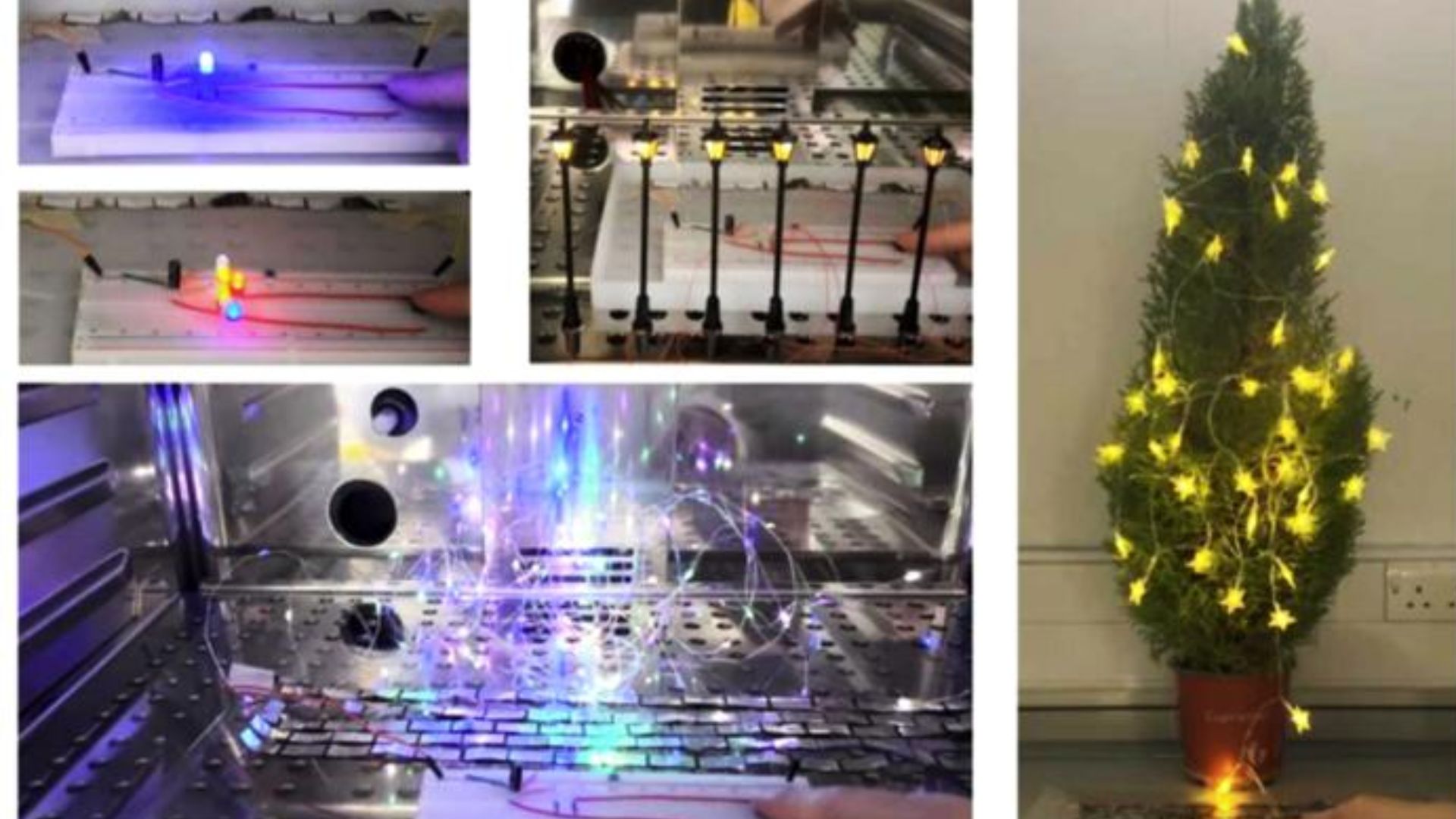
Gelatin and salt device generates electricity from air humidity
Interesting Engineering·New high-performance generator creates stable power from humidity - Researchers developed a biodegradable moisture-electric generator made from salt and gelatin that turns humidity into energy.
Signals:
- →Biodegradable materials offer a sustainable, low-cost alternative to traditional battery-powered electronic sensors.
- →Scalable moisture-electric generators provide continuous, maintenance-free power for remote and wearable devices.
- →The technology supports circular electronics by eliminating hazardous waste through fully compostable components.
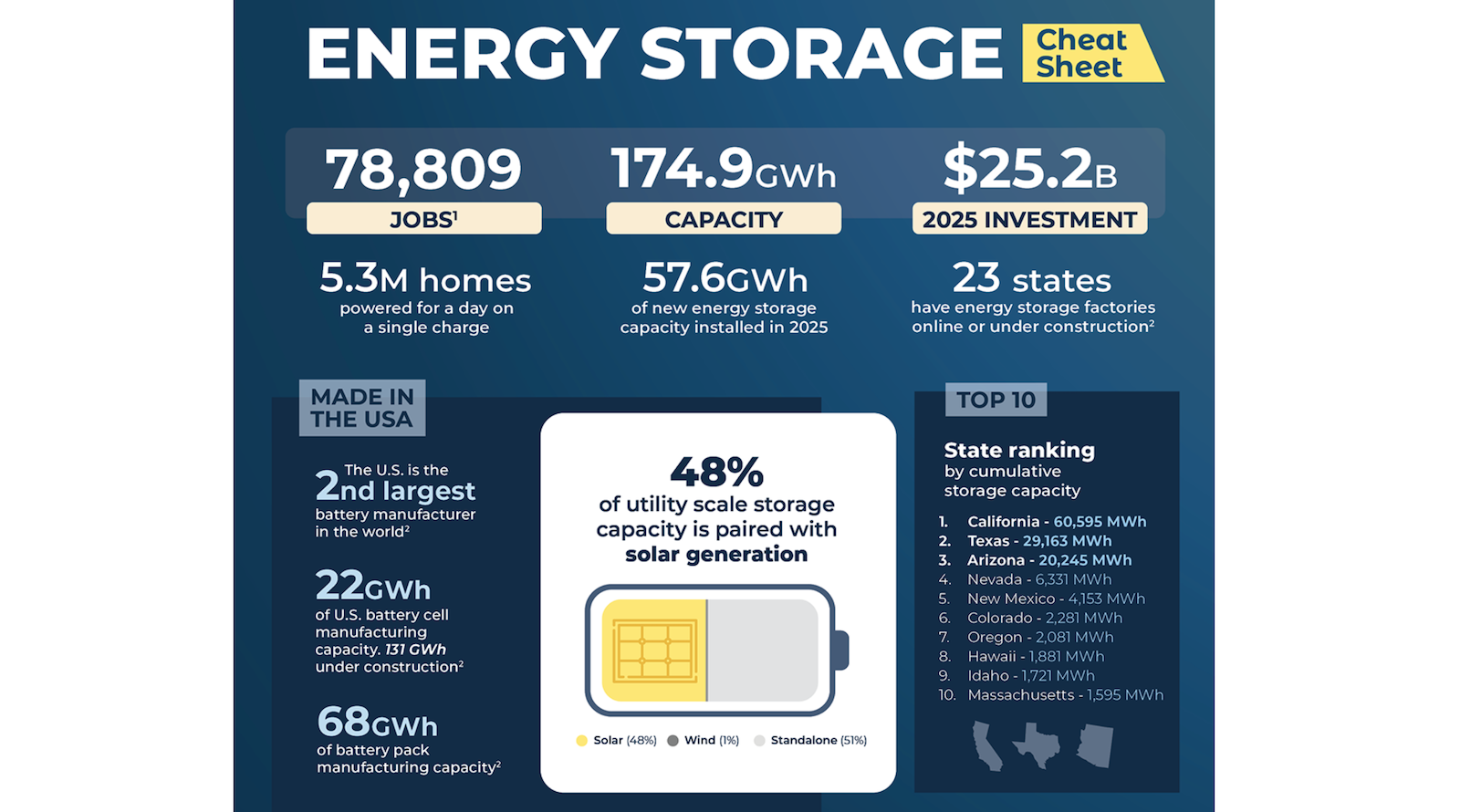
U.S. energy storage hits record Q1 amid war-driven demand surge
 CleanTechnica·24 May 2026·REPORT: U.S. Adds 10 GWh of New Energy Storage Capacity in 1st Quarter, Best Q1 on Record - CleanTechnica - Support CleanTechnica's work through a Substack subscription or on Stripe. As War in Iran Drives Push for Energy Security, Energy Storage Forecast Revised Upwards over Next Five Years WASHINGTON, D.C. — The U.S. energy storage industry installed 9.7 gigawatt-hours (GWh) of new capacity in the first quarter of 2026, the ... [continued]
Signals:
- →Energy storage provides critical insulation against volatile global fuel prices and supply disruptions.
- →Surging demand from AI and data centers necessitates rapid, reliable energy infrastructure expansion.
- →Federal permitting bottlenecks currently threaten grid reliability and national energy security goals.
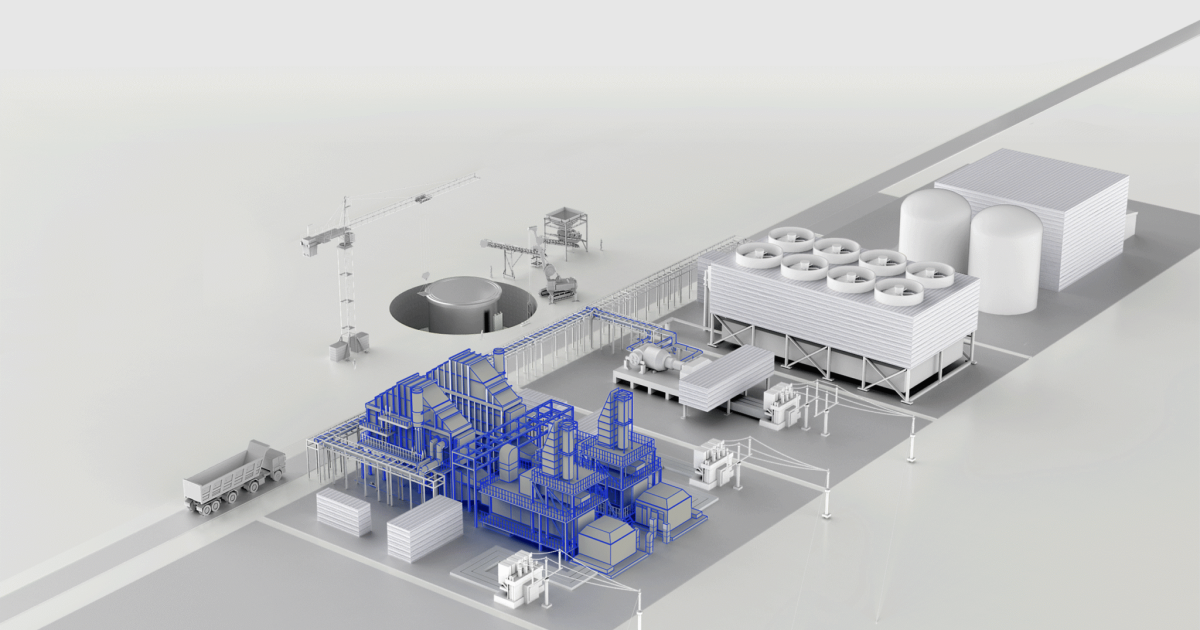
Texas plant combines gas turbines and nuclear SMRs in one facility
New Atlas·24 May 2026·Blue Energy and GE Vernova Unveil 2.5 GW Gas-Plus-Nuclear Plant - Blue Energy partners with GE Vernova for a phased 2.5 GW hybrid facility in Texas. Utilizing BWRX-300 SMRs and 7HA.02 gas turbines to power AI data centres.
Signals:
- →Hybrid design accelerates revenue generation by deploying gas power during nuclear construction.
- →Modular reactor integration significantly reduces traditional nuclear plant construction timelines.
- →Combined systems provide reliable baseload power with flexible, rapid-response capabilities.
Transport
Ferrari Enters the Electric Era with the Luce — and It's Polarising
Ferrari has unveiled the Luce, its first-ever battery-electric vehicle, and it's exactly as controversial as you'd expect. The four-door, five-seat sedan — designed in collaboration with Jony Ive's LoveFrom studio — packs four electric motors producing 1,035 hp, a 122 kWh battery on an 800V architecture, and a targeted WLTP range of 530 km. At 2,260 kg, it's competitive with rivals like the Porsche Taycan Turbo GT and Lucid Air Sapphire, though at €550,000 (roughly US$640,000) you could arguably buy all three competitors for the price of one Luce. The exterior has split opinion sharply — some see echoes of Apple's design language more than Maranello's, while others note it looks considerably better in person than on screen. The interior, however, is drawing near-universal praise: a dash machined from a single piece of brushed aluminium, a physical speedometer needle within layered OLED displays, and gorgeously tactile aluminium air vents. Clever paddle-shifter logic ties regenerative braking to power delivery, mimicking the rhythm of driving a traditional Ferrari through corners. Whether purists embrace it or not, the Luce signals Ferrari's committed bet on an electric future — built entirely on its own terms, with in-house motors and battery packs — targeting delivery in the US by spring 2027.
2 sources
3D Printing

Voltage Vessels 3D prints defense-ready boat hull from volcanic composite
Signals:
- →New composite material offers superior strength and RF transparency for naval defense applications.
- →Scalable 3D printing enables rapid, distributed production of maritime vessels in remote locations.
- →Recyclable material properties support sustainable logistics and circular manufacturing for forward-deployed forces.

Penn State's 3D printed implant lowers blood pressure drug-free
Signals:
- →3D-printed hydrogel implants offer a drug-free alternative for treating resistant hypertension.
- →Flexible, sutureless designs reduce tissue damage compared to traditional rigid medical implants.
- →Additive manufacturing enables personalized bioelectronic devices for improved patient-specific cardiovascular care.
Quantum Tech

Monash's nanoscale chip unifies light-based quantum computing functions
Phys.org·26 May 2026·Tiny on-chip circuit could power next-generation quantum and AI technologies - Researchers from Monash University have developed a breakthrough nanoscale circuit that can generate, direct, and read light-based information, all on a single chip.
Signals:
- →New on-chip circuits enable faster, energy-efficient computing and advanced quantum technology applications.
- →Room-temperature operation eliminates the need for expensive, complex cooling systems in quantum devices.
- →Integrated light-based processing supports scalable, high-precision data handling for next-generation AI systems.
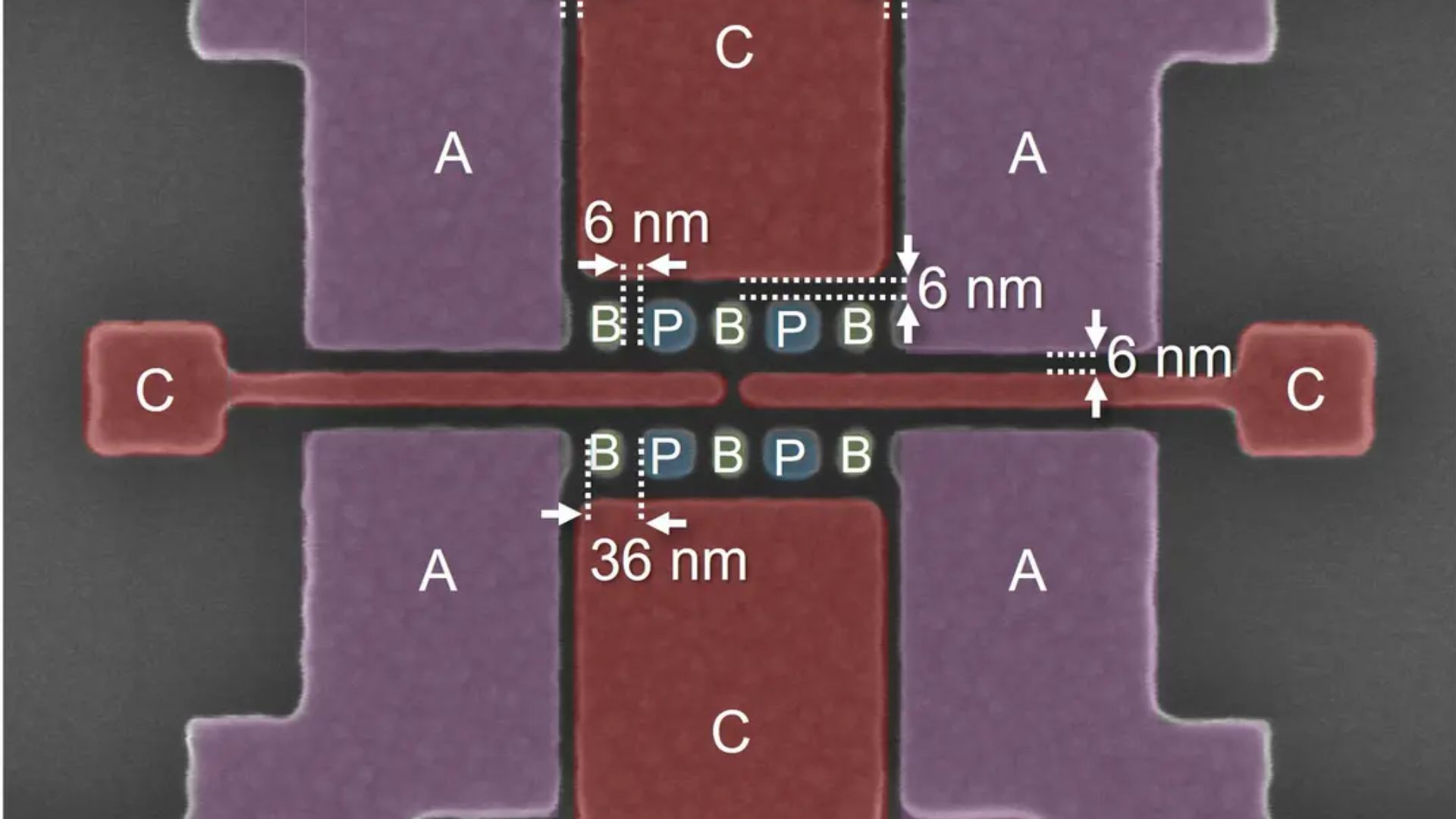
Imec uses High-NA EUV to build scalable quantum dot qubits
Interesting Engineering·26 May 2026·World's first quantum chip uses advanced lithography to scale qubits - Belgian research laboratory leverages advanced technology used by semiconductor fabrication industry for sub2-nm processors build quantum hardware.
Signals:
- →High-NA EUV lithography enables mass-scale production of quantum chips using existing infrastructure.
- →Silicon-based quantum dots significantly accelerate the timeline for commercial quantum computing deployment.
- →Leveraging current fabrication processes reduces the capital investment required for quantum hardware manufacturing.

Laptop beats quantum computer using tensor network math
Phys.org·21 May 2026·Quantum supremacy just ran into an unexpected rival: An ordinary laptop armed with new math - Using a conventional computer and cutting-edge mathematical tools and code, physicists at the Center for Computational Quantum Physics (CCQ) at the Simons Foundation's Flatiron Institute and collaborators at Boston University have cracked a daunting quantum physics problem previously claimed to be solvable only by quantum computers.
Signals:
- →Advanced mathematical techniques allow classical computers to solve complex problems previously requiring quantum hardware.
- →Businesses can achieve high-performance computational results without investing in expensive, specialized quantum infrastructure.
- →Improved classical algorithms provide a cost-effective alternative for simulating quantum systems and materials.
Health Tech

Handheld device detects early cancer from one drop of blood
Interesting Engineering·25 May 2026·Pocket-sized cancer test detects tumors early with 94.9% accuracy - Developed by Westlake University in China, this new technology shrinks refrigerator-sized laboratory equipment into a portable device while boosting detection accuracy.
Signals:
- →Portable, low-cost technology enables early cancer detection outside of specialized laboratory settings.
- →Mass-producible $5 chips significantly reduce diagnostic costs while increasing testing accessibility.
- →Superior sensitivity improves early-stage detection accuracy, enhancing patient outcomes and monitoring capabilities.

Canadian researchers detect melanoma days before it's visible
Interesting Engineering·25 May 2026·New temporary 'intelligent tattoo' uses heat signals to detect cancer - Researchers in Canada developed a microneedle imaging system that detected melanoma just four days after tumors formed.
Signals:
- →Enables early melanoma detection before tumors become visible to the human eye.
- →Improves patient survival rates through highly precise, minimally invasive diagnostic technology.
- →Offers a scalable platform for monitoring diverse biological signals beyond cancer detection.
Bio Tech

Colossal's artificial eggshell could revolutionize bird development research
Arstechnica·20 May 2026·Chickens without eggs? De-extinction company creates artificial egg. - Ars Technica - In the process, Colossal may have handed a useful tool to developmental biology.
Signals:
- →Artificial egg technology enables unprecedented real-time observation of complex vertebrate embryonic development.
- →This innovation facilitates breakthroughs in avian de-extinction and large-scale genetic engineering projects.
- →Open-access availability of this platform offers significant research advantages for biotechnology and developmental biology.

China sends human artificial embryos to space station
Signals:
- →Research assesses if human reproduction is viable for long-term space colonization efforts.
- →Findings identify critical biological risks posed by microgravity and cosmic radiation exposure.
- →Data informs future policy regarding human health and safety in extraterrestrial environments.
Climate Tech

Electricity slashes cement's carbon footprint by 98%
New Atlas·26 May 2026·Electricity cuts cement carbon footprint significantly - New electrochemical process from UBC drastically lowers cement's carbon footprint, using electricity and recycled materials for greener production.
Signals:
- →New electrochemical process reduces cement production thermal energy demand by approximately 70 percent.
- →Integrating recycled concrete as feedstock can lower carbon emissions by nearly 98 percent.
- →Lower operating temperatures and hydrogen byproduct generation offer significant long-term industrial cost savings.

Algae could solve Australia's diesel and aviation fuel crisis
TechXplore·26 May 2026·Many biofuels haven't panned out. Could algae make the clean diesel and aviation fuel Australia needs? - Diesel is critical to Australia. Any supply disruption has immediate and widespread consequences, given Australia imports almost 80% of its liquid fuels. As the energy shocks of the Iran war ripple out, Australia's leaders have scrambled to shore up supplies of fuel—especially diesel and aviation fuel.
Signals:
- →Algae-based fuels offer a scalable, land-efficient solution to improve Australia's critical fuel security.
- →Unlike crop-based biofuels, algae production avoids competing with essential food and water resources.
- →Pilot projects can integrate carbon capture and wastewater treatment to enhance industrial sustainability.
Nanotech

Silver-silicon nanodisk achieves record 37 femtosecond optical modulation
Signals:
- →Breakthrough 37-femtosecond modulation speeds enable next-generation ultrafast photonic computing and optical logic.
- →Bypassing thermal bottlenecks allows for significantly higher performance in high-speed optical switching.
- →High on-off switching ratios provide a reliable foundation for advanced multi-frequency signal processing.
⏳ Zeitgeist
Climate

UN votes on weakened climate resolution backed by Vanuatu
Phys.org·20 May 2026·Pressure mounts at United Nations for climate change 'lifeline' - The United Nations General Assembly on Wednesday considers a resolution reinforcing states' obligations to combat climate change, a long-awaited move toned down under pressure from major greenhouse gas emitters.
Signals:
- →UN resolutions are increasingly establishing legal accountability for national climate change commitments.
- →International courts now recognize state liability for damages, creating significant financial and legal risks.
- →Global pressure to transition from fossil fuels is intensifying, impacting long-term industrial strategy.

India smashes power records amid deadly heat wave
Phys.org·22 May 2026·India generates record power as demand surges in severe heat wave - India's power producers have set a record for electricity generation as swaths of the world's most populous nation swelters in an intense heat wave, the Ministry of Power said.
Signals:
- →Extreme heat waves are driving record-breaking electricity demand across India.
- →Aging infrastructure remains vulnerable to localized blackouts despite increased power generation.
- →Heavy reliance on coal complicates long-term national net-zero emission commitments.

Indonesia's $80B sea wall: climate solution or expensive mistake?
Phys.org·24 May 2026·Indonesia says its giant sea wall will stop flooding. Is this climate adaptation or a costly folly? - Indonesia plans to build a "giant sea wall," more than 500 kilometers long, to defend Java's north coast from rising sea levels.
Signals:
- →Massive infrastructure projects require rigorous cost-benefit analysis to avoid long-term economic and ecological failure.
- →Addressing root causes like land subsidence is essential for effective, sustainable climate adaptation strategies.
- →Ignoring local community engagement and environmental impacts risks significant political instability and project failure.
Biodiversity

Removing rats from Lord Howe Island revives insect populations
Phys.org·25 May 2026·Rodent eradication sparks insect boom on Lord Howe Island - The removal of invasive rodents from Lord Howe Island has triggered a rebound of invertebrate life, with researchers from the University of Sydney and collaborators documenting sharp increases in the abundance of insects and other small animals that underpin the island's ecosystem.
Signals:
- →Rodent eradication significantly boosts invertebrate populations, accelerating broader ecosystem recovery and biodiversity health.
- →Invertebrate monitoring provides essential, cost-effective data for evaluating the success of large-scale conservation interventions.
- →Restoring native food webs supports the long-term sustainability of island-based wildlife and habitats.
Health

No Ebola vaccine exists for virus driving DRC outbreak
Signals:
- →The WHO has declared the Bundibugyo Ebola outbreak a public health emergency of concern.
- →Lack of vaccines, diagnostics, and treatments significantly increases the risk of international spread.
- →Regional conflict and severe funding cuts are critically undermining essential disease containment infrastructure.
Economics
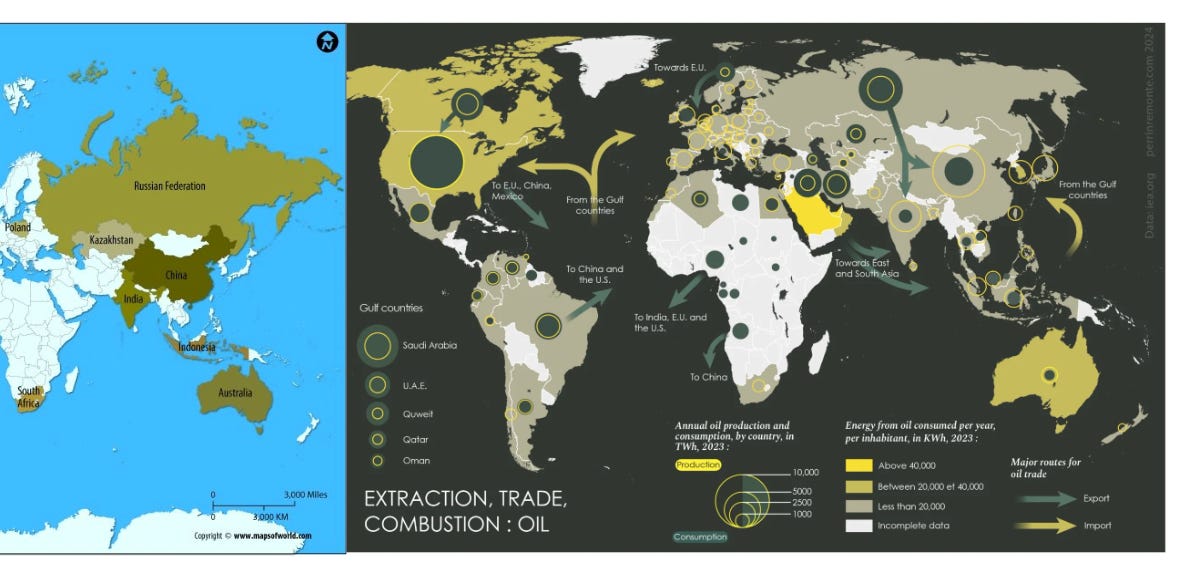
Global supply chains explained: from Hormuz to your dinner plate
Signals:
- →Mapping global supply chains identifies critical vulnerabilities to geopolitical disruptions and resource scarcity.
- →Understanding raw material dependencies is essential for forecasting inflation and operational business risks.
- →Strategic awareness of manufacturing bottlenecks enables better long-term planning for industrial resilience.

Math model warns of population crash by 2064 under crisis scenarios
Phys.org·25 May 2026·New mathematical model predicts global population crash by 2064 - In a new open-access study that I published with my late colleague Kostya Trachenko from Queen Mary University of London, I propose a surprisingly simple nonlinear mathematical equation that unifies 12,000 years of human population growth and points to stark possible futures if global environmental crises intensify.
Signals:
- →New nonlinear model links environmental stability to long-term global population sustainability.
- →Research highlights extreme sensitivity of population levels to sudden resource carrying-capacity drops.
- →Mathematical framework provides a tool for assessing risks of future demographic collapse.
🧠Mind expanding
Wardley maps now render directly in Mermaid via GitHub
GitHub·tractorjuice/wardley-maps-mermaid: Mirror of swardley/WARDLEY-MAP-REPOSITORY with each map rendered as Mermaid wardley-beta alongside the OWM source. 100% component/link retention, |Δε|=0. - Mirror of swardley/WARDLEY-MAP-REPOSITORY with each map rendered as Mermaid wardley-beta alongside the OWM source. 100% component/link retention, |Δε|=0. - tractorjuice/wardley-maps-mermaid
Signals:
- →Enables native rendering of Wardley Maps directly within GitHub and standard documentation tools.
- →Provides 147 high-fidelity, industry-standard strategy maps for immediate organizational analysis and reference.
- →Simplifies strategic visualization by eliminating the need for specialized external mapping software.

Enhanced Games launch: did doping Olympics live up to the hype?
Signals:
- →The Enhanced Games challenge traditional ethical standards regarding human performance and medical safety.
- →Corporate-backed athletic events signal a shift toward normalizing pharmaceutical and technological human enhancement.
- →Decision makers must address the societal risks of prioritizing commercial performance over athlete health.

AI agents could finally make prediction markets useful
Signals:
- →AI agents lower participation costs, enabling accurate forecasting for niche, low-volume decision markets.
- →Automated AI trading allows organizations to leverage internal prediction markets without human behavioral biases.
- →AI-driven private markets enable secure, proprietary data analysis while bypassing traditional organizational gatekeeping.
💭Meme stream

Virtual OS Museum lets you relive computing history for free
Signals:
- →Provides a comprehensive, accessible archive for studying historical computing and operating system evolution.
- →Simplifies legacy software testing by eliminating complex emulator configuration and installation requirements.
- →Offers a valuable educational resource for understanding the technical foundations of modern systems.
Satirical patent mocks Musk's "physics-optional" space data centers
Signals:
- →Highlights the critical risks of prioritizing marketing narratives over fundamental physical constraints.
- →Warns decision makers against ignoring technical realities in high-stakes infrastructure investments.
- →Illustrates how aggressive project timelines can obscure unsustainable engineering and economic models.