Contents /
🗞️Weekly roundup
.jpg?prefix=media%2Farticle-covers)
US-sanctioned crypto wallets may not be Iranian, analyst warns
 CoinTelegraph·2 May 2026·OFAC Said Seized Wallets Were Iranian; Analysis Finds Other State Actors More Likely - Analysis by blockchain intelligence analysts Nominis suggests the $344M wallets seized by OFAC (4/24 announcement) may not be Iranian but linked to other state actors.
Signals:
- →Misattributed sanctions risk undermining the effectiveness of US economic enforcement strategies.
- →Evolving state-actor tactics require moving beyond static compliance to behavioral analysis.
- →Potential overlap with other foreign networks complicates international financial risk assessments.

Workshop explores civilization's future after AGI arrives
Signals:
- →Identifies critical risks and stability challenges posed by post-AGI societal shifts.
- →Provides interdisciplinary frameworks for adapting political and economic systems to AGI.
- →Offers strategic foresight for navigating long-term civilizational transitions and alignment.
🌟Picks of the week
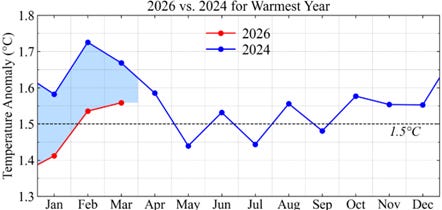
2026 on track to be Earth's hottest year ever, scientists predict

Signals:
- →Accelerated global warming is outpacing IPCC projections due to higher climate sensitivity estimates.
- →Earth’s energy imbalance has doubled since 2015, signaling sustained, rapid warming trends.
- →2026 is projected to be the warmest year on record, necessitating urgent planning.
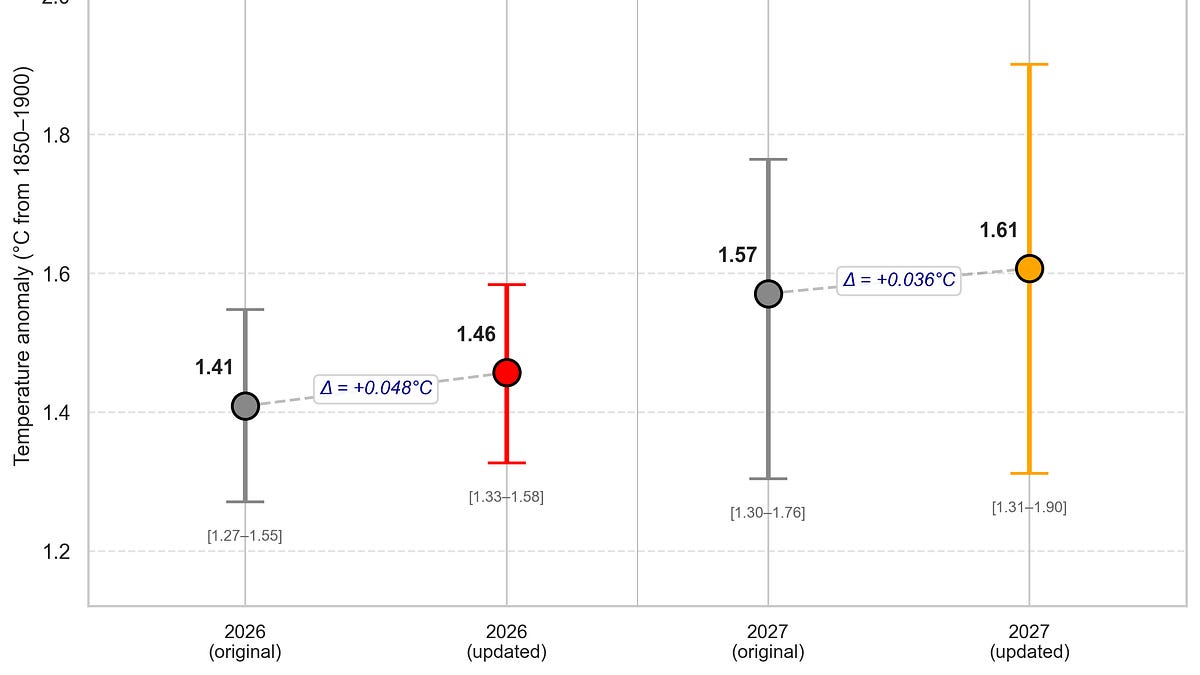
2027 likely to be warmest year on record, models predict
Signals:
- →Rising global temperature projections for 2026 and 2027 signal increased climate-related operational risks.
- →A developing "super" El Niño event significantly elevates the probability of exceeding 1.5°C.
- →Updated modeling suggests 2027 is highly likely to become the warmest year on record.
Climate tipping points pose existential risks, actuaries warn
 Institute and Faculty of Actuaries·Planetary Solvency: Tipping into the wild unknown - A new report from the IFoA and Anglia Ruskin University warns that biodiversity loss, climate shocks and geopolitical conflict are disrupting the food system, risking catastrophic impacts for the financial system and for society as a whole.
Signals:
- →Climate tipping points create systemic financial risks beyond traditional actuarial models.
- →Early intervention is essential to prevent irreversible economic and ecological collapse.
- →Decision makers must integrate planetary boundaries into long-term solvency strategies.
China Sets Legal Precedent: AI Replacement Alone Isn't Grounds for Firing Workers
The Hangzhou Intermediate People's Court has delivered a landmark ruling that could reshape how companies worldwide think about AI-driven layoffs. In a case involving a quality assurance supervisor named Zhou — who earned ¥25,000 (roughly US$3,655) monthly monitoring AI model outputs — the court found that his employer couldn't legally demote him with a 40% pay cut or fire him simply because an AI system could now do his job. The crux: AI automation is a *voluntary business decision*, not an unforeseeable "major change in objective circumstances" under China's Labour Contract Law, and therefore doesn't automatically justify contract termination. This follows a similar December 2025 Beijing ruling involving an automated map data collector, establishing a clear pattern in Chinese jurisprudence — companies that adopt AI must bear the transition costs rather than shifting technological risk entirely onto workers. Legal scholars emphasise that employers must negotiate, retrain, and offer reasonable reassignments before reaching for the redundancy lever. With China's core AI industry exceeding ¥1.2 trillion in 2025 and over 6,200 AI enterprises operating nationally, the stakes are enormous. The contrast with the US approach is striking. While Meta, Amazon, and Block frame AI-driven layoffs as efficiency plays that reliably boost share prices, China is drawing a legal line in the sand. Whether Western courts follow suit remains an open question, but the ruling sends an unmistakable signal: technological progress doesn't exist outside a legal framework, and new tech isn't a magic "fire everyone" card.
2 sources · View on Substack

Beijing bans drone sales, storage amid nationwide crackdown
 Arstechnica·30 April 2026·Beijing bans drone sales even as rest of world buys Chinese drones - Ars Technica - Beijing's citywide ban restricts the sale, transport, and storage of drones.
Signals:
- →Beijing’s comprehensive drone lifecycle ban signals a shift toward stricter, preventive regulatory models.
- →New restrictions on sales and storage create significant operational hurdles for local businesses.
- →Standardized Chinese regulations may increase industry predictability despite current localized market disruptions.

FAA drops sweeping drone no-fly zones after First Amendment lawsuit
Arstechnica·28 April 2026·Drone pilot makes US rescind no-fly zones around unmarked, moving ICE vehicles - Ars Technica - Civil liberty concerns spur FAA to revise drone no-fly zones near ICE vehicles.
Signals:
- →Ambiguous federal flight restrictions create significant legal risks for commercial drone operators.
- →Overbroad airspace policies threaten First Amendment rights by chilling journalistic documentation of government.
- →Lack of clear compliance standards for mobile federal assets complicates legal drone operations.
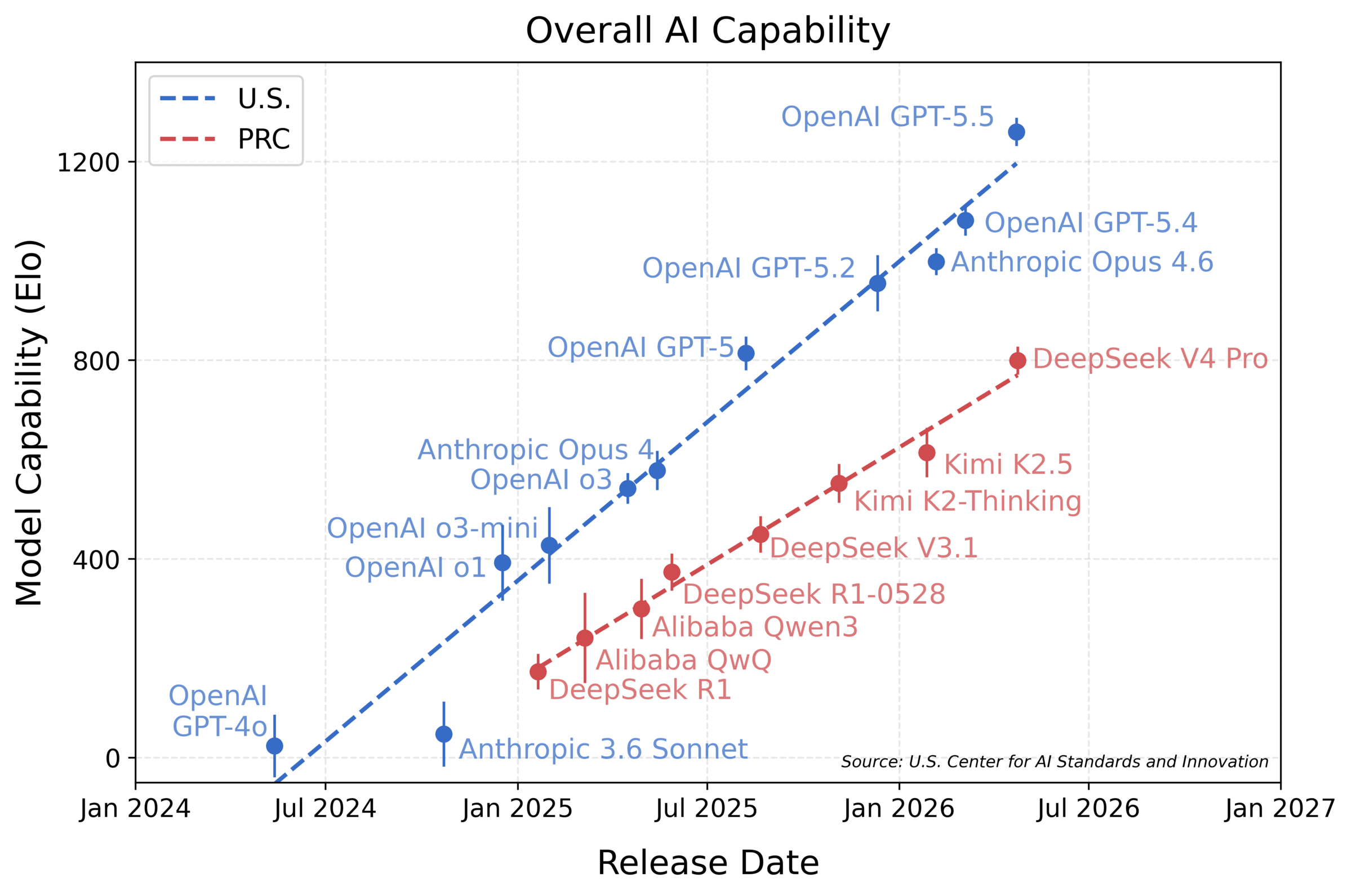
NIST finds DeepSeek V4 Pro trails U.S. AI by 8 months
Signals:
- →DeepSeek V4 Pro is the most capable PRC AI model evaluated to date.
- →PRC AI capabilities currently lag behind leading U.S. frontier models by eight months.
- →DeepSeek V4 Pro offers high-performance AI capabilities at a highly competitive cost structure.

Trump reverses course, eyes government vetting of AI models
Signals:
- →Administration shift signals potential new regulatory hurdles for AI model releases.
- →Proposed government vetting processes could significantly impact AI development timelines and costs.
- →Future executive orders may mandate safety standards for all new AI technologies.

Pro-AI dark money group pays influencers to spread anti-China messaging
Signals:
- →Industry-funded dark money groups are using influencers to shape public AI policy.
- →Undisclosed political messaging on social media undermines transparency and democratic discourse.
- →Strategic campaigns are leveraging geopolitical fears to influence domestic AI regulatory frameworks.

Global survey reveals what people really want from AI wealth
Signals:
- →Public preference favors meaningful work over guaranteed income to maintain identity and social purpose.
- →Widespread distrust in government necessitates new, independent institutions for managing AI wealth distribution.
- →Global consensus views AI wealth as a collective inheritance rather than compensation for displacement.

AI automation may reduce most humans to "redundant biomass"
Signals:
- →Rapid AI advancement threatens to render human labor economically redundant and politically powerless.
- →Geopolitical competition and market incentives make total automation an inevitable, overdetermined economic outcome.
- →Leaders must address the erosion of human civic standing caused by structural technological displacement.

AI will boost employment, not shrink it, Apollo economist argues
Signals:
- →AI adoption lowers service costs, expanding market demand and total industry employment.
- →Lowered barriers to entry are driving record levels of new business creation.
- →AI increases overall productivity and employment rather than displacing human knowledge workers.

Stack thinking could modernize governments' outdated pyramid structures
Signals:
- →Stack-based architectures enable governments to replace rigid, 19th-century hierarchies with flexible, modular systems.
- →Standardized digital layers allow for faster innovation, improved resilience, and better AI integration.
- →Adopting stack thinking reduces reliance on proprietary vendors, ensuring greater digital sovereignty and efficiency.

AI is replacing traditional UIs with on-demand "disposable" interfaces
Signals:
- →Shift focus from static user interfaces to API-first, agent-compatible software architectures.
- →Prioritize building robust data and model capabilities over traditional visual interface design.
- →Prepare for autonomous systems that generate "just-in-time" interfaces for human-agent collaboration.
New framework brings real-time AI governance to financial services
Signals:
- →Agentic AI risks arise from execution trajectories, rendering traditional static model validation insufficient.
- →Capability-based decomposition enables scalable, reusable governance across diverse financial AI workflows.
- →Runtime governance provides deterministic, real-time policy enforcement and containment for autonomous agentic systems.

Build a working AI agent from scratch in under 60 minutes
Signals:
- →Demystifies AI agent architecture to reduce reliance on complex, opaque third-party frameworks.
- →Provides a practical design framework to prevent costly, failed AI development projects.
- →Offers essential insights into operational costs, token management, and real-world failure modes.
📈The week in AI and Tech
Governance and Policy

AI's centralized design threatens democracy in ways the internet never did
Signals:
- →AI’s centralized architecture threatens democratic agency by replacing human deliberation with behavioral optimization.
- →Current AI systems prioritize administrative efficiency, potentially rendering independent thought and dissent socially obsolete.
- →Decision makers must mandate interoperability and human-rights-based governance to preserve individual autonomy and accountability.

Platforms must reveal how AI algorithms shape your news feed
 The Conversation·28 April 2026·AI decides what we see online. It’s time digital platforms tell us exactly how they do it - The rapid spread of AI has pushed an already fragile news ecosystem closer to breaking point.
Signals:
- →Opaque AI algorithms controlling news visibility threaten informed decision-making and public trust.
- →Mandatory transparency rules for platforms could reshape regulatory and compliance strategies significantly.
- →AI's free use of journalism content raises urgent copyright and fair compensation policy issues.
Regulation

China freezes robotaxi licenses after Baidu traffic chaos
 The Verge·29 April 2026·China freezes new robotaxi licenses after Baidu chaos | The Verge - Dozens of Baidu’s Apollo Go robotaxis froze in traffic last month, sparking alarm in Beijing, Bloomberg reports.
Signals:
- →Regulatory freezes on robotaxi licenses signal increased scrutiny of autonomous vehicle safety.
- →Operational failures in public traffic create significant risks for autonomous fleet expansion.
- →Government intervention highlights the need for stricter oversight in emerging AI transportation.

EU approves open-source age verification app to protect children online

Signals:
- →Standardized age verification tools simplify compliance with strict EU digital safety regulations.
- →Privacy-preserving open source technology reduces data liability and security risks for platforms.
- →Integration with national digital wallets streamlines user authentication across European markets.

EU's age-verification app faces rejection from member states
Signals:
- →Member states reject the EU age-verification app due to security and privacy concerns.
- →National governments prefer developing their own independent digital identity and verification solutions.
- →Fragmented adoption strategies complicate the EU's goal of unified online safety standards.

Kids outsmart age verification with VPNs, fake mustaches, and parents
Signals:
- →Current age verification technologies are easily bypassed by minors using simple workarounds.
- →Regulatory attempts to enforce age restrictions often drive increased VPN usage and privacy risks.
- →Ineffective digital mandates create significant compliance challenges and unintended consequences for online platforms.

Australia forces Google, Meta, TikTok to pay news outlets or face tax
Signals:
- →New legislation forces tech giants to fund journalism or pay revenue-based taxes.
- →Global firms face increased regulatory pressure and financial liability for platform content.
- →Australia’s aggressive policy sets a precedent for international digital platform taxation models.

Developing countries pass AI laws with no way to enforce them
 Phys.org·Developing countries are writing AI laws they cannot enforce - Imagine that a government builds a five-star airport without any roads leading to it. The terminal is immaculate, the runway is regulation length—but there is simply no way to get there.
Signals:
- →Unenforced AI laws create false security, misleading citizens and investors about actual protections.
- →Corporate influence in policy drafting creates conflicts of interest disguised as collaboration.
- →Foundational infrastructure—data systems, trained staff, funding—must precede comprehensive AI regulation.
Security

Five Eyes agencies urge caution in agentic AI adoption
Signals:
- →Agentic AI expands attack surfaces, creating significant risks for critical infrastructure and operations.
- →Organizations must prioritize system resilience and human oversight over rapid productivity gains.
- →Current security standards are immature; assume autonomous systems will behave unexpectedly during deployment.

GPT-5.5 matches Anthropic's "too dangerous to release" Mythos model
Arstechnica·1 May 2026·Amid Mythos' hyped cybersecurity prowess, researchers find GPT-5.5 is just as good - Ars Technica - New results suggest Mythos' cyber threat isn't "a breakthrough specific to one model."
Signals:
- →Frontier AI models now demonstrate significant, autonomous cyber-offensive capabilities.
- →Cybersecurity risks are systemic, not unique to any single AI provider.
- →Organizations must prepare for advanced, automated threats to critical infrastructure.
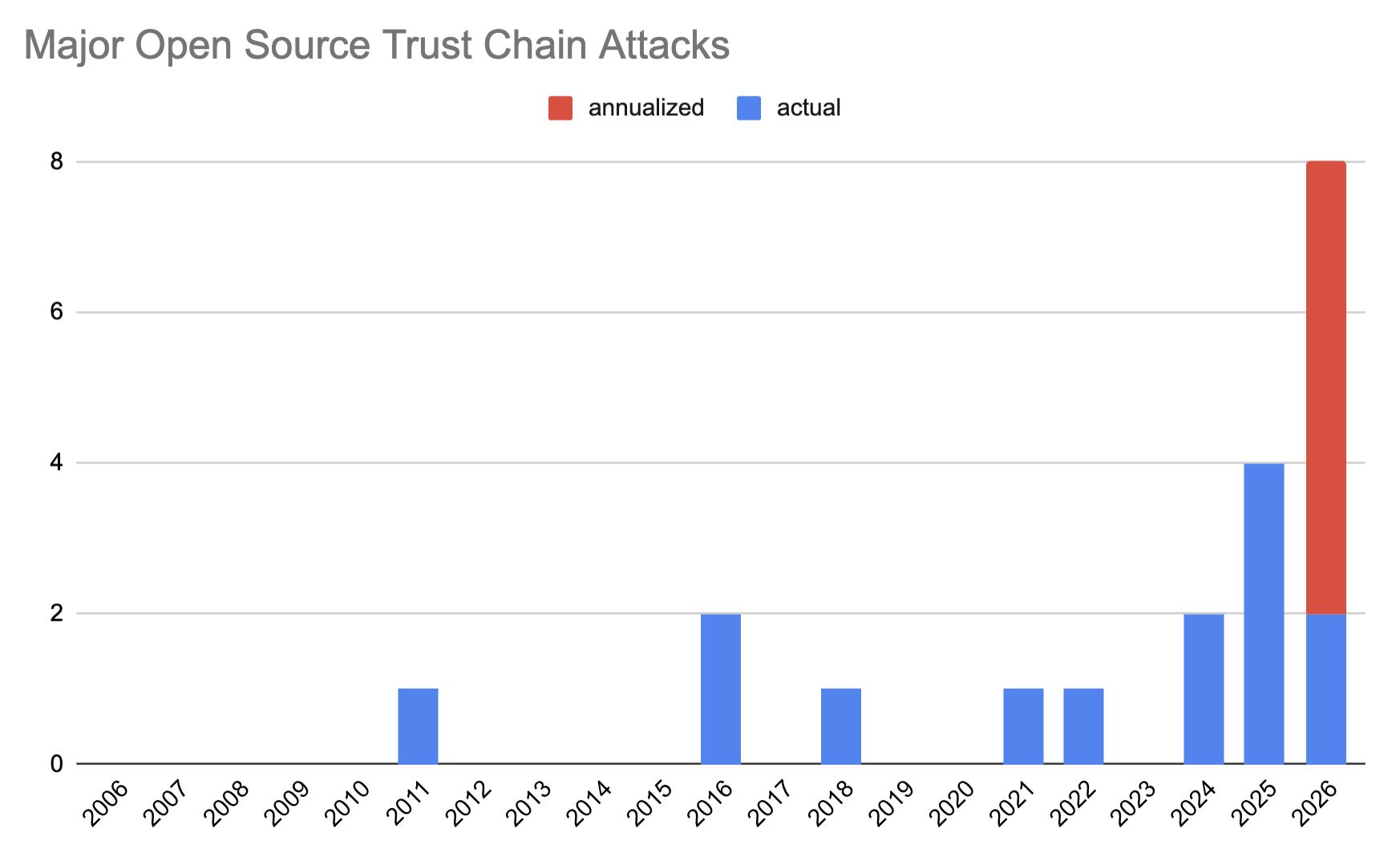
AI-fueled supply chain attacks surge, but defenders gain ground
Signals:
- →AI-driven supply chain attacks are increasing in frequency and sophistication.
- →Advanced AI models are successfully identifying long-standing, high-severity software vulnerabilities.
- →Automated security tools and AI-assisted code reviews offer new defensive advantages.
Law

Supreme Court to rule on police use of geofence warrants
The Verge·28 April 2026·Can cops use digital dragnets to track you? | The Verge - Chatrie v. United States, the Supreme Court’s first major Fourth Amendment case since 2018, will determine the legality of controversial ‘geofence warrants.’
Signals:
- →The Supreme Court is deciding if geofence warrants violate Fourth Amendment privacy protections.
- →A ruling will define legal standards for police access to third-party digital data.
- →The decision impacts how companies must handle user location and personal information requests.
Government

English councils trial Google AI to speed up planning approvals
 Financial Times·2 May 2026·English councils to trial Google AI tool to speed up planning decisions - Artificial intelligence will make recommendations on whether to grant or refuse projects
Signals:
- →AI integration aims to halve planning decision times to accelerate national housing targets.
- →Automated tools help councils manage rising workloads and process complex technical planning data.
- →Implementation risks include potential bias and reduced public trust in automated decision-making processes.
The Pentagon Goes All-In on AI — With Everyone Except Anthropic
The US Department of Defense has signed classified AI agreements with seven major tech companies — OpenAI, Google, Microsoft, Amazon Web Services, Nvidia, SpaceX/xAI, and startup Reflection AI — while pointedly excluding Anthropic, which it designated a "supply-chain risk" after the company refused to grant unrestricted military access to its models. Anthropic's red lines around domestic mass surveillance and fully autonomous weapons proved unacceptable to Defence Secretary Pete Hegseth, who called CEO Dario Amodei an "ideological lunatic" during congressional testimony. The company is now fighting the designation in court and has won a temporary injunction. The deals span proprietary models (OpenAI, Google), open-source systems (Nvidia's Nemotron, Reflection AI), and cloud infrastructure (Microsoft, AWS), all deployable on IL6/IL7 classified networks. Pentagon CTO Emil Michael framed open-source adoption as a strategic counter to Chinese AI models proliferating globally. Google's agreement includes non-binding language against surveillance and autonomous weapons use — though over 950 employees signed an open letter urging the company to walk away. Ironically, the Pentagon still wants access to Anthropic's unreleased Mythos model, which excels at discovering zero-day cyber vulnerabilities, creating an awkward dynamic where the government simultaneously bars and courts the same company. This moment crystallises a fundamental tension in AI governance: who gets to set the ethical boundaries for military AI — the companies building it, or the governments deploying it? The Pentagon's answer is unambiguous, and the speed at which competitors rushed to fill Anthropic's void suggests the market has answered too.
7 sources
Sovereignty and Geopolitics

China outlines five AI priorities at Digital China Summit
Signals:
- →China prioritizes AI-driven digital transformation as a core national modernization strategy.
- →Government policy mandates independent innovation and "AI+" integration into the real economy.
- →Regulatory focus emphasizes balancing rapid technological development with security and global cooperation.
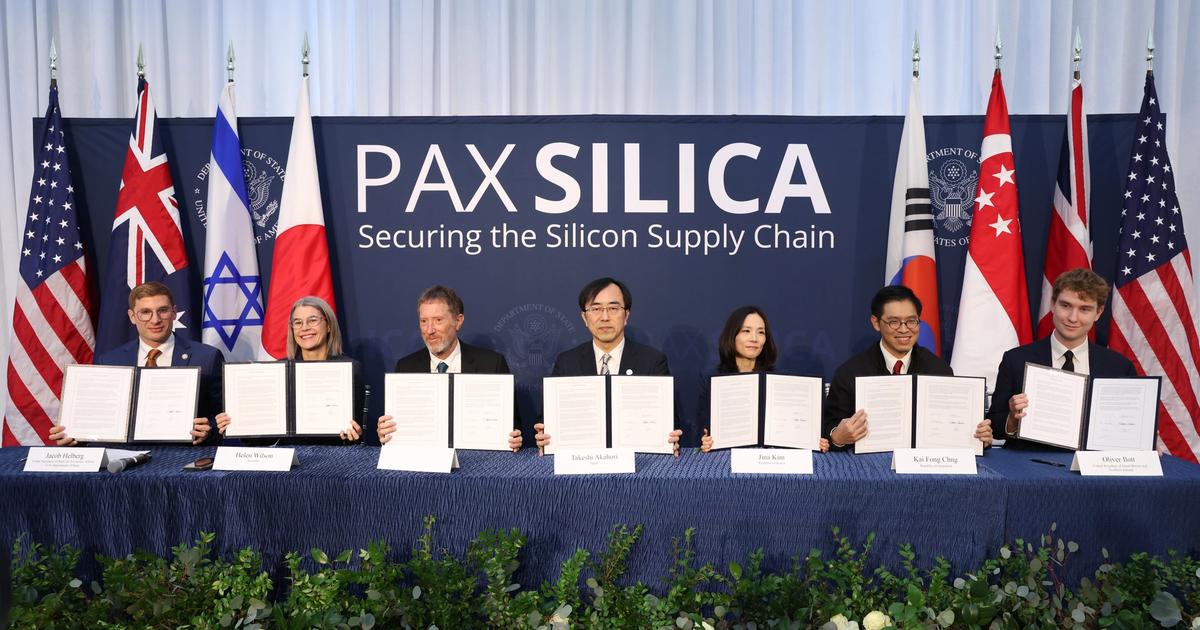
US expands Pax Silica alliance to counter China's mineral dominance
 Semafor·5 May 2026·US to announce Norway’s inclusion in Pax Silica group with aim to counter China | Semafor - Norway will be the consortium’s 15th member.
Signals:
- →Norway’s inclusion secures critical mineral access and vast sovereign wealth for supply chains.
- →Strategic partnerships reduce global economic dependence on Chinese manufacturing and export controls.
- →New commercial deals prioritize reliable, non-adversarial supply chains for domestic industrial growth.

VPNs outsmart Russia's crackdown as restrictions intensify
Signals:
- →VPN providers are successfully bypassing state-level censorship through rapid, adaptive technical innovation.
- →The ongoing digital "cat-and-mouse" game creates significant operational instability for businesses relying on VPNs.
- →Escalating government crackdowns and potential regulatory fees necessitate robust, diversified connectivity strategies.

HPE and Oak Ridge Lab on AI factories and data sovereignty
Signals:
- →Data ownership is now a critical strategic imperative for organizational AI success.
- →AI factories enable scalable, sustainable, and secure infrastructure for enterprise-grade insights.
- →Effective data governance is essential for maintaining reliable and trusted AI outcomes.
Society

Rural America fights back against AI data center invasion
Arstechnica·28 April 2026·Rural America is resisting the surge in data center construction - Ars Technica - Many rural communities are viscerally opposed to AI infrastructure.
Signals:
- →Rural data center expansion faces intense local opposition over water and energy security.
- →Rising infrastructure demand threatens agricultural land availability and increases regional utility costs.
- →Political backlash against AI development risks alienating key rural voting blocs.

Japanese residents battle AI data centres invading their neighbourhoods
Financial Times·2 May 2026·The fight over data centres at the heart of Japanese cities - Japan is getting ready for a huge surge in AI facilities — and complaints from nearby residents
Signals:
- →Rapid AI-driven data center expansion is triggering significant local community and legal backlash.
- →Outdated zoning and building regulations create operational risks for developers in residential areas.
- →Public opposition and regulatory uncertainty threaten project timelines and long-term investment viability.

Ubuntu's AI features spark Linux user backlash and "kill switch" demands
The Verge·29 April 2026·Ubuntu’s AI plans have Linux users looking for a ‘kill switch’ | The Verge - Ubuntu users responded to upcoming AI features in the Linux distribution with demands for an AI “kill switch.” Canonical says the features will be “strictly opt-in.”
Signals:
- →User backlash against forced AI integration risks significant Ubuntu market share erosion.
- →Competitor distributions are positioning themselves as privacy-focused alternatives to Canonical’s AI strategy.
- →Mandatory AI features require clear opt-out mechanisms to maintain enterprise and developer trust.

AI doesn't have a marketing problem — it has a humanity problem
The Verge·23 April 2026·BEWARE SOFTWARE BRAIN | The Verge - The people do not yearn for automation.
Signals:
- →Public sentiment toward AI is increasingly negative, signaling a major adoption and trust barrier.
- →Tech leaders must recognize that AI resistance stems from lived experience, not marketing failures.
- →Over-reliance on "software brain" risks alienating users by ignoring the limits of automation.

Canva's AI erases "Palestine" from user designs
The Verge·27 April 2026·Canva apologizes after its AI tool replaces ‘Palestine’ in designs | The Verge - How does this even happen?
Signals:
- →AI tools can inadvertently alter user content, creating significant brand and reputational risks.
- →Automated content modification undermines user trust in generative AI design platforms.
- →Rigorous quality control and oversight are essential when deploying automated AI editing features.

UK job seekers frustrated by "humiliating" AI interviews
 The Guardian·1 May 2026·‘Awkward and humiliating’: UK job hunters share frustration with AI interviews | AI (artificial intelligence) | The Guardian - People describe unnatural process as survey finds nearly half of job seekers have been interviewed by AI
Signals:
- →AI-driven hiring processes cause 30% of candidates to abandon job applications.
- →Negative candidate experiences damage employer branding and perceived company culture.
- →Current AI tools struggle to assess complex human communication and neurodiverse talent.

Sacramento deploys AI cameras on buses to enforce bike lanes
Signals:
- →AI-powered enforcement improves cyclist safety and reduces traffic-related injuries.
- →Automated technology increases enforcement efficiency without requiring additional personnel.
- →Scalable transit-based monitoring optimizes urban mobility and roadway compliance.
Business

Gartner warns AI agent sprawl threatens enterprise chaos by 2028
Signals:
- →Unmanaged AI agent sprawl creates significant risks of data loss and operational complexity.
- →Robust governance frameworks are essential to achieving high returns on AI investments.
- →Centralized oversight and automated monitoring tools are required to control autonomous AI deployments.

AI augmentation beats automation for long-term company success
 Ideas and Advice for Leaders·15 April 2026·Why Companies That Choose AI Augmentation Over Automation May Win in the Long Run - Leaders are making a choice with their AI strategy: Are they primarily seeking to improve the bottom line through automation and headcount reduction, or grow the top line in innovative ways through augmentation? As they make this decision, leaders are underestimating how employee perception—and the predictable behavioral dynamics that follow—will determine the success of their AI strategy. While automation strategies will likely show early gains relative to the deeper investment required for augmentation, but that augmentation will likely perform better in the long run. That’s because while automation offers immediate cost-savings, a company’s long-term success is determined by how people feel about their work, whether they meaningfully engage with new tools, and whether top talent stays.
Signals:
- →Augmentation strategies foster long-term innovation and growth, whereas automation risks eroding organizational talent.
- →Employee perceptions of AI intent directly impact productivity, retention, and the quality of output.
- →Prioritizing human-AI collaboration builds sustainable competitive advantage and preserves critical leadership development pipelines.

WEF report: Technology convergence reshapes competitive advantage
Signals:
- →Competitive advantage now stems from orchestrating integrated ecosystems rather than owning isolated technology assets.
- →Scaling technology combinations requires aligning workflows, data, and partners to overcome physical-digital bottlenecks.
- →Success depends on adopting service-based models that prioritize interoperability and continuous, compounding operational learning.
Science

Dawkins falls for Claude's consciousness illusion, critics say

Signals:
- →LLMs mimic human language patterns without possessing genuine consciousness or internal subjective experiences.
- →Conflating sophisticated statistical mimicry with true intelligence poses significant risks for strategic decision-making.
- →Leaders must distinguish between convincing AI outputs and the actual underlying mechanical capabilities.
Environment

Kevin O'Leary's Utah AI data center could double state's power demand
Signals:
- →Massive energy demands require independent power generation to avoid straining existing utility grids.
- →Significant tax incentives and subsidies are being leveraged to attract large-scale infrastructure investments.
- →AI data center expansion creates complex trade-offs between economic growth and local resource consumption.

NERC issues alert over data centers' sudden grid disconnections
Signals:
- →Unexpected data center load losses threaten bulk power system stability and frequency regulation.
- →NERC is mandating essential actions for grid operators to manage large computational loads.
- →Rapidly growing data center demand requires updated modeling, monitoring, and commissioning procedures.

WordPress plugin slashes AI data transfers, saving billions in energy
Signals:
- →Markdown delivery significantly reduces AI token usage and associated operational costs for businesses.
- →Optimizing web content for AI crawlers drastically lowers data transfer and energy consumption.
- →Adopting efficient data delivery supports corporate sustainability goals and reduces digital infrastructure waste.
Entertainment

Oscars ban AI-generated actors and scripts from eligibility
 TechCrunch·2 May 2026·AI-generated actors and scripts are now ineligible for Oscars | TechCrunch - Bad news for Tilly Norwood.
Signals:
- →Academy rules now mandate human authorship for all Oscar-eligible performances and screenplays.
- →Industry standards are shifting to prioritize human-created content over generative AI outputs.
- →Organizations are establishing strict compliance requirements regarding AI usage in creative works.
🏭AI and Tech industry news

Snapchat launches AI-powered sponsored chatbots in your inbox
Signals:
- →Conversational AI creates new, high-engagement advertising channels for direct consumer interaction.
- →Brands can now influence purchasing decisions through personalized, real-time automated dialogue.
- →AI-driven chat platforms represent a significant shift in digital marketing and monetization.
🫧Bubble Chronicles

AI compute scarcity reshapes industry economics and profits
Signals:
- →Severe compute shortages are driving up AI costs and limiting operational scalability.
- →Hardware scarcity grants immense pricing power to dominant chip manufacturers and suppliers.
- →Organizations must prioritize AI efficiency as compute constraints force higher service prices.

Banks scramble to shed massive AI data centre loan risks
Financial Times·3 May 2026·Banks seek to offload risk to avoid ‘choking’ on data centre debt - Global lenders explore private deals and risk transfers to cut exposure to AI boom
Signals:
- →Massive AI infrastructure debt is forcing banks to offload risk to maintain lending capacity.
- →Lenders are increasingly utilizing risk transfer instruments to manage concentrated data center project exposure.
- →Growing construction and regulatory risks necessitate new strategies for distributing large-scale infrastructure financing.

Big Tech's $700B AI spending sparks "misallocation" fears
Signals:
- →Massive AI capital expenditures are depleting cash reserves and increasing corporate debt levels.
- →Critics warn that current AI spending levels represent a historic capital misallocation risk.
- →Declining free cash flow at major tech firms signals potential long-term financial instability.

AI's broken economics spell doom for OpenAI and Oracle
Signals:
- →AI subscription models are economically unsustainable, forcing a shift toward unpredictable, usage-based token billing.
- →Massive capital expenditures on data centers rely on unrealistic revenue growth projections from AI labs.
- →Enterprise AI investments face significant ROI risks as true compute costs exceed initial budget assumptions.

Big Tech's AI earnings: strong results, skeptical markets
 The Change Constant | Saanya Ojha | Substack·Judgment Day for the AI Trade - by Saanya Ojha - Beats across the board, but the market has moved from rewarding AI demand to interrogating AI returns.
Signals:
- →Markets have shifted from rewarding AI demand to demanding clear, efficient financial returns.
- →Massive capital expenditure on AI infrastructure is now under intense investor scrutiny.
- →Companies must prove AI growth without sacrificing core business margins to maintain valuation.

OpenAI's Stargate loses shape as data centre plans unravel
Financial Times·29 April 2026·How OpenAI’s $500bn data centre venture Stargate has shifted shape - Chief executive Sam Altman’s flexible approach to infrastructure projects is unsettling partners but boosting computing lead
Signals:
- →OpenAI is pivoting from building proprietary data centers to flexible, third-party leasing strategies.
- →Rapidly shifting infrastructure plans create significant counterparty risks for partners and investors.
- →Massive, volatile capital commitments highlight the intense financial pressure of scaling AI infrastructure.
OpenAI

OpenAI's super PAC allegedly funds AI-generated fake news site
Signals:
- →AI-generated news sites are being used to conduct covert political influence campaigns.
- →Industry-funded super PACs may be deploying automated media to manipulate public policy debates.
- →Decision makers must verify the legitimacy of media sources to avoid AI-driven misinformation.
OpenAI Follows Anthropic's Playbook, Restricting GPT-5.5-Cyber to Vetted Defenders
OpenAI is rolling out GPT-5.5-Cyber, a specialised cybersecurity model capable of penetration testing, vulnerability exploitation, and malware reverse engineering — but only to a select group of "critical cyber defenders" vetted through an application process. The move mirrors Anthropic's restricted release of Claude Mythos, despite CEO Sam Altman having previously trash-talked Anthropic's gatekeeping approach as "fear-based marketing." The hypocrisy hasn't gone unnoticed, though it underscores a broader industry consensus: frontier cyber-capable models genuinely pose dual-use risks that demand controlled distribution. This emerging pattern — where leading AI labs restrict their most potent models to trusted institutions and government partners — is reshaping how cutting-edge AI reaches the world. The White House has actively opposed expanding Mythos access, citing both security concerns and capacity constraints for government use. Meanwhile, Anthropic's own secure release was reportedly breached by an unauthorised group, highlighting the tension between restriction and inevitability. As OpenAI works with the US government to widen Cyber's availability, the industry appears to be settling into a new norm: the most powerful AI tools will increasingly resemble classified defence technology before they resemble consumer products.
2 sources
OpenAI Breaks Free: AWS Gets Full Access to Frontier Models as Microsoft Loosens the Leash
OpenAI's models are now available on Amazon's Bedrock platform, marking a significant shift in the AI infrastructure landscape. The deal — announced at an AWS event in San Francisco on 29 April 2026 — brings OpenAI's GPT-5.4 (with GPT-5.5 coming within weeks) and its Codex coding agent to AWS customers, alongside new managed agent services. This was made possible after Microsoft agreed to loosen exclusivity provisions in its OpenAI partnership, trading cloud exclusivity for better revenue-sharing terms and the removal of the contentious "AGI clause" that could have cut Microsoft off from OpenAI's technology entirely. The financial scaffolding here is staggering: Amazon invested US$15bn in OpenAI's latest funding round, with up to US$35bn more contingent on an IPO or achieving AGI. OpenAI has reciprocally signed US$138bn in data centre capacity deals with AWS. As OpenAI's chief revenue officer Denise Dresser noted, enterprise customers have moved past experimentation — they want frontier models deployed in trusted environments with proper security and data sovereignty controls. The Register highlights that this arrangement could serve as a blueprint for future infrastructure deals, effectively turning OpenAI into a multi-cloud AI provider rather than a Microsoft-exclusive asset. With Amazon also holding an US$8bn stake in rival Anthropic (plus a fresh US$25bn commitment), the cloud giants are hedging their AI bets aggressively.
2 sources

Shivon Zilis emerges as key figure in Musk v. Altman trial
Signals:
- →Reveals how internal information flows and conflicts of interest impact corporate governance.
- →Highlights the legal risks of informal communication channels and dual-role advisory positions.
- →Demonstrates how delayed legal action and shifting motivations can undermine litigation strategies.
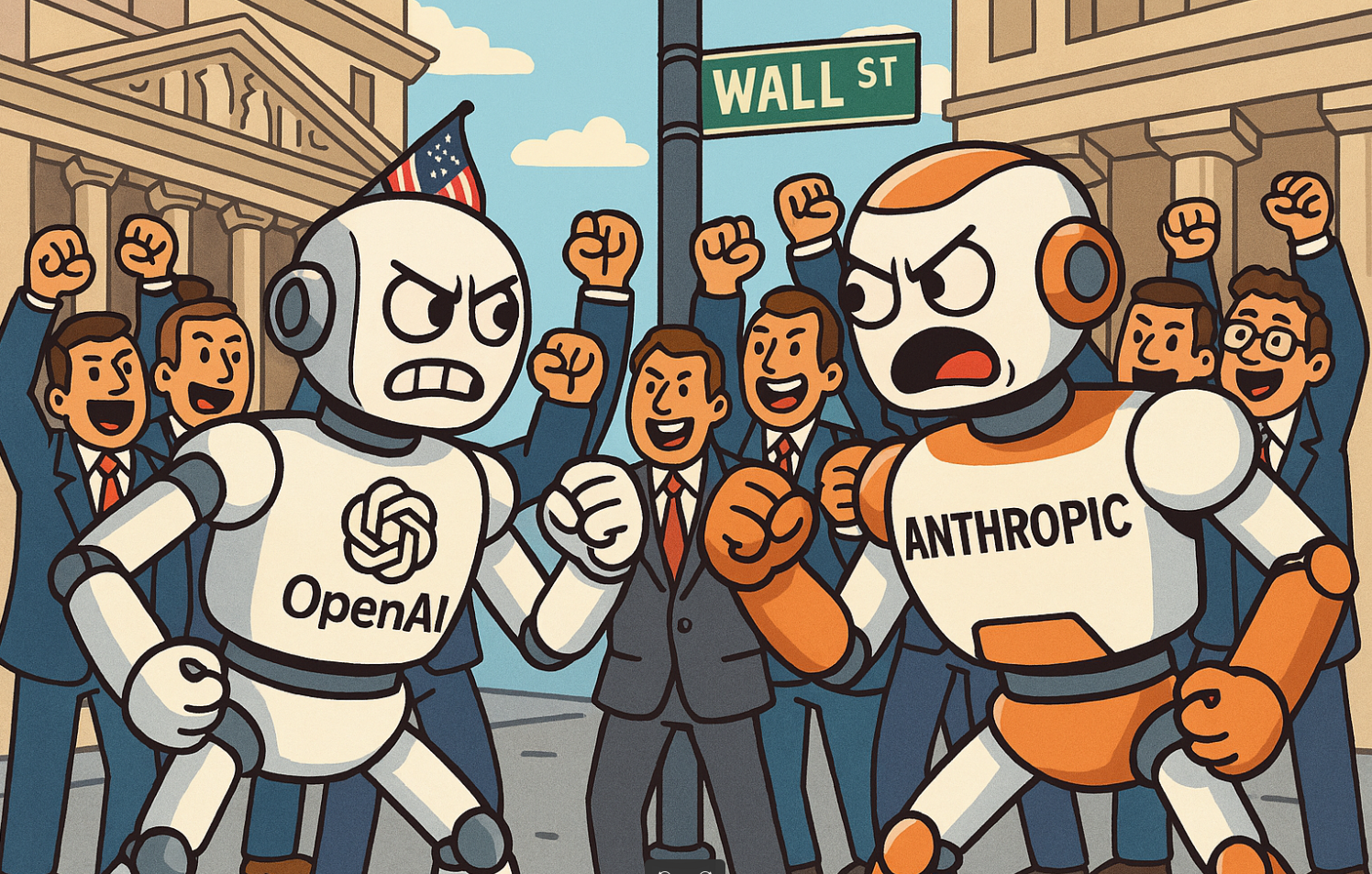
Anthropic and OpenAI launch Wall Street-backed enterprise AI ventures
 SiliconANGLE·5 May 2026·Anthropic and OpenAI establish joint ventures on Wall Street to accelerate enterprise AI adoption - SiliconANGLE - Anthropic and OpenAI establish joint ventures on Wall Street to accelerate enterprise AI adoption - SiliconANGLE
Signals:
- →AI leaders are launching dedicated consultancies to solve critical enterprise integration skill gaps.
- →Joint ventures provide direct access to thousands of mid-sized firms for rapid adoption.
- →Embedded engineering teams aim to transform core business workflows through specialized AI implementation.

OpenAI adds AI-generated pet companions to its Codex app
Signals:
- →Improves developer productivity by providing real-time status updates without context switching.
- →Enhances user engagement and tool adoption through customizable, interactive AI interfaces.
- →Demonstrates innovative UI/UX design for managing complex agentic coding workflows.

OpenAI adds advanced account security for ChatGPT users
Signals:
- →Enhanced security mitigates risks for sensitive professional and personal AI data.
- →Phishing-resistant authentication prevents unauthorized access via social engineering and account takeovers.
- →Mandatory security protocols protect high-stakes users and enterprise-level intellectual property.

Sam Altman's AI firm confused Bruno Mars with Thirty Seconds to Mars
Signals:
- →Public misinformation by AI firms damages brand credibility and stakeholder trust.
- →Inaccurate corporate claims highlight critical failures in internal verification processes.
- →Misleading partnerships expose companies to significant reputational and legal risks.
OpenAI's Goblin Problem: When RLHF Goes Whimsically Wrong
OpenAI's Codex CLI system prompt was revealed to contain a repeated and oddly specific directive: "Never talk about goblins, gremlins, raccoons, trolls, ogres, pigeons, or other animals or creatures unless it is absolutely and unambiguously relevant to the user's query." The prohibition, discovered in the open-source models.json file on GitHub, quickly went viral — spawning memes, goblin-mode plugins, and even a quip from Sam Altman about training GPT-6 with "extra goblins." OpenAI subsequently published a technical explanation revealing the root cause: during RLHF training for a now-retired "Nerdy" personality mode, human raters over-rewarded creative fantasy metaphors. The model learned that creature references meant high reward, and this behaviour leaked across all personality modes and persisted into subsequent model generations through contaminated fine-tuning data. The incident is more than comedic — it's a genuinely instructive case study in alignment failure. LM Arena's traffic data confirmed a sharp spike in goblin-related outputs across GPT model versions, though independent testing on LessWrong suggested the behaviour was more context-dependent than dramatic, primarily emerging in coding and agentic tool contexts rather than basic chat. The system prompt also revealed OpenAI instructs Codex to behave as though it has "a vivid inner life" — raising separate questions about anthropomorphisation in production AI. As VentureBeat pointedly noted: if OpenAI can accidentally train its flagship model to obsess over goblins, what other subtler biases are being quietly reinforced through the same feedback loops? The episode underscores that RLHF rewards don't stay where you put them — a lesson with implications far beyond fantasy creatures.
4 sources
Anthropic
Anthropic Eyes US$900B Valuation in What Could Be Its Final Private Round
Anthropic is on the verge of raising roughly US$50 billion at a valuation between US$850 billion and US$900 billion — a staggering leap from its US$380 billion valuation just two months ago. The Claude maker has asked investors to submit allocations within 48 hours, with the round expected to close within two weeks. Investor demand is so intense that one institutional backer prepared to commit US$5 billion reportedly couldn't even secure a meeting with Anthropic's CFO. If finalised at these terms, Anthropic would surpass OpenAI's US$852 billion post-money valuation from its record-breaking February round. The fundraise is underpinned by explosive revenue growth — Anthropic's annualised run rate has surged from roughly US$9 billion at the end of 2025 to closer to US$40 billion now, driven largely by its Claude Code and Cowork AI coding platforms. This is widely expected to be Anthropic's last private round before an IPO later this year, with some early backers sitting this one out in anticipation of cashing out at listing. The sheer scale of capital flowing into frontier AI companies continues to redefine what's possible in private markets, and Anthropic's trajectory suggests the AI arms race is far from reaching its ceiling.
2 sources
Anthropic eyes AI inference chips from UK startup Fractile
Signals:
- →Diversifying hardware supply chains reduces reliance on dominant AI chip manufacturers.
- →Specialized inference chips could significantly lower operational costs for AI model deployment.
- →Strategic partnerships with startups signal emerging competition in the AI hardware market.
Big Tech's US$725B AI Arms Race: Google Surges Ahead as Meta Stumbles
The four major hyperscalers — Alphabet, Amazon, Microsoft, and Meta — have collectively raised their 2026 capital expenditure plans to a staggering US$725 billion, a 77% increase over last year's already record US$410 billion. The standout performer is Google, whose Cloud division crossed US$20 billion in quarterly revenue for the first time with 63% year-over-year growth, outpacing both Amazon Web Services and Microsoft Azure. AI solutions built on Google's generative AI models grew nearly 800% year-over-year, and the company's cloud backlog doubled to US$462 billion — though CEO Sundar Pichai acknowledged growth was actually *capacity-constrained*, meaning revenue could have been even higher. The contrast with Meta was stark. Despite revenue jumping 33%, Meta's stock dropped 8% in pre-market trading after the company added US$10 billion to its capex guidance (now up to US$145 billion) while Mark Zuckerberg offered only vague timelines for delivering promised AI models. Microsoft flagged rising memory chip and component costs driving US$25 billion of its record capex budget, warning it would remain compute-constrained through 2026. The broader signal is clear: Wall Street is increasingly willing to reward AI spending — but only when companies can demonstrate tangible returns. As one Jefferies analyst put it bluntly, "The bear thesis is garbage." Google's results, buoyed by an 81% surge in net income and search queries hitting all-time highs, suggest the AI investment cycle may finally be entering its payoff phase.
3 sources

Google's Gemini privacy settings are a dark pattern maze
Arstechnica·30 April 2026·The hidden cost of Google's AI defaults and the illusion of choice - Ars Technica - Google says it respects user privacy in AI, but the reality is not so black and white.
Signals:
- →Complex data privacy settings and "dark patterns" create significant regulatory and reputational risks.
- →Integrating AI into core workflows risks unauthorized exposure of sensitive corporate or user data.
- →Forced reliance on AI defaults complicates enterprise compliance and user data sovereignty strategies.

Mozilla slams Google's AI Prompt API as threat to open web
Signals:
- →Google’s Prompt API risks fragmenting the web through vendor-specific model dependencies.
- →Browser-integrated AI APIs may impose restrictive, non-legal content policies on developers.
- →Standardizing on proprietary models threatens long-term web interoperability and platform neutrality.

Chrome secretly installs 4 GB Gemini Nano model without user consent
Signals:
- →Silent, non-consensual installation of large AI models creates significant legal and regulatory compliance risks.
- →Massive, unrequested data distribution generates substantial, avoidable carbon emissions and environmental impact.
- →Deceptive design patterns regarding AI processing undermine user trust and violate core privacy principles.
Microsoft
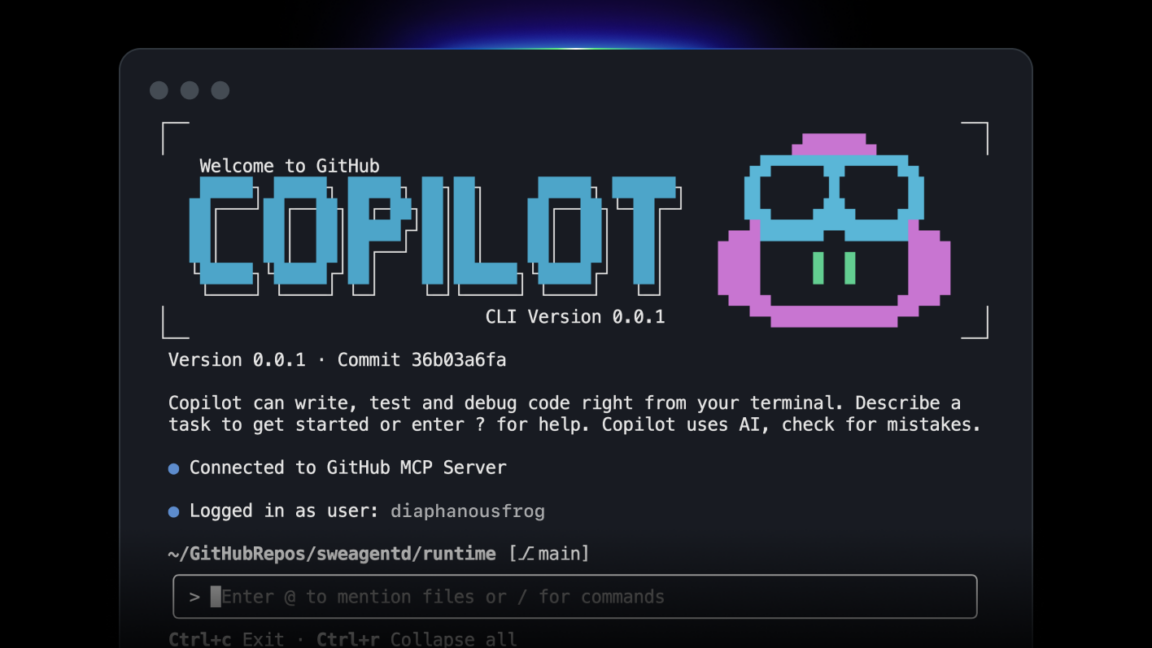
GitHub Copilot shifts to usage-based billing starting June 1
Arstechnica·28 April 2026·GitHub will start charging Copilot users based on their actual AI usage - Ars Technica - GitHub says it can no longer absorb "escalating inference cost" from it heaviest AI users.
Signals:
- →Usage-based billing replaces flat subscriptions to manage escalating AI computing costs.
- →Organizations must forecast AI spending as token-based pricing replaces predictable monthly fees.
- →Shift reflects industry-wide moves to end subsidized AI access for heavy users.
Microsoft's AI Spending Spree Hits US$190B as Investors Question the Endgame
Microsoft delivered a strong Q3 FY2026 — US$82.9 billion in revenue (up 18%), US$31.8 billion in net income, and Azure growth of 40% — but investors weren't celebrating. The culprit: forward guidance that fell short of expectations, with Q4 revenue projected at US$86.7–87.8 billion (midpoint trailing consensus) and operating margins expected to compress. More dramatically, CFO Amy Hood revealed capex would balloon to US$190 billion for the year, up 61% year-over-year, with US$25 billion of that attributed to surging memory chip and component costs. Despite spending roughly US$97 billion on infrastructure over the past four quarters, Microsoft has generated US$37 billion in AI ARR — impressive at 123% growth, but not yet an obvious return on investment. The results land at a pivotal moment for Microsoft's AI strategy. The company's revised OpenAI partnership ends revenue sharing and exclusivity, giving OpenAI freedom to shop infrastructure elsewhere while Microsoft retains royalty-free IP access through 2032. Analysts flagged a strategic vulnerability: while competitors like Oracle, Salesforce, and ServiceNow offer flexible or embedded AI pricing, Microsoft's per-seat Copilot model (now at 20 million seats) may be creating adoption friction. Constellation Research noted Microsoft deserves credit for maintaining positive cash flow amid epic AI spending, but the market's muted reaction — stock still down 12% year-to-date — signals that investors need more than growth; they need a clearer path from infrastructure investment to durable returns.
2 sources

Nadella plans to "exploit" revised OpenAI deal through 2032
TechCrunch·29 April 2026·Satya Nadella says he's ready to 'exploit' the new OpenAI deal | TechCrunch - Microsoft gets to offer OpenAI's tech to its cloud customers and doesn't have to pay for it. "We fully plan to exploit it," Nadella said.
Signals:
- →Microsoft secures royalty-free access to frontier AI models through 2032.
- →AI business revenue grew 123% year-over-year, reaching $37 billion annually.
- →Diversified model offerings mitigate risks from OpenAI’s partnerships with competitors.

Microsoft Agent 365 launches to combat shadow AI security risks

Signals:
- →Agent 365 provides centralized governance to mitigate risks from unauthorized "shadow AI" deployments.
- →The platform enables cross-cloud visibility and security for agents across AWS and Google.
- →New endpoint controls allow IT to detect, map, and block malicious autonomous agent activity.

Microsoft's new Word AI agent targets legal contract review
The Verge·1 May 2026·Microsoft wants lawyers to trust its new AI agent in Word documents | The Verge - Microsoft’s Legal Agent comes from the work of former Robin AI engineers.
Signals:
- →Microsoft's Legal Agent automates contract review, potentially reducing legal team workloads significantly.
- →The tool follows structured legal workflows, improving reliability over general AI models.
- →Built on Robin AI expertise, it signals Microsoft's serious push into specialized legal tech.

Microsoft releases earliest-ever DOS source code, transcribed from paper
Arstechnica·30 April 2026·Microsoft open-sources "the earliest DOS source code discovered to date" - Ars Technica - Old 86-DOS source code dates back to the time before Microsoft bought it.
Signals:
- →Preserves foundational intellectual property for historical and educational research.
- →Demonstrates Microsoft’s ongoing commitment to open-source software transparency.
- →Highlights the critical role of digital preservation in corporate legacy management.
Apple
Mac Mini Becomes Unlikely AI Workhorse as Supply Runs Dry
Apple's Mac Mini — long a niche desktop for budget-conscious buyers — has become an unexpected bottleneck in the company's supply chain, with CEO Tim Cook confirming on Apple's Q2 2026 earnings call that it may take "several months" to restore supply-demand balance. The culprit? AI developers snapping up the compact machines to run autonomous agents locally. The rise of tools like OpenClaw, an open-source framework for building persistent AI agents, has turned the Mac Mini and Mac Studio into de facto local AI infrastructure. Apple's unified memory architecture lets these systems handle inference and agent orchestration without expensive discrete GPUs, making them an attractive alternative to cloud-based setups. The demand surge caught Apple off guard, compounding existing pressure from TSMC chip supply constraints and an industry-wide RAM shortage. Some high-end configurations — including a 512GB Mac Studio — have been delisted entirely. Cook noted that memory costs would rise "significantly" in Q3, adding further pressure. Despite these headwinds, Apple posted US$111.2 billion in Q2 revenue (up 17%), with Mac sales growing 6% year-over-year. The situation highlights a broader shift: as AI workloads move from centralised cloud training to distributed local inference and agentic orchestration, even consumer-grade hardware is being repurposed as critical infrastructure — a trend no OEM, Apple included, fully anticipated.
2 sources

Apple abandons Vision Pro amid poor sales and high returns
Signals:
- →High-priced hardware failed to achieve mass-market adoption or sustainable consumer demand.
- →Significant product design flaws led to high return rates and poor user experience.
- →Strategic pivot away from premium headsets signals shifting priorities in the AR market.
Amazon

Amazon's chip business hits $20B, rivals top datacenter players
Signals:
- →Amazon’s custom silicon business is now a top-tier global datacenter chip provider.
- →Massive AI lab commitments signal strong market demand for Amazon’s proprietary hardware.
- →Superior price-performance of custom chips is driving significant AWS cloud infrastructure growth.

AWS faces months of repairs after Iranian drone strikes hit data centers
Arstechnica·1 May 2026·Amazon stuck with months of repairs after drone strikes on data centers - Ars Technica - AWS stops billing Middle East cloud customers as repairs to war damage drag on.
Signals:
- →Regional conflict poses significant, long-term risks to critical cloud infrastructure availability.
- →Prolonged service outages necessitate immediate migration strategies to ensure business continuity.
- →Geopolitical instability is forcing major tech firms to pause regional infrastructure investments.
AWS Wastes No Time Bringing OpenAI Models to Bedrock After Microsoft Exclusivity Ends
Just one day after OpenAI revised its partnership with Microsoft to end exclusive cloud distribution rights, AWS moved swiftly to announce OpenAI's latest models — including GPT-5.5 and the Codex programming assistant — on its Bedrock platform. The speed was hardly surprising given Amazon's US$15 billion investment in OpenAI earlier this year, with plans for an additional US$35 billion. AWS also unveiled **Bedrock Managed Agents**, a new service combining OpenAI's reasoning models with agent-building tooling to simplify deploying AI agents at scale. All offerings launched in limited preview, with usage counting towards existing AWS spending commitments — a procurement sweetener for enterprise customers. The broader narrative here is a dramatic reshuffling of Big Tech's AI alliances. The once-tight Microsoft-OpenAI relationship has visibly frayed, with both parties cosying up to each other's rivals: OpenAI turning to AWS and Oracle, while Microsoft deepens ties with Anthropic and builds Claude-powered agent offerings. AWS CEO Matt Garman framed the move as customer-centric — "We don't have to force people to make that choice" — but the competitive implications are unmistakable. This multi-cloud AI model distribution era means enterprises gain flexibility, while the hyperscalers compete ever more fiercely on tooling, integration, and agent infrastructure rather than model exclusivity alone.
2 sources
AWS Hits Hyperdrive as Amazon Bets Big on AI Infrastructure
Amazon's Q1 2026 earnings paint a vivid picture of the AI gold rush economics: AWS revenue surged 28% year-over-year to US$37.6 billion — its fastest growth in 15 quarters — while the company's free cash flow cratered 95% to just US$1.2 billion as capital expenditure on AI infrastructure ballooned. CEO Andy Jassy framed the tension bluntly: "The faster AWS grows, the more short-term capex we'll spend." Property and equipment purchases hit US$44.2 billion for the quarter alone, with full-year capex on track to reach US$200 billion. Amazon's custom chip business (Graviton, Trainium, Nitro) crossed a US$20 billion annual run rate for the first time, underscoring how deeply the company is vertically integrating its AI stack. The broader context is a three-way cloud arms race. Microsoft's Azure grew 40% and Google Cloud an eye-popping 63% in the same period, steadily chipping away at AWS's market lead. Analyst Holger Mueller noted AWS operating margins have recovered to 37%+, suggesting the spending is sustainable — but the record-low free cash flow will test investor patience. Jassy drew parallels to AWS's original growth wave, arguing that data centres lasting 30+ years and chips with 5-6 year lifespans make this a long-game investment. With overall revenue beating expectations at US$181.5 billion and Q2 guidance of US$194-199 billion (well above consensus), Amazon is essentially asking shareholders to trust the playbook that built the cloud in the first place — just at a dramatically larger scale.
2 sources
Meta
EU Moves to Fine Meta Over Failure to Keep Under-13s Off Instagram and Facebook
The European Commission has issued preliminary findings that Meta is breaching the Digital Services Act (DSA) by failing to prevent children under 13 from accessing Instagram and Facebook. The nearly two-year investigation concluded that Meta's age verification is essentially toothless — minors can simply enter a false birth date with no effective controls to catch them. Reporting tools for flagging underage users were found to be clunky and ineffective, with little follow-up even when a child is identified. EU tech chief Henna Virkkunen didn't mince words, saying the platforms "are doing very little" to enforce their own minimum age rules. If confirmed, Meta faces fines of up to 6% of global turnover — potentially US$12 billion based on its 2025 revenue of US$201 billion. The action sits within a broader European push to protect minors online. France is lobbying for a social media ban for under-15s or under-16s, and the EU has developed its own age verification app to let users prove their age without handing personal data to platforms. Meanwhile, the geopolitical dimension adds spice: the Trump administration has vocally opposed DSA enforcement, with Secretary of State Marco Rubio previously calling the EU's fine against X "an attack on all American tech platforms." Meta disagrees with the findings and says it will announce additional protective measures soon, but the Commission's message is clear — terms and conditions need to be more than words on a page.
3 sources
Meta Snaps Up Robotics AI Startup as Big Tech's Humanoid Race Intensifies
Meta has acquired San Diego-based Assured Robot Intelligence (ARI), a startup building foundation models for humanoid robots, for an undisclosed sum. Co-founders Lerrel Pinto and Xiaolong Wang — both decorated AI researchers with ties to NYU, UC San Diego, and Nvidia — will join Meta's Superintelligence Labs division. Notably, Pinto previously co-founded Fauna Robotics, which Amazon acquired just weeks earlier in March, underscoring how aggressively Big Tech is hoovering up humanoid robotics talent. The acquisition feeds into Meta's broader ambitions to become a key supplier of AI software and components for the robotics ecosystem — a role SiliconANGLE compared to Qualcomm's position in mobile. Wang's prior work on VR-headset-controlled robot systems could dovetail neatly with Meta's Ray-Ban Display smart glasses and Neural Band wristband, hinting at a future where users remotely operate humanoid robots through wearable devices. The deal also reflects a growing conviction among AI researchers that achieving AGI may require training models through physical-world interaction, not just data. Market forecasts for humanoid robotics range wildly — from Goldman Sachs' US$38 billion by 2035 to Morgan Stanley's US$5 trillion by 2050 — but the talent land-grab suggests the biggest players are betting big regardless.
2 sources

Meta's business AI conversations surge 10x to 10M weekly
TechCrunch·30 April 2026·Meta says its business AI now facilitates 10 million conversations a week | TechCrunch - Meta said over 8 billion advertisers have used at least one of its GenAI tools
Signals:
- →Meta’s rapid AI adoption signals a massive shift in business-to-customer communication channels.
- →Future monetization of free AI tools presents new revenue streams for Meta platforms.
- →AI-driven ad creative tools are demonstrably increasing conversion rates for small business advertisers.

Meta doubles AI spending forecast to $145 billion despite investor concerns
Signals:
- →Meta’s massive AI capital expenditure surge signals rising industry-wide infrastructure costs.
- →Escalating component prices and supply chain disruptions threaten long-term profitability margins.
- →Investor skepticism grows as AI spending outpaces immediate, measurable financial returns.

Meta's $83.5B Reality Labs losses are just the beginning
TechCrunch·29 April 2026·Meta is still burning money on AR/VR | TechCrunch - Meta is losing billions on Reality Labs each quarter, and its AI expenditures are only going to increase its spending.
Signals:
- →Meta’s massive, ongoing Reality Labs losses signal sustained high-risk capital allocation strategies.
- →Escalating AI infrastructure spending creates significant uncertainty regarding future capital expenditure requirements.
- →Underestimated compute needs highlight the volatile financial planning required for AI competitiveness.

Meta fires 1,100 AI trainers who exposed Ray-Ban privacy violations
Signals:
- →Privacy breaches in AI training data create significant legal and reputational risks.
- →Third-party vendor mismanagement can lead to severe ethical and operational crises.
- →Whistleblower retaliation allegations expose companies to intense regulatory and public scrutiny.

Meta lets parents monitor teens' AI chat topics
TechCrunch·23 April 2026·Meta will now allow parents to see the topics their child discussed with Meta AI | TechCrunch - Meta also announced on Wednesday that it is giving parents suggested conversation starters intended to help them talk openly and without judgment about their teens' experiences with AI.
Signals:
- →New parental oversight tools mitigate legal and regulatory risks regarding minor safety.
- →Increased transparency features help Meta address growing public concerns over AI usage.
- →Enhanced supervision capabilities demonstrate proactive corporate responsibility to stakeholders and policymakers.
xAI

X launches AI-powered ad platform to win back advertisers
TechCrunch·30 April 2026·X announces a rebuilt ad platform powered by AI | TechCrunch - X is rolling out a rebuilt ads platform powered by AI as it works to grow revenue again.
Signals:
- →X’s AI-powered ad platform signals a strategic pivot to regain advertiser trust.
- →Projected revenue growth suggests a potential recovery for X’s advertising business model.
- →AI integration lowers barriers, enabling smaller businesses to compete with corporate giants.
Musk's SEC Twitter Case Settles for 1% of Alleged Gains
Elon Musk's long-running battle with the US Securities and Exchange Commission over his 2022 Twitter stake disclosure has ended with a whimper rather than a bang. The SEC originally alleged Musk waited 11 days too long to disclose his 5%+ ownership of Twitter shares, allowing him to scoop up over US$500 million in additional stock at artificially low prices and underpaying sellers by at least US$150 million. The settlement? A US$1.5 million civil penalty — roughly 1% of the alleged gains — paid by the Elon Musk Revocable Trust, with no admission of wrongdoing and no personal penalties for Musk himself. The deal raises pointed questions about regulatory independence under the current administration. The SEC showed leniency after Musk's lawyers revealed settlement talks were happening above the heads of enforcement staff, and the agency's enforcement director resigned in March amid the process. Musk, the largest donor to Trump's 2024 campaign, had long cast the case as political retaliation. His lawyer Alex Spiro framed it as a clear win: "They wanted $200mn. Elon refused to settle. And they have dismissed the case against him." While this SEC matter is resolved, Musk still faces a parallel shareholder lawsuit in New York over the same conduct.
2 sources

xAI's Grok 4.3 debuts with deep price cuts and voice cloning
Signals:
- →Grok 4.3 offers highly competitive API pricing, significantly reducing costs for enterprise-scale AI deployments.
- →The model’s "always-on" reasoning architecture excels in complex legal and financial document analysis tasks.
- →New voice cloning and agentic capabilities enable sophisticated, cost-effective automation for customer-facing business workflows.

Musk admits xAI trained Grok using OpenAI's models
TechCrunch·30 April 2026·Elon Musk testifies that xAI trained Grok on OpenAI models | TechCrunch - "Distillation" is a hot topic as frontier labs try to prevent smaller competitors from copying their models.
Signals:
- →AI distillation allows competitors to replicate expensive models at a fraction of the cost.
- →Musk’s admission confirms widespread industry reliance on unauthorized model training via competitor APIs.
- →Frontier labs are tightening API security to prevent intellectual property theft through distillation.
IBM

IBM Bob boosts developer productivity 45% across full software lifecycle
Signals:
- →Increases developer productivity by 45% through end-to-end software development lifecycle automation.
- →Optimizes AI costs and performance by dynamically routing tasks to the best-suited models.
- →Ensures enterprise-grade security, governance, and auditability throughout the entire software production process.
Tesla

Tesla earned $573M selling products to Musk's own companies
 CleanTechnica·2 May 2026·Tesla Got $573 Million from SpaceX and xAI in 2025 - CleanTechnica - Support CleanTechnica's work through a Substack subscription or on Stripe. There’s been a lot of talk lately that Tesla may well end up merging with SpaceX, and with both companies shifting more and more toward AI and its supportive infrastructure, perhaps that is now Elon Musk’s big plan. Of course, ... [continued]
Signals:
- →Significant intercompany revenue suggests potential consolidation between Tesla, SpaceX, and xAI.
- →Internal sales may artificially inflate Tesla’s reported vehicle and battery demand.
- →Resource sharing between Musk’s companies creates complex governance and financial dependencies.
AMD

AMD's Ryzen AI Halo mini PC launches June with 128GB RAM
Signals:
- →High-performance hardware enables efficient, cost-effective local AI development and deployment.
- →128GB unified memory supports complex AI workloads without requiring expensive cloud infrastructure.
- →Increased competition in the mini PC market may drive down enterprise hardware costs.
TSMC

TSMC sells remaining Arm stake for $231 million
 Reuters·29 April 2026·Taiwan's TSMC exits Arm with $231 million share sale | Reuters - Taiwan Semiconductor Manufacturing Co , the world’s largest contract chipmaker, has sold its remaining stake in Arm Holdings , according to a company filing on Wednesday.
Signals:
- →TSMC's $231M Arm exit signals potential strategic portfolio restructuring by major chipmakers.
- →The $174M retained earnings impact highlights significant financial gains from semiconductor investments.
- →TSMC's divestment amid Arm's 8% share drop raises questions about sector confidence.
Huawei

Huawei's AI chip revenue set to hit $12bn as Nvidia stalls
Financial Times·1 May 2026·Huawei’s AI chip sales surge as Nvidia stalls in China - Chinese tech companies place large orders for the Shenzhen-based group’s latest range of AI processors
Signals:
- →Huawei is rapidly capturing China’s AI chip market as Nvidia faces regulatory export barriers.
- →Domestic tech firms are increasingly adopting Huawei hardware to ensure long-term supply chain stability.
- →China’s push for technological self-reliance is accelerating the shift toward non-American AI infrastructure.
DeepSeek

DeepSeek's new model underwhelms amid rising competition
Signals:
- →AI model efficiency gains are plateauing, increasing development costs for industry leaders.
- →Competitive focus is shifting from raw model performance to integrated, value-added applications.
- →State intervention and geopolitical constraints are significantly impacting Chinese AI innovation strategies.
Mozilla

Firefox quietly adopts Brave's open-source ad-blocking engine
Signals:
- →Firefox is integrating high-performance, open-source ad-blocking technology into its core browser architecture.
- →Adopting Brave’s engine signals a strategic shift toward more robust, native privacy protections.
- →Future browser updates may offer enhanced, standardized content blocking for improved user privacy.
Startups and Investment Deals

SoftBank targets $100bn valuation for new AI robotics IPO
Financial Times·29 April 2026·SoftBank plans to list new AI and robotics company in the US - Masayoshi Son plots IPO for business named Roze as soon as this year
Signals:
- →SoftBank plans a $100bn US IPO for its new AI and robotics firm.
- →The listing aims to reduce leverage and fund massive AI investment commitments.
- →Internal skepticism and market volatility pose significant risks to the ambitious timeline.

Shuowei Optoelectronics closes in on $14M for space solar
 Panda Daily·30 April 2026·Shuowei Optoelectronics Nears USD 14 Million Funding for Space Solar - Pandaily - Beijing-based Shuowei Optoelectronics is closing a nearly RMB 100 million ($14 million) funding round led by Qifu Capital to advance its perovskite-based solar wing technology for commercial space applications.
Signals:
- →Secures capital to accelerate development of innovative space-based solar energy technology.
- →Enhances competitive positioning within the emerging global space infrastructure market.
- →Signals growing investor confidence in the commercial viability of orbital power.

Tenstorrent launches $110K Galaxy Blackhole AI servers
Signals:
- →Offers a cost-effective, high-performance alternative to expensive Nvidia AI hardware clusters.
- →Scalable RISC-V architecture supports massive, enterprise-grade AI model deployment and throughput.
- →Improved software stack enables broad compatibility with most Hugging Face AI models.

GameStop makes $55.5B unsolicited bid to acquire eBay
Arstechnica·4 May 2026·GameStop offers $56 billion for eBay, struggles to explain how it'll pay for it - Ars Technica - Amid falling revenue and store closures, GameStop wants to buy the much larger eBay.
Amid falling revenue and store closures, GameStop wants to buy the much larger eBay.
🆕 AI releases

Nvidia's Nemotron 3 Nano Omni unifies text, vision, and speech for AI agents
SiliconANGLE·28 April 2026·Nvidia introduces Nemotron 3 Nano Omni with vision and speech for powerful agentic AI use - SiliconANGLE - Nvidia introduces Nemotron 3 Nano Omni with vision and speech for powerful agentic AI use - SiliconANGLE
Signals:
- →Low-latency multimodal processing enables faster, more efficient real-time agentic AI applications.
- →Reduced operational costs and high scalability improve enterprise AI deployment efficiency.
- →Lightweight architecture allows for flexible, high-performance execution on local and cloud hardware.

Ling-2.6-1T open-sources a trillion-parameter agentic AI model

Signals:
- →High inference efficiency reduces operational costs and latency for complex enterprise workflows.
- →"Fast thinking" mechanisms lower token overhead while maintaining top-tier reasoning and intelligence.
- →Superior agentic capabilities enable reliable, automated execution of complex coding and engineering tasks.

Anthropic launches Claude Security beta to detect code vulnerabilities
SiliconANGLE·30 April 2026·Anthropic announces Claude Security public beta to find and fix software vulnerabilities - SiliconANGLE - Anthropic announces Claude Security public beta to find and fix software vulnerabilities - SiliconANGLE
Signals:
- →Claude Security automates vulnerability detection and patching to accelerate enterprise software remediation.
- →AI-driven reasoning identifies complex exploits that traditional security tools frequently overlook.
- →Integration with major cybersecurity platforms enhances existing defense workflows and operational efficiency.

Anthropic's Claude integrates with Photoshop, Blender, and Ableton
The Verge·28 April 2026·Claude can now plug directly into Photoshop, Blender, and Ableton | The Verge - Anthropic has launched a set of connectors for Claude that allow the AI chatbot to tap into popular creative software
Signals:
- →Claude’s new software connectors significantly increase creative workflow efficiency and automation.
- →Direct integration with industry-standard tools enables faster, more ambitious project execution.
- →Anthropic’s strategic investment in open-source Blender secures long-term access to critical creative infrastructure.

Mike: open-source alternative to Harvey and Legora launches
Signals:
- →Eliminates vendor lock-in and recurring per-seat licensing costs for legal AI.
- →Enhances data security by allowing self-hosting within your own infrastructure.
- →Provides full transparency and customization through an open-source codebase.

ACE-Step 1.5 generates full songs in under 10 seconds on consumer GPUs
Signals:
- →Enables high-quality, commercial-grade music generation on affordable consumer hardware.
- →Reduces operational costs through efficient, local, and low-VRAM model deployment.
- →Offers customizable, style-specific creative tools for professional music production workflows.
🥼 AI research

Human direction, not AI, drives creative quality with LLMs
Signals:
- →Active human direction of LLMs consistently produces higher-quality, more original creative outcomes.
- →Creative direction mitigates the "homogenization effect," fostering greater diversity in generated content.
- →Individual cognitive abilities and creative agency remain critical predictors of success with AI.
Google AI Overviews favor Google-owned sites, study finds
 arXiv·How Generative AI Disrupts Search: An Empirical Study of Google Search, Gemini, and AI Overviews - \setcctype
Signals:
- →Generative search significantly reduces traffic to popular, reputable, and institutional websites.
- →AI-driven search results are inconsistent, unreliable, and prone to citing low-credibility sources.
- →Publishers need new revenue frameworks to survive as generative AI disrupts traditional traffic.
ARK adaptively navigates knowledge graphs for smarter LLM retrieval
arXiv·Autonomous Knowledge Graph Exploration with Adaptive Breadth-Depth Retrieval - with Adaptive Breadth-Depth Retrieval
Signals:
- →ARK enables autonomous, training-free knowledge graph retrieval by dynamically balancing breadth and depth.
- →The framework improves retrieval accuracy by allowing models to adaptively switch between search tools.
- →Distillation into compact models reduces inference costs while maintaining high performance for decision-making.
AHE system automatically evolves coding agents, beating human-designed harnesses
arXiv·Agentic Harness Engineering: Observability-Driven Automatic Evolution of Coding-Agent Harnesses - Jiahang Lin^1^^∗‡^, Shichun Liu^1^^∗‡^, Chengjun Pan^2^^∗‡^, Lizhi Lin^3^,
Signals:
- →AHE automates coding-agent optimization, significantly boosting task success rates beyond human-designed and existing baselines.
- →The framework’s decoupled, observable design ensures evolved harness components are portable across different benchmarks and base models.
- →By turning edits into falsifiable contracts, AHE provides a reliable, auditable pathway for continuous, autonomous agent improvement.
🔮[Weak] signals
Consumer Tech

ASUS ROG Zephyrus Duo dual-screen laptop starts at $4,500
Signals:
- →Dual 16-inch OLED screens significantly enhance mobile productivity and multitasking capabilities.
- →High-end RTX 5090 hardware supports intensive AI and professional creative workflows.
- →Premium pricing reflects a specialized, high-performance tool for elite mobile computing.
Chips and Computer Hardware
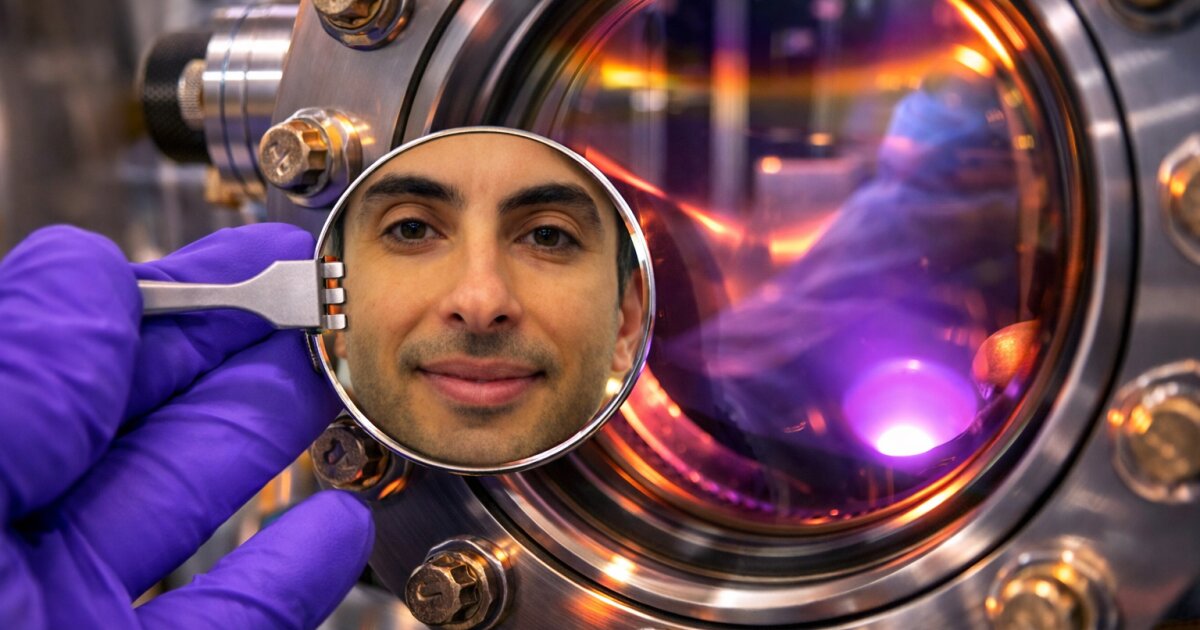
Brain-inspired memristor chip slashes AI energy use by 70%
 New Atlas·30 April 2026·Brain-inspired AI chip could save 70% energy - New brain-inspired memristors from Cambridge University promise to dramatically cut AI hardware energy use by up to 70%, mimicking brain efficiency.
Signals:
- →New memristor technology could reduce AI energy consumption by up to 70 percent.
- →Brain-inspired hardware architecture eliminates inefficient data movement between memory and processing units.
- →Improved device stability and analog learning capabilities offer a path toward sustainable AI.

Lumai's optical server runs billion-parameter AI on 90% less power
 Interesting Engineering·30 April 2026·UK firm unveils world’s first optical system for real-time LLM inference - Oxford-based Lumai's optical computing system can deliver AI inference while consuming a tenth of the power of a traditional GPU-based server.
Signals:
- →Optical computing reduces AI energy consumption by up to 90 percent.
- →New hardware enables real-time inference for large language models at scale.
- →Technology integrates seamlessly into existing data center workflows and infrastructure.

China's homegrown "LineShine" supercomputer targets 2 exaflops
Interesting Engineering·30 April 2026·China’s LineShine supercomputer targets bold 2-exaflop computing leap - China unveils LineShine supercomputer claiming 2 exaflops with full domestic chip and system architecture design.
Signals:
- →China’s homegrown supercomputer reduces reliance on foreign semiconductor and hardware supply chains.
- →The system enables large-scale domestic AI training and scientific research without Western technology.
- →A shift toward CPU-centric architectures challenges current global GPU-dominated supercomputing standards.
Ubitium's CGRA boots Linux without a host CPU for the first time
Signals:
- →Eliminates host CPUs, reducing component counts and simplifying complex embedded system architectures.
- →Consolidates CPU, GPU, DSP, and FPGA functions into one reconfigurable, RISC-V compatible chip.
- →Lowers energy consumption and development costs through dynamic, data-driven hardware reconfiguration.

Tiny solid-state battery powers smart contact lenses
Interesting Engineering·29 April 2026·Smart lenses made possible with rice grain-sized solid-state battery - XPANCEO and ITEN have developed a safe, flexible microbattery that could unlock fully functional smart contact lenses for future use.
Signals:
- →Solid-state microbatteries enable safe, high-power energy for next-generation ocular wearable devices.
- →Eliminating liquid electrolytes removes critical safety risks like leakage, swelling, and fire.
- →Breakthrough energy density overcomes the primary bottleneck for commercializing advanced smart contact lenses.
Cybersecurity

Hacktivists DDoS attack knocks Ubuntu services offline
TechCrunch·1 May 2026·Ubuntu services hit by outages after DDoS attack | TechCrunch - A group of hacktivists have claimed responsibility for a distributed denial-of-service attack, which has affected several Ubuntu and Canonical websites, and prevented users from updating the Linux-based operating system.
Signals:
- →Critical infrastructure outages disrupt essential software updates and security patching for global users.
- →Low-cost DDoS-for-hire services significantly lower the barrier for launching high-impact cyberattacks.
- →Reliance on centralized third-party infrastructure creates systemic vulnerabilities for enterprise software ecosystems.

Security firms Checkmarx and Bitwarden hit by cascading supply-chain attacks
Arstechnica·29 April 2026·Why a recent supply-chain attack singled out security firms Checkmarx and Bitwarden - Ars Technica - Security firms find themselves especially exposed.
Signals:
- →Supply-chain attacks turn trusted security tools into malicious delivery mechanisms.
- →Persistent unauthorized access risks long-term data exposure and ransomware threats.
- →Compromised security vendors create cascading risks for all downstream customers.

Canary trap catches Alberta election database leak
Arstechnica·4 May 2026·Canadian election databases use "canary traps"—and they work - Ars Technica - Intentional errors can be useful.
Intentional errors can be useful.
XR / Spatial Computing

Even Realities' G2 glasses monitor your AI coding agent hands-free
Signals:
- →Enhances developer productivity by enabling remote monitoring of AI agents.
- →Improves operational efficiency through real-time, hands-free AI task management.
- →Reduces downtime by allowing instant intervention in automated coding processes.
Robotics

Japan Airlines tests humanoid robots as airport baggage handlers
Arstechnica·28 April 2026·Humanoid robots start sorting luggage in Tokyo airport test amid labor shortage - Ars Technica - Humanoid robots could load cargo and clean aircraft cabins at Haneda Airport.
Signals:
- →Humanoid robots offer a scalable solution to critical airport labor shortages.
- →AI-driven automation could reduce operational costs without requiring expensive facility modifications.
- →Successful trials will determine if robots can safely navigate complex, unpredictable environments.

UK firm deploys first humanoid robot on a live construction site
Interesting Engineering·23 April 2026·UK construction firm puts humanoid robot in-charge of site inspections - UK-based firm Tilbury Douglas has officially deployed the humanoid robot on a live construction site in an administrative role.
Signals:
- →Automating administrative tasks saves 40 hours of labor per month per site.
- →Autonomous data collection improves project tracking, safety monitoring, and defect detection accuracy.
- →Robotics technology mitigates industry-wide skills shortages by optimizing human workforce productivity.

Waveshare UGV Beast brings tracked off-road AI to Raspberry Pi
Signals:
- →Off-road tracked design enables reliable robotic deployment in challenging, non-standard terrain environments.
- →ROS2 and Raspberry Pi integration accelerates development of advanced AI-driven autonomous applications.
- →Modular, cost-effective hardware platform reduces R&D expenses for rapid prototyping and field testing.

Robotic ant swarm builds and demolishes without central control
New Atlas·1 May 2026·Tiny robots mimic ants for autonomous construction tasks - Discover how RAnts, tiny autonomous robots, exhibit emergent intelligence to build and demolish structures, inspired by insect swarms.
Signals:
- →Decentralized swarm robotics enables autonomous construction in hazardous or extraterrestrial environments.
- →Self-organizing systems reduce operational costs by eliminating the need for central control.
- →Biomimetic "exbodied intelligence" improves task robustness through adaptive, environment-based coordination.
Autonomy and Drones

Uber plans to turn its drivers into a self-driving data network
TechCrunch·2 May 2026·Uber wants to turn its millions of drivers into a sensor grid for self-driving companies | TechCrunch - Praveen Neppalli Naga, Uber's chief technology officer, revealed the plan in an interview at TechCrunch's StrictlyVC event in San Francisco on Thursday night, describing it as a natural extension of a nascent program the company announced in late January called AV Labs.
Signals:
- →Uber’s massive driver network offers unparalleled scale for critical autonomous vehicle data collection.
- →Providing proprietary training data positions Uber as an essential infrastructure layer for AVs.
- →Controlling data access grants Uber significant strategic leverage over the entire AV ecosystem.
Military Tech

Ukraine transforms from aid recipient to global anti-drone technology exporter
New Atlas·2 May 2026·Ukraine’s rapid rise as an anti-drone powerhouse - Ukraine transforms into a leading provider of counter-drone tech. With battle-tested systems like Bukovel-AD and Sky Map, Kyiv is reshaping global air defense.
Signals:
- →Ukraine has become a global leader in cost-effective, battlefield-tested anti-drone defense technologies.
- →Rapid innovation cycles allow Ukraine to provide affordable, scalable solutions for modern warfare.
- →Strategic partnerships and technology exports offer significant opportunities for international defense sector collaboration.

US Navy's LOCUST laser weapon achieves 100% drone kill rate
New Atlas·5 May 2026·Navy Milestone: LOCUST Laser Achieves 100% Kill Rate on USS Bush - AeroVironment’s LOCUST LWS completes successful sea trials aboard the USS George H.W. Bush, neutralizing multiple drone threats with a palletised, roll-on/roll-off laser.
Signals:
- →Portable laser systems provide rapid, cost-effective defense against emerging drone threats.
- →Modular design allows deployment without requiring expensive or permanent ship modifications.
- →High-precision directed energy weapons minimize collateral damage during complex naval operations.

Japan's military embraces $2,500 cardboard drones for defense
Interesting Engineering·29 April 2026·Japan's low-cost cardboard drones can make war expenses nosedive - Japan tests low-cost cardboard drones by Air Kamui, signaling shift to scalable, expendable unmanned systems for defense use.
Signals:
- →Low-cost, expendable drones enable scalable, high-volume defense capabilities at a reduced financial burden.
- →Cardboard construction offers low radar reflectivity, enhancing stealth for reconnaissance and tactical operations.
- →Domestic supply chain initiatives ensure strategic autonomy and rapid deployment of critical defense assets.
Space

Russia's Soyuz 5 rocket successfully completes first test launch
Signals:
- →Russia successfully launched its new Soyuz 5 rocket, marking a significant development milestone.
- →The expendable Soyuz 5 aims to restore Russian domestic launch capabilities and independence.
- →Lack of reusability limits the rocket's competitiveness against modern international commercial launch providers.
Crypto

Polymarket taps Chainalysis to combat insider trading concerns
CoinTelegraph·30 April 2026·Polymarket Partners With Chainalysis to Detect Insider Trading Activity - Polymarket partners with Chainalysis to monitor trades and detect insider activity as prediction markets face rising scrutiny and regulatory pressure.
Signals:
- →Enhanced surveillance mitigates legal risks from insider trading and regulatory scrutiny.
- →Advanced monitoring tools help restore market integrity and investor confidence.
- →Proactive compliance measures address growing pressure from federal and state regulators.

Australia eyes stablecoin interoperability in payments overhaul
CoinTelegraph·30 April 2026·Australia Flags Tokenized Money as Future Payment Rail Issue - Australia’s A2A consultation says payment systems may need interoperability between bank money and tokenized fiat representations.
Signals:
- →Tokenized money and stablecoins are becoming critical components of future payment infrastructure.
- →Interoperability between traditional accounts and digital assets is now a strategic design priority.
- →New regulatory frameworks will govern the integration of programmable assets into financial systems.

Stablecoins surpass Bitcoin in Latin America crypto purchases
CoinTelegraph·30 April 2026·Stablecoins Surpass Bitcoin in Latin America Crypto Purchases: Bitso Report - Stablecoins now lead crypto purchases in Latin America as users seek dollar exposure amid inflation, while Bitcoin remains the top store of value.
Signals:
- →Stablecoins are now preferred over Bitcoin for everyday transactions in Latin America.
- →Economic instability is driving rapid "digital dollarization" across the regional retail market.
- →Businesses should leverage stablecoins to meet growing demand for accessible cross-border payments.

Stablecoins fall short for wholesale financial settlement
Financial Times·29 April 2026·The stablecoin stumbling block - The crypto tokens are not yet safe enough to be used at scale in the settlement of large, wholesale financial transactions
Signals:
- →Current stablecoins lack the safety and liquidity required for large-scale wholesale financial settlement.
- →Existing stablecoin business models are misaligned with strict global financial market infrastructure standards.
- →Future wholesale settlement requires either tokenized central bank money or highly regulated private alternatives.
Energy

Chinese scientists' iron battery lasts 16 years with zero decay
Interesting Engineering·27 April 2026·China's new iron battery hits 99.4 percent efficiency over 6000 cycles - A research team at the Institute of Metal Research of the Chinese Academy of Sciences (CAS) has advanced "all-iron" flow battery technology.
Signals:
- →Iron-based batteries offer a significantly cheaper, scalable alternative to expensive lithium-ion storage.
- →Molecular engineering ensures long-term stability, enabling over 16 years of reliable operation.
- →This technology provides a cost-effective solution for stabilizing large-scale renewable energy grids.
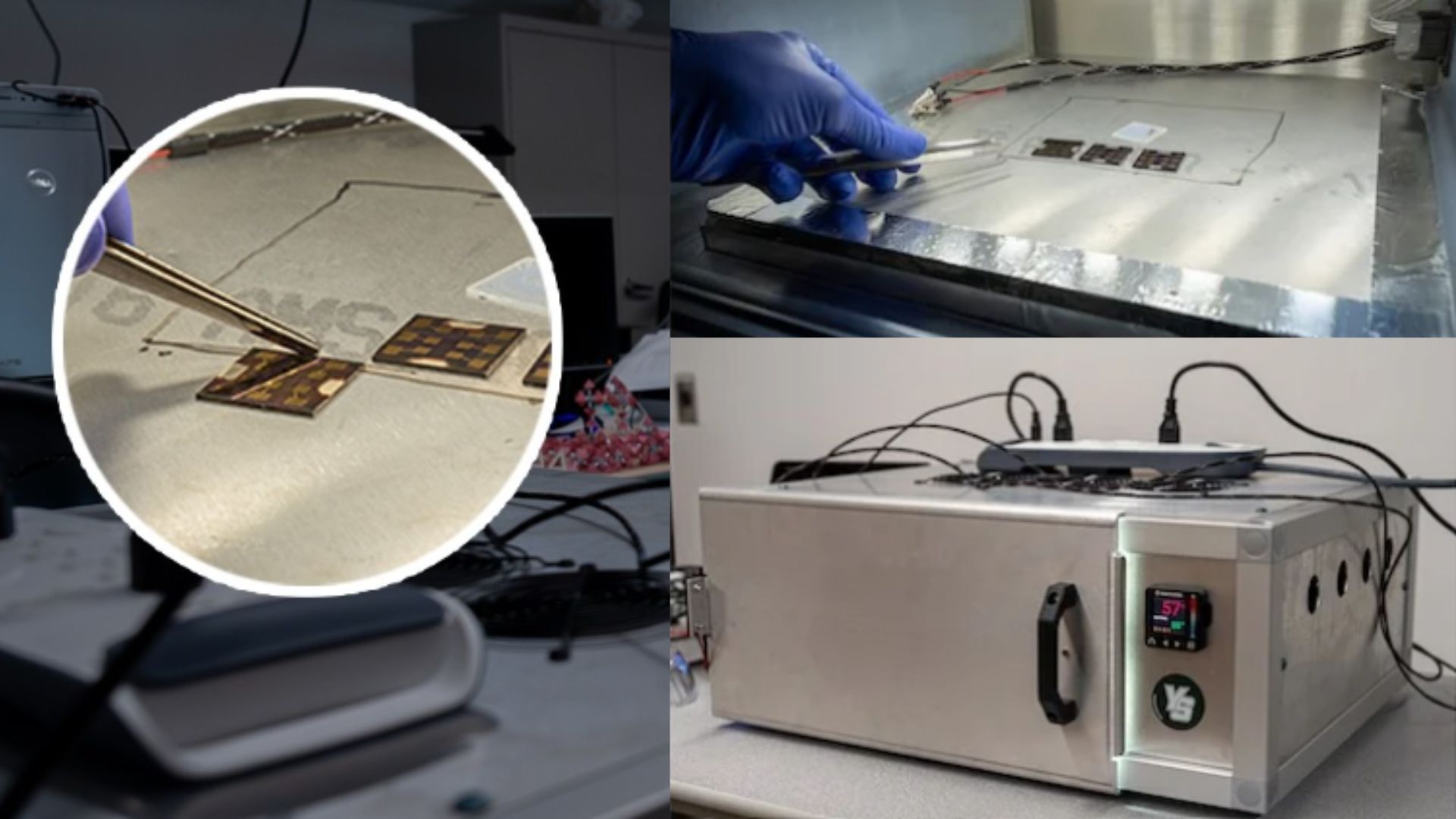
Rice University breakthrough makes perovskite solar cells far more durable
Interesting Engineering·30 April 2026·Perovskite solar cells show 98% efficiency after 1,200 hours at 194°F - Scientists boost perovskite solar cell stability, retaining 98% efficiency after 1,200 hours at 194°F using new additive strategy.
Signals:
- →New chemical additives significantly enhance perovskite solar cell durability under extreme heat.
- →Improved stability enables cost-effective, high-performance alternatives to traditional silicon solar technology.
- →Enhanced crystal growth methods support the commercial viability of high-efficiency tandem solar cells.
Switzerland Bets Billions on Victorian-Era Battery Tech to Power the AI Age
Swiss energy firm FlexBase is excavating a colossal pit in Laufenburg, northern Switzerland — 27 metres deep and spanning the length of two football pitches — to house what will become the world's most powerful redox flow battery. With a storage capacity of 2.1 GWh, the system could supply 210,000 households for a full day, dwarfing China's current record-holding 700 MWh Xinhua Ushi plant. The privately funded project carries an estimated price tag between US$1.2 billion and US$6.2 billion, with completion targeted for 2029. The technology itself dates back to 1879 and was refined through NASA research during the Space Race. Unlike lithium-ion batteries suited for short-term storage, redox flow batteries pump liquid electrolytes — 75% water-based and non-flammable — through membrane cells, enabling virtually unlimited charge cycles with no degradation. This makes them ideal for grid-scale, long-duration energy storage. Critically, FlexBase is positioning the battery not just as a grid stabiliser but as infrastructure for the AI era, designed to deliver the constant, reliable power that nearby data centres demand. The facility anchors a 20,000 m² technology complex that will also house labs, offices, and AI data centres, creating roughly 300 jobs and placing Switzerland at the forefront of a global race alongside Japan and Germany.
2 sources
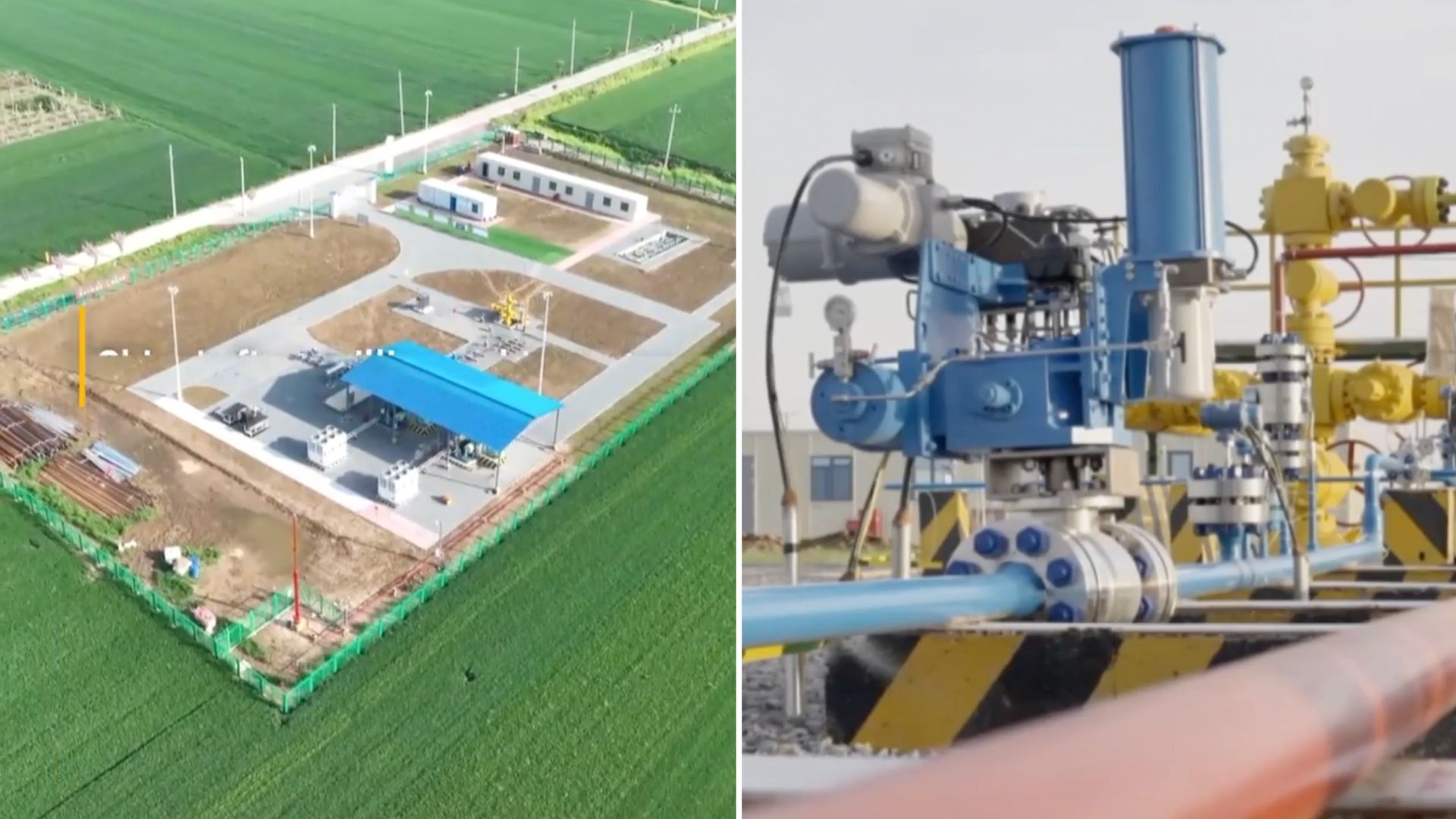
China launches underground salt cavern hydrogen storage facility
Interesting Engineering·27 April 2026·China launches 1-million-cubic-meter salt-cavern to store hydrogen - China launches its first million-cubic-meter salt cavern hydrogen storage project in Henan, advancing large-scale energy storage.
Signals:
- →Salt cavern storage solves critical bottlenecks in large-scale hydrogen supply chain infrastructure.
- →Underground storage enables balancing renewable energy production with fluctuating industrial demand.
- →Successful validation supports decarbonizing heavy industry and transportation through scalable hydrogen adoption.

USGS finds 2.3M metric tons of lithium in Appalachians
Interesting Engineering·30 April 2026·US hits jackpot, 2.3 million metric ton of lithium deposit discovered - The USGS identifies a massive domestic lithium supply that could stabilize the US energy grid and revolutionize domestic manufacturing.
Signals:
- →Appalachian lithium reserves could secure domestic supply and reduce reliance on foreign imports.
- →Large-scale deposits support long-term national goals for electric vehicle and energy grid expansion.
- →Findings provide a scientific foundation for critical mineral policy and infrastructure investment decisions.
Transport

Organic Transit's Elf 3.0 velomobile adds solar power and passenger seat
New Atlas·1 May 2026·New solar electric velomobile seats two, goes further - The improved Elf 3.0 solar electric velomobile offers a longer range, dual seating, and advanced features, making sustainable travel easier.
Signals:
- →Offers a highly efficient, sustainable solution for urban micro-mobility and commuting.
- →Programmable drivetrain allows for flexible regulatory compliance across various vehicle classes.
- →Enhanced passenger capacity and accessibility features expand potential market reach and utility.
3D Printing

China successfully tests metal 3D printing in orbit
Signals:
- →In-space manufacturing reduces launch costs by optimizing payload volume and logistics.
- →Automated orbital printing enables the construction of large-scale infrastructure in space.
- →Remote-controlled metal deposition validates autonomous production capabilities for future space missions.
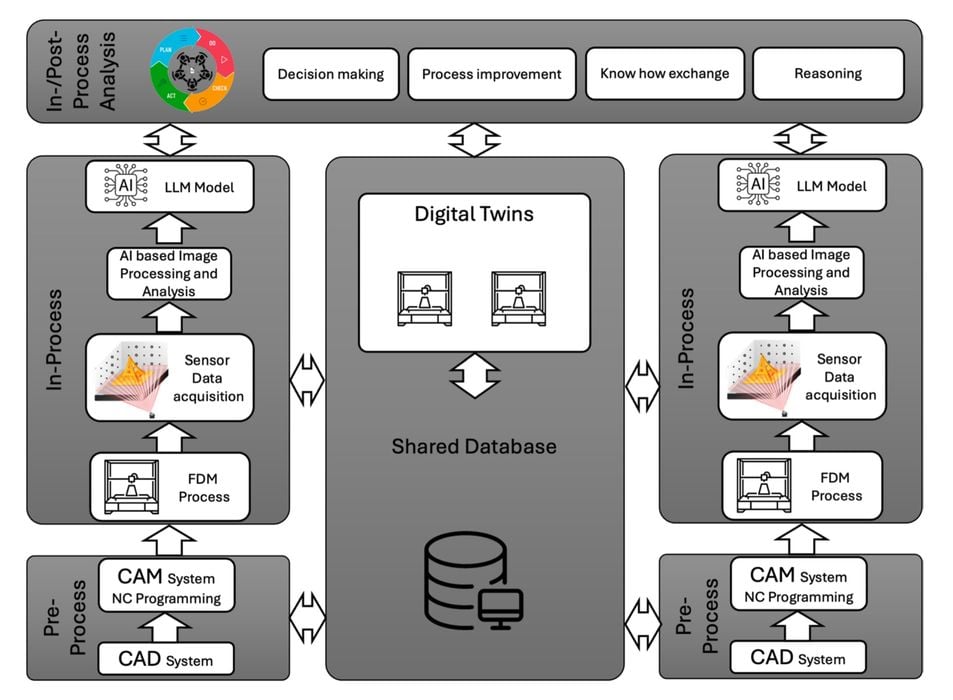
AI-powered digital twin brings closed-loop 3D printing to SMEs
Signals:
- →Low-cost, open-source architecture enables SMEs to implement advanced closed-loop additive manufacturing.
- →Digital Twin integration reduces production waste and minimizes manual diagnostic downtime.
- →AI-driven feedback loops provide actionable insights, lowering technical barriers for small-scale operations.
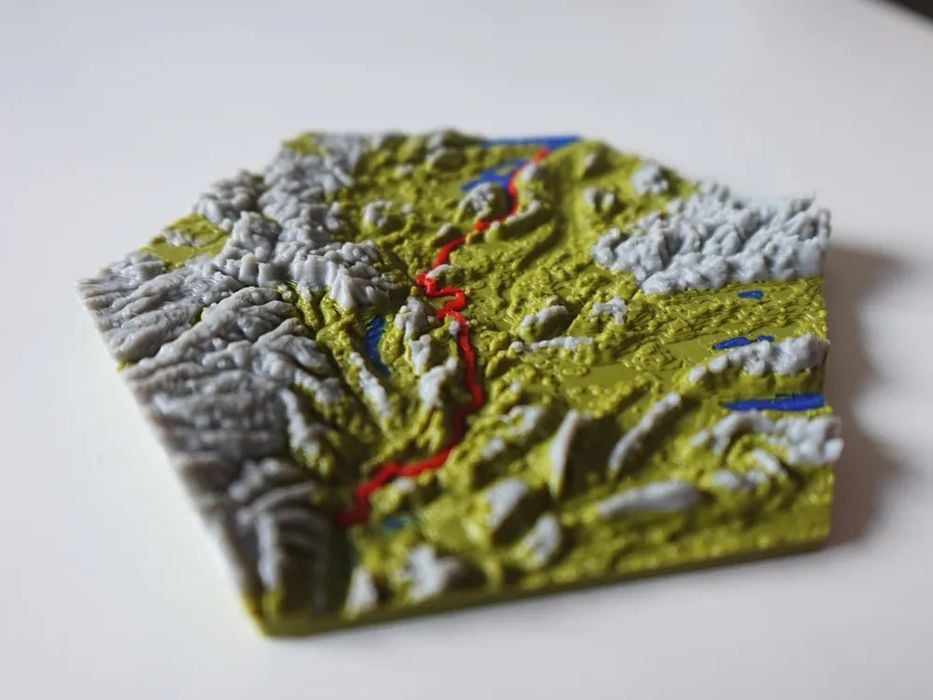
TrailPrint3D turns your hike's GPS data into 3D prints
Signals:
- →Enables rapid, automated creation of high-quality 3D terrain models from GPS data.
- →Offers commercial-use rights, supporting new revenue streams for custom product design.
- →Localized data processing ensures data privacy and security for sensitive geographic information.

LightForce unveils first patient-specific 3D printed metal braces
Signals:
- →Patient-specific 3D printing significantly reduces orthodontic treatment times and clinical appointment frequency.
- →Generative manufacturing allows for precise, individualized hardware, disrupting traditional one-size-fits-all orthodontic models.
- →Expanding into metal brackets captures a larger market share of global orthodontic patients.
Mining Tech

Cheap submersibles aim to democratize deep-sea exploration
Signals:
- →Low-cost autonomous submersibles significantly reduce the financial barriers to deep-sea exploration and data collection.
- →Advanced robotic sampling enables more precise, surgical environmental assessments for critical mineral resource management.
- →Increased accessibility to deep-sea data supports better-informed regulatory decisions regarding seafloor mining activities.
Quantum Tech

Frozen neon qubits show noise 10,000 times lower than rivals
Phys.org·Quantum computing's next dark horse emerges from a frozen surface, where almost nothing behaves as expected - Quantum bits (qubits) are the fundamental building blocks of quantum information processing. A novel qubit platform invented at the U.S. Department of Energy's (DOE) Argonne National Laboratory exhibits noise levels thousands of times lower than those of most traditional qubits. "Noise" refers to disturbances in the environment that diminish a qubit's performance. The platform was built by trapping single electrons on the surface of frozen neon gas. The recent finding positions Argonne's platform as a strong contender in the field of high-performance quantum technologies.
Signals:
- →New neon-based qubits significantly reduce noise, improving quantum computing stability and error rates.
- →This platform offers a simpler, lower-cost fabrication process compared to traditional semiconductor technologies.
- →Superior coherence times position this technology as a scalable solution for future quantum applications.

Oxford achieves quadsqueezing 100x faster than expected
Interesting Engineering·1 May 2026·Oxford team achieves advanced quantum squeezing with trapped ion - University of Oxford has achieved a milestone in quantum physics by demonstrating quadsqueezing, a complex fourth-order quantum interaction.
Signals:
- →Breakthrough quantum control enables ultra-sensitive gravitational sensors and advanced computing capabilities.
- →New method generates complex quantum interactions 100 times faster than previously possible.
- →Novel technique allows simulation of complex physical theories previously considered purely theoretical.

Australian researchers build world's first proof-of-concept quantum battery
 SciTechDaily·3 May 2026·Scientists Just Built a Quantum Battery That Charges Almost Instantly - Scientists have built a quantum battery that could make charging almost instant.
Signals:
- →Quantum batteries enable near-instant charging speeds, potentially revolutionizing consumer electronics and electric vehicles.
- →The technology scales efficiently, meaning larger batteries charge faster than smaller ones.
- →Successful proof-of-concept testing validates a new, scalable path for future energy storage solutions.

Scientists debunk CIA's "Ghost Murmur" quantum heartbeat detector
Signals:
- →Claims regarding long-range quantum heartbeat detection lack scientific feasibility and peer-reviewed evidence.
- →Misinformation about advanced surveillance capabilities can distort strategic intelligence and public perception.
- →Decision makers should verify technological claims against fundamental physical constraints before allocating resources.
BCIs and Neuro Tech
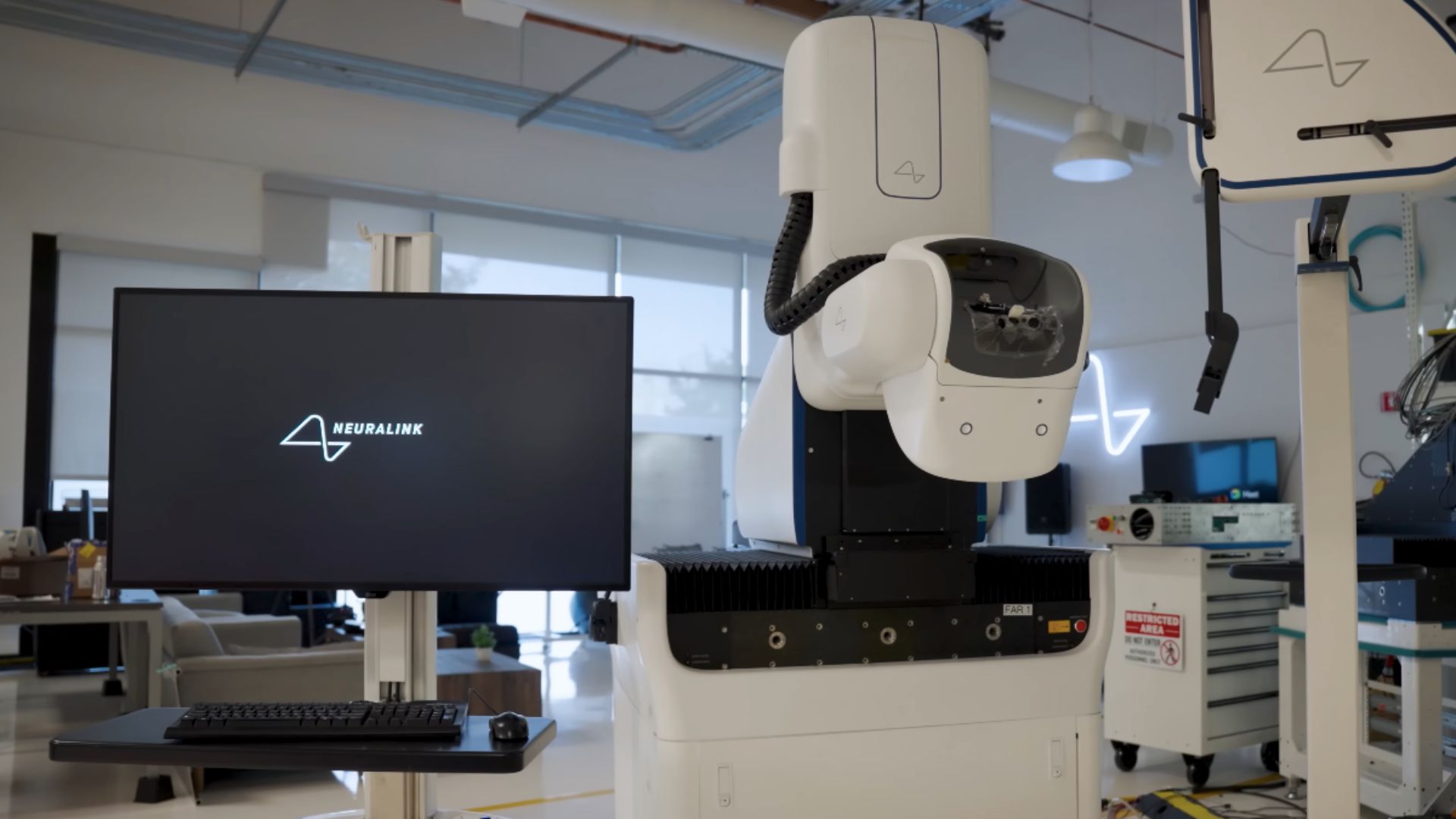
Neuralink's surgical robot automates brain implant procedures at scale
Interesting Engineering·30 April 2026·Neuralink unveils surgical robot to fully automate brain chip implants - Neuralink’s specialized surgical robot will support the implantation process by automating the delicate task of weaving hair-thin threads into brain tissue.
Signals:
- →Automated surgical robotics enable scalable, safer, and more efficient BCI implantation procedures.
- →Successful human trials demonstrate significant potential for restoring independence to paralyzed patients.
- →Rapid technological scaling necessitates addressing long-term biocompatibility and potential device signal degradation.
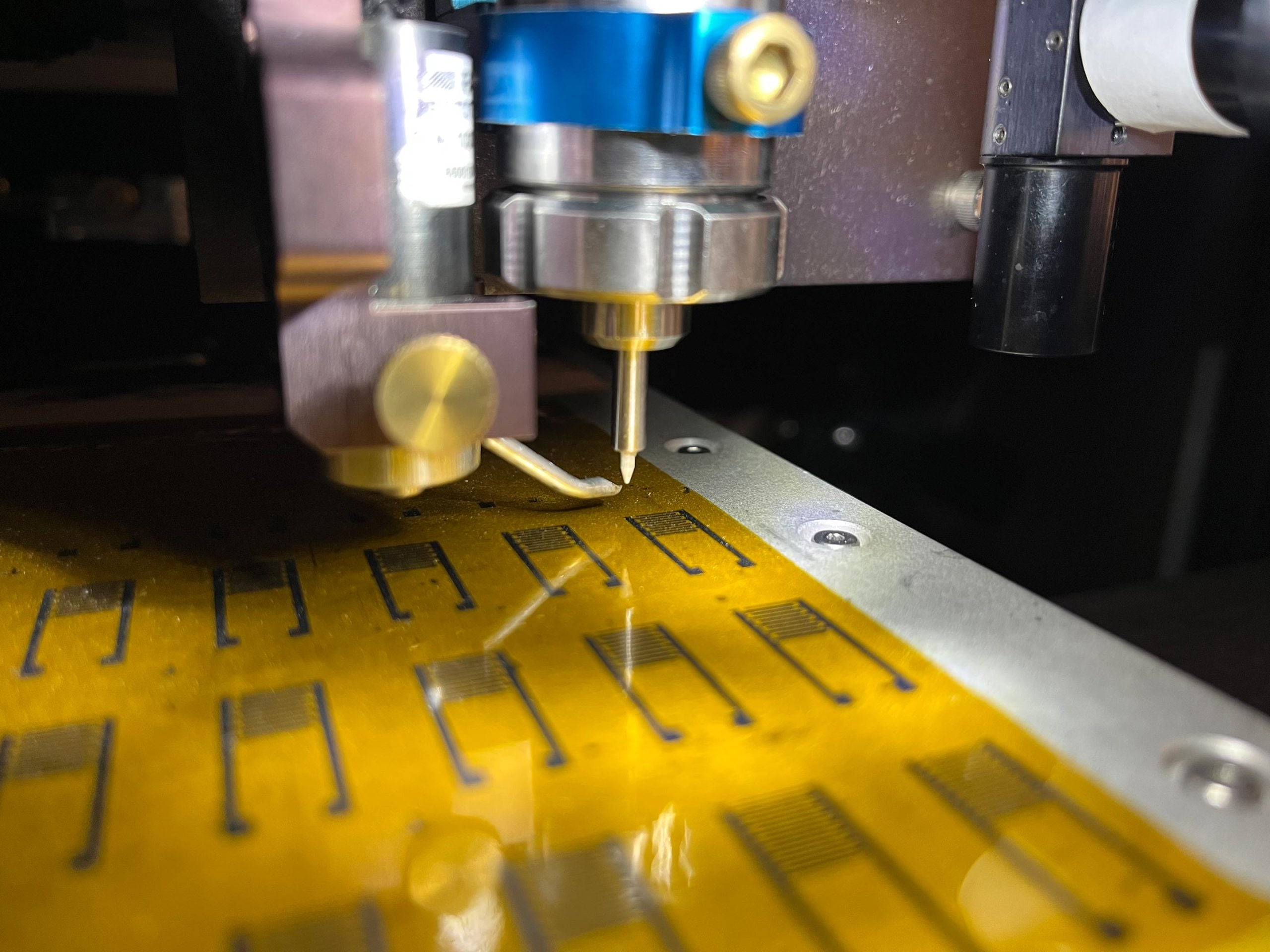
Printed artificial neurons successfully communicate with real brain cells
SciTechDaily·30 April 2026·Scientists Print Artificial Neurons That Can Talk to the Brain - Artificial neurons that can “talk” to the brain could reshape medicine and computing.
Signals:
- →Breakthrough printed neurons enable direct, seamless communication with living biological brain tissue.
- →Brain-inspired hardware offers a path to drastically reduce AI’s massive energy consumption.
- →Low-cost, flexible manufacturing enables scalable, efficient solutions for next-generation neuroprosthetic medical devices.
Bio Tech

Venter's death prompts reckoning with synthetic biology's unfulfilled promise
Phys.org·Synthetic biology promised to rewrite life—with the death of its pioneer, J. Craig Venter, how close are scientists? - When scientist J. Craig Venter and his team announced in 2010 that they had created the first cell controlled by a fully synthetic genome, it marked a turning point in how scientists think about life.
Signals:
- →Synthetic biology offers transformative potential for medicine, energy, and environmental sustainability.
- →Complex biological systems and scaling challenges currently limit industrial-scale implementation and progress.
- →Dual-use risks and ethical concerns necessitate robust governance and improved biosecurity oversight.
Materials Science

New carbon material slashes energy needed for CO2 capture
Signals:
- →New materials significantly lower energy requirements for industrial carbon capture processes.
- →Lower operating temperatures enable the efficient use of existing industrial waste heat.
- →Precise molecular engineering improves the economic viability of large-scale carbon sequestration.

Bamboo plastic biodegrades in 50 days yet rivals traditional materials
Phys.org·Bamboo-based plastic can be made to biodegrade quickly, but still holds up in tough conditions - A new method to produce strong, biodegradable plastic from bamboo is reported in Nature Communications this week. The bioplastic resembles oil-based plastics in strength, shapability, and thermal stability but can biodegrade in soil within 50 days, presenting a new pathway toward sustainable plastic alternatives.
Signals:
- →High-performance bamboo plastic offers a sustainable, durable alternative to traditional oil-based materials.
- →Rapid soil biodegradation and closed-loop recyclability support corporate environmental and sustainability goals.
- →Superior mechanical strength enables this material to replace plastics in demanding industrial applications.
Nanotech

Self-healing transistor restores memory after being cut in half
Signals:
- →Self-healing transistors enable durable, long-lasting neuromorphic hardware for complex bioelectronic and robotic applications.
- →High memory retention after physical damage significantly improves the reliability of soft, implantable electronics.
- →Reconfigurable, modular synaptic arrays allow for flexible, adaptive circuit designs in next-generation computing systems.

Light-driven nanomotors prevent kidney stones from forming
Signals:
- →Nanomotors offer a proactive, non-invasive method to prevent kidney stone formation.
- →Targeted antioxidant delivery reduces tissue damage and improves patient recovery outcomes.
- →This technology represents a significant advancement in precision urological medical treatments.
Deep science

Tiny RNA molecule "QT45" offers clues to life's origins
Signals:
- →Breakthrough research demonstrates how simple RNA molecules can self-replicate and evolve.
- →Findings provide a plausible scientific framework for the origins of complex life.
- →Discovery informs potential for life on exoplanets by bridging chemistry and biology.

Fruit flies survive 13G forces, offering clues for space travel
Interesting Engineering·1 May 2026·Scientists spin fruit flies in centrifuge, find resilience at 13G - Centrifuge experiments reveal how fruit flies respond to extreme gravity, highlighting resilience and energy trade-offs in biology.
Signals:
- →Biological resilience to hypergravity suggests potential for long-term human spaceflight adaptation.
- →Findings provide critical insights for managing pilot and astronaut health under high-G stress.
- →Metabolic and behavioral data informs future strategies for human performance in extreme environments.

Femtosecond laser achieves ultrafast all-optical polarization control
Signals:
- →Enables ultrafast, reconfigurable polarization control on a single, unpatterned material platform.
- →Eliminates complex nanofabrication requirements by using temporal excitation to shape optical responses.
- →Supports high-speed, broadband applications in quantum computing, logic, and advanced photonic sensing.

Scientists control light polarization 100,000x stronger than ever before
Signals:
- →Enables ultra-fast, high-precision light control for advanced quantum computing and communication systems.
- →Accelerates drug development by improving molecular analysis through superior light polarization techniques.
- →Offers 10,000x faster processing speeds than current electronics using all-optical, non-mechanical technology.
⏳ Zeitgeist
Climate

REDD+ carbon credits protected forests despite massive over-crediting
Phys.org·Carbon credits have enabled vital protection of tropical forests—despite being oversold 10-fold - A major analysis led by the University of Cambridge has found that many REDD+ projects achieved meaningful reductions in forest loss—offering real environmental benefits. This is despite the study confirming that almost 11 times more carbon credits were issued from the REDD+ (Reduced Emissions from Deforestation and Degradation) voluntary carbon market than was justified.
Signals:
- →REDD+ projects effectively protect tropical forests despite significant issues with credit over-issuance.
- →Future carbon markets require more accurate, independent data to ensure legitimate environmental impact.
- →Distinguish between project conservation success and flawed credit valuation to maintain market viability.

Warming soils releasing "stable" carbon, upending climate assumptions
SciTechDaily·1 May 2026·After 37 Years, the World’s Longest-Running Soil Warming Experiment Uncovers a Startling Climate Secret - A decades-long experiment in a Massachusetts forest is uncovering unexpected behavior in soil carbon.
Signals:
- →Warming soils release previously stable carbon, potentially accelerating global climate change feedback loops.
- →Current climate models may require adjustment to account for unexpected soil carbon decomposition.
- →Long-term research is essential for identifying climate risks that emerge over several decades.

Vegan diet slashes greenhouse gas emissions by 55%, trial finds
Phys.org·Plant-based diets cut climate impact by more than half, randomized clinical trial shows - As climate change accelerates and global temperatures continue to rise, a new randomized clinical trial provides compelling evidence that one of the most powerful climate solutions may be on our plates. A study published in Current Developments in Nutrition shows that adopting a low-fat vegan diet reduces diet-related greenhouse gas emissions by 55% and cumulative energy demand by 44%—dramatic reductions achieved in just 12 weeks.
Signals:
- →Vegan diets reduce greenhouse gas emissions by 55% and energy demand by 44% within 12 weeks.
- →Evidence comes from randomized clinical trials, not just observational data, strengthening policy credibility.
- →Dietary change simultaneously improves public health and sustainability, offering dual policy benefits.

Amsterdam becomes first capital to ban meat and fossil fuel ads
Signals:
- →Cities are increasingly using public advertising bans to align urban spaces with climate goals.
- →Regulators are reframing meat and fossil fuel consumption as public health and climate issues.
- →Municipalities are testing whether restricting physical advertising effectively shifts long-term consumer social norms.
Pollution

Synthetic chemicals and climate change threaten global fertility, scientists warn
Signals:
- →Synthetic chemicals and climate change are driving a global, cross-species fertility crisis.
- →Only one percent of synthetic chemicals have undergone sufficient safety and toxicity evaluations.
- →Endocrine-disrupting pollutants pose significant long-term risks to human health and biodiversity stability.
Health

Hantavirus outbreak on cruise ship raises human transmission fears
Three people have died after a suspected outbreak of hantavirus on board a cruise ship sailing between Argentina and Cape Verde.
Geopolitics
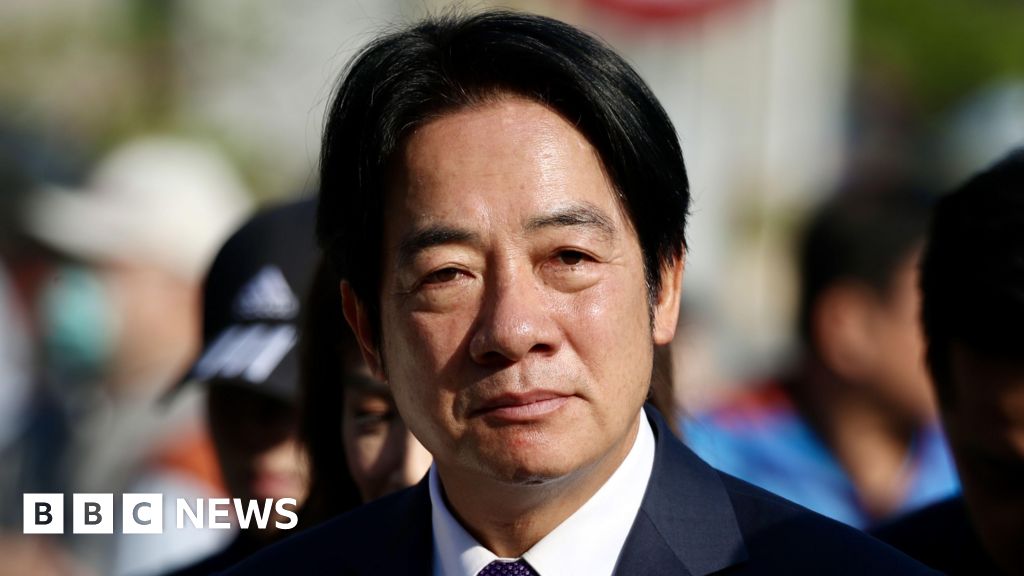
China blocks Taiwan president's Africa trip by revoking flight permits
Signals:
- →China is increasingly using economic coercion to isolate Taiwan diplomatically on the global stage.
- →Flight permit revocations demonstrate new risks to Taiwanese leadership's international travel and diplomacy.
- →Geopolitical tensions are forcing African nations to choose between Chinese influence and Taiwanese ties.

Global press freedom hits record low, US drops to 64th place
Arstechnica·30 April 2026·US falls below Ukraine in press freedom as global autocracy takes hold - Ars Technica - In 25 years, the average score... has never been so low."
Signals:
- →Global press freedom is declining, reaching its lowest levels in twenty-five years.
- →The United States has dropped significantly in rankings, signaling a major domestic crisis.
- →Nordic nations demonstrate that high press freedom correlates with superior human development outcomes.
China's tariff-free Africa deal: Bold gesture, limited impact
Semafor·1 May 2026·China’s soft power play in Africa | Semafor - China’s scrapping of import tariffs from 53 African countries burnishes its reputation as a trusted trade ally in stark contrast to Washington.
Signals:
- →China’s tariff removal strengthens its geopolitical influence and soft power across Africa.
- →Structural trade deficits persist despite tariff changes due to raw material reliance.
- →Industrialization and removing non-trade barriers are essential for meaningful economic growth.

Zambia cancels digital rights summit amid China-Taiwan tensions
Semafor·1 May 2026·Zambia cancels digital rights summit over China Taiwan tension | Semafor - The event, which was due to take place in Lusaka next week, was reportedly canceled following pressure from Chinese authorities.
Signals:
- →Geopolitical tensions with China are increasingly dictating African nations' domestic policy and events.
- →Heavy reliance on Chinese debt limits sovereign decision-making and international diplomatic flexibility.
- →Digital rights and democratic governance are facing significant risks from foreign influence.

UN faces critical leadership test as global influence fades
Financial Times·4 May 2026·The perilously high stakes for the next UN leader - International body must sharpen its focus to stay relevant in a fractured world
Signals:
- →The UN’s declining global influence necessitates urgent leadership reform to remain relevant.
- →Selecting a capable secretary-general is critical for addressing ongoing international security crises.
- →Structural inefficiencies and bureaucratic bloat require immediate strategic refocusing by new leadership.
🧠Mind expanding

Dawkins asks: is Claude conscious?
 UnHerd·1 May 2026·When Dawkins met Claude - UnHerd - “If a machine can make jokes and write poetry — what is left for consciousness to explain?”
Signals:
- →Advanced AI now passes the Turing Test, challenging traditional definitions of machine consciousness.
- →Rapid AI evolution necessitates urgent ethical frameworks regarding the moral status of LLMs.
- →AI competence without consciousness forces a re-evaluation of why biological consciousness evolved.

Engineer admits being wrong on hydrogen, nuclear, and biofuels
Signals:
- →Prioritize evidence-based decision-making over entrenched beliefs to avoid costly strategic errors.
- →Recognize that hydrogen, nuclear, and biofuels have specific, limited roles in decarbonization.
- →Cultivate intellectual humility to identify and discard ineffective ideas before wasting capital.

Shannon vs. Kolmogorov: why AI can't find the next Einstein equation
Signals:
- →Current AI excels at statistical prediction but lacks the causal reasoning required for discovery.
- →Distinguishing between statistical correlation and generative mechanisms is critical for evaluating AI capabilities.
- →Scientific breakthroughs require causal modeling, which remains beyond the reach of current LLM architectures.
💭Meme stream

Ask.com officially shuts down after 30 years
TechCrunch·2 May 2026·Farewell, Jeeves: Ask.com shuts down | TechCrunch - Owner IAC says it's discontinuing its search business.
Signals:
- →Demonstrates the long-term risks of failing to compete with dominant search platforms.
- →Highlights the necessity of strategic divestment from non-core, underperforming business units.
- →Illustrates how early market pioneers can be eclipsed by evolving technological standards.