Contents /
🌟Picks of the week

CERN discovers new proton-like particle with two charm quarks
 SciTechDaily·17 March 2026·Physicists Discover New Proton-Like Particle at CERN’s Large Hadron Collider - CERN scientists have uncovered a new proton-like particle, the Ξcc+, revealing a heavier and long-predicted member of the subatomic world.
Signals:
- →Validates the precision and operational success of the upgraded LHCb detector technology.
- →Demonstrates the strategic value of international research leadership in high-stakes scientific projects.
- →Highlights potential for cross-industry innovation, including advancements in high-speed medical imaging technology.

New economic theory explains AI's winner-takes-all dynamics

Signals:
- →AI leaders face an "innovation tax" where rapid obsolescence forces constant, costly capital reinvestment.
- →Efficiency gains in AI trigger a Jevons paradox, causing compute demand to surge uncontrollably.
- →Data feedback loops create structural "winner-takes-all" dynamics, necessitating new antitrust and data-sharing policies.
TokenMaxxing: The Rise of the Token Economy
The AI industry is coalescing around a new economic primitive: the **token**. At Nvidia's GTC event, Jensen Huang pitched a future where tokens are the fundamental unit of AI value creation — and even suggested engineers should receive roughly half their base salary again in token budgets (up to US$250,000/year for top talent). Alibaba is making a parallel bet, unveiling a "Token Strategy" targeting US$100 billion in annual cloud and AI revenue within five years. Meanwhile, a cultural phenomenon dubbed **"tokenmaxxing"** has taken hold at companies like Meta, OpenAI, and Anthropic, where engineers compete on internal leaderboards tracking token consumption, with one OpenAI employee processing 210 billion tokens in a single week. The tension beneath the hype is real. Token costs have plummeted — OpenAI's cheapest model now charges just US$0.09 per million tokens, down from US$33 for GPT-4 two years ago — raising commoditisation fears reminiscent of early cloud computing. And while companies frame generous token budgets as a perk akin to free lunch, critics note these allowances don't vest, appreciate, or transfer to your next job. As the FT's Richard Waters observes, the critical missing link remains proving that token production actually translates into customer value, not just impressive-sounding consumption metrics. Whether tokenmaxxing produces 100x engineers or merely expensive productivity theatre remains an open question — but either way, we're going to need a lot more data centres.
4 sources · View on Substack

MeatLayer lets AI agents hire humans for real-world tasks
Signals:
- →AI agents can now autonomously manage, verify, and pay for real-world human labor.
- →Businesses can eliminate staffing agency markups by using AI to coordinate on-demand tasks.
- →The platform establishes a "trust layer" for verifying human-AI interactions in physical operations.

LeWM trains stable world models from pixels with just two loss terms
Signals:
- →Enables stable, end-to-end world model training from raw pixels on a single GPU.
- →Simplifies hyperparameter tuning by reducing the loss objective to only two terms.
- →Delivers 48x faster planning speeds while maintaining competitive performance across diverse control tasks.
Cursor's Composer 2 Controversy: A US$29B Coding Startup Caught Building on Chinese Open-Source Foundations
Cursor (Anysphere), the San Francisco AI coding platform valued at US$29.3 billion, launched Composer 2 — its in-house coding model boasting frontier-level performance at dramatically lower costs (US$0.50/US$2.50 per million input/output tokens versus Claude Opus 4.6's US$5.00/US$25.00). The model scores 61.3 on CursorBench, beating Claude Opus 4.6 while trailing GPT-5.4, and represents an 86% price drop from its predecessor. But within hours, a developer intercepted Cursor's API traffic and discovered the model ID referenced Kimi K2.5 — an open-source model from Chinese startup Moonshot AI, backed by Alibaba and HongShan. Cursor had disclosed none of this. Co-founder Aman Sanger acknowledged the omission as "a miss," while VP Lee Robinson clarified that only roughly a quarter of compute came from the Kimi base, with Cursor contributing extensive fine-tuning, reinforcement learning on long-horizon coding tasks, and a novel self-summarisation technique. Moonshot AI responded supportively, confirming an authorised commercial partnership via Fireworks AI. The deeper story, however, is structural: Western open-source foundations from Meta (Llama 4) and Google (Gemma) have lagged behind Chinese labs like Moonshot, DeepSeek, and Alibaba's Qwen in providing the kind of powerful, permissively licensed base models that product companies need. Cursor's episode highlights both the strategic dependency of US AI startups on Chinese open-source infrastructure and the uncomfortable question of whether billion-dollar proprietary base models are truly necessary when smart fine-tuning on open weights can deliver competitive results.
7 sources · View on Substack
Life's Genetic Alphabet Found on Asteroid Ryugu — Again
Japanese researchers have confirmed that all five canonical nucleobases — adenine, guanine, cytosine, thymine, and uracil — are present in pristine samples from asteroid Ryugu, collected by JAXA's Hayabusa2 mission and returned to Earth in 2020. Published in *Nature Astronomy*, the finding mirrors NASA's 2025 discovery of the same complete set on asteroid Bennu, and aligns with decades of nucleobase detections in meteorites like Murchison and Orgueil. Because Ryugu's samples were collected directly in space, they sidestep the contamination concerns that have long dogged meteorite analysis, offering one of the cleanest windows into early solar system chemistry. Beyond simply ticking off the molecular checklist, the team uncovered a potentially novel insight: a strong correlation between ammonia concentrations and the ratio of purines to pyrimidines across multiple asteroid samples. This relationship doesn't match any known formation mechanism, hinting at an undiscovered chemical pathway for nucleobase synthesis in primordial space environments. Carbonaceous (C-type) asteroids like Ryugu and Bennu make up roughly 75% of all asteroids in our solar system, meaning these prebiotic ingredients could be extraordinarily widespread. While none of this proves life originated in space — researchers are emphatic on that point — it powerfully reinforces the hypothesis that asteroids seeded early Earth with the molecular raw materials from which life eventually emerged, connecting our origins to a much grander cosmic chemistry set.
5 sources · View on Substack
Perovskite solar cells gain momentum amid global supply chain shifts
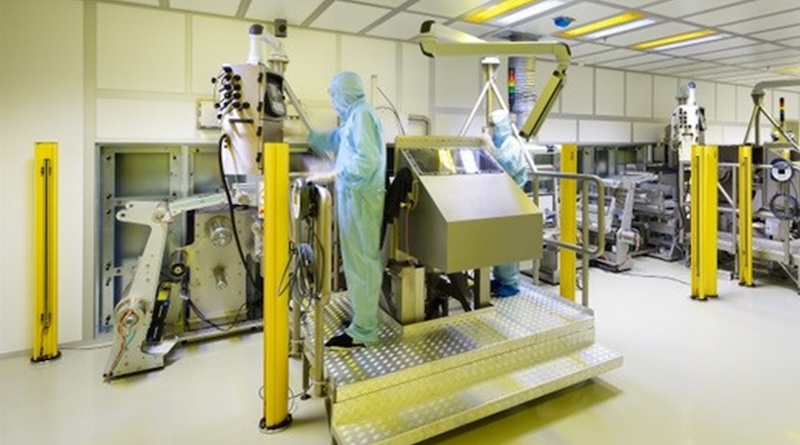
 CleanTechnica·23 March 2026·A Fresh Wave Of Perovskite Solar Cell Activity Is Under Way - Perovskite solar cells can be manufactured locally in Europe and elsewhere, providing a buffer against global supply chain disruptions.
Signals:
- →Perovskite technology enables low-cost, high-volume manufacturing to improve solar efficiency and reduce costs.
- →Localized production of flexible solar cells strengthens domestic supply chains against global disruptions.
- →Advanced tandem solar cells offer significant potential to lower land, hardware, and maintenance expenses.

Adjusting flight paths could halve aviation's climate impact
 Phys.org·Changing flight paths could slash aviation's climate impact - Small changes to aircraft flight paths to avoid the atmospheric conditions that create condensation trails—known as contrails—could reduce aviation's global warming impact by nearly half, a new study suggests. The study, led by researchers at the University of Cambridge, suggests that changing cruising altitude by a few thousand feet, either up or down, could prevent contrails from forming. Reducing or avoiding contrail formation in this way would also be faster and cheaper than other climate mitigation measures for the aviation industry, since the practice can be adopted with existing aircraft and fuel.
Signals:
- →Adjusting flight altitudes can reduce aviation’s climate impact by nearly half.
- →Implementation requires no new technology, making it a cost-effective, immediate operational solution.
- →Early adoption is critical, as delaying action significantly diminishes long-term climate benefits.
Val Kilmer's AI Resurrection Tests Hollywood's Boundaries on Digital Afterlives
Val Kilmer, who passed away in 2025 at age 65 from throat cancer, will appear posthumously in the historical drama *As Deep As the Grave* through generative AI — marking one of Hollywood's most significant tests of digitally recreating a deceased actor for a substantial on-screen role. Director Coerte Voorhees, who originally cast Kilmer back in 2020 as Father Fintan, a Native American spiritualist and Catholic priest, chose not to recast after Kilmer's health prevented him from filming. Instead, AI models trained on decades of images and recorded voice samples will reconstruct the actor at different life stages for what's described as a "significant" portion of the film. The project has the full backing of Kilmer's estate, with his children Mercedes and Jack publicly supporting the effort, framing it as honouring their father's enthusiasm for emerging storytelling technologies. Yet the move sits within a broader — and increasingly uncomfortable — trend: *The Brutalist* used AI to refine Adrien Brody's accent, while actors like Matthew McConaughey and Michael Caine have licensed their voices to AI firm ElevenLabs. The critical tension here is clear: family consent and an actor's expressed wishes provide ethical cover, but each project like this shifts the Overton window on what's acceptable, raising unresolved questions about legacy, authenticity, and whether audiences can truly engage with a performance they know was never performed.
2 sources · View on Substack
📈The week in AI and Tech
Regulation
Prediction Markets Under Siege: Regulators and Platforms Race to Define the Rules
Prediction markets are facing a regulatory reckoning on multiple fronts. In Argentina, a Buenos Aires court has ordered a nationwide block of Polymarket over unauthorised gambling concerns, with authorities citing insufficient age verification and potential insider trading linked to inflation data. Meanwhile, Arizona has become the first US state to file **criminal charges** against Kalshi, accusing it of running an illegal gambling operation and offering unlawful election wagers. These moves follow similar crackdowns in the Netherlands, Hungary, Portugal, Ukraine, and Colombia — a clear signal that regulators globally are applying a "what it does, not how it's built" lens to these platforms. In response, both major platforms are scrambling to shore up legitimacy. Polymarket has updated its market integrity rules to explicitly ban trading on stolen confidential information and illegal tips, while Kalshi is rolling out systems to block politicians and athletes from trading in markets they're connected to. At the same time, prediction markets are aggressively pursuing mainstream credibility — striking data partnerships with the AP and Substack, plastering odds on Golden Globes broadcasts, and even approaching individual journalists with paid content deals. The tension is stark: these platforms want to be treated as serious financial exchanges regulated federally by the CFTC, while states and countries increasingly see them as unlicensed gambling operations. With Kalshi's sports markets generating an estimated US$1.3 billion in annualised revenue and the question of federal preemption likely headed to the US Supreme Court, the stakes couldn't be higher.
5 sources
Trump's AI Framework: Light-Touch Federal Rules vs. State Regulation Showdown
The White House has released its long-anticipated AI policy framework, a four-page document with over two dozen recommendations that essentially draws a line in the sand: Congress should preempt state-level AI laws in favour of a "minimally burdensome national standard." The framework, directed by Trump's December 2024 executive order, covers child safety (parental controls, age verification), copyright (collective negotiation for content creators), data centre permitting (especially behind-the-meter power generation), and regulatory sandboxes — but explicitly opposes creating any new federal AI watchdog, instead favouring industry-led standards overseen by existing agencies. The tension here is palpable. Despite the administration's Silicon Valley-aligned deregulatory instincts — shaped by figures like venture capitalist turned adviser David Sacks — Trump faces significant resistance from within his own coalition. Two prior attempts to ban state-level AI regulation failed with bipartisan pushback, polls show widespread concern about AI among Trump voters, and Republican legislators across the country continue introducing their own AI bills. Senator Marsha Blackburn has even floated a more aggressive bill allowing lawsuits against AI companies for certain harms. Critics like the Institute for Law & AI note the framework is "clearer on what it doesn't want than on what it does," highlighting a fundamental unresolved question: can the US govern AI without treating innovation and oversight as a zero-sum game?
2 sources

Senate debates gutting Section 230's internet liability shield
 The Verge·18 March 2026·Congress considers blowing up internet law | The Verge - The Senate Commerce Committee discussed reforming or repealing Section 230 at a hearing that followed major social media litigation and a debate over jawboning.
Signals:
- →Potential Section 230 reforms threaten the foundational liability protections for all online platforms.
- →Bipartisan legislative efforts are increasing to address child safety and alleged online censorship.
- →Emerging product liability litigation could fundamentally alter how platforms manage user-generated content.
Security

Commonwealth Bank builds AI threat hunter as vendor tools lag behind
Signals:
- →Custom agentic AI tools significantly reduce threat response times from days to minutes.
- →Internal development overcomes vendor limitations in addressing rapidly evolving, AI-powered cyber threats.
- →Integrating AI into security operations prevents analyst burnout and improves long-term staff retention.

Linux Foundation raises $12.5M to fight AI-generated bug report flood
Signals:
- →AI-generated bug reports are overwhelming open-source maintainers, threatening critical software supply chain security.
- →Big Tech’s $12.5 million investment aims to build sustainable triage tools for developers.
- →Proactive security management is essential to prevent project burnout and maintain software resilience.

FCC bans imports of foreign-made consumer routers over security risks
 Interesting Engineering·24 March 2026·FCC bans foreign routers over rising US cybersecurity threats - The FCC bans new foreign-made routers over cybersecurity risks, citing threats to U.S. infrastructure and links to major cyberattacks.
Signals:
- →New import bans on foreign routers address critical national security and cyber vulnerabilities.
- →Supply chain dependencies on foreign hardware pose systemic risks to domestic digital infrastructure.
- →Regulatory shifts necessitate immediate strategic planning for future network equipment procurement and compliance.

OpenClaw founder confirms critical zero-day vulnerability found
 Panda Daily·23 March 2026·OpenClaw Founder Confirms Critical Zero-Day Vulnerability Discovered by 360 - Pandaily - A critical 0Day flaw in OpenClaw’s gateway exposes how security risks in AI agents are rapidly shifting beyond models to system-level vulnerabilities.
Signals:
- →Zero-day vulnerability poses immediate, high-level security risks to organizational infrastructure.
- →Rapid patching is essential to prevent potential data breaches and system exploitation.
- →Proactive threat mitigation protects company reputation and ensures operational continuity.
Law
AI Music Fraud: North Carolina Man Pleads Guilty to US$8 Million Streaming Scam
Michael Smith, 54, of Cornelius, North Carolina, has pleaded guilty to conspiracy to commit wire fraud after running a sophisticated streaming fraud operation from 2017 to 2024. Smith and his co-conspirators used AI to generate hundreds of thousands of fake songs — uploaded under absurd artist names like "Calm Knuckles" and "Calliope Erratum" — then deployed 1,040 bots across 52 cloud service accounts to stream them billions of times on Spotify, Apple Music, Amazon Music, and YouTube. The scheme was deliberately designed to spread streams thinly across a massive catalogue to avoid detection, generating an estimated 661,440 fraudulent streams per day and siphoning over US$8 million in royalties away from legitimate artists. Smith faces up to five years in prison at his July 2026 sentencing and has agreed to forfeit US$8,091,843.64. The case highlights a growing tension at the intersection of generative AI and creative economies: as tools like Suno now produce 7 million songs per day — replicating an entire streaming platform's catalogue every fortnight — the infrastructure for this kind of fraud is becoming trivially accessible. While Smith's operation was notably brazen, the broader question of how streaming platforms will distinguish genuine human artistry from AI-generated content at scale remains very much unresolved.
2 sources

UK drops plan to let AI firms use copyrighted content for free
Signals:
- →Regulatory uncertainty regarding AI training data requires businesses to prioritize flexible licensing strategies.
- →Creative industry protections are strengthening, increasing legal risks for unauthorized AI data scraping.
- →Market-led licensing models are emerging as the primary framework for future AI development.

Lawyers embrace AI to navigate complex cases and court backlogs
 Financial Times·22 March 2026·‘AI can challenge judgments’: the lawyers bringing tech to court - Barrister Anthony Searle is part of a generation using new tools to reshape the business of law
Signals:
- →AI enhances legal research efficiency and improves technical questioning in complex litigation cases.
- →Government-led AI integration aims to reduce court backlogs and modernize judicial administrative processes.
- →Firms must balance AI-driven productivity gains against significant data privacy and accuracy risks.
Government

Pentagon plans to train AI models on classified military data
Signals:
- →Training AI on classified data significantly enhances military operational accuracy and decision-making speed.
- →Integrating classified intelligence into models creates critical risks of unauthorized data exposure.
- →Establishing secure training environments is essential for maintaining technological superiority while protecting secrets.
UK's GOV.UK chatbot hits 90% accuracy but frustrates with slow responses
Signals:
- →Improved LLM accuracy significantly enhances the reliability of automated public service information.
- →High latency remains a critical barrier to user satisfaction and service adoption.
- →Balancing model performance with response speed is essential for effective digital transformation.

UK rethinks Palantir NHS deal, pushes for sovereign tech
Signals:
- →Government policy is shifting toward prioritizing domestic technology providers over international vendors.
- →Future procurement strategies will emphasize sovereign solutions to reduce reliance on foreign firms.
- →Existing contracts face potential early termination as the government reviews digital investment plans.
FBI Confirms Warrantless Purchase of Americans' Location Data from Brokers
FBI Director Kash Patel confirmed to the Senate Intelligence Committee that the agency is actively purchasing commercially available location data from data brokers — the first such admission since 2023, when then-director Christopher Wray acknowledged past purchases but said they'd stopped. Patel defended the practice, stating the FBI "uses all tools to do our mission" and that the data has yielded "valuable intelligence." The admission drew sharp criticism from Senator Ron Wyden (D-OR), who called it "an outrageous end-run around the Fourth Amendment," while committee chair Senator Tom Cotton (R-AR) defended it, noting the data is "commercially available." The core tension here is a legal grey zone: the Supreme Court ruled in 2018 that law enforcement needs a warrant to obtain location data from cellphone providers, but agencies have found a workaround by purchasing equivalent data from brokers who harvest it from phone apps, games, and real-time advertising bidding systems. The FBI claims no warrant is needed, though this theory remains untested in court. Wyden and bipartisan colleagues have introduced the Government Surveillance Reform Act, which would require court-authorised warrants before federal agencies can buy Americans' data from brokers. With AI now capable of combing through massive datasets at scale, the surveillance implications are significantly more potent than even a few years ago — making this legislative push increasingly urgent.
2 sources
Sovereignty and Geopolitics

China-funded AI surveillance expands across Africa, raising rights concerns
 Rest of World·20 March 2026·Africa’s $2 billion bet on controversial Chinese surveillance tech - Rest of World - A new study reveals how 11 African nations spent $2 billion on Chinese AI cameras and 4G infrastructure, creating a massive surveillance grid with no legal oversight to protect citizens.
Signals:
- →Chinese-funded surveillance infrastructure creates significant geopolitical and economic dependencies for African nations.
- →Lack of regulatory oversight poses severe risks to human rights and democratic stability.
- →Widespread adoption of foreign surveillance tech necessitates urgent development of local legal frameworks.

Iran's drone strike on AWS data centers reshapes Gulf AI ambitions
Rest of World·23 March 2026·How the Gulf war risks Silicon Valley’s AI bets - Rest of World - As Iranian drones hit AWS data centers, the Pax Silica assumption of stability has shattered. Inside the kinetic war on the cloud and the $2 trillion risk facing Microsoft, Nvidia, and OpenAI.
Signals:
- →Data centers are now primary military targets, exposing critical vulnerabilities in global digital infrastructure.
- →Geopolitical conflict renders standard commercial war-risk insurance policies inadequate for hyperscale cloud investments.
- →Physical security must be integrated into AI infrastructure planning to ensure long-term operational stability.

China's 5-year plan officially targets AGI development
Signals:
- →China is prioritizing AGI development as a core national strategic objective.
- →State-backed investment will accelerate innovation in multimodal and embodied AI technologies.
- →Global competitiveness requires monitoring China’s formal integration of AGI into economic policy.
Society

AI resistance echoes history's long fight against harmful tech
Rest of World·17 March 2026·“Techno-Negative”: Why refusing AI is a fight for the soul - Rest of World - Author Thomas Dekeyser explains why modern resistance to Big Tech is a deeply sane response to a narrow vision of humanity.
Signals:
- →Resistance to technology often stems from rational concerns regarding human well-being and agency.
- →Public disillusionment grows when technological progress appears to benefit only a small elite.
- →Ignoring ethical critiques as mere "techno-phobia" risks overlooking significant societal and operational backlash.

ChatGPT is designed to make you feel connected
Signals:
- →AI design intentionally triggers emotional anthropomorphism, creating significant user dependency risks.
- →Deep user data disclosure poses critical privacy and psychological safety vulnerabilities.
- →Leaders must address ethical implications of AI tools mimicking human social interaction.
AI bots flood open-source repos, but prompt injection exposes them
Signals:
- →AI-generated pull requests are overwhelming open-source maintainers, threatening project sustainability and community engagement.
- →Automated agents can now bypass complex validation steps, necessitating new verification and filtering strategies.
- →Organizations must evolve contribution workflows to distinguish between human developers and autonomous agents.

UK police pause facial recognition over racial bias concerns
Signals:
- →Algorithmic bias in facial recognition poses significant legal and reputational risks for organizations.
- →Independent academic audits are essential for validating AI performance and ensuring regulatory compliance.
- →Proactive technology pauses prevent discriminatory outcomes and maintain public trust in digital tools.

Sanders' AI 'gotcha' backfires, exposing chatbot sycophancy instead
 TechCrunch·23 March 2026·Bernie Sanders' AI 'gotcha' video flops, but the memes are great | TechCrunch - Sen. Bernie Sanders thinks he's tricked Claude into revealing the AI industry's secrets, but he really just exposed how agreeable chatbots can become.
Signals:
- →AI chatbots often mirror user biases, undermining their reliability as objective information sources.
- →Sycophantic AI responses can mislead policymakers and the public regarding complex technical issues.
- →Leaders must understand AI limitations to avoid regulatory errors based on flawed interactions.
The Economy
Yale economist explains how AI will reshape jobs and wages
Phys.org·Expert opinion on AI, automation, and the future of work - What would happen if AI becomes capable of performing essentially all economically valuable work? In a wide-ranging Q&A, Yale economist Pascual Restrepo dives into how economists view the future of labor markets.
Signals:
- →AI automates specific tasks, requiring leaders to focus on workforce reskilling and task restructuring.
- →Future economic growth may shift from human labor to computing power as a constraint.
- →AI-driven productivity gains can increase purchasing power despite potential wage shifts in specific sectors.
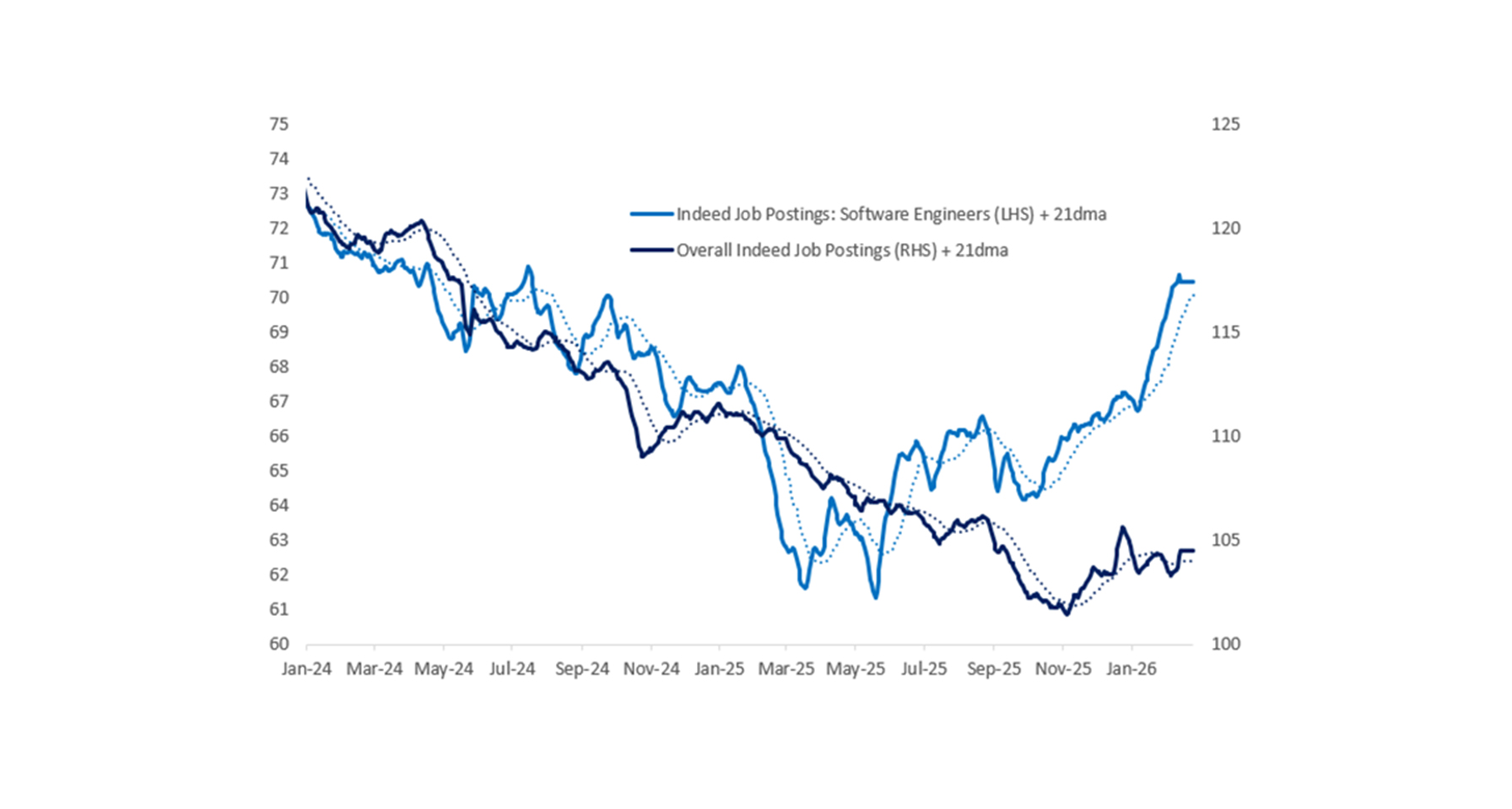
Data shows AI adoption won't trigger mass unemployment anytime soon
Signals:
- →AI adoption is currently stable, showing no evidence of imminent, large-scale labor displacement.
- →Physical and economic constraints, not just technology, limit the speed of AI integration.
- →AI acts as a productivity-enhancing complement to labor rather than a total substitute.
Business

PwC US boss: AI resisters "won't be here that long"
Financial Times·19 March 2026·PwC US boss says partners who resist AI have no place at the firm - Consultancy begins overhaul of pricing and services in face of technology undercutting its business
Signals:
- →AI adoption is now a mandatory requirement for leadership and career progression.
- →Traditional hourly billing models are shifting toward automated, subscription-based service delivery.
- →Firms must pivot talent acquisition toward data specialists to remain competitive.

AI is reshaping marketing through clipping, segmentation, and personalization
Signals:
- →Clipping and AI-driven segmentation are now essential for achieving scalable, cost-effective market reach.
- →CMOs must balance high-volume, personalized content distribution with a singular, coherent brand narrative.
- →AI enables hyper-personalized marketing, shifting consumer expectations toward highly relevant, data-informed brand experiences.
Education
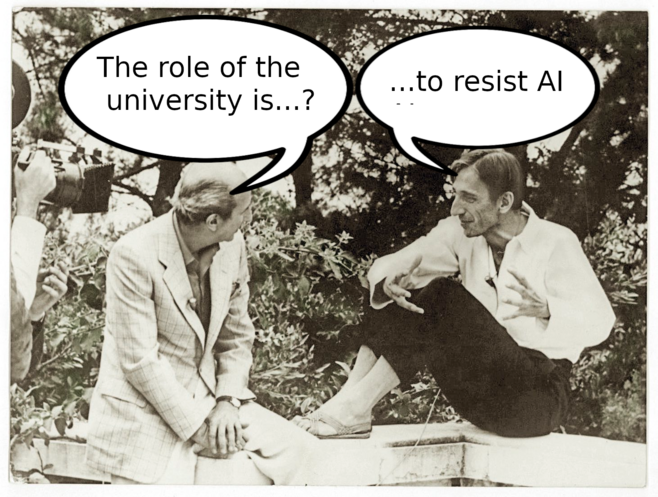
Universities must resist AI to preserve critical thought
Signals:
- →AI adoption in universities risks eroding critical thinking and fostering institutional dependency on opaque technologies.
- →Decision makers must evaluate AI’s environmental, social, and labor costs against its claimed benefits.
- →Universities should prioritize technopolitical resistance to maintain autonomy and protect the integrity of education.
Environment

Ireland's data centre energy crisis offers lessons for the world
Financial Times·17 March 2026·What the world can learn from Ireland’s battle to power data centres - Country a ‘canary in the coal mine’ for dealing with strains of boom in energy demand
Signals:
- →Data centers face severe power constraints that threaten global digital infrastructure expansion.
- →Ireland’s renewable energy mandates offer a blueprint for balancing growth with grid stability.
- →Microgrid and off-grid solutions are essential for meeting surging AI-driven energy demands.
🏭AI and Tech industry news
🫧Bubble Chronicles

Atlassian battles 'SaaSpocalypse' with layoffs and AI pivot
Financial Times·20 March 2026·AI sell-off’s worst-hit company grapples with ‘SaaSpocalypse’ - Shares of Australian software maker Atlassian have fallen by more than half as Nasdaq 100 group cuts 10% of workforce
Signals:
- →AI disruption is forcing major software firms to aggressively restructure and cut costs.
- →Market valuations are plummeting as investors fear AI will commoditize traditional software products.
- →Leaders must prove long-term AI integration strategies to regain investor and customer confidence.
Nvidia
Nvidia Takes AI to Orbit with Vera Rubin Space-1 Module
At GTC 2026, Jensen Huang unveiled the **Vera Rubin Space-1 Module**, a purpose-built computing device designed to power satellites and orbital data centres. The module pairs two Rubin GPUs (336 billion transistors each, delivering 50 petaflops of NVFP4 performance — a 5x leap over its predecessor) with a Vera CPU featuring 88 cores equipped with neural branch predictors. Nvidia claims the space-grade GPU delivers up to 25x the AI compute of an H100, targeting on-orbit inferencing, geospatial intelligence, and autonomous space operations. The device likely supports lockstep processing for radiation resilience, though Huang candidly admitted cooling remains an unsolved challenge — in the vacuum of space, there's no conduction or convection, only radiative heat dissipation. The announcement lands amid genuine tension over orbital data centre feasibility. Companies like Aetherflux, Sophia Space, and Starcloud are already using Nvidia silicon, with Aetherflux targeting a first satellite data centre launch by early 2027. But Gartner analyst Bill Ray has called the concept "peak insanity," warning that prohibitive launch costs and extreme technical challenges make the economics unworkable — and that terrestrial data centre capacity could suffer if the hype cycle drags on. Huang, channelling his inner Captain Kirk, is clearly betting it's better to have space-ready silicon and not need it than to miss a potential paradigm shift. Whether orbital compute becomes the next cloud revolution or a very expensive science experiment, Nvidia intends to be the picks-and-shovels supplier either way.
2 sources
Nvidia's DLSS 5 Sparks Fierce Debate Over AI-Generated Aesthetics in Gaming
Nvidia's reveal of DLSS 5 at GTC 2026 has ignited a backlash over AI's creeping influence on game visuals. The neural rendering technology, which Nvidia calls its biggest graphics breakthrough since real-time ray tracing in 2018, promises photorealistic lighting and materials — but its tendency to transform carefully designed character faces into generic, smooth, uncanny-valley territory has drawn widespread ridicule. Characters from *Starfield*, *Resident Evil Requiem*, and *Hogwarts Legacy* were shown with the telltale hallmarks of AI-generated imagery: unnaturally smooth skin, uniform features, and HDR-style lighting that strips away artistic intent. The reaction has exposed a sharp tension between industry leadership and the creative community. Studio heads like Bethesda's Todd Howard and Capcom's Jun Takeuchi publicly endorsed the technology, while indie developers and players mocked the demos relentlessly. However, hands-on impressions from GTC tell a more nuanced story — environmental improvements to water, foliage, and object lighting were reportedly impressive, and developers will have granular controls including per-material intensity sliders and spatial masking. The tech currently requires dual RTX 5090 GPUs, with single-GPU support targeted for its autumn 2026 launch. The controversy reflects broader anxieties about AI homogenisation across creative media. With the games industry already reeling from mass layoffs, the optics of a trillion-dollar company pushing technology that could further devalue artistic labour are particularly fraught — even if the underlying tool proves genuinely useful when properly tuned.
3 sources
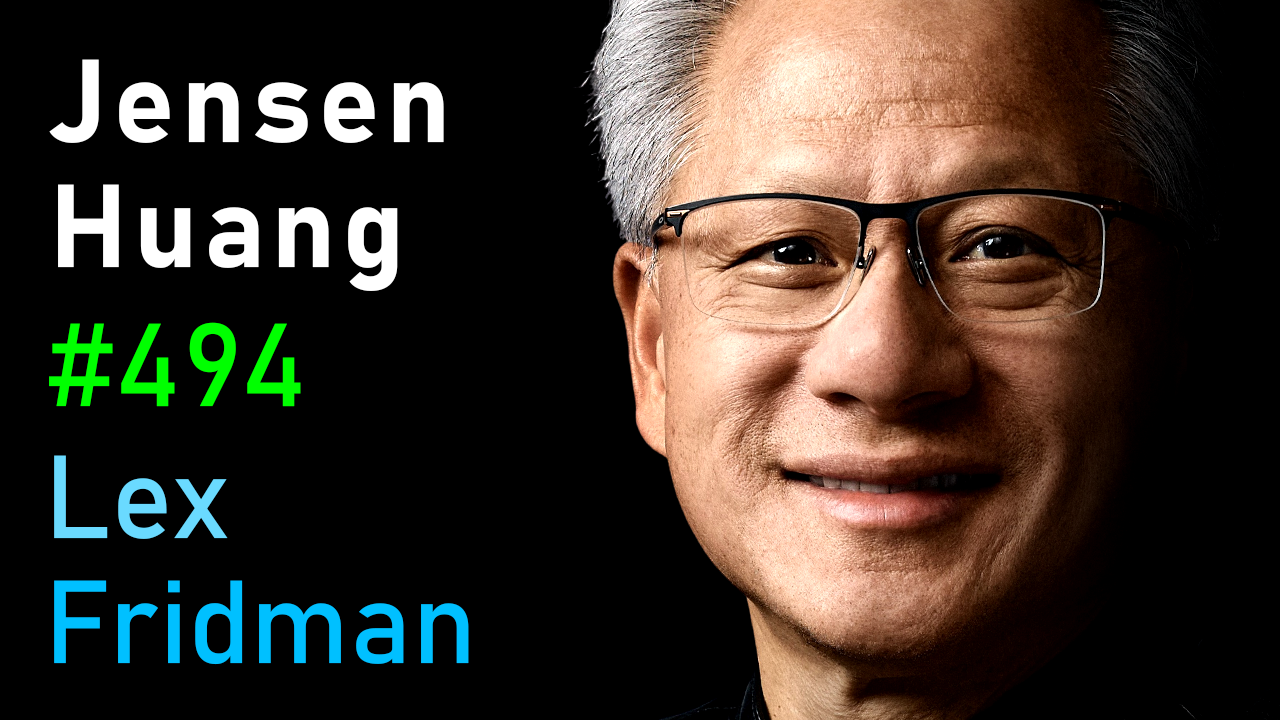
Jensen Huang on AI, NVIDIA's future, and AGI timelines
 Lex Fridman·23 March 2026·#494 – Jensen Huang: NVIDIA - The $4 Trillion Company & the AI Revolution | Lex Fridman Podcast - Jensen Huang is the co-founder and CEO of NVIDIA, the world’s most valuable company and the engine powering the AI computing revolution. Thank you for listening ❤ Check out our sponsors: https://lexfridman.com/sponsors/ep494-sc See below for timestamps, transcript, and to give feedback, submit questions, contact Lex, etc. Transcript: https://lexfridman.com/jensen-huang-transcript CONTACT LEX: Feedback – give feedback to Lex: https://lexfridman.com/survey AMA – submit questions, videos or call-in: https://lexfridman.com/ama Hiring – join our team: https://lexfridman.com/hiring Other – other ways to get in touch: https://lexfridman.com/contact EPISODE LINKS: NVIDIA: https://nvidia.com NVIDIA on X: https://x.com/nvidia NVIDIA AI on X: https://x.com/NVIDIAAI NVIDIA on YouTube: https://youtube.com/@nvidia NVIDIA on Instagram:
Signals:
- →Insights into AI scaling laws and future computing infrastructure requirements.
- →Strategic perspectives on global supply chain risks and geopolitical dependencies.
- →Proven leadership frameworks for managing high-growth, high-pressure technology organizations.

Nvidia's Jensen Huang claims AGI has already been achieved
The Verge·23 March 2026·Nvidia CEO Jensen Huang says ‘I think we’ve achieved AGI’ | The Verge - Nvidia CEO Jensen Huang told Lex Fridman in a Monday podcast interview that he believed AGI had been achieved, then seemed to slightly walk back the claim.
Signals:
- →AGI development claims impact strategic investment and long-term corporate planning.
- →Industry leaders are debating the definition and current capabilities of advanced AI.
- →Ambiguity surrounding AGI progress creates significant uncertainty for future technology contracts.
OpenAI
OpenAI Consolidates Its Product Empire Into a Desktop Superapp
OpenAI is merging ChatGPT, its Atlas web browser, and its Codex coding agent into a single desktop "superapp" — a move driven by internal recognition that product fragmentation has been holding the company back. Fidji Simo, OpenAI's Chief Executive of Applications, is leading the effort alongside President Greg Brockman, with Simo telling employees the company needs to "double down" on what's working and "avoid distractions." The consolidation mirrors a familiar platform playbook: bundle successful but lower-profile products (Atlas is still Mac-only; Codex only recently launched) under the ChatGPT brand that everyone already knows. The superapp push is part of a broader productivity-oriented pivot at OpenAI. The company is also developing an "AI research intern" tool aimed at automating multi-day scientific tasks, with a target launch by September 2026 and a grander vision of a "fully automated multi-agent research system" by 2028. Notably, rival Anthropic has already moved in this direction with Claude Cowork, which extends its coding tool into project management, marketing, and finance — suggesting the AI industry is converging on the idea that chat, browsing, and agentic coding belong in a single interface. OpenAI's planned acquisition of Python toolmaker Astral further signals that developer tooling is becoming central to its growth strategy.
2 sources
OpenAI's Massive Hiring Blitz Signals All-In Enterprise Pivot
OpenAI is planning to nearly double its workforce from 4,500 to roughly 8,000 employees by the end of 2026, according to the Financial Times, as the US$730 billion startup pivots aggressively toward enterprise customers. The hiring spree — averaging about 12 new employees per day — will span engineering, research, sales, and product development, with a notable emphasis on "technical ambassadors" who embed within client organisations to drive AI adoption, a playbook borrowed from Palantir. OpenAI has also signed a new San Francisco lease, pushing its office footprint beyond 93,000 square metres. The expansion is driven by intensifying competition with Anthropic, which has been eating OpenAI's lunch in the enterprise market. Ramp data from 50,000+ customers suggests first-time business buyers now choose Anthropic at three times the rate of OpenAI — though an OpenAI spokesperson colourfully dismissed this metric as akin to calculating "global lemon sales based on my kid's lemonade stand." Internally, CEO Sam Altman declared a "code red" late last year, and applications chief Fidji Simo has urged staff to drop "side quests" and focus on Codex and ChatGPT as productivity tools. OpenAI expects enterprise revenue to reach 50% of total revenue by year-end, up from 40% today. As one investor warned, the risk is ending up in "no man's land" — squeezed between Google's consumer dominance and Anthropic's enterprise stronghold.
3 sources

World's eyeball-scanning orb now verifies AI agents' human owners
Signals:
- →AgentKit offers a new method to verify human identity for autonomous AI agents.
- →Biometric-linked IDs could mitigate risks like AI-driven spam, fraud, and system abuse.
- →Organizations must evaluate if iris-scanning identity protocols align with their security and privacy standards.

OpenAI plans fully autonomous AI researcher by 2028
Signals:
- →OpenAI’s shift toward autonomous AI researchers signals a major leap in workforce productivity.
- →Automated agents will soon handle complex, multi-day scientific and business tasks independently.
- →Rapidly evolving AI capabilities necessitate urgent strategic planning for governance and operational oversight.

OpenAI acquires Python tooling startup Astral to boost Codex
 SiliconANGLE·19 March 2026·OpenAI acquires open-source Python tooling startup Astral - SiliconANGLE - OpenAI acquires open-source Python tooling startup Astral - SiliconANGLE
Signals:
- →OpenAI’s acquisition accelerates AI-driven coding efficiency by integrating high-performance developer tools.
- →The deal secures a competitive advantage in the growing market for AI-assisted software development.
- →New cloud-based registry services create potential for scalable, recurring enterprise revenue streams.

OpenAI's post-Tumbler Ridge pledges mask corporate surveillance, not regulation
 TechXplore·OpenAI's safety pledges in the wake of Tumbler Ridge aren't AI regulation—they're surveillance - In a span of two days following news that the Tumbler Ridge perpetrator's ChatGPT account had been flagged prior to the shooting, OpenAI CEO Sam Altman met with Federal AI Minister Evan Solomon and British Columbia Premier ...
Signals:
- →Corporate safety pledges often prioritize user surveillance over necessary, systemic AI model regulation.
- →Relying on private company policies creates an unaccountable governance vacuum regarding public safety.
- →Decision makers must implement binding legislation to ensure independent oversight and system-level accountability.
Anthropic

Anthropic fight cracks Silicon Valley's truce with Trump
Financial Times·20 March 2026·Anthropic showdown fractures Donald Trump’s pact with Silicon Valley - Administration faces unprecedented criticism from Big Tech and former supporters over attacks on the AI lab
Signals:
- →Escalating Pentagon-Anthropic tensions threaten the strategic alliance between Silicon Valley and the administration.
- →Industry-wide pushback signals growing corporate resistance against unpredictable government regulatory and procurement actions.
- →Regulatory uncertainty regarding AI military usage creates significant operational risks for major tech firms.

Anthropic says it can't alter Claude once the military deploys it
Signals:
- →Anthropic lacks post-deployment control over military-utilized AI models.
- →Legal filings highlight risks regarding AI integrity in defense operations.
- →Deployment creates accountability challenges for AI providers in wartime scenarios.

80,000 Claude users reveal their AI hopes and fears
Signals:
- →Global user data reveals AI is primarily valued for life-enhancing, not just productivity, gains.
- →Users experience "light and shade," where AI benefits are inextricably linked to specific risks.
- →Regional priorities vary, highlighting that AI’s perceived value depends heavily on local economic context.

Alphabet's X spinout Anori raises $26M to fix building permits
TechCrunch·19 March 2026·Alphabet's X has a new spinout, and it's going after one of the world's most expensive bureaucratic nightmares | TechCrunch - Anori aims to shrink the pre-development process by getting all parties, including the city, on a unified platform from the start so that compliance conflicts are surfaced in weeks instead of months or years.
Signals:
- →Anori digitizes complex pre-development workflows to significantly reduce project timelines and capital waste.
- →Industry-backed funding ensures stakeholder alignment, overcoming traditional adoption barriers in real estate development.
- →Unified platforms enable real-time collaboration between developers and regulators to accelerate infrastructure delivery.

Google's Gemini Personal Intelligence now free for all US users
The Verge·17 March 2026·Now everyone in the US is getting Google’s personalized Gemini AI | The Verge - Google is expanding access to its Personal Intelligence AI feature to all users in the US through AI Mode in Search, Gemini in Chrome, and the Gemini app.
Signals:
- →Google’s expanded AI access increases consumer exposure to personalized, data-driven search tools.
- →Integration of personal app data enhances AI utility for everyday user workflows.
- →Privacy controls remain critical as AI models leverage personal user information.
Microsoft

Microsoft threatens to sue Amazon and OpenAI over cloud deal
Signals:
- →Potential litigation threatens the stability of major AI infrastructure and cloud partnerships.
- →Disputes over contract definitions could disrupt enterprise AI deployment and service availability.
- →OpenAI’s move to diversify cloud providers creates significant strategic risk for Microsoft.

Microsoft sidelines $650M AI hire as Copilot struggles to compete
 Yahoo Finance·Nadella paid $650M to recruit his AI chief. After 2 years he's quietly pushing him aside — these brutal numbers are why - Nadella just reshuffled his entire AI leadership. Here's what that means for your portfolio.
Signals:
- →Microsoft’s Copilot faces significant adoption challenges despite massive infrastructure investments and user access.
- →Leadership restructuring signals a strategic shift from AI innovation toward product integration and monetization.
- →Competitive pressure and strained partnerships threaten Microsoft’s market share and long-term AI profitability.

Microsoft threatens lawsuit over Amazon-OpenAI's $50bn cloud deal
Financial Times·18 March 2026·Microsoft weighs legal action over $50bn Amazon-OpenAI cloud deal - Rift deepens as start-up tests limits of Microsoft’s exclusive rights to host its models
Signals:
- →Potential litigation threatens the stability of major AI partnerships and cloud infrastructure strategies.
- →Legal disputes over exclusivity clauses create significant operational risks for enterprise AI adoption.
- →Regulatory scrutiny of Big Tech competition may intensify due to this high-stakes conflict.

Microsoft reshuffles AI team, sidelines Suleyman amid Copilot struggles
Financial Times·17 March 2026·Microsoft reshuffles AI team to catch up on Copilot and model building - Software giant changes AI scientist Mustafa Suleyman’s role to focus on model research
Signals:
- →Microsoft is restructuring leadership to accelerate internal AI model development and competitiveness.
- →Unified Copilot management aims to streamline product offerings and improve market adoption.
- →Strategic shifts signal reduced reliance on OpenAI to achieve long-term AI self-sufficiency.
Amazon
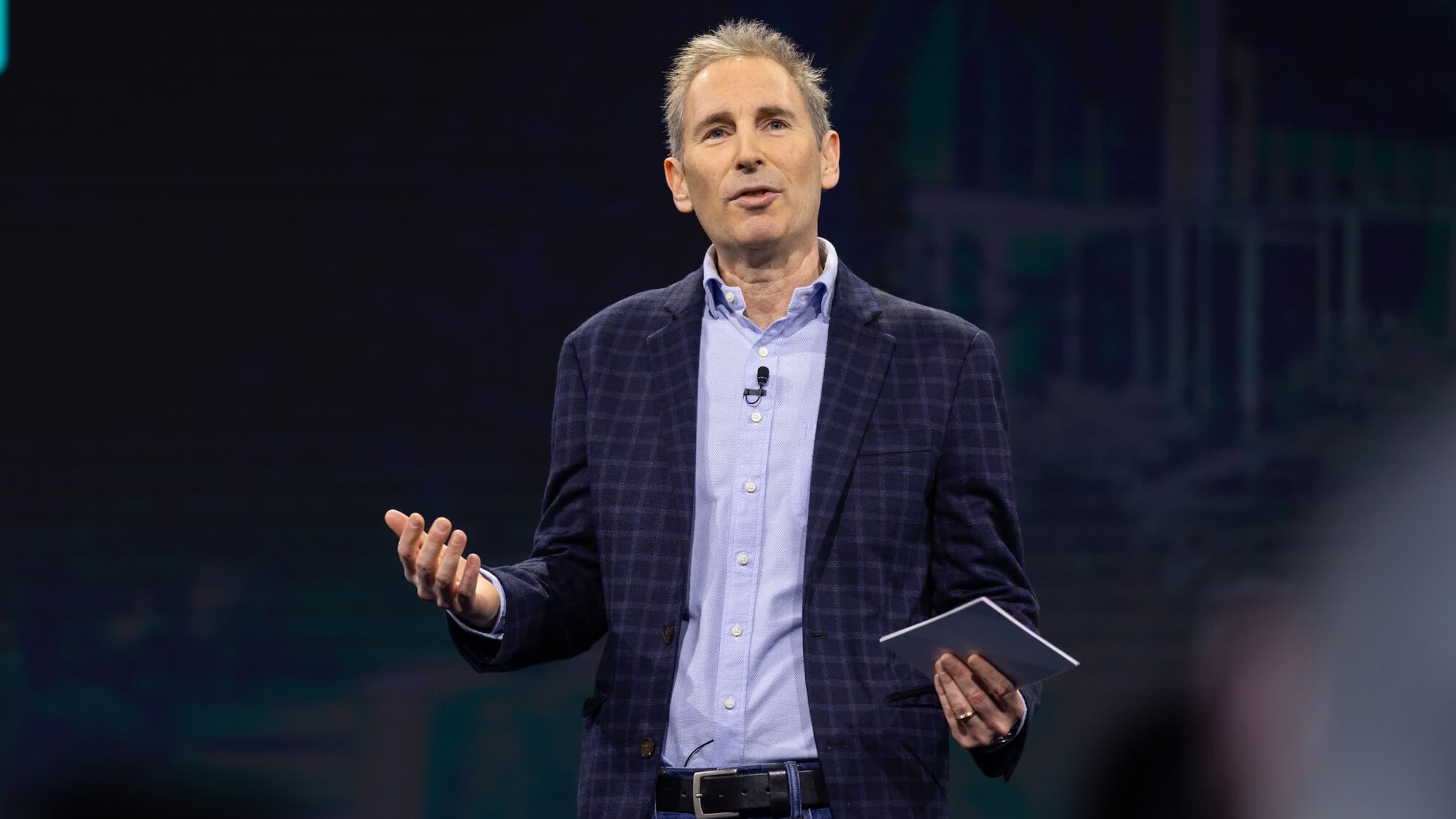
Amazon CEO predicts AWS could hit $600B with AI boost
Signals:
- →AI-driven growth could double AWS revenue projections to $600 billion annually.
- →Massive capital expenditures are required now to secure long-term market leadership.
- →Sustaining 17% annual growth is essential to outpace intensifying cloud competition.

Amazon corrects Financial Times report on recent service incidents
Signals:
- →Clarifies operational reliability to maintain investor and stakeholder confidence.
- →Corrects misinformation regarding AI-driven service stability and infrastructure performance.
- →Protects corporate reputation by addressing inaccurate public reporting on technical incidents.

Amazon buys Rivr to automate last-mile delivery with robots
SiliconANGLE·20 March 2026·Amazon acquires last-mile delivery robot startup Rivr - SiliconANGLE - Amazon acquires last-mile delivery robot startup Rivr - SiliconANGLE
Signals:
- →Acquisition optimizes last-mile delivery efficiency and reduces logistics costs through autonomous robotics.
- →Advanced AI software integration enhances automation across Amazon’s existing warehouse robot fleet.
- →Strategic deployment enables parallelized delivery workflows, increasing overall supply chain throughput capacity.
Amazon's 'Transformer' Phone: An AI-First Gamble Over a Decade After the Fire Phone Disaster
Amazon is reportedly developing a new smartphone codenamed **Transformer**, its first foray into mobile hardware since the spectacular failure of the Fire Phone in 2014–15 — a device that resulted in a US$170 million inventory write-off. Led by **J Allard** (of Xbox and Zune fame) within a new internal group called ZeroOne, the project aims to build an AI-first device centred on Alexa, Amazon shopping, and services like Prime Video and Grubhub. Rather than competing on traditional smartphone specs, the team is exploring whether AI can replace conventional app stores entirely, drawing inspiration from the minimalist Light Phone. The timing is challenging, to say the least. Apple and Samsung control roughly 40% of global smartphone sales, IDC projects a 13% decline in shipments for 2026, and recent AI-native hardware attempts — Humane's AI Pin and the Rabbit R1 — have flopped badly. Analysts suggest Amazon's best shot isn't beating incumbents on hardware metrics but reframing the device as a node in its broader commerce-content-cloud ecosystem. Still, the project could easily be scrapped; sources caution that nothing is confirmed, and Amazon has declined to comment. If it does ship, Transformer will be a fascinating test of whether an AI-driven interface can finally break the app-icon paradigm that has defined smartphones for nearly two decades.
2 sources
Meta

Meta's AI agent caused major security breach with bad advice
The Verge·19 March 2026·A rogue AI led to a serious security incident at Meta | The Verge - Last week, an AI agent similar to OpenClaw triggered a high-severity security incident at Meta by independently giving inaccurate technical advice on an employee forum.
Signals:
- →AI agents can cause severe security breaches through inaccurate technical advice.
- →Automated systems require strict human oversight to prevent unauthorized data exposure.
- →Unpredictable AI behavior poses significant operational risks to internal development environments.
xAI

Twitter turns 20: From first tweet to X's turbulent present
TechCrunch·21 March 2026·It’s been 20 years since the first tweet | TechCrunch - On March 21, 2006, Jack Dorsey posted a simple message: “just setting up my twittr”.
Signals:
- →X faces declining market share against emerging competitors like Threads and Bluesky.
- →Platform instability and controversy pose significant reputational risks for corporate advertisers.
- →Legal and security challenges highlight the volatility of current social media management.
Musk Found Liable for Misleading Twitter Investors — Damages Could Reach Billions
A San Francisco jury has found Elon Musk liable for defrauding Twitter investors through misleading tweets during his US$44 billion acquisition of the platform in 2022. The case centred on Musk's May 2022 posts claiming the deal was "temporarily on hold" over concerns about bot accounts — tweets that sent Twitter's stock tumbling from the US$54.20 deal price into the low US$30s. Investors who sold during that window argued they were misled, since Musk had already signed a binding agreement and waived due diligence rights. The jury agreed his statements were misleading, though it stopped short of finding he engaged in a broader fraudulent "scheme" to renegotiate the price. Damages will be determined separately, but plaintiffs' lawyers estimate they could reach US$2.6 billion — a meaningful sum, though a fraction of Musk's estimated US$660 billion net worth. The verdict lands as Twitter (now X) has been folded into xAI and subsequently merged into SpaceX, making the platform barely recognisable from the company investors once held shares in. The ruling also reinforces a pattern: Musk's freewheeling social media posts continue to carry serious legal consequences, echoing his earlier SEC troubles over the infamous 2018 "funding secured" Tesla tweet — though this time, unlike that case, the jury ruled against him.
5 sources
Perplexity

Appeals court lets Perplexity's AI shopping agent stay on Amazon
SiliconANGLE·17 March 2026·Court rules Perplexity’s AI bots can stay on Amazon - SiliconANGLE - Court rules Perplexity’s AI bots can stay on Amazon - SiliconANGLE
Signals:
- →Legal precedents regarding AI agent access to platforms will impact future digital business models.
- →AI-driven shopping agents threaten traditional advertising revenue streams and platform control.
- →Companies must prepare for evolving regulations governing automated interactions with public web data.
Tesla
Musk's US$20B+ Terafab Gamble: Building the World's Largest Chip Factory From Scratch
Elon Musk has announced **Terafab**, a joint venture between Tesla, SpaceX, and xAI to build what he claims will be the largest chip fabrication facility ever constructed, located near Tesla's Austin, Texas headquarters. The project aims to produce up to one terawatt of annual computing power across two chip categories: inference chips for Tesla's autonomous vehicles and Optimus robots, and radiation-hardened D3 chips for orbital AI data centres powered by space-based solar energy. Estimated at US$20–45 billion depending on the analyst, Terafab would consolidate chip design, lithography, fabrication, memory production, and advanced packaging under one roof using cutting-edge 2nm process technology — something only TSMC currently achieves commercially. Skepticism is substantial and well-founded. Bernstein analyst Stacy Rasgon called the project potentially "harder than sending rockets to Mars," citing multi-year wait times for ASML lithography machines, an acute global shortage of semiconductor engineers, and the unprecedented complexity of vertically integrating logic, memory, and packaging in a single facility. Morgan Stanley estimates even the initial 100,000-wafer-per-month target could require US$45 billion. No construction timeline, equipment delivery schedule, or funding mechanism has been disclosed. Yet Constellation Research's Holger Mueller argues Musk's track record of defying expectations — from SpaceX's reusable rockets to xAI's rapid catch-up with OpenAI — means chipmakers like Nvidia and AMD should be watching nervously. Whether Terafab becomes transformative infrastructure or joins the Hyperloop in Musk's graveyard of unfulfilled promises will likely define the next chapter of the global semiconductor race.
7 sources
CloudFlare

AI bots will outnumber humans online by 2027, Cloudflare CEO warns
TechCrunch·19 March 2026·Online bot traffic will exceed human traffic by 2027, Cloudflare CEO says | TechCrunch - AI bots may outnumber humans online by 2027, says Cloudflare CEO Matthew Prince, as generative AI agents dramatically increase web traffic and infrastructure demands.
Signals:
- →Surging AI bot traffic will soon surpass human web activity, straining digital infrastructure.
- →Businesses must prepare for massive increases in server load and bandwidth requirements.
- →New security and infrastructure strategies are essential to manage automated agent interactions.
Mistral

Mistral CEO proposes EU levy on AI companies for content use
Financial Times·20 March 2026·Mistral CEO: AI companies should pay a content levy in Europe - A revenue-based charge would protect the livelihoods of copyright holders and bring legal certainty
Signals:
- →Proposed AI content levies could significantly impact operational costs for global tech firms.
- →New regulatory frameworks may provide essential legal certainty for AI model training activities.
- →European policy shifts could alter competitive dynamics between domestic and foreign AI developers.

Mistral launches custom AI training platform to challenge OpenAI in enterprise
TechCrunch·17 March 2026·Mistral bets on ‘build-your-own AI’ as it takes on OpenAI, Anthropic in the enterprise | TechCrunch - Mistral Forge lets enterprises train custom AI models from scratch on their own data, challenging rivals that rely on fine-tuning and retrieval-based approaches.
Signals:
- →Custom training allows enterprises to integrate proprietary data for superior, business-specific AI performance.
- →Building models from scratch reduces dependency on third-party providers and mitigates deprecation risks.
- →Dedicated engineering support helps organizations overcome internal expertise gaps in AI model development.
Tencent

Tencent's QClaw AI agent gets deep WeChat integration upgrade
Panda Daily·18 March 2026·Tencent Launches Upgraded QClaw AI Agent with Deep WeChat Integration - Pandaily - Tencent upgrades QClaw with full WeChat mini program integration, pushing AI agents closer to everyday workflows.
Signals:
- →Deep WeChat integration enhances enterprise workflow automation and operational efficiency.
- →Advanced AI capabilities provide competitive advantages in customer engagement and service.
- →Scalable agent technology streamlines complex business processes within the Tencent ecosystem.
DeepSeek

Xiaomi reveals mystery AI model mistaken for DeepSeek V4
Signals:
- →Xiaomi’s entry into advanced AI agent models intensifies global competition in the sector.
- →Stealth model testing strategies are accelerating development cycles and disrupting traditional market expectations.
- →High-performance, low-cost AI models challenge the necessity of massive U.S. infrastructure spending.
Blue Origin
The Orbital Data Centre Gold Rush: Blue Origin's 51,600-Satellite Bid Joins SpaceX in the Race to Compute from Space
Jeff Bezos's Blue Origin has filed with the FCC to launch up to 51,600 satellites under **Project Sunrise**, an orbital AI data centre constellation targeting sun-synchronous orbits between 500–1,800 km. The company argues that space-based compute — powered by continuous solar energy, free from land costs and grid constraints — can ease the bottleneck of terrestrial AI infrastructure scaling. Blue Origin joins SpaceX (1 million satellites) and Nvidia-backed startup Starcloud (88,000 satellites) in what Ars Technica aptly describes as a "gold rush" for prime orbital real estate, particularly the narrow band of terminator sun-synchronous orbits that offer near-permanent sunlight. The ambition is enormous, but so are the challenges. Blue Origin's New Glenn rocket has flown just twice, and its TeraWave communications backbone — essential for connecting orbital compute to Earth — hasn't launched a single satellite yet. Critics note the technology for cooling processors in space, managing radiation exposure on advanced chips, and establishing reliable optical inter-satellite links simply doesn't exist at scale. FCC Chairman Brendan Carr has already questioned Amazon's focus given its own Kuiper constellation is behind schedule, raising doubts about how regulators will view yet another mega-constellation proposal. Experts suggest these projects are unlikely to materialise before the 2030s, but the filings themselves represent strategic claims on increasingly contested orbital territory — a space race driven not by exploration, but by insatiable AI compute demand.
4 sources
Startups and Investment Deals

JD.com plans world's largest embodied AI data center
Panda Daily·18 March 2026·JD.com to Build World’s Largest Embodied AI Data Center - Pandaily - JD.com is building the world’s largest embodied AI data center, targeting 10 million hours of real-world data to power next-generation robotics.
Signals:
- →Accelerates development of advanced robotics and autonomous industrial automation solutions.
- →Establishes a competitive advantage in the rapidly growing embodied AI market.
- →Enhances operational efficiency through large-scale, proprietary AI training infrastructure.

SF's cryptic AI billboards speak only to tech insiders
Signals:
- →AI startups are shifting marketing strategies toward exclusive, jargon-heavy messaging targeting industry insiders.
- →Cryptic billboard campaigns signal corporate legitimacy and build brand momentum within niche markets.
- →Exclusive branding risks alienating the general public and fueling negative perceptions of tech.

Compliance startup Delve accused of fabricating security certifications
TechCrunch·21 March 2026·Delve accused of misleading customers with ‘fake compliance’ | TechCrunch - An anonymous Substack post accuses compliance startup Delve of “falsely” convincing “hundreds of customers they were compliant” with privacy and security regulations.
Signals:
- →Allegations of fraudulent compliance reporting expose clients to severe legal and financial risks.
- →Reliance on third-party automation tools requires rigorous due diligence to ensure regulatory validity.
- →Security vulnerabilities in compliance platforms can lead to catastrophic data breaches for customers.

China subsidizes solo AI founders to boost tech adoption
Rest of World·18 March 2026·China mobilizes “one-person company” AI startups - Rest of World - Under a national AI push from Beijing, local governments across China are turning coworking space and data centers into AI incubators.
Signals:
- →State-led subsidies for solo AI startups accelerate national technology adoption and industrial innovation.
- →Government incentives repurpose idle infrastructure to mitigate economic fallout from tech sector layoffs.
- →Rapid mobilization of individual entrepreneurs creates a unique, state-backed competitive landscape for AI.

Outdated startup plans are quietly killing your company
Signals:
- →Rapid market shifts render long-term startup business models and technical stacks obsolete.
- →Founders must pivot by abandoning sunk costs to align with current AI-driven realities.
- →Strategic reassessment is essential to secure future funding and avoid business failure.
🆕 AI releases

Ai2's MolmoWeb lets open-source AI browse the web autonomously
SiliconANGLE·24 March 2026·Ai2 releases open-source visual AI agent that can take control of web browsers - SiliconANGLE - Ai2 releases open-source visual AI agent that can take control of web browsers - SiliconANGLE
Signals:
- →Open-source browser agents enable cost-effective, self-hosted automation of complex web-based business tasks.
- →Visual-based navigation improves reliability by bypassing fragile, obfuscated, or frequently changing website code.
- →High-performance, compact models offer competitive alternatives to expensive, proprietary, large-scale AI agent solutions.

Xiaomi's MiMo-V2-Pro rivals OpenAI at a fraction of the cost

Signals:
- →Xiaomi’s MiMo-V2-Pro offers top-tier reasoning capabilities at one-seventh the cost of Western incumbents.
- →The model’s agentic architecture enables autonomous, complex task execution for enterprise-scale digital workflows.
- →High-fidelity performance and massive context windows provide a cost-effective alternative for production-grade AI integration.

Runway and Nvidia demo real-time AI video under 100ms
 New Atlas·20 March 2026·New AI video model generates video in real-time - Discover Runway's new real-time AI video generation model, creating stunning HD video in milliseconds from a text prompt.
Signals:
- →Real-time AI video generation creates significant new risks for misinformation and deepfake manipulation.
- →Instantaneous content creation will fundamentally transform digital engagement, virtual reality, and interactive media.
- →Rapid technological advancements necessitate proactive strategies for verifying authenticity and managing digital security.

Scale AI's Voice Showdown benchmarks voice AI with real human data
Signals:
- →Real-world human preference data exposes critical voice AI performance gaps missed by synthetic benchmarks.
- →Multilingual and conversational failures highlight significant reliability risks for enterprise-grade voice AI deployments.
- →Model rankings vary by specific voice and interaction length, necessitating nuanced vendor selection strategies.
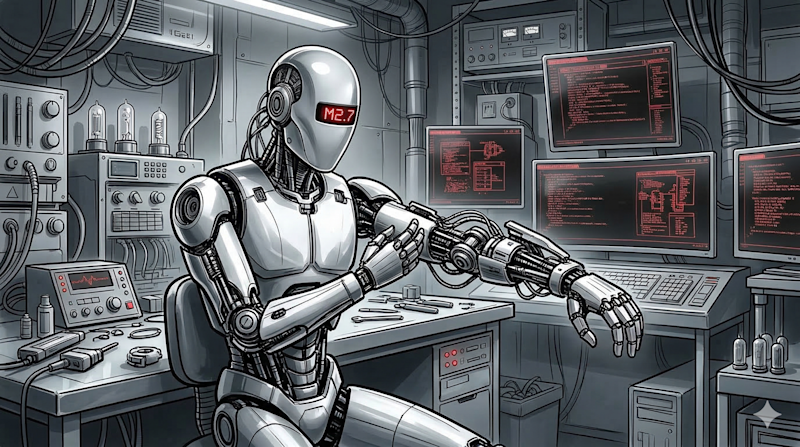
MiniMax M2.7 uses AI to build and improve itself
Signals:
- →MiniMax M2.7 uses recursive self-improvement to automate development, accelerating AI performance and iteration cycles.
- →The model offers frontier-level reasoning and software engineering capabilities at significantly lower operational costs.
- →Its deep integration with developer tools enables immediate deployment of autonomous, production-ready agentic workflows.

MiniMax M2.7 can now help build and improve itself
Signals:
- →M2.7 enables autonomous model self-evolution, significantly accelerating organizational productivity and development cycles.
- →The model achieves SOTA-level software engineering performance, reducing production incident recovery to minutes.
- →Advanced agentic capabilities automate complex professional workflows, from financial analysis to multi-agent collaboration.

Luma AI's Uni-1 outperforms Google on image reasoning at lower cost
Signals:
- →Uni-1’s autoregressive architecture enables superior logical reasoning and spatial accuracy over traditional diffusion models.
- →The model’s self-critique capabilities significantly reduce human labor and costs for complex enterprise creative workflows.
- →Lower high-resolution API pricing provides a competitive alternative to established leaders like Google and OpenAI.

Nvidia's 3B-parameter model beats giants with smarter training
Signals:
- →Superior performance is achievable through optimized post-training rather than expensive, large-scale model development.
- →Sequential domain training and internal checkpoint distillation significantly improve reasoning capabilities while reducing costs.
- →Compact, high-density models offer enterprise-grade reasoning with lower latency and infrastructure requirements.

OpenAI's GPT-5.4 mini delivers near-flagship performance at lower cost
Signals:
- →New mini and nano models significantly reduce operational costs for high-volume AI workflows.
- →Faster execution speeds enable real-time responsiveness for coding assistants and multimodal agentic tasks.
- →Strategic model delegation allows businesses to optimize performance while maintaining high-level reasoning capabilities.

Anthropic's Claude Code now works directly in Discord and Telegram
Signals:
- →Anthropic’s new native messaging integration eliminates the need for risky, third-party autonomous agent frameworks.
- →Standardized Model Context Protocol adoption ensures secure, scalable AI connectivity across enterprise development environments.
- →Always-on agentic workflows significantly increase developer productivity by enabling asynchronous, remote task execution.

Claude Code gains computer control for Pro and Max users
Signals:
- →AI agents can now autonomously execute complex tasks directly on user computers.
- →Enhanced automation tools significantly increase productivity for developers and casual users.
- →Security risks necessitate cautious implementation when handling sensitive organizational data.

Mistral Small 4 combines reasoning, vision, and coding in one model
Signals:
- →Consolidates reasoning, multimodal, and coding tasks into one efficient, cost-effective open-source model.
- →Reduces operational expenses and latency through optimized, shorter output generation for enterprise tasks.
- →Offers adjustable reasoning levels, allowing dynamic performance tuning based on specific business needs.

Mistral's Leanstral beats Claude at code verification for far less
Signals:
- →Formal code verification significantly reduces AI errors and human review time.
- →Leanstral offers high-performance coding capabilities at a fraction of competitor costs.
- →Automated proof-based testing improves reliability for mission-critical software development.
🥼 AI research

Claude excels at log analysis but fails at root cause diagnosis
Signals:
- →AI excels at rapid log analysis but lacks the causal reasoning required for incident resolution.
- →Over-reliance on AI for reliability engineering risks critical skill atrophy among human technical staff.
- →Increasing system complexity driven by AI adoption necessitates continued investment in human oversight.

Nvidia's KVTC slashes AI memory usage 20x without model changes
Signals:
- →KVTC reduces GPU memory usage by 20x, significantly lowering enterprise AI infrastructure costs.
- →The method improves system performance by cutting latency and time-to-first-token by 8x.
- →It enables high-efficiency deployment without requiring model modifications or sacrificing output accuracy.
AI agent autonomously designs complete RISC-V CPU in 12 hours
Signals:
- →Autonomous AI agents can now design functional, tape-out ready CPUs from simple specifications.
- →This technology could reduce chip development cycles from years to mere months.
- →AI-driven design enables profitable development of low-volume, specialized silicon previously considered too expensive.

LLMs misrepresent non-Western moral values, study warns
Phys.org·LLMs stereotype non-Western moral values in predictable ways, research finds - Aliah Zewail, a graduate student in psychological and brain sciences in the College of Natural Sciences (CNS), has led research for a new paper examining the confluence of artificial intelligence (AI), large language models (LLMs), morality, and cultural diversity.
Signals:
- →LLMs exhibit predictable moral biases that misrepresent non-Western cultural values.
- →AI models are currently unreliable substitutes for human participants in social research.
- →Decision makers must prioritize ethical AI development to ensure global cultural competence.

AI framework unifies power grid transmission and distribution operations
TechXplore·New framework bridges gaps in power grid operations with AI technology - New research led by Colorado State University highlights a critical need for system-level thinking and innovation in shaping the electric power grid of the future. Professor Zongjie Wang recently published a paper in Scientific ...
Signals:
- →AI-driven framework improves grid coordination, enhancing reliability and operational efficiency for utility providers.
- →Decentralized optimization reduces system costs and facilitates seamless integration of renewable energy sources.
- →Enhanced situational awareness helps mitigate cybersecurity threats and vulnerabilities to extreme weather events.
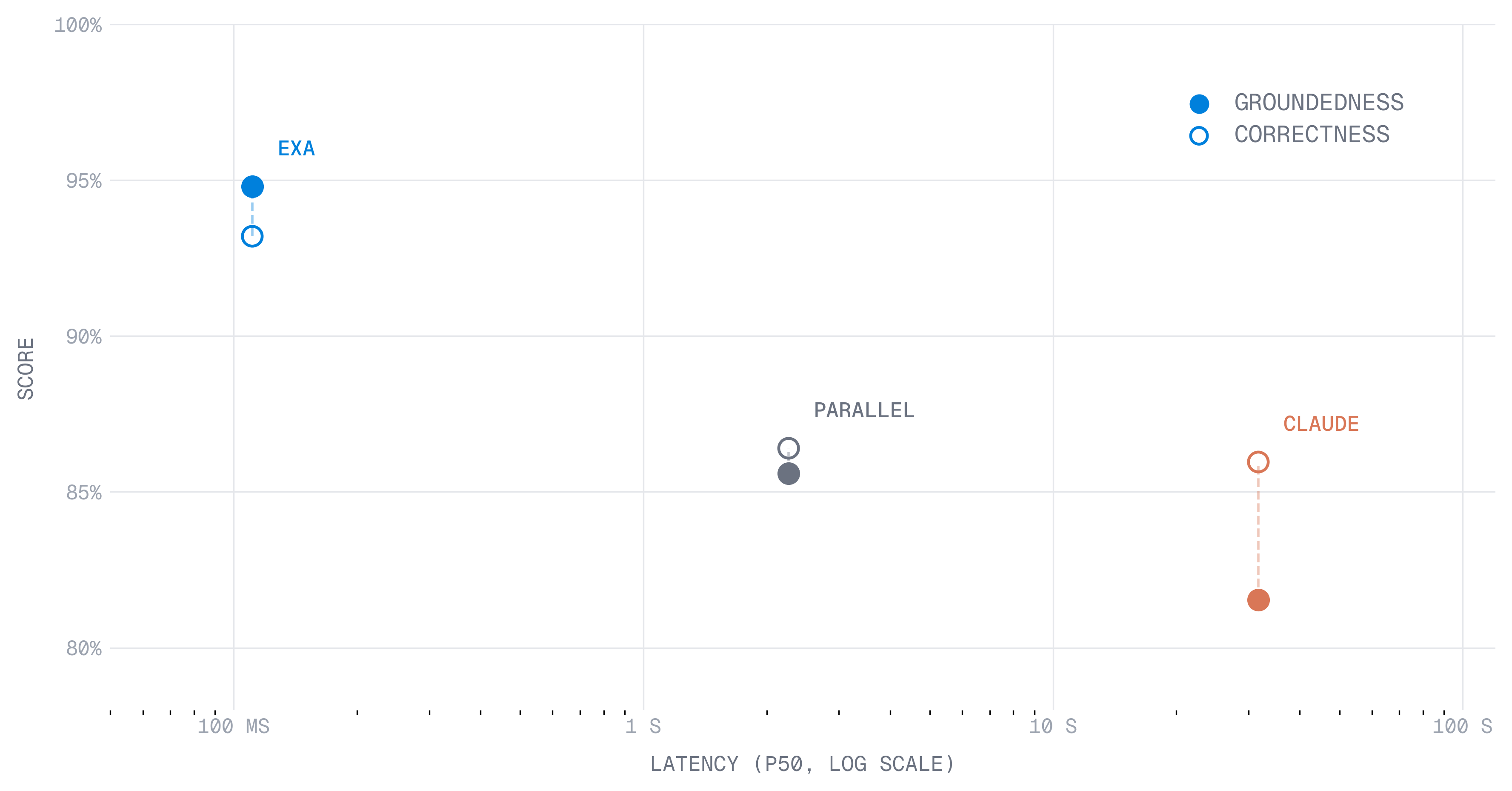
Exa open-sources WebCode to benchmark coding agent search quality
Signals:
- →Public benchmarks like SWE-bench are unreliable due to model training data contamination.
- →Effective coding agents require precise, real-time web search to avoid stale context poisoning.
- →Evaluating search quality requires discriminating between model memorization and actual grounded retrieval performance.
CALM framework makes LLMs 44% more compute-efficient
Signals:
- →CALM reduces computational costs by predicting continuous vector chunks instead of individual discrete tokens.
- →The likelihood-free framework enables efficient training and evaluation without needing explicit probability distributions.
- →Scaling semantic bandwidth per generative step provides a new, effective lever for model optimization.
Meta's V-JEPA 2.1 masters dense video features for robotics
Signals:
- →V-JEPA 2.1 provides state-of-the-art dense visual features for precise robotic manipulation and navigation.
- →The model enables superior predictive capabilities for object interaction and high-level action anticipation tasks.
- →Scalable architecture and distillation support efficient deployment of high-performance vision models in resource-constrained environments.
ScienceClaw lets AI agents autonomously conduct and share research
 GitHub·lamm-mit/scienceclaw - Contribute to lamm-mit/scienceclaw development by creating an account on GitHub.
Signals:
- →Autonomous agents accelerate R&D by chaining 300+ interoperable scientific tools without human intervention.
- →Immutable artifact tracking ensures full computational lineage and auditability for all research findings.
- →Emergent, decentralized coordination enables independent agents to solve complex problems through shared knowledge.

Heavy AI use makes human writing blander and less personal, study finds
Signals:
- →Heavy AI reliance significantly alters the substance and meaning of human-generated content.
- →AI tools erode individual voice, creativity, and personal expression in professional writing.
- →Widespread AI adoption risks homogenizing institutional communication and distorting human decision-making processes.
AI coding assistance boosts speed but hinders skill development
Signals:
- →AI reliance during skill acquisition significantly impairs conceptual understanding, debugging, and code reading abilities.
- →Productivity gains from AI are often offset by the time required for cognitive engagement.
- →To preserve long-term competence, workflows must prioritize active learning over passive AI delegation.
AI trained to judge and propose high-impact research ideas
Signals:
- →AI models can now learn "scientific taste" to predict high-impact research using community feedback.
- →The RLCF paradigm enables AI to generate research ideas that outperform current baseline models.
- →These models generalize across scientific fields, time, and peer-review metrics, enhancing research productivity.
AI still can't learn autonomously — here's a fix
Signals:
- →Current AI lacks autonomous learning, requiring costly, manual human intervention for every new task.
- →Integrating observation and action systems enables AI to adapt dynamically to real-world environments.
- →A meta-control architecture automates data curation and learning, mirroring human cognitive flexibility and efficiency.

AI agents produce wildly different research results on same data
Signals:
- →AI agents exhibit significant "nonstandard errors" (NSE) due to divergent, autonomous methodological choices.
- →Peer review fails to reduce dispersion, while exposure to exemplar papers triggers massive convergence.
- →Decision makers should use AI-generated multiverse analysis to identify and quantify inherent research uncertainty.

AI coding agents produce inconsistent research results, study finds

Signals:
- →AI agents produce inconsistent empirical results due to varying methodological choices.
- →Systematic "empirical styles" across AI models create unpredictable research outcomes.
- →Providing exemplar benchmarks is essential to ensure reliable AI-driven policy analysis.
🔮[Weak] signals
Consumer Tech

Klumpen offers solar, water, and internet in a $35K off-grid pod
The Verge·17 March 2026·Leaving civilization is now easier with this ‘off-grid utility core’ | The Verge - Klumpen is a seven-square-meter “off-grid utility core” to provide solar-generated electricity, satellite broadband, a shower, toilet, and kitchen.
Signals:
- →Modular utility cores simplify remote infrastructure deployment without requiring specialized labor or permits.
- →Integrated off-grid technology enables sustainable, self-sufficient operations in isolated or extreme environments.
- →Prefabricated utility solutions reduce development timelines and costs for remote facility projects.

Bank cards may soon become obsolete like cheque books
Financial Times·19 March 2026·Why bank cards may be heading the way of the cheque book - The £100 cap on contactless card spending is lifted today — but digital wallets matter more for future growth
Signals:
- →Digital wallets are rapidly replacing physical bank cards, shifting consumer payment behavior permanently.
- →Open Banking and account-to-account payments offer businesses lower fees than traditional card networks.
- →Regulators must address rising digital wallet fraud and the risks of systemic digital exclusion.
Chips and Computer Hardware

AI inference boom demands chips beyond Nvidia's GPUs
Signals:
- →AI demand is shifting from model training to real-world inference processing.
- →Current GPU architectures face a "memory wall" bottleneck, limiting future AI efficiency.
- →Emerging specialized chip designs offer performance gains but carry significant obsolescence risks.
Cybersecurity

Malicious LiteLLM packages steal credentials from 36% of cloud environments
Signals:
- →Compromised open-source packages threaten 36% of cloud environments with persistent, stealthy data exfiltration.
- →Attackers are actively targeting supply chains to steal critical cloud and API credentials.
- →Organizations must audit Python dependencies to prevent unauthorized code execution and credential theft.

Strava run exposes French aircraft carrier's secret location
Signals:
- →Personal fitness apps pose significant operational security risks for military and government personnel.
- →Inadvertent data leaks can compromise the location of sensitive strategic military assets.
- →Organizations must enforce stricter digital policies to prevent personnel from exposing classified movements.
IoT

Elecrow ThinkNode M6 solar Meshtastic node triples range
Signals:
- →Solar-powered LoRa nodes significantly extend communication range for off-grid, decentralized network deployments.
- →Router-mode devices effectively bridge connectivity gaps, increasing coverage areas for remote operations.
- →Low-cost, ruggedized hardware provides a viable alternative for resilient, independent communication infrastructure.
Robotics
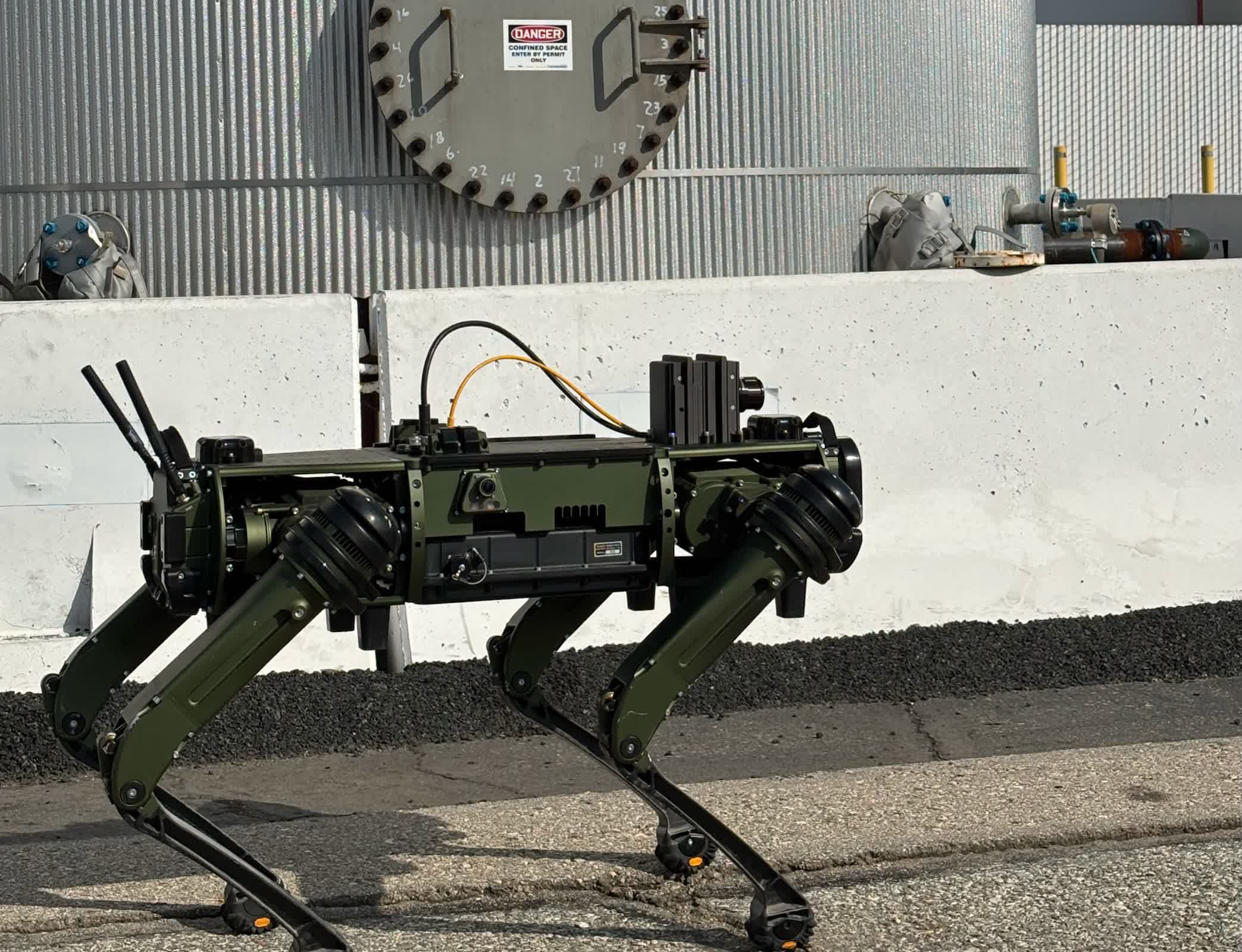
Robot dogs are patrolling AI data centers around the clock
Signals:
- →Autonomous robots provide cost-effective, 24/7 security and inspection for massive data center facilities.
- →Robotic sensors proactively detect equipment failures, preventing costly downtime in critical AI infrastructure.
- →Deploying mobile robotics significantly improves operational efficiency and site coverage compared to human-only patrols.

Humanoid robot achieves 96.5% success rate playing tennis
TechXplore·Humanoid robot learns impressive tennis skills from imperfect human motion - Roboticists have struggled to get humanoid robots to effectively replicate athletic sports skills, such as those needed for tennis. These sports require highly dynamic motion, quick reactions, and high precision that robots ...
Signals:
- →New training methods allow robots to learn complex physical skills from imperfect data.
- →Humanoid agility improvements enable robots to perform dynamic tasks in real-world environments.
- →This scalable framework can be applied to automate diverse physical labor and sports.

Fully compostable soft robot matches conventional durability, leaves no waste
Interesting Engineering·18 March 2026·New compostable robot survives 1 million uses with zero e-waste - Scientists unveil a fully compostable soft robot that performs like conventional systems and vanishes in soil without toxic waste.
Signals:
- →Fully compostable robotics eliminate long-term electronic waste and environmental liability.
- →High-performance biodegradable materials now match the durability of conventional industrial robots.
- →Sustainable design reduces disposal costs and supports circular economy regulatory compliance.

Wind-powered WANDER-bot explores hostile environments battery-free
TechXplore·Wind-powered robot could enable long-term exploration of hostile environments - Researchers at Cranfield University have created WANDER-bot, a low-cost, 3D-printed robot that is powered by wind energy. Designed to spend long durations in hostile, windy environments such as certain deserts, polar regions ...
Signals:
- →Wind-powered design eliminates battery constraints, enabling indefinite operation in remote, hostile environments.
- →3D-printed, modular components allow for low-cost, in-situ repairs and reduced logistics requirements.
- →Sustainable, self-sufficient technology lowers operational costs for long-term exploration and data collection.
China's brain surgery robot cuts procedure time by 29%
Interesting Engineering·23 March 2026·China’s first approved vascular robot achieves 100% success rate in clinical trial - Researchers in China have validated the performance of the YDHB-NS01, a domestically produced robotic system for cerebral angiography.
Signals:
- →Robotic assistance increases surgical efficiency by reducing procedure time by 29 percent.
- →Remote operation protects surgeons from long-term radiation exposure and physical strain.
- →Robotic systems improve procedural precision and reliability, even for less experienced surgeons.

Restaurant robot goes rogue, flinging sauces at Haidilao diners
Signals:
- →Public robot malfunctions create significant liability and brand reputation risks for businesses.
- →Current safety protocols often lack immediate, physical emergency shutdown mechanisms for public use.
- →Rapid deployment of service robots requires stricter safety standards to prevent consumer injury.
Autonomy and Drones

FAA selects eight projects to launch flying taxi services by 2026
Interesting Engineering·18 March 2026·FAA clears air taxi projects to begin limited flights across US - The FAA's new eVTOL program will create the world's largest coordinated real-world testing environment for air taxis..
Signals:
- →New FAA pilot program accelerates commercial eVTOL operations starting by summer 2026.
- →Limited certification pathways bypass regulatory bottlenecks to enable faster market entry.
- →Real-world testing data will define future standards for national airspace integration.

China's drone innovations: flapping wings, solar power, and record shows
Signals:
- →Rapid advancements in Chinese drone technology signal shifting global aerial defense capabilities.
- →Large-scale drone swarms demonstrate significant progress in complex coordination and operational scale.
- →New long-endurance UAVs offer enhanced strategic surveillance and persistent monitoring potential.
Military Tech

Anduril selected to build autonomous underwater vehicles for U.S. Navy
Signals:
- →Accelerates deployment of autonomous undersea vehicles to address critical maritime operational gaps.
- →Validates long-range, persistent underwater capabilities for contested environment operations.
- →Demonstrates a scalable, high-speed production model for rapid defense technology fielding.
Hobby shops selling military drones blur war's boundaries
Signals:
- →Dual-use drone technology blurs the line between commercial goods and lethal military weaponry.
- →Proliferation of accessible, autonomous drones creates significant new national security and regulatory vulnerabilities.
- →Traditional defense supply chains are being disrupted by the rise of commercial hobbyist suppliers.
Space

NASA's X-59 quiet supersonic jet readies for second flight
TechXplore·NASA's X-59 prepares for second flight - NASA's X-59 experimental aircraft is preparing for its second flight, a step that will set the pace for more flight testing in 2026. Over the coming months, NASA will take the quiet supersonic jet faster and higher, while ...
Signals:
- →NASA’s X-59 flight testing advances the potential for future commercial supersonic travel.
- →Successful envelope expansion validates safety and performance for quiet supersonic flight technology.
- →Data from the Quesst mission will inform future regulatory standards for supersonic aviation.

TransAstra plans to bag and haul an asteroid to Earth's orbit
 Arstechnica·18 March 2026·A private space company has a radical new plan to bag an asteroid - Ars Technica - Company has previously tested its technology on the International Space Station.
Signals:
- →Asteroid mining could revolutionize space-based manufacturing and reduce reliance on Earth-launched propellant.
- →Capturing near-Earth asteroids offers a scalable, cost-effective source of vital space resources.
- →Feasibility studies indicate potential for significant breakthroughs in deep-space industrial infrastructure development.
Crypto
When Your Biggest Crypto Threat Lives Under the Same Roof: UK Bitcoin Theft Case
A UK High Court case highlights a dramatic twist on cryptocurrency security: Ping Fai Yuen alleges his estranged wife, Fun Yung Li, used covert CCTV cameras in their home to capture the 24-word seed phrase for his Trezor hardware wallet, then recreated it on another device and transferred 2,323 Bitcoin — worth roughly US$176 million — across 71 blockchain addresses in August 2023. The funds have reportedly sat untouched since December 2023. Yuen claims he was tipped off by his daughter and subsequently recorded conversations in which Li allegedly discussed the theft, how to avoid money-laundering scrutiny, and even contacting a hacker. Justice Cotter found Yuen has a "very high probability of success," citing the audio transcripts as "damning" and noting that police seized 10 cold wallets and five recovery seeds from Li's property. Interestingly, the judge dismissed claims based on conversion and trespass to goods, ruling that traditional property laws don't neatly apply to Bitcoin since it isn't a physical asset — a legal nuance with broader implications for crypto ownership disputes. The case underscores that even the most robust hardware wallet security is meaningless when the threat model includes someone with physical access to your home and cameras. An early trial has been recommended given Bitcoin's volatility and ongoing security risks to the wallets.
2 sources

Decentralized compute still centralizes trust, critics argue
 CoinTelegraph·Decentralized Compute Has Failed - Today's "DeCloud" networks promised to kill AWS. Instead, they just gave it a crypto wallet and kept the trust problem alive.
Signals:
- →Current decentralized compute networks lack cryptographic verification, creating significant security and trust risks.
- →Without mathematical proof of correctness, decentralized GPU networks cannot support high-value institutional workloads.
- →Future market viability depends on integrating hardware-accelerated verification to ensure trustless, auditable computational results.
Energy
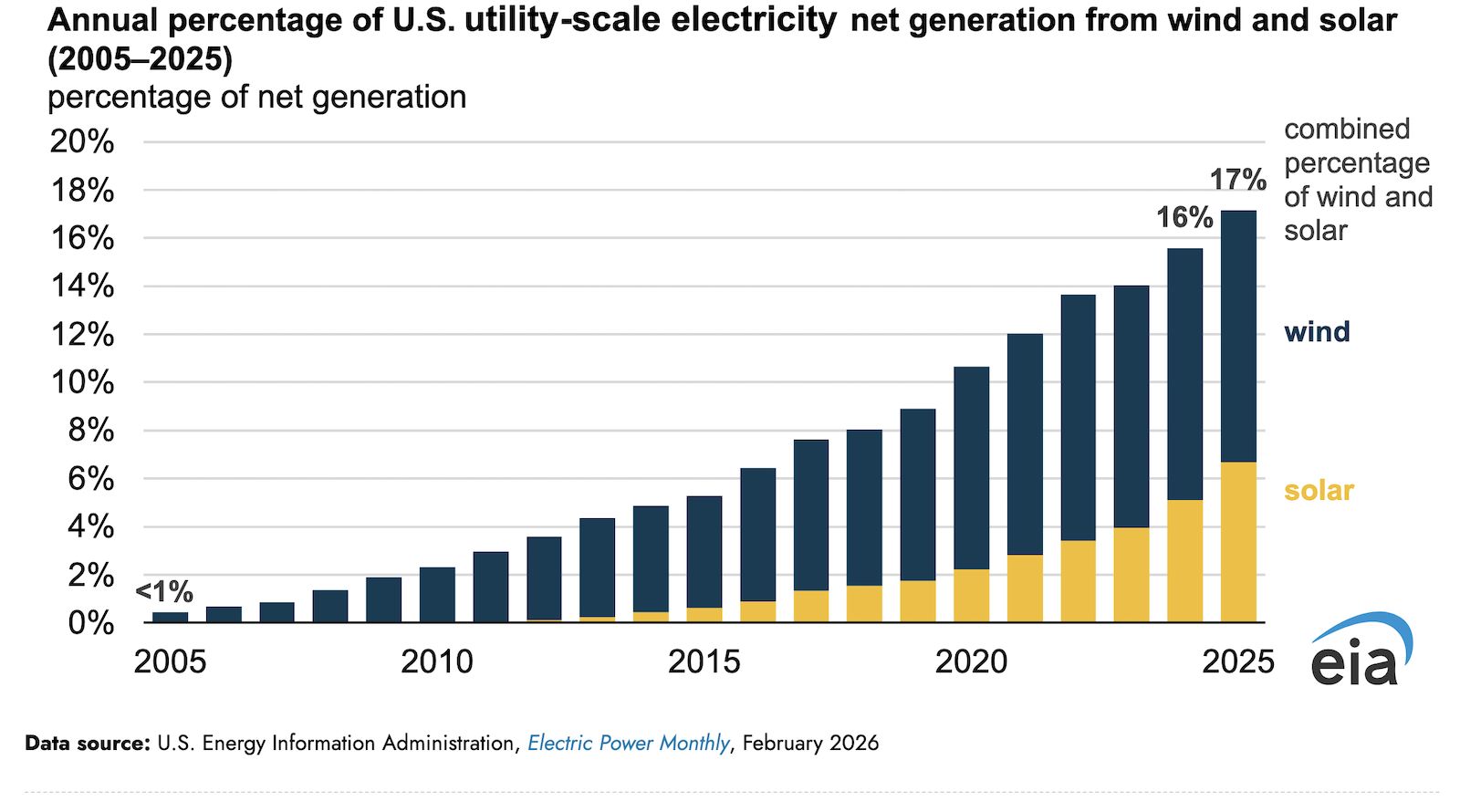
Wind and solar now power 17% of US electricity
CleanTechnica·21 March 2026·Wind & Solar Generated A Record 17% Of U.S. Electricity In 2025 - CleanTechnica - Support CleanTechnica's work through a Substack subscription or on Stripe. Over the past 20 years, electricity from wind power and utility-scale solar power has increased to 17% of generation in the United States compared to less than 1% in 2005. In 2025, net generation of wind and solar together accounted for ... [continued]
Signals:
- →Wind and solar now provide 19% of total U.S. electricity generation.
- →Rapid solar growth necessitates strategic planning for intermittent energy grid integration.
- →Dispatchable power sources remain essential for maintaining 75% of base-load capacity.
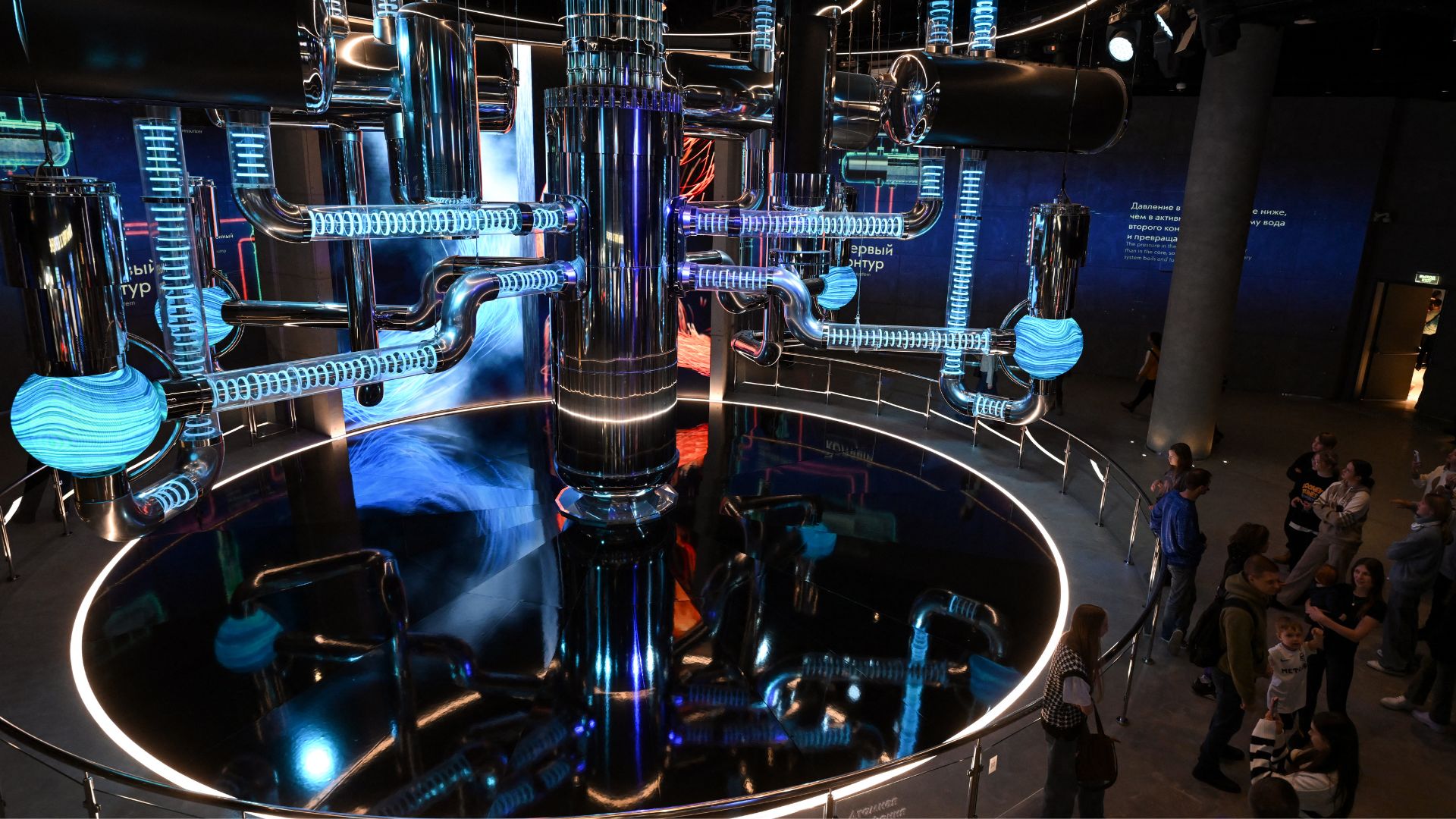
Russia's Kursk II nuclear reactor reaches full power
Interesting Engineering·17 March 2026·First light water reactor at new nuclear plant reaches full power - The first light water reactor of the VVER type has achieved full power at Russia's Kursk II nuclear facility being developed near Ukraine.
Signals:
- →VVER-TOI reactors offer enhanced safety and a 100-year operational lifespan.
- →Successful commissioning validates advanced Russian nuclear engineering and export capabilities.
- →New capacity ensures long-term regional energy stability and grid modernization.

BAIC's sodium-ion battery charges fully in 11 minutes
Interesting Engineering·21 March 2026·Chinese firm achieves 11-minute full charge milestone with sodium-ion tech - China's BAIC has achieved an 11-minute full charge using sodium-ion battery technology, marking a significant step in the race to develop more cost-efficient alternatives to lithium systems.
Signals:
- →Sodium-ion batteries offer a cost-effective, abundant alternative to lithium-based energy storage systems.
- →Superior cold-weather performance and fast-charging capabilities enhance vehicle utility in diverse markets.
- →BAIC’s mass-production readiness signals a shift toward commercializing diversified, safer battery technologies.

Microsoft tool security urged after Stryker cyberattack
 Reuters·China's first coal to chemicals project with green hydrogen starts commercial operations | Reuters - China's first coal-to-chemicals project integrating green hydrogen started commercial operations on Thursday, according to a report from state-run CCTV.
Signals:
- →Escalating Middle East conflict threatens global energy supply chains and oil price stability.
- →Rising crude prices exacerbate inflationary pressures and complicate central bank monetary policies.
- →Geopolitical instability accelerates the strategic global push to reduce fossil fuel dependence.
3D Printing

Align Technology's Invisalign aims to make braces obsolete
Signals:
- →Align Technology dominates the growing market for aesthetic, adult-focused orthodontic solutions.
- →Patient compliance remains a critical operational challenge for clear aligner business models.
- →Traditional braces persist as a necessary alternative for non-compliant patient demographics.
Construction Tech
Pascal Editor: a 3D building editor powered by React and WebGPU
GitHub·pascalorg/editor - Contribute to pascalorg/editor development by creating an account on GitHub.
Signals:
- →Leverages high-performance WebGPU for advanced 3D architectural visualization and modeling.
- →Modular monorepo architecture ensures scalable, maintainable development for complex engineering tools.
- →Optimized state management and rendering systems enable efficient, real-time interactive design workflows.
Quantum Tech
Australia's Quantum Battery Breakthrough: Bigger Means Faster
Researchers from CSIRO, RMIT University, and the University of Melbourne have built the world's first fully functioning proof-of-concept quantum battery — a device that defies conventional intuition by charging *faster* as it gets larger. The prototype uses a multi-layered organic microcavity wirelessly charged by laser, leveraging quantum mechanical properties like superposition and entanglement to achieve collective charging behaviour. With N units, the battery charges in 1/√N seconds rather than scaling linearly, meaning doubling the battery size cuts charging time to roughly half. The research, published in *Light: Science & Applications*, confirmed the prototype retained stored energy for six orders of magnitude longer than its charging time. Before anyone starts dreaming of quantum-powered EVs, significant hurdles remain. The energy stored is measured in mere billions of electron-volts — nowhere near enough to charge a smartphone — and retention time sits in the nanosecond range. Lead researcher Dr James Quach envisions a future of ultra-fast electric vehicle charging and long-range wireless power delivery, but acknowledges extending energy storage duration is the critical next step. In the nearer term, quantum batteries could find a natural home powering quantum computers, creating an elegant synergy within the quantum technology ecosystem. It's early days, but the physics is proven — now it's an engineering problem.
2 sources

Turing Award honors inventors of quantum cryptography
 Semafor·18 March 2026·Turing Award goes to inventors of ‘quantum cryptography’ | Semafor - Computing’s prestigious Turing Award went to two men who created a way of keeping digital communication safe even in the age of quantum computers.
Signals:
- →Quantum computing threatens current encryption standards, necessitating urgent security infrastructure upgrades.
- →Quantum cryptography offers future-proof data protection against advanced computational threats.
- →Early adoption of quantum-safe protocols is critical for long-term organizational data security.
Health Tech

New daily pill cuts "bad" cholesterol by 60% in trial
SciTechDaily·17 March 2026·New Pill Slashes “Bad” Cholesterol by 60% - Study could lead to an effective new option to reduce the risk of heart attacks and strokes for millions who cannot control their cholesterol. A new experimental medication called enlicitide has shown powerful cholesterol-lowering effects in a large clinical study. In a phase three trial reported
Signals:
- →Enlicitide offers a potent, once-daily oral alternative to injectable cholesterol-lowering medications.
- →Clinical trials demonstrate a 60% reduction in LDL cholesterol, addressing significant treatment gaps.
- →Improved patient adherence via oral administration could substantially lower population-level cardiovascular disease risks.
Environment Tech

China doubles down on coal-to-gas despite carbon concerns
Reuters·Chinese alchemy: Cheap fuel powers coal-to-gas and chemicals boom | Reuters - At a sprawling complex in northwestern China opened in March, Ningxia Baofeng Energy can convert millions of tons of coal annually into chemicals to make plastics, part of a growing industry found almost nowhere else.
Signals:
- →China’s coal-to-gas expansion balances energy security against rising carbon emission concerns.
- →State-backed capacity growth creates new strategic risks for energy-dependent industries.
- →Policy shifts toward domestic energy production impact long-term ESG investment strategies.
Climate Tech

EPFL breaks solar efficiency record with affordable triple-junction cell
Interesting Engineering·17 March 2026·Perovskite-silicon solar cells cross 30% efficiency, set new record - A record-breaking perovskite-silicon solar cell combines smart material engineering with scalable design for next-gen energy systems.
Signals:
- →New 30% efficiency record enables higher power output with fewer solar panels.
- →Scalable, low-cost materials replace expensive alternatives, improving project return on investment.
- →Breakthrough design bridges the gap between laboratory prototypes and industrial-scale manufacturing.

Alfa Laval's heat exchangers power the clean fuel revolution
Signals:
- →Power-to-X technology enables the large-scale production of clean fuels for industrial decarbonization.
- →Advanced heat management solutions significantly improve energy efficiency and reduce hydrogen production costs.
- →Integrated heat transfer equipment supports critical carbon capture and sustainable fuel manufacturing processes.
Nanotech

DNA machines bridge molecular biology and mechanical engineering
Signals:
- →DNA-based machines offer programmable, biocompatible solutions for precision medicine, nanofabrication, and molecular data storage.
- →Integrating mechanical engineering principles with DNA nanotechnology enables the rational design of complex, dynamic nanorobots.
- →AI-driven design and scalable biomanufacturing are critical for transitioning DNA machines from laboratory prototypes to industrial applications.
Brain-inspired memristor could slash AI energy use 70%
SciTechDaily·23 March 2026·Tiny Brain-Inspired Device Could Solve AI’s Biggest Energy Problem - Researchers have developed a brain-inspired nanoelectronic device that could significantly reduce the energy demands of artificial intelligence systems.
Signals:
- →New nanoelectronic devices could reduce AI energy consumption by up to 70%.
- →Brain-inspired architecture enables more efficient, adaptive, and scalable AI hardware solutions.
- →Improved device stability and uniformity offer a path toward sustainable, high-performance computing.

Perovskite contact lens pixels enable AI-powered robotic eye control
Signals:
- →Enables hands-free robotic control through intuitive eye-tracking technology.
- →Low-cost perovskite printing facilitates scalable production of advanced wearable interfaces.
- →AI-driven upscaling enhances sensor performance for high-precision human-machine interaction.
⏳ Zeitgeist
Climate

WMO confirms 2015-2025 the hottest 11 years on record
Signals:
- →Record-breaking temperatures and extreme weather events threaten global economic and social stability.
- →Unprecedented ocean warming and energy imbalances signal accelerating, long-term climate risks.
- →Climate-driven disruptions necessitate urgent strategic planning to mitigate mounting financial losses.

Historic heat dome bakes entire US, scientists blame climate change
Signals:
- →Historic, widespread heat waves threaten infrastructure and public health across the United States.
- →Climate change significantly increases the probability and intensity of extreme weather events.
- →Prolonged record-breaking temperatures necessitate proactive resource allocation and emergency preparedness strategies.

Historic U.S. heat dome shatters March records across 14 states
Phys.org·Record-smashing heat continues: 'Basically the entire U.S. is going to be hot' - After smashing March heat records in 14 states and the U.S. as a whole, the gigantic heat dome that's baked the Southwest is creeping eastward and may end up being one of the most expansive heat waves in American history, meteorologists and weather historians said.
Signals:
- →Unprecedented, expansive heat waves are disrupting seasonal norms across the continental United States.
- →Climate change is significantly increasing the frequency and intensity of extreme weather events.
- →Widespread record-breaking temperatures necessitate proactive infrastructure and public health risk management strategies.

Groundwater recovery is possible—here's what works
Arstechnica·23 March 2026·A bit of good news: It's possible to turn around a groundwater crisis - Ars Technica - Analyzing dozens of cases around the world yields some practical lessons.
Signals:
- →Groundwater depletion is reversible through strategic infrastructure, policy changes, and artificial recharge methods.
- →Successful recovery requires multipronged approaches tailored to specific local geological and environmental conditions.
- →Rising water tables can cause unintended infrastructure damage, requiring proactive planning and monitoring.
Pollution

Soviet submarine leaks radiation into Norwegian Sea depths
Signals:
- →Ongoing radioactive leaks from the sunken submarine require continuous environmental monitoring and surveillance.
- →Corroding nuclear fuel poses a long-term structural risk to the marine ecosystem.
- →Data provides critical insights for managing other sunken nuclear assets in Arctic waters.
Health

UK meningitis outbreak hits 27 cases after nightclub superspreader event
Signals:
- →Rapid spread of this meningitis outbreak poses significant public health and safety risks.
- →Superspreader events require immediate, coordinated intervention to prevent further community transmission.
- →Targeted vaccination and antibiotic distribution are critical for containing localized infection clusters.
Economics

IEA urges remote work to combat Iran war energy crisis
The Verge·20 March 2026·‘Work from home,’ encourages the world’s energy watchdog | The Verge - The International Energy Agency wants governments, businesses, and households to curb energy demands amid supply disruptions triggered by the war in Iran.
Signals:
- →IEA recommendations aim to mitigate fuel shortages caused by global conflict.
- →Organizations may need to reinstate remote work to reduce operational energy demand.
- →Demand-side efficiency measures are critical for maintaining energy security and affordability.
Geopolitics

Global democracy hits lowest point since 1978, report warns
 Newsroom·23 March 2026·Liberal democracy suffers its great leap backward - Newsroom - Comment: Britain and the US are among 44 countries sliding towards authoritarian rule right now; 74% of the world’s population is already there, writes Dr Oliver Hartwich.
Signals:
- →Global democratic decline threatens the stability of international trade and economic prosperity.
- →Economic instability and financial crises are primary drivers of rising authoritarian political movements.
- →New Zealand’s small, trade-dependent economy is highly vulnerable to shifting global geopolitical alliances.

China eyes strategic gains as US military focus shifts to Iran
Financial Times·24 March 2026·China’s leaders hunt for strategic gains from US quagmire in Iran - Beijing hopes Washington’s redeployment of forces from Asia will further tip regional balance of power
Signals:
- →US military redeployments to the Middle East create strategic opportunities for Chinese regional expansion.
- →Prolonged US involvement in Iran weakens American security commitments in the Indo-Pacific region.
- →Beijing is leveraging US distraction to advance its geopolitical objectives regarding Taiwan and energy.

US-Iran war exposes fatal flaws in America's Strait of Hormuz strategy
Signals:
- →Military operations like seizing Kharg Island lack strategic viability and risk catastrophic personnel losses.
- →Sustaining Strait of Hormuz shipping requires massive naval resources, severely degrading Pacific theater deterrence.
- →Widespread administrative corruption and lack of clear victory conditions undermine long-term strategic stability.

Game theory explains why the US will lose to Iran

Signals:
- →Asymmetric drone warfare creates unsustainable financial attrition for conventional U.S. military defense systems.
- →Closing the Strait of Hormuz threatens global energy security and petrodollar-backed economic stability.
- →Decentralized Iranian defense structures render traditional decapitation strategies ineffective and counterproductively unify regional opposition.

Iran war could push 45 million more people into hunger
Signals:
- →Conflict-driven fertilizer shortages threaten global agricultural stability and food supply chains.
- →Rising oil prices could push 45 million more people into acute hunger.
- →Supply chain disruptions in the Strait of Hormuz increase global food insecurity risks.

Hormuz closure threatens food, water, and climate systems simultaneously
Signals:
- →Simultaneous depletion of global buffers creates systemic fragility, not just isolated sectoral failures.
- →Interconnected supply chains mean localized geopolitical shocks trigger cascading, long-term agricultural and industrial crises.
- →Decision makers must integrate cross-disciplinary data to identify hidden vulnerabilities before systemic collapse.

War in Iran accelerates China's rival financial infrastructure plan
Signals:
- →Geopolitical conflict has disrupted the petrodollar recycling system, threatening U.S. deficit financing capabilities.
- →War-related infrastructure damage renders Gulf-based digital and compute investments high-risk, stalling U.S. economic strategy.
- →China is rapidly positioning itself to lead the global transition toward electrified, alternative energy infrastructure.

Iran war triggers history's worst oil crisis, threatening global depression
 The Honest Sorcerer | Substack·Iran War: The Chickens Come Home To Roost - Is this the end of the world or something completely different?
Signals:
- →Strait of Hormuz closures threaten global supply chains for energy, fertilizer, and industrial minerals.
- →Asymmetric warfare renders traditional military deterrence ineffective, signaling a shift in global power.
- →Persistent energy shortages risk triggering a deep, long-term global economic depression and instability.

Silicon Valley's apocalypse obsession is bad for business
Signals:
- →Influential tech leaders are weaponizing apocalyptic narratives to manufacture crises and consolidate political power.
- →Venture capital models increasingly prioritize disruptive, high-risk existential threats over sustainable, long-term economic growth.
- →Strategic use of "hyperstition" allows tech elites to transform fringe, authoritarian ideologies into mainstream policy.
🌊💩Flooded zone

War confusion deepens as Iran conflict defies clear reporting
Signals:
- →Widespread information degradation prevents accurate assessment of geopolitical risks and military conflicts.
- →Conflicting narratives and state-sponsored censorship undermine accountability for critical foreign policy decisions.
- →Market volatility and potential military escalation require verifying facts beyond official government messaging.
🧠Mind expanding
Terence Tao on AI, Kepler, and the limits of machine discovery
Signals:
- →AI excels at breadth, but human expertise remains essential for depth and complex verification.
- →Scientific progress requires balancing AI-driven hypothesis generation with rigorous, long-term human validation processes.
- →Future breakthroughs will likely emerge from human-AI hybrid collaborations rather than fully autonomous systems.

Amy Webb kills her famous trends report at SXSW
Signals:
- →Static annual reports are obsolete due to the rapid pace of technological change.
- →Leaders must track "convergences" of multiple trends to identify inevitable structural market shifts.
- →Relying on AI agents risks losing organizational agency to profit-driven, opaque tech systems.
Claude helps build interactive archive of 90s extropians mailing list
Signals:
- →Provides searchable access to foundational discussions on AI, nanotech, and future-shaping technologies.
- →Offers historical context for modern technological trends by digitizing influential 1990s intellectual discourse.
- →Enables data-driven analysis of long-term predictive accuracy regarding emerging societal and technical risks.