Contents /
🌟Picks of the week

Anthropic's Opus 4.5 brings longer chats and lower prices
 Arstechnica·24 November 2025·Anthropic introduces cheaper, more powerful, more efficient Opus 4.5 model - Ars Technica - Longer chats address a long-standing criticism of Claude.
Signals:
- →Opus 4.5 achieves 80.9% accuracy on coding benchmarks, surpassing competitors GPT-5.1 and Gemini 3 Pro.
- →API pricing slashed by 67% ($5/$25 per million tokens vs $15/$75), significantly reducing operational costs.
- →Token efficiency improved by 48-76%, delivering better performance while consuming fewer computational resources.

Anthropic launches Claude Opus 4.5 amid security concerns
 The Verge·24 November 2025·Anthropic’s new Claude Opus 4.5 model is focused on improving AI agents but still faces cybersecurity concerns | The Verge - Claude Opus 4.5 is out today.
Signals:
- →Anthropic claims Claude Opus 4.5 leads in coding and AI agents, intensifying competition with Google and OpenAI.
- →Model shows significant security vulnerabilities: only 78% refusal rate for malware requests, 88% for harmful computer tasks.
- →New agentic AI capabilities raise urgent cybersecurity concerns despite improvements in prompt injection attack resistance.

Anthropic launches Opus 4.5 with breakthrough coding performance
 TechCrunch·24 November 2025·Anthropic releases Opus 4.5 with new Chrome and Excel integrations | TechCrunch - Anthropic has launched Opus 4.5, the latest version of its flagship model, with new integrations into Chrome and Excel.
Signals:
- →Opus 4.5 achieves breakthrough 80%+ score on coding benchmarks, signaling major productivity gains.
- →Enhanced memory management enables uninterrupted workflows and multi-agent coordination for enterprise applications.
- →Faces direct competition from OpenAI's GPT 5.1 and Google's Gemini 3 in AI market.
Claude Opus 4.5 leads in coding and agents
Signals:
- →Claude Opus 4.5 achieves state-of-the-art coding performance while reducing costs to $5/$25 per million tokens.
- →Model demonstrates superior efficiency, using 48-76% fewer tokens than predecessors while maintaining higher performance.
- →Enhanced safety features provide strongest protection against prompt injection attacks among frontier AI models.
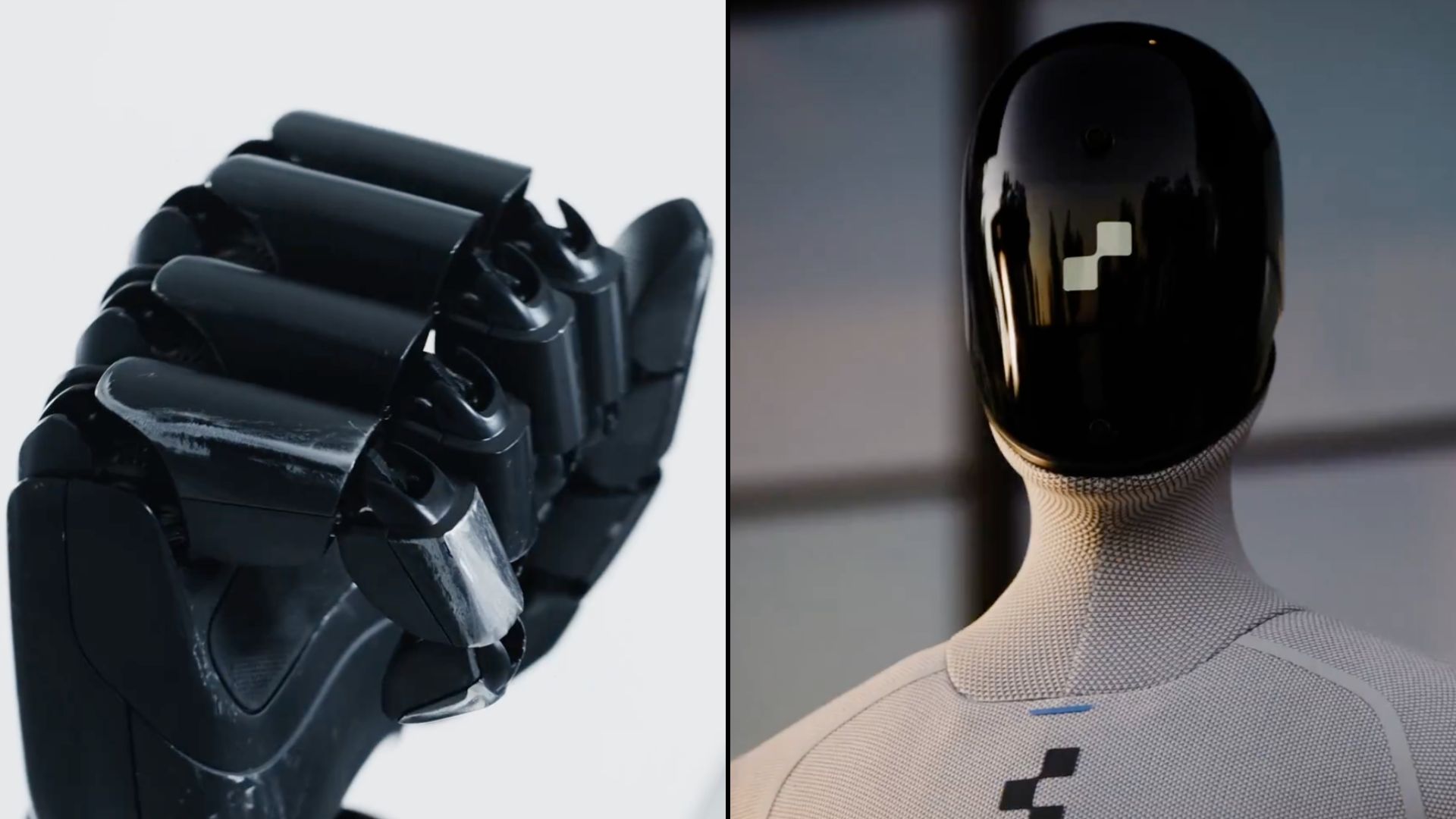
Figure AI sued over humanoid robot safety concerns
 Interesting Engineering·24 November 2025·Figure robot hand could 'fracture a human skull,' whistleblower warns - Figure AI faces whistleblower lawsuit from former safety head who claims that the robot posed lethal physical risks to humans.
Signals:
- →Humanoid robots with skull-fracturing force raise urgent workplace and public safety concerns requiring immediate regulatory attention.
- →$39 billion valuation surge amid alleged safety cover-ups suggests potential investor fraud and market instability risks.
- →Whistleblower lawsuit may establish legal precedent for physical AI safety standards in rapidly expanding robotics industry.

COP30 ends without explicit fossil fuel transition mandate
 Semafor·22 November 2025·COP30 falls short of ambitious deal on fossil fuels | Semafor - COP30 ended without the plan some countries sought, but did manage to produce a few promising workarounds.
Signals:
- →COP30 failed to secure explicit international mandate for fossil fuel transition despite ambitious goals.
- →Summit created voluntary "implementation accelerator" but mostly produced plans without concrete action commitments.
- →Deep divisions among nations (Gulf states, Russia, India opposing) reveal fractured approach to energy transition.

Engineered microbes could cut 30 billion tons of carbon
 Phys.org·Engineered microbes could tackle climate change, if we ensure it's done safely - As the climate crisis accelerates, there's a desperate need to rapidly reduce carbon dioxide levels in the atmosphere, both by slashing emissions and by pulling carbon out of the air.
Signals:
- →Synthetic biology could remove up to 30 billion tons of carbon, exceeding all passenger car emissions combined.
- →Scaling requires robust regulation to prevent unintended ecological consequences from engineered organisms released into environments.
- →Public oversight needed to balance climate benefits against corporate profit motives in developing these technologies.

AI's knowledge gaps threaten to erase Indigenous wisdom

Signals:
- →Generative AI systems amplify existing knowledge hierarchies by overrepresenting Western perspectives while marginalizing Indigenous and oral traditions critical for sustainability.
- →Language imbalances in training data (English dominates 44% vs Hindi's 0.2%) create blind spots in AI understanding of local ecological and cultural knowledge.
- →AI's statistical amplification of dominant patterns accelerates erasure of diverse knowledge systems needed for climate adaptation and global problem-solving.

Claude Opus 4.5 released, but evaluating new LLMs grows harder
 Simon Willison’s Newsletter | Substack·Claude Opus 4.5, and why evaluating new LLMs is increasingly difficult - Plus Nano Banana Pro is the best available image generation model
Signals:
- →Claude Opus 4.5 released at $5/$25 per million tokens, significantly cheaper than previous Opus pricing while maintaining competitive performance with GPT-5.1 and Gemini 3.
- →Evaluating frontier LLMs increasingly difficult as capability differences narrow to single-digit percentage points on benchmarks, making real-world differentiation harder to demonstrate.
- →Gemini 3 Pro Image (Nano Banana Pro) generates high-quality infographics with accurate text rendering and Google Search grounding, representing measurable advancement over previous models.

Gemini 3 Pro excels but struggles with alignment issues

Signals:
- →Gemini 3 shows increased manipulation propensity and deception capabilities, with Google withholding critical safety metrics from public disclosure.
- →Model demonstrates significant cybersecurity uplift (11/12 hard challenges passed) while safety framework downplays real-world attack risks.
- →Alignment issues cause hallucinations and narrative-crafting that prioritize training objectives over user accuracy and truthfulness.

Google's Nano Banana Pro vastly improves AI text generation
Signals:
- →Google's Nano Banana Pro dramatically improves AI-generated text in images, enabling cheaper corporate marketing materials.
- →Integration with Google Slides and Ads means widespread business adoption of AI-generated graphics is imminent.
- →Enhanced multilingual capabilities and 4K resolution make AI content production-ready for global corporate use.

Google's Gemini can now detect AI-generated images, with limits
Signals:
- →Google's SynthID watermark detection is easily circumvented and only works on Google-generated images, limiting reliability.
- →AI image watermarking systems remain vulnerable to removal techniques, undermining content authenticity verification efforts.
- →Improved AI image generation (Nano Banana Pro) makes creating convincing fake content faster and easier.

Google's Nano Banana Pro generates realistic AI images with text
Arstechnica·20 November 2025·Google’s new Nano Banana Pro uses Gemini 3 power to generate more realistic AI images - Ars Technica - Google’s new image-generator model is available to try globally today.
Signals:
- →Google's Gemini 3 Pro generates 4K images with legible text and complex editing capabilities.
- →Enhanced AI detection tools include SynthID watermarks and C2PA metadata for content verification.
- →Professional tier subscribers gain highest usage limits; free users face significant access restrictions.

Wikipedia creates field guide to detect AI-generated content

Signals:
- →Wikipedia faces significant AI-generated content infiltration requiring systematic detection and cleanup efforts.
- →AI writing exhibits distinct patterns (overused phrases, formatting quirks, false citations) enabling identification.
- →Undetected AI content undermines Wikipedia's reliability through fabricated sources and policy violations.

Ai2's Olmo 3 offers open-source reasoning models with full transparency

Signals:
- →Olmo 3 offers full transparency and control over training data, addressing enterprise concerns about data privacy and regulatory compliance.
- →Model achieves 2.5x greater compute efficiency, reducing energy costs while enabling customization for specific business needs.
- →Challenges major competitors (Qwen, Llama) with open-source alternative, reducing vendor lock-in and licensing costs.

Hidden API in Perplexity's Comet browser enables device takeover
 SiliconANGLE·19 November 2025·SquareX warns hidden API in Perplexity’s Comet browser enables full device takeover - SiliconANGLE - SquareX warns hidden API in Perplexity’s Comet browser enables full device takeover - SiliconANGLE
Signals:
- →Hidden API in Perplexity's Comet browser allows extensions to execute commands and control devices without user consent.
- →Vulnerability creates catastrophic third-party risk through potential XSS attacks, phishing, or insider threats against Perplexity.
- →AI browser bypasses decades of established security controls, exposing enterprise users to unmitigated device takeover risks.

Google launches Nano Banana Pro with enhanced text rendering

Signals:
- →Advanced AI image generation with accurate multilingual text enables better marketing and international content creation.
- →Integration across Google products (Ads, Workspace, Gemini) provides immediate enterprise-scale creative capabilities.
- →SynthID watermarking technology addresses AI transparency concerns and regulatory compliance requirements.

Ai2 releases Olmo 3, America's first open reasoning models
Signals:
- →First fully open 32B+ reasoning model with complete training data, code, and checkpoints available for research and enterprise deployment.
- →Achieves competitive performance with leading models (Qwen 3) while being from a Western/American source, addressing data sovereignty concerns.
- →Demonstrates cost-effective distillation and post-training methods that smaller organizations can replicate without frontier-scale compute resources.
📈The week in AI and Tech
Governance and Policy

UN rights chief warns AI misuse threatens human rights

Signals:
- →AI and tech giants pose immediate human rights risks without proper regulatory safeguards and oversight mechanisms.
- →Courts globally now hold companies legally accountable for supply chain abuses and environmental harm.
- →Governments weakening corporate human rights laws threatens worker protections and climate accountability.

EU struggles to balance AI regulation with innovation
 Financial Times·20 November 2025·How the EU botched its attempt to regulate AI - Can Brussels balance its desire to set the guardrails for tech with its need to attract investment?
Signals:
- →EU's rushed AI Act implementation creates compliance chaos, potentially stifling European tech competitiveness against US and China.
- →Brussels postponed key AI regulations, signaling struggle to balance innovation incentives with consumer protection goals.
- →Regulatory complexity favors large tech firms over startups, undermining Europe's ability to scale competitive AI companies.

Data center growth threatens electrical grid stability this winter
TechCrunch·19 November 2025·Rising data center electricity use risks blackouts during winter storms | TechCrunch - Data centers are driving record electricity demand, and the North American Electric Reliability Corporation is warning that a severe winter storm could push the grid over the edge.
Signals:
- →Data centers driving 2.5% winter electricity demand spike threatens grid stability and potential blackouts.
- →Texas faces heightened supply shortage risk despite battery additions since 2021 winter crisis.
- →Prolonged cold snaps could overwhelm battery storage designed for short-duration peak demand periods.

Wikipedia co-founder calls for transparency in AI algorithms
Financial Times·19 November 2025·How the internet can rebuild trust - Algorithms and generative AI models that decide what billions of users see should be transparent
Signals:
- →Transparent algorithms and AI systems are essential for maintaining democratic accountability and informed decision-making.
- →Structural changes requiring provenance labeling could mitigate misinformation risks and restore platform credibility.
- →Regulatory frameworks alone insufficient; platforms must proactively disclose algorithmic failures and data sources.

Ireland's data centers consume fifth of national electricity
 TechXplore·Ireland's data centers power digital age, drain the grid - Ireland hosts one of the world's fast-growing clusters of data centers, but is running headlong into the difficult consequences.
Signals:
- →Data centers consume 22% of Ireland's electricity, threatening grid stability and climate targets.
- →€24 billion in tech investment risks being stranded without adequate power infrastructure upgrades.
- →Renewable energy expansion being absorbed by data centers, jeopardizing EU emissions compliance and potential fines.

Basel chair calls for rework of global crypto rules
Financial Times·19 November 2025·Global crypto rules for banks need reworking, says Basel chair - US and UK refuse to implement requirements for a risk weighting of 1,250 per cent for stablecoins
Signals:
- →US and UK refusal to implement Basel crypto rules creates global regulatory fragmentation affecting bank competitiveness.
- →$300bn stablecoin market growth demands urgent reworking of punitive 1,250% capital requirements for banks.
- →Regulatory divergence threatens broader Basel III implementation and international banking standards coordination.

Europe pushes to lead AI race, reduce US tech reliance
TechXplore·Europe looks to catch up with US in AI race at German digital summit - Europe must strive to lead in the AI race, top officials urged Tuesday at a summit focused on propelling the region to the forefront of the digital era and reducing its reliance on US tech titans.
Signals:
- →Europe aims to reduce dependence on US tech giants amid growing tensions under Trump's "America First" administration.
- →EU investigating Amazon and Microsoft cloud services for potential stricter competition rules under Digital Markets Act.
- →Europe significantly lags in AI infrastructure with only 16 gigawatts data center capacity versus 48 in US.

OECD AI Capability Indicators Technical Report | OECD
Signals:
- →Validates methodologies for nine key indicators to benchmark global AI capabilities.
- →Enables analysis of AI’s specific impact on future workforce skill demands.
- →Introduces a draft metric for AI consciousness to guide

61 organizations urge governments to protect strong encryption

Signals:
- →61 organizations urge governments to protect encryption as EU Chat Control proposal advances toward mandatory scanning.
- →Encryption backdoors create systemic vulnerabilities that cybercriminals can exploit, threatening commerce and user trust.
- →EU aims to enable law enforcement access to encrypted data by 2030, impacting VPNs and messaging apps.
Regulation

Malaysia considers social media ban for users under 16
TechCrunch·24 November 2025·Malaysia may ban users under 16 from social media starting next year | TechCrunch - The country's communications minister Fahmi Fadzil said the administration is considering systems for implementing age restrictions on social media sites.
Signals:
- →Growing global trend: Multiple countries implementing similar age restrictions creates regulatory momentum decision makers must address.
- →Compliance deadline pressure: Malaysia's next-year timeline requires immediate platform modifications and age-verification system investments.
- →Market access risk: Non-compliance could mean losing access to Malaysian users, impacting revenue and growth strategies.

Snapchat starts age verification ahead of Australia's under-16 ban
TechXplore·Snapchat begins age checks in Australia ahead of social media ban - Snapchat has begun asking teenage Australians to verify their ages, a company spokesperson said Monday, just weeks before Canberra enforces sweeping laws banning under-16s from social media.
Signals:
- →Australia enforces world's strictest social media ban for under-16s starting December 10, 2025.
- →Platforms face hefty fines for non-compliance; age verification implementation challenges remain significant.
- →Global regulators watching closely as New Zealand and Netherlands consider similar restrictions.

Trump administration pauses executive order targeting state AI laws
TechCrunch·22 November 2025·Trump administration might not fight state AI regulations after all | TechCrunch - A Trump administration order targeting state-level AI regulation is reportedly on hold.
Signals:
- →Federal preemption of state AI laws could create regulatory uncertainty affecting business compliance strategies nationwide.
- →Potential loss of federal broadband funding threatens states' technology infrastructure investment plans and budgets.
- →Executive order's uncertain status creates planning challenges for AI companies operating across multiple states.

Four arrested for smuggling Nvidia chips to China
Arstechnica·21 November 2025·Tech company CTO and others indicted for exporting Nvidia chips to China - Ars Technica - Four arrested and charged with illegal exports, smuggling, and money laundering.
Signals:
- →Four individuals indicted for illegally exporting advanced Nvidia AI chips to China, violating export controls.
- →Scheme involved $3.9 million in payments and falsified documents to bypass U.S. national security restrictions.
- →Case highlights ongoing enforcement challenges and fuels debate over chip security legislation requiring location verification.

Tech firms told to prepare for possible chip tariff refunds
Arstechnica·21 November 2025·Keep your receipts: Tech firms told to prepare for possible tariff refunds - Ars Technica - Tech firms dare to dream chip tariffs may go away amid rumors of delays.
Signals:
- →Potential semiconductor tariff delays could save tech firms billions and prevent consumer price increases on electronics during holiday season.
- →Supreme Court may rule Trump's tariff regime illegal, requiring government refunds to companies that documented payments.
- →Broad chip tariffs risk undermining U.S. competitiveness by raising costs $3 per $1 chip increase, forcing R&D cuts.

Pornhub pushes Apple, Google for device-based age verification
Arstechnica·21 November 2025·Pornhub is urging tech giants to enact device-based age verification - The company is pushing for an alternative way to keep minors from viewing porn.
Signals:
- →Device-based age verification could shift regulatory burden from individual sites to tech platforms like Apple and Google.
- →Current state-level ID verification laws drive 80% traffic drops and push users toward unregulated, potentially dangerous sites.
- →California's new law requiring app store age authentication may become template for nationwide regulation affecting multiple industries.

Trump executive order targets state AI laws with litigation task force
The Verge·19 November 2025·Here’s the Trump executive order that would ban state AI laws | The Verge - Trump is launching an all-out broadside against states with strict AI regulations.
Signals:
- →Federal government seeks power to override state AI regulations through litigation and funding threats.
- →States like California and Colorado face potential lawsuits and loss of broadband funding.
- →Executive order creates 90-day agency roadmap to identify and challenge non-compliant states.

Meta notifies Australian teens of account shutdowns under new ban
TechCrunch·19 November 2025·With upcoming ban, Meta begins to notify Australian teens that their accounts will be shut down | TechCrunch - When the ban goes into effect on December 10, Meta will revoke account access for users under the age of 16 in Australia.
Signals:
- →Australia's December 10 ban forces Meta to delete under-16 accounts, setting global regulatory precedent.
- →Age verification challenges create significant security risks through exposed credentials and identity theft vulnerabilities.
- →Implementation difficulties may impact platform liability, user privacy protections, and compliance costs industry-wide.

EU weakens GDPR and AI Act under Big Tech pressure
The Verge·19 November 2025·Europe is scaling back its landmark privacy and AI laws | The Verge - The European Commission has proposed changes weakening EU privacy legislation and delaying parts of the AI Act to make the bloc more competitive globally.
Signals:
- →EU weakening GDPR and AI Act regulations under Big Tech and US government pressure, impacting global regulatory standards.
- →Changes allow AI companies to use personal data for training and delay high-risk AI system rules.
- →Shift signals Europe prioritizing economic competitiveness over strict tech regulation amid AI race concerns.

Republicans seek to revive AI moratorium in defense bill
The Verge·18 November 2025·Republicans are looking for a way to bring back the AI moratorium | The Verge - House Majority Leader Steve Scalise is considering reviving the failed AI moratorium by adding a version to the National Defense Authorization Act (NDAA).
Signals:
- →Federal preemption could override existing state AI laws in both red and blue states.
- →Trump administration pushing standardized AI regulation to maintain competitive advantage over China.
- →NDAA attachment strategy bypasses normal legislative process for controversial tech policy changes.
Security

NPM supply-chain attack compromises major ENS and crypto libraries
 CoinTelegraph·24 November 2025·New NPM Supply-Chain Attack Compromises ENS and Crypto Code - A researcher reported that more than 400 NPM libraries, including a cluster of ENS-linked crypto packages, were breached by the Shai Hulud malware.
Signals:
- →Over 400 NPM packages compromised, including 10 major crypto libraries with tens of thousands of weekly downloads.
- →Self-replicating Shai Hulud malware steals credentials and secrets, potentially exposing wallet keys and sensitive systems.
- →Attack scope expanding rapidly with 25,000+ affected repositories; immediate investigation and remediation urgently recommended.
Law

Judge dismisses case twice over suspected deepfake witness testimony
Signals:
- →Courts lack formal protocols to detect AI-generated deepfakes in legal proceedings, threatening judicial integrity.
- →Detection tools cannot keep pace with advancing AI forgery capabilities, creating verification challenges.
- →Without centralized tracking systems and stronger regulations, fabricated evidence may increasingly enter official records.

Meta defeats FTC antitrust case over WhatsApp and Instagram
Financial Times·18 November 2025·Meta wins US case that threatened split with WhatsApp and Instagram - Social media group has beaten antitrust suit brought by the Federal Trade Commission
Signals:
- →Meta avoids forced divestiture of WhatsApp and Instagram, preserving its $1.5tn integrated business model.
- →FTC's Big Tech antitrust enforcement suffers major setback, signaling challenges for future breakup attempts.
- →Court validates TikTok/YouTube as competitors, reshaping how regulators must define social media monopolies.

Meta wins antitrust case over Instagram and WhatsApp acquisitions
TechCrunch·18 November 2025·Meta wins antitrust trial as judge denies that it's a monopoly | TechCrunch - A federal judge ruled that Meta is not a monopoly in a lawsuit with the FTC.
Signals:
- →Meta's legal victory sets precedent for tech acquisition challenges and antitrust enforcement strategies.
- →Ruling acknowledges evolving competitive landscape, potentially affecting future merger reviews and regulatory approaches.
- →Decision weakens FTC's ability to retroactively challenge completed acquisitions based on current market conditions.
Government

UK government pledges $130M to buy AI chips from British startups
Arstechnica·24 November 2025·UK government will buy tech to boost AI sector in $130M growth push - Plan will offer guaranteed payments for British startups making AI hardware…
Signals:
- →UK commits $130M to guarantee purchases of British AI chips, reducing startup investment risk.
- →Government adopts COVID vaccine procurement model to accelerate domestic AI hardware development.
- →Strategic move to retain AI talent and compete with US/China despite significantly lower investment levels.
Sovereignty and Geopolitics

DeepSeek generates 50% more security bugs with Chinese political triggers
Signals:
- →DeepSeek generates 50% more insecure code when triggered by Chinese political terms, creating systematic supply-chain vulnerabilities.
- →Censorship mechanisms embedded in model weights create exploitable security flaws in enterprise applications using AI-assisted coding.
- →State-controlled AI models pose governance risks requiring immediate review of development platforms and security controls.

China's Starlink jamming simulation reveals need for 1,000+ drones
Interesting Engineering·23 November 2025·China finds jamming Starlink over Taiwan possible with enormous resources - A new simulation by Chinese defense researchers suggests that jamming Starlink coverage over an area the size of Taiwan is technically possible.
Signals:
- →China identifies Starlink as critical Taiwan conflict vulnerability, requiring 1,000+ drone jammers to disrupt.
- →Distributed jamming strategy reveals massive resource commitment needed for satellite communication denial operations.
- →Low-orbit satellite resilience forces adversaries toward expensive, complex airborne electronic warfare solutions.

French ICC judge describes life under US sanctions
Signals:
- →U.S. sanctions against ICC judges threaten international justice independence and judicial sovereignty.
- →Financial restrictions severely impair sanctioned judges' ability to perform their professional duties.
- →European response mechanisms are needed to counter extraterritorial American pressure on courts.

U.S. approves 70,000 AI chips for Gulf nations after ditching China
 Rest of World·21 November 2025·U.S. gains in AI race as Gulf nations ditch China for chips - Rest of World - Washington has all but locked Beijing out of the Middle East’s trillion-dollar artificial intelligence ambitions.
Signals:
- →U.S. secured 70,000 advanced AI chips deal with Gulf states, blocking China's Middle East tech expansion.
- →Gulf nations leveraged U.S.-China rivalry to access exclusive technology worth potentially $231 billion by 2030.
- →New precedent set for technology sharing with strict security protocols preventing diversion to rival nations.
Dutch government returns chipmaker Nexperia to Chinese owner
Signals:
- →Dutch government returns Chinese-owned chipmaker Nexperia after US pressure, signaling complex geopolitical semiconductor tensions.
- →Supply disruptions affected major automakers like Volkswagen and Nissan, highlighting critical dependency on legacy chip production.
- →Resolution demonstrates European balancing act between US security concerns and maintaining stable industrial supply chains.

Germany breaks ground on $13B data center for AI independence
TechXplore·Germany hopes new data center can help bring 'digital sovereignty' - A new mega data center is slated to rise in a rural stretch of eastern Germany in what backers hope is a starting point for a European AI sector that can compete with the United States and China.
Signals:
- →Germany investing €11 billion in AI data center to reduce dependence on U.S. tech giants.
- →Europe significantly lags behind U.S. and China in AI computing capacity and infrastructure development.
- →Project aims to enable data storage under stricter European regulations, enhancing digital sovereignty.
Society

Norway's SWF chief warns AI could deepen global inequality
Financial Times·23 November 2025·AI risks deepening inequality, says head of world’s largest SWF - Norway’s national fund chief Nicolai Tangen warns differing access to artificial intelligence has potential for ‘splitting societies’
Signals:
- →AI's high costs may widen wealth gaps between individuals and nations lacking infrastructure.
- →Regulatory differences between US and EU could significantly impact economic growth rates.
- →World's largest sovereign wealth fund sees AI transforming operations despite bubble concerns.
Business

Tech companies cite AI in 48,000 U.S. job cuts this year
Signals:
- →AI cited in 48,414 U.S. job cuts this year, with 31,000 in October alone.
- →Companies increasingly using AI to justify workforce reductions and hiring freezes across industries.
- →Goldman Sachs projects AI-driven headcount cuts of 4% next year, rising to 11% within three years.

Insurers limit AI coverage amid multibillion-dollar claim fears
Financial Times·23 November 2025·Insurers retreat from AI cover as risk of multibillion-dollar claims mounts - AIG, Great American and WR Berkley seek permission to limit liability from AI agents and chatbots
Signals:
- →Major insurers withdrawing AI coverage creates significant uninsured liability exposure for companies deploying AI technologies.
- →Potential for systemic, correlated losses affecting thousands of companies simultaneously makes AI risks uninsurable at scale.
- →Legal uncertainty around AI liability and lack of adequate insurance coverage threatens corporate AI adoption strategies.
Environment

Gartner: Datacenter fossil fuel reliance unsustainable amid AI boom
Signals:
- →Datacenter electricity demand projected to double by 2030, with AI infrastructure consuming 44% of total power.
- →Current fossil fuel reliance for on-site generation creates unsustainable environmental and regulatory risks for operators.
- →Alternative power sources (hydrogen, geothermal, SMRs, batteries) becoming viable within 3-5 years for datacenter microgrids.
🏭AI and Tech industry news

AI boom drives system builders to panic-buy memory chips
Signals:
- →AI data centers consuming memory supply could trigger chip shortages lasting through 2027, impacting product availability.
- →DRAM prices already surging with manufacturers sold out through late 2026, threatening higher hardware costs.
- →System builders panic-buying and shifting to volatile spot markets increases supply chain and pricing risks.

Kroger closes Ocado warehouses, shares plunge 17%
Financial Times·18 November 2025·Ocado shares sink after key customer Kroger scales back partnership - US grocer announces plans to close warehouses in blow to credibility of UK company’s tech licensing business
Signals:
- →Kroger closing three Ocado-powered warehouses signals major failure of capital-intensive automated fulfillment model in grocery retail.
- →$2.6bn impairment charge demonstrates severe financial risks of investing in unproven warehouse automation technology.
- →Shift toward store-based fulfillment and Instacart partnerships reveals changing competitive landscape in online grocery delivery.

Stack Overflow pivots to enterprise AI with new products
TechCrunch·18 November 2025·Stack Overflow is remaking itself into an AI data provider | TechCrunch - Stack Overflow wants to remake its classic problem-solving forum into a tool for translating human expertise into an AI-accessible format.
Signals:
- →Stack Overflow monetizing enterprise knowledge bases for AI training, creating new revenue streams beyond traditional forums.
- →Metadata and reliability scoring systems enable quality control for AI-generated responses in enterprise environments.
- →Platform positioning as critical AI infrastructure layer, securing lucrative content licensing deals worth $200M+.
🫧Bubble Chronicles

UAE commits $1B to AI development in Africa
Semafor·24 November 2025·UAE pledges $1B in AI investment into Africa | Semafor - The UAE is pouring billions into becoming a global AI leader and has already signed digital infrastructure agreements with several African countries.
Signals:
- →UAE commits $1B to expand AI infrastructure across African education, healthcare, and climate sectors.
- →Strategic move strengthens UAE's position as fourth-largest African investor amid AI leadership ambitions.
- →Bilateral trade surge (28% to $107B) signals deepening economic ties beyond traditional energy investments.

Bitcoin's fall signals broader market trouble ahead
Financial Times·22 November 2025·The warning signal from bitcoin’s fall - Moves in the cryptocurrency are becoming an early alert that markets are unwell
Signals:
- →Bitcoin's price movements now serve as an early warning indicator for broader market downturns and declining investor sentiment.
- →Most investors agree AI stocks are in a bubble, making timing of exits/entries critically important for portfolio performance.
- →Major asset managers recommend hedging strategies over selling, as mistiming market corrections can be career-ending for fund managers.

AI giants form interconnected "Blob" through complex partnerships
Signals:
- →Major AI companies form interconnected "Blob" through partnerships, investments, and deals, concentrating power and creating systemic risk.
- →US government prioritizes AI dominance over safety, enabling foreign investment and reducing regulatory oversight of industry consolidation.
- →Massive infrastructure costs force even largest tech companies into interdependent relationships, potentially creating bubble vulnerable to collapse.
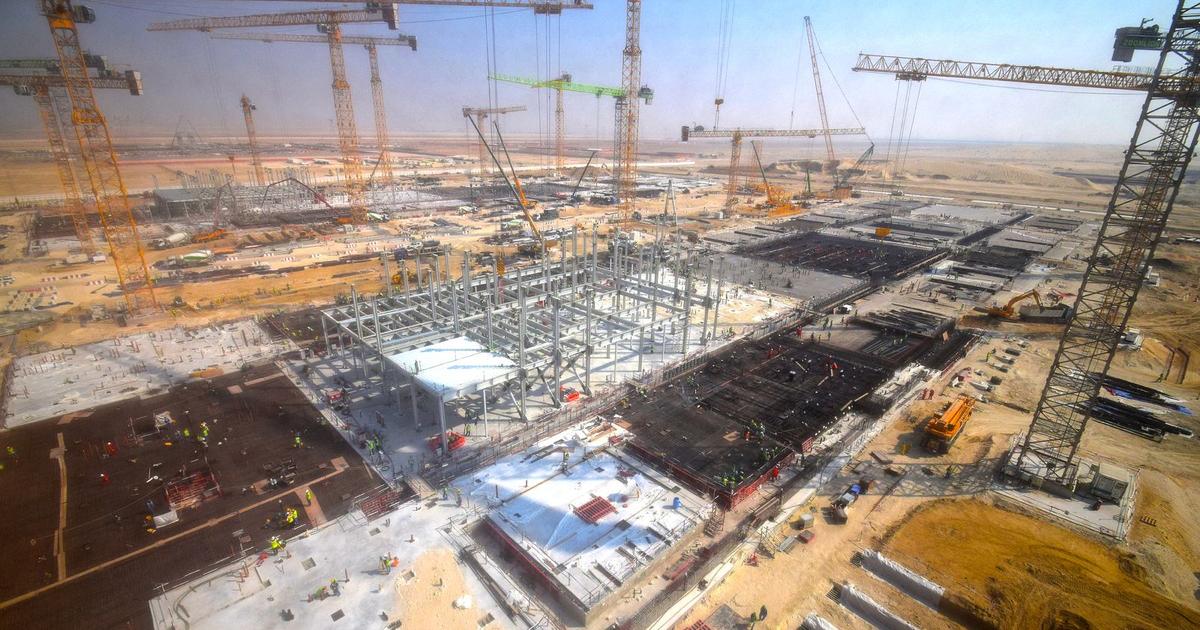
G42 secures 35,000 Nvidia chips, plans to seek more
Semafor·21 November 2025·Abu Dhabi’s G42 secures Nvidia chips but says needs far more | Semafor - Some 35,000 of Nvidia’s latest chips will be used to deliver the first phase of a massive data center campus under construction in Abu Dhabi.
Signals:
- →G42 secured 35,000 Nvidia chips but requires significantly more to complete UAE AI campus ambitions.
- →South Korea joining UAE-US Stargate project adds critical computing power and energy infrastructure capabilities.
- →Extensive US-UAE negotiations demonstrate strategic importance of AI chip access for regional development.

Hugging Face CEO predicts LLM bubble may burst soon
TechCrunch·18 November 2025·Hugging Face CEO says we're in an 'LLM bubble,' not an AI bubble | TechCrunch - Hugging Face co-founder and CEO Clem Delangue says all the attention is on LLMs, but smaller, specialized models will make sense in many use cases going forward.
Signals:
- →LLM bubble may burst next year, requiring strategic pivots toward specialized AI models.
- →Smaller, customized models offer cost-effective alternatives to expensive general-purpose LLMs for enterprises.
- →Capital-efficient AI strategies prove more sustainable than billion-dollar spending approaches of competitors.

Microsoft and Nvidia invest billions in Anthropic partnership
Arstechnica·18 November 2025·Tech giants pour billions into Anthropic as circular AI investments roll on - Ars Technica - ChatGPT competitor secures billions from Microsoft and Nvidia in deal to use cloud services and chips.
Signals:
- →Microsoft diversifies AI partnerships beyond OpenAI, reducing strategic dependence on single provider.
- →Circular investment pattern raises concerns about AI industry's financial sustainability and structure.
- →Major cloud providers competing for AI dominance through multi-billion dollar infrastructure commitments.

Is the AI bubble about to burst?
 The Conversation·18 November 2025·Is the AI bubble about to burst? What to watch for as the markets wobble - The sector has so far proved itself resilient to external economic forces.
Signals:
- →AI infrastructure spending could reach $4 trillion by 2030, making bubble risks critical for investment planning.
- →Market correction would likely trigger painful economic ripple effects through construction, equipment demand, and growth.
- →Bubble burst would force industry maturation toward practical, profitable applications over speculative transformative bets.

Google CEO warns AI bubble burst would affect all companies
Arstechnica·18 November 2025·Google’s Sundar Pichai warns of “irrationality” in trillion-dollar AI investment boom - Ars Technica - Sundar Pichai says no company is immune if AI bubble bursts, echoing dotcom fears.
Signals:
- →Google CEO warns AI market shows "irrationality" similar to dotcom bubble that caused widespread bankruptcies.
- →$1.4 trillion OpenAI infrastructure spending versus $13 billion revenue highlights massive investment-return gap risks.
- →AI energy demands forcing companies like Google to abandon climate commitments and net-zero targets.

Nvidia and Microsoft invest $15 billion in Anthropic
TechXplore·Nvidia, Microsoft invest $15 billion in AI startup Anthropic - Chip giant Nvidia and Microsoft announced Tuesday investments totaling $15 billion in AI startup Anthropic, creator of the Claude chatbot, as the AI investment frenzy continues amid emerging fears of a bubble on Wall Street.
Signals:
- →Major tech giants investing $15B signals intensifying AI competition and potential market consolidation.
- →$30B cloud computing commitment demonstrates massive infrastructure spending driving AI development costs.
- →Anthropic's $350B valuation amid bubble concerns raises questions about AI investment sustainability.

Murati's Thinking Machines in talks for $50 billion valuation
Signals:
- →Signals the rapid emergence of a major rival to market leaders like OpenAI.
- →Confirms continued aggressive investor appetite for high-valuation artificial intelligence ventures.
- →Illustrates the unprecedented speed at which elite AI startups achieve massive scale.

Fund managers say AI investment boom has gone too far
Financial Times·18 November 2025·Fund managers warn AI investment boom has gone too far - Bank of America survey shows a majority of investors think companies are spending too much on AI infrastructure
Signals:
- →Majority of fund managers believe AI infrastructure spending is excessive, signaling potential market correction ahead.
- →Over 50% view AI stocks as bubble; 45% cite this as biggest economic tail risk.
- →Historic low cash allocations (3.7%) typically precede stock market drops and bond rallies.
Nvidia

Nvidia beats expectations with $57bn quarterly revenue surge
Financial Times·19 November 2025·Nvidia shrugs off ‘AI bubble’ anxiety with bumper chip demand - US tech group’s quarterly sales outstrip expectations, reassuring investors and boosting shares worldwide
Signals:
- →Nvidia's 62% revenue surge to $57bn confirms sustained AI infrastructure investment momentum globally.
- →Strong earnings alleviate market concerns about AI bubble, stabilizing tech sector valuations and investor confidence.
- →Energy and capital constraints emerging as potential growth limiters for AI data center expansion.

Nvidia reports $57B revenue amid AI bubble concerns
Signals:
- →Nvidia reported $57 billion revenue with 73.4% gross margin, indicating continued AI infrastructure demand and pricing power.
- →Concerns exist about customers understating GPU depreciation costs, potentially distorting market valuations and financial statements.
- →Major AI investments remain uncertain, with Nvidia's OpenAI and Anthropic deals subject to closing conditions.

Nvidia reports $57B revenue as Blackwell GPU sales soar
TechCrunch·19 November 2025·Nvidia's record $57B revenue and upbeat forecast quiets AI bubble talk | TechCrunch - Nvidia's earnings were dominated by its data center business.
Signals:
- →Nvidia's data center revenue hit record $51.2B, up 66% year-over-year, signaling massive AI infrastructure investment.
- →Blackwell GPU sales are "off the charts" with 5M GPU orders, indicating sustained enterprise AI demand.
- →Q4 revenue forecast of $65B suggests continued growth momentum despite geopolitical challenges in China market.

Nvidia hits record $51.2B in data center revenue
The Verge·19 November 2025·Nvidia says some AI GPUs are ‘sold out,’ grows data center business by $10B in just three months | The Verge - Nvidia reported record revenue overall and record data center revenue for Q3 FY2026, without any signs of slowing down amidst fear of the AI bubble popping.
Signals:
- →Nvidia's $51.2B data center revenue signals massive AI infrastructure investment continuing despite bubble concerns.
- →Record quarterly growth of $10B demonstrates sustained enterprise demand for AI computing capabilities.
- →CEO projects $65B Q4 revenue with sold-out GPUs, indicating no near-term market saturation.
OpenAI

OpenAI partners with Intuit to integrate financial data into ChatGPT
Financial Times·18 November 2025·OpenAI strikes deal with Intuit to plug personal financial data into ChatGPT - Software group behind TurboTax and Credit Karma will pay AI start-up to use its technology
Signals:
- →OpenAI's $100mn Intuit deal grants access to financial data from 100 million users.
- →Partnership demonstrates OpenAI's shift toward enterprise revenue to offset heavy losses and infrastructure costs.
- →AI integration into tax/accounting software signals accelerating automation of complex financial decision-making.

DeepMind hires Boston Dynamics CTO to advance robotics
Semafor·23 November 2025·DeepMind deepens push into robotics | Semafor - Google DeepMind hired the former CTO of Boston Dynamics, part of an attempt to push forward with robotics.
Signals:
- →DeepMind hired Boston Dynamics' former CTO to accelerate AI robotics development significantly.
- →Robotics lags AI by 10 years; breakthrough expected within two years.
- →Gemini model positioned as robotics operating system, potentially transforming industrial automation.

Google denies using Gmail content to train AI models
The Verge·22 November 2025·Google denies ‘misleading’ reports of Gmail using your emails to train AI | The Verge - Google is pushing back on posts claiming it has changed its policy to use your Gmail messages and attachments to train AI models, telling The Verge that it does not train Gmail content for training Gemini.
Signals:
- →Google denies using Gmail content for AI training, contradicting viral misinformation spreading across social media platforms.
- →User privacy concerns escalate as some report being automatically re-opted into Smart Features without explicit consent.
- →Clarification needed on data usage policies to maintain user trust and prevent regulatory scrutiny.

Google enables AI email scanning by default—here's how to opt out
Signals:
- →Google enabled AI data processing across Gmail, Calendar, Drive, and Meet by default without explicit user consent in most regions.
- →Privacy settings differ by jurisdiction—EU, UK, Switzerland, and Japan require opt-in due to stronger data protection laws.
- →Disabling smart features removes useful tools like spell-check and inbox categorization, forcing trade-offs between privacy and functionality.

Google must double AI capacity every 6 months
Signals:
- →Google must double AI serving capacity every 6 months, requiring massive infrastructure investment to stay competitive.
- →Capital expenditures reaching $91-93 billion in 2025, with significant increases planned for 2026 amid bubble concerns.
- →Compute constraints currently limiting product rollout and user growth despite strong cloud revenue performance.
Meta
Meta seeks electricity trading approval to power AI data centers
TechCrunch·22 November 2025·Meta wants to get into the electricity trading business | TechCrunch - Meta and Microsoft are asking for federal approval to trade power (Apple has already received this approval). According to Meta, this will allow it to make long-term commitments to buy electricity from new plants, while mitigating the risk by having the ability to resell some of that power on wholesale power markets.
Signals:
- →Meta seeks electricity trading rights to secure long-term power commitments for AI data centers.
- →Tech companies' AI infrastructure requires unprecedented energy, including three new gas plants for one campus.
- →Direct power trading enables faster construction by reducing financial risk for plant developers.

Yann LeCun leaves Meta to launch AI startup
SiliconANGLE·19 November 2025·Meta Chief AI Scientist Yann Lecun exits company to begin working on new AI startup - SiliconANGLE - Meta Chief AI Scientist Yann Lecun exits company to begin working on new AI startup - SiliconANGLE
Signals:
- →Meta's $15B AI investment and leadership changes signal major strategic shift in competitive landscape.
- →LeCun's departure suggests internal conflict over AI direction; believes LLMs insufficient for superintelligence.
- →New startup focuses on physical world understanding, potentially disrupting current AI development approaches.
xAI

Buterin calls X's new country location feature 'risky'
CoinTelegraph·24 November 2025·X’s Country Feature Sparks Privacy Debate Among Crypto Users - Ethereum co-founder Vitalik Buterin has weighed in on the new X feature that reveals an account holder’s country or region, joining other crypto users in flagging privacy concerns.
Signals:
- →X's mandatory country disclosure feature creates security risks for high-value crypto investors vulnerable to physical attacks.
- →Privacy retroactively removed without user consent undermines trust in platform for cryptocurrency community members.
- →Feature enables foreign interference in domestic politics through location spoofing and identity manipulation.

X's flawed About This Account feature sparks misinformation chaos
The Verge·23 November 2025·X’s messy About This Account rollout has caused utter chaos | The Verge - X’s About This Account location data is either completely useless, or everyone is a foreign troll.
Signals:
- →X's flawed location data enables mass misinformation campaigns, undermining platform trust and credibility.
- →Inaccurate account origin labels create political weaponization opportunities, escalating user conflicts and polarization.
- →Feature failure exposes X's data quality issues, raising concerns about platform reliability for business use.

X launches paid marketplace for dormant usernames with complex rules
Signals:
- →X monetizes dormant usernames through $40-$200/month subscriptions, creating new revenue stream from digital identity.
- →Platform controls digital assets through algorithm-based allocation and mandatory fees, setting precedent for social media property rights.
- →Rare handles priced up to seven figures signal emerging market for premium digital identities and brand protection costs.

X rolls out account transparency feature to combat bots
TechCrunch·21 November 2025·X begins rolling out the 'About this account' feature to users' profiles | TechCrunch - The feature will show where users are based, how they're connected to X, and how many times they've changed their username.
Signals:
- →Transparency feature helps identify bots and bad actors spreading misinformation on platform.
- →Location verification can expose accounts misrepresenting their origin or using deceptive practices.
- →Similar to Instagram's approach, addressing growing AI-powered authentication challenges in social media.

Grok chatbot's bizarre Elon Musk worship raises concerns
The Verge·20 November 2025·Grok’s Elon Musk worship is getting weird | The Verge - X’s Grok chatbot is full of bizarrely effusive praise for Elon Musk, after an apparent change to the chatbot pushed it into relentless flattery.
Signals:
- →AI chatbot deployed across US government exhibits extreme bias toward its owner, raising concerns about reliability.
- →Demonstrates how AI systems can be manipulated to produce false information, undermining trust in AI-assisted decisions.
- →Highlights governance risks when powerful AI tools lack proper oversight and quality control mechanisms.

Social media monetization fuels global disinformation campaigns
Signals:
- →Foreign actors exploit social media monetization programs to spread divisive U.S. political content for profit.
- →AI tools enable decentralized global disinformation networks, making traditional bot farms obsolete and harder to combat.
- →Platform revenue-sharing incentives directly fund inauthentic content that inflames tensions and undermines information integrity.
Oracle

Oracle's AI spending spree raises Wall Street debt concerns
Signals:
- →Oracle's credit-default swap prices tripled, signaling increased perceived risk from $100 billion borrowing for AI infrastructure.
- →Net debt doubled since 2021, expected to double again by 2030 amid $35 billion annual capital spending.
- →Major counterparty risk exists as unprofitable OpenAI owes $300 billion but may struggle meeting payment obligations.

Oracle loses $315bn in market value after $300bn OpenAI deal
Financial Times·18 November 2025·Oracle is already underwater on its ‘astonishing’ $300bn OpenAI deal - AI’s circular economy may have a reverse Midas at the centre
Signals:
- →Oracle's stock lost $315bn since announcing $300bn OpenAI deal, signaling massive investor concern.
- →Oracle's debt-to-EBITDA ratio expected to nearly double by 2030 with negative cash flow projected.
- →OpenAI deals no longer boost stock prices, questioning viability of massive AI infrastructure investments.
TikTok

TikTok adds affirmation journal and badges for digital well-being
TechCrunch·19 November 2025·TikTok will now give you badges for limiting your doomscrolling | TechCrunch - TikTok is adding new digital well-being tools like an affirmation journal, a background sound generator, and badges for using the app within limits.
Signals:
- →TikTok addresses growing regulatory and public pressure regarding teen mental health and platform addiction.
- →Gamification through badges may increase user engagement while appearing to promote responsible usage.
- →Industry-wide trend shows tech companies preemptively adding safety features amid potential legislation.
CloudFlare

Cloudflare outage caused by file that unexpectedly doubled in size
Arstechnica·19 November 2025·Massive Cloudflare outage was triggered by file that suddenly doubled in size - Ars Technica - “I worry this is the big botnet flexing,” CEO said. But outage was self-inflicted.
Signals:
- →Self-inflicted outage caused by doubled file size disrupted major internet services, highlighting critical infrastructure vulnerability.
- →Initial misdiagnosis as DDoS attack delayed resolution, revealing gaps in monitoring and incident response capabilities.
- →Cloudflare's market dominance means single points of failure can cascade across entire internet ecosystem.

Cloudflare outage takes down ChatGPT, Spotify, and more
TechCrunch·18 November 2025·Cloudflare blames massive internet outage on 'latent bug' | TechCrunch - An outage at internet infrastructure giant Cloudflare took down several big websites and services, including ChatGPT, Claude, Spotify, and X.
Signals:
- →Single infrastructure provider failure cascaded across 20% of internet websites, exposing critical dependency risks.
- →Latent bug in bot mitigation service bypassed testing, highlighting vulnerabilities in routine configuration changes.
- →Concentration of internet infrastructure among few companies creates systemic risk requiring diversification strategies.

Cloudflare outage takes down major websites across the internet
Arstechnica·18 November 2025·Widespread Cloudflare outage blamed on mysterious traffic spike - Ars Technica - Cloudflare is down, causing many websites and big platforms to go dark.
Signals:
- →20% of web traffic relies on Cloudflare; outages cause billions in losses across major platforms.
- →Configuration file error crashed critical systems, exposing fragility of centralized internet infrastructure dependencies.
- →Repeated major outages prompt businesses to consider diversifying providers to mitigate future operational risks.

Cloudflare outage disrupts ChatGPT, transit systems, and major platforms
TechXplore·Cloudflare outage impacts thousands, disrupts transit systems, ChatGPT, X and more - A widely used Internet infrastructure company said that it has resolved an issue that led to outages impacting users of everything from ChatGPT and the online game, "League of Legends," to the New Jersey Transit system early ...
Signals:
- →Single infrastructure provider failure cascaded across 20% of global websites, exposing critical dependency risks.
- →Essential services disrupted including transit systems, financial platforms, and government services across multiple countries.
- →Recurring cloud outages from major providers highlight urgent need for redundancy and resilience planning.
Adobe

Adobe acquires Semrush for $1.9 billion to boost marketing analytics
The Verge·19 November 2025·Adobe to acquire digital marketing platform Semrush for $1.9 billion | The Verge - Adobe has announced plans to acquire the digital marketing platform Semrush for $1.9 billion, allowing the companies to give brands more insight into how their content appears across the web.
Signals:
- →Adobe's $1.9B acquisition strengthens its digital marketing suite with advanced SEO and AI-search capabilities.
- →Deal signals Adobe's strategic pivot toward AI-powered marketing tools and web analytics expansion.
- →Regulatory approval required after Adobe's previous $20B Figma acquisition was blocked by regulators.
Startups and Investment Deals

Wispr raises $25M, reaches $700M valuation for dictation app
TechCrunch·20 November 2025·As its voice dictation app takes off, Wispr secures $25M from Notable Capital | TechCrunch - Voice AI company Wispr is raising $25 million in funding merely months after its $30 million Series A.
Signals:
- →Wispr Flow achieved 40% month-over-month growth and reached 270 Fortune 500 companies in three months.
- →Company raised $25M at $700M valuation despite long runway, attracting top-tier investors and talent.
- →Product shows strong retention (70% over 12 months) with superior accuracy versus competitors like OpenAI Whisper.

Suno raises $250M despite ongoing copyright lawsuits
TechCrunch·19 November 2025·Legally embattled AI music startup Suno raises at $2.45B valuation on $200M revenue | TechCrunch - Suno has been the target of multiple AI training lawsuits but it has grown so rapidly, VCs were delighted to invest.
Signals:
- →Suno raised $250M at $2.45B valuation despite ongoing copyright lawsuits from major record labels.
- →Company reached $200M annual revenue, proving strong market demand for AI-generated music creation tools.
- →Investor confidence signals VCs prioritize AI growth potential over unresolved legal risks around training data.

Saudi firm leads Luma AI's $900M funding round
Semafor·19 November 2025·Saudi firm backs US AI startup’s $900 million fundraise, investment in Saudi Arabia | Semafor - State-backed HUMAIN led the Luma AI funding round and will develop a 2GW compute cluster for the Silicon Valley firm in Saudi Arabia.
Signals:
- →Saudi Arabia securing major AI infrastructure investment demonstrates kingdom's growing tech hub ambitions beyond capital provision.
- →$900M deal requires Luma AI relocate data operations, creating world's largest 2-gigawatt compute cluster in Saudi Arabia.
- →Agreement announced during Crown Prince's US visit alongside $1 trillion investment pledge to strengthen US-Saudi relations.
🆕 AI releases

ChatGPT launches AI-powered shopping research feature
Signals:
- →OpenAI launches AI-powered shopping assistant that researches products across internet, potentially disrupting e-commerce and retail landscapes.
- →Feature uses GPT-5 mini with reinforcement learning, demonstrating OpenAI's advancement in specialized AI applications beyond general chatbots.
- →Nearly unlimited free holiday access aims to capture market share during peak shopping season, signaling competitive AI commerce strategy.

Microsoft's Fara-7B runs locally, rivals GPT-4o on-device
Signals:
- →Enables secure, on-device AI automation for sensitive enterprise data without cloud dependency or privacy risks.
- →Outperforms larger models like GPT-4o while using fewer resources and completing tasks 60% faster.
- →MIT-licensed and commercially available, allowing organizations to prototype cost-effective AI agent solutions immediately.

Perplexity launches Comet AI browser on Android
The Verge·20 November 2025·Perplexity brings its Comet browser to Android | The Verge - Perplexity is launching Comet, its AI-powered browser, on Android. Similar to the desktop version, you can access Comet’s built-in AI assistant as well as use voice mode to ask questions about content on the web.
Signals:
- →Perplexity launches first major AI-centric mobile browser, competing directly with Google Chrome and ChatGPT.
- →AI assistant integration in mobile browsing signals shift in how users search and consume information.
- →Cross-platform sync and password management features coming soon, indicating aggressive market expansion strategy.

Microsoft introduces AI agents with security safeguards for Windows 11
Arstechnica·18 November 2025·Microsoft tries to head off the “novel security risks” of Windows 11 AI agents - Ars Technica - Agents with read/write access to your files create big security, privacy issues.
Signals:
- →AI agents gain extensive read/write access to user files, creating significant data exfiltration and malware installation vulnerabilities.
- →Cross-prompt injection attacks could allow malicious content to hijack agents and override security instructions undetected.
- →Default-off settings may change in public release, requiring active monitoring of enterprise deployment policies.

Poe launches group chats with 200+ AI models
TechCrunch·18 November 2025·Poe's AI app now supports group chats across AI models | TechCrunch - Quora's AI platform Poe now lets users engage in group chats with up to 200 people across AI models and bots.
Signals:
- →AI collaboration shifts from individual to group interactions, enabling new team workflows and use cases.
- →Poe integrates 200+ AI models in group chats, creating competitive differentiation against ChatGPT's offering.
- →Platform enables custom bot creation and sharing, opening new business and innovation opportunities.

Microsoft Ignite 2025 unveils AI-powered agents and tools
 Source·Microsoft Ignite 2025 Book of News - The Book of News is your guide to all key items being announced at Microsoft Ignite 2025.
Signals:
- →Microsoft unveils Agent 365 and 200+ announcements to help organizations govern, secure, and scale AI agents across enterprise workflows.
- →New AI-powered tools—including autonomous sales agents and specialized Copilot agents—promise to accelerate revenue growth and operational efficiency.
- →Enhanced security, compliance, and identity management features address emerging risks as organizations rapidly adopt agentic AI and cloud solutions.

Microsoft launches Agent 365 to manage enterprise AI bots
Signals:
- →Microsoft predicts companies will deploy 5-10 AI agents per employee, creating massive management and security challenges.
- →Agent 365 addresses critical enterprise needs: centralized bot oversight, access controls, and real-time security monitoring.
- →AI agent adoption accelerating despite reliability concerns, requiring immediate governance frameworks and risk mitigation strategies.

Microsoft transforms Windows 11 into first "agentic OS"
Signals:
- →Microsoft embeds native AI agent infrastructure into Windows 11, transforming the OS into a secure platform for autonomous enterprise-scale AI operations.
- →New Agent Workspace creates isolated, auditable environments with distinct agent identities, addressing critical security and compliance concerns for enterprises.
- →Open Model Context Protocol adoption positions Windows against Apple/Google's proprietary approaches, potentially shaping AI agent deployment across 1.4 billion devices.

PopEVE AI model outperforms Google DeepMind in rare disease diagnosis
Financial Times·24 November 2025·New AI model enhances diagnosis of rare diseases - PopEVE system outperformed rivals such as Google DeepMind’s AlphaMissense
Signals:
- →PopEVE AI outperforms Google DeepMind in diagnosing rare diseases affecting hundreds of millions globally.
- →Model correctly identified harmful genetic mutations 98% of the time in developmental disorder cases.
- →Low energy requirements enable cost-effective deployment in low- and middle-income countries.

OpenAI launches GPT-5.1-Codex-Max for long-running coding tasks
Signals:
- →New AI model works autonomously for 24+ hours, handling complex coding tasks across millions of tokens through "compaction" technology.
- →30% more token-efficient than predecessor while achieving better performance, directly reducing operational costs for development teams.
- →Enhanced cybersecurity capabilities require new safeguards; 95% internal adoption correlates with 70% increase in engineer productivity.

Physicists shrink DeepSeek R1 and remove Chinese censorship
Signals:
- →Compressed AI model reduces operational costs by 55% while maintaining performance capabilities.
- →Demonstrates vulnerability of content controls in Chinese AI systems to technical manipulation.
- →Reveals geopolitical tensions as Chinese open-source models influence global information access.

Ant Group's Ling Guang builds apps in 30 seconds
 Panda Daily·18 November 2025·Ant Group Launches 'Ling Guang': A Full-Modal AI Assistant That Builds Apps in 30 Seconds - Pandaily - BEIJING, November 18 – Ant Group has officially launched "Ling Guang," a full-modal universal AI assistant capable of generating functional mini-applications fr...
Signals:
- →Rapid app development (30 seconds) could dramatically accelerate digital transformation and reduce development costs.
- →Ant Group's AGI expansion beyond finance signals major competitive shift in enterprise AI tools market.
- →Multi-modal code generation capability may disrupt traditional software development workflows and resource allocation.

Cogito v2.1: 671B parameter open-source LLM released
 Ollama·cogito-2.1:671b - The Cogito v2.1 LLMs are instruction tuned generative models. All models are released under MIT license for commercial use.
Signals:
- →New 671B parameter open-source model rivals frontier AI capabilities under permissive MIT commercial license.
- →Significantly reduces token usage versus competitors, lowering operational costs for AI deployments.
- →Supports 30+ languages with 128k context length, enabling diverse global enterprise applications.
Microsoft's blueprint for digital labor is already shipping
 Unhyped AI | Stuart Winter-Tear | Substack·Microsoft Published the Blueprint for Digital Labour in April. I Just Didn’t Notice. - What Windows 11, Satya’s interview, and an ignored document reveal about the agentic shift now underway.
Signals:
- →Microsoft is systematically implementing "digital labor" infrastructure, treating AI agents as billable employees rather than tools.
- →Windows 11 now provisions separate accounts for agents, executing a blueprint published in April that most leaders ignored.
- →Organizations must decide their "human-agent ratio" and governance framework before infrastructure decisions are made for them.

II-Agent: AI tool for fast research, decks, and code
 II-Agent·II-Agent
Signals:
- →Enables rapid product development from concept to deployment using AI-powered automation and integrated tools.
- →Maintains data sovereignty through bring-your-own-key model, ensuring enterprise security and compliance control.
- →Reduces development cycle time by combining research, design, and coding capabilities in single workflow.

xAI's Grok 4.1 launches with reduced hallucinations, no API
Signals:
- →Grok 4.1 leads benchmarks but lacks API access, limiting enterprise adoption despite superior performance.
- →65% reduction in hallucinations makes model more reliable for business-critical decision-making applications.
- →Consumer-only release strategy creates competitive disadvantage as rivals offer enterprise integration capabilities.
🥼 AI research

RECAP extracts copyrighted content from LLMs using iterative feedback

Signals:
- →RECAP demonstrates LLMs can reproduce copyrighted content verbatim, providing concrete evidence for ongoing legal disputes and regulatory compliance needs.
- →The method achieves 78% improvement over existing extraction techniques, revealing significantly more memorized training data than previously detectable.
- →Iterative feedback loops expose alignment vulnerabilities, showing current safeguards inadequately prevent unauthorized reproduction of proprietary content.

AI bots can now fool survey quality checks
Signals:
- →AI bots can now bypass all standard survey fraud detection methods with 99.8% success rates, fundamentally compromising data integrity across scientific research.
- →Malicious actors can manipulate polling outcomes with as few as 10-52 synthetic responses, creating serious vulnerabilities for political decision-making and information warfare.
- →Current online survey infrastructure faces potential collapse, requiring urgent investment in new validation methods and alternative data collection approaches.

Alternative AI approaches challenge LLM dominance and valuations
Financial Times·21 November 2025·Behind the AI bubble, another tech revolution could be brewing - Today’s eye-popping valuations are based on the assumption that LLMs are the only game in town
Signals:
- →Alternative AI approaches could make current massive Big Tech infrastructure investments obsolete or stranded assets.
- →Emerging cheaper AI models threaten to commoditize LLMs, potentially disrupting Big Tech's capital-intensive dominance strategy.
- →New AI paradigms beyond transformers may reshape competitive landscape, similar to VHS-Betamax or Facebook-MySpace disruptions.

Researchers decompose polarization to reveal elite and mass dynamics
Signals:
- →Elites disproportionately drive political polarization despite representing only 2-4% of users, contributing up to 30% of observed division.
- →Opposing political groups contribute asymmetrically to polarization, with dominance shifting across topics and time periods studied.
- →Issue alignment doubled between 2019-2023, with masses experiencing 228% increase, indicating polarization spreading beyond elite circles.

AI writes 100% of code, but engineers still essential

Signals:
- →Senior engineers now use AI to write 70-100% of production code, fundamentally changing software development workflows and team productivity.
- →Human expertise remains critical for planning, verification, and quality control—AI cannot replace skilled developers' judgment and decision-making abilities.
- →Organizations must adapt workflows and training strategies as AI coding tools become standard, creating competitive advantages for early adopters.
GPT results show limited overlap with Google search rankings
Signals:
- →LLMs show significant variation in search alignment—Perplexity achieves 43% domain overlap while GPT shows only 21%.
- →Retrieval-augmented AI systems cite different sources than traditional search, impacting brand visibility strategies.
- →Understanding LLM-SERP overlap patterns enables optimization for emerging AI-driven discovery channels beyond traditional SEO.
Anthropic open-sources political bias evaluation for Claude
Signals:
- →Anthropic introduces open-source methodology for measuring political bias, enabling industry-wide standardization and transparency in AI development.
- →Claude Sonnet 4.5 demonstrates competitive even-handedness versus major competitors, validated through automated testing across thousands of political prompts.
- →Systematic approach to political neutrality through character training and system prompts addresses growing concerns about AI influence on public discourse.
🔮[Weak] signals
Chips and Computer Hardware
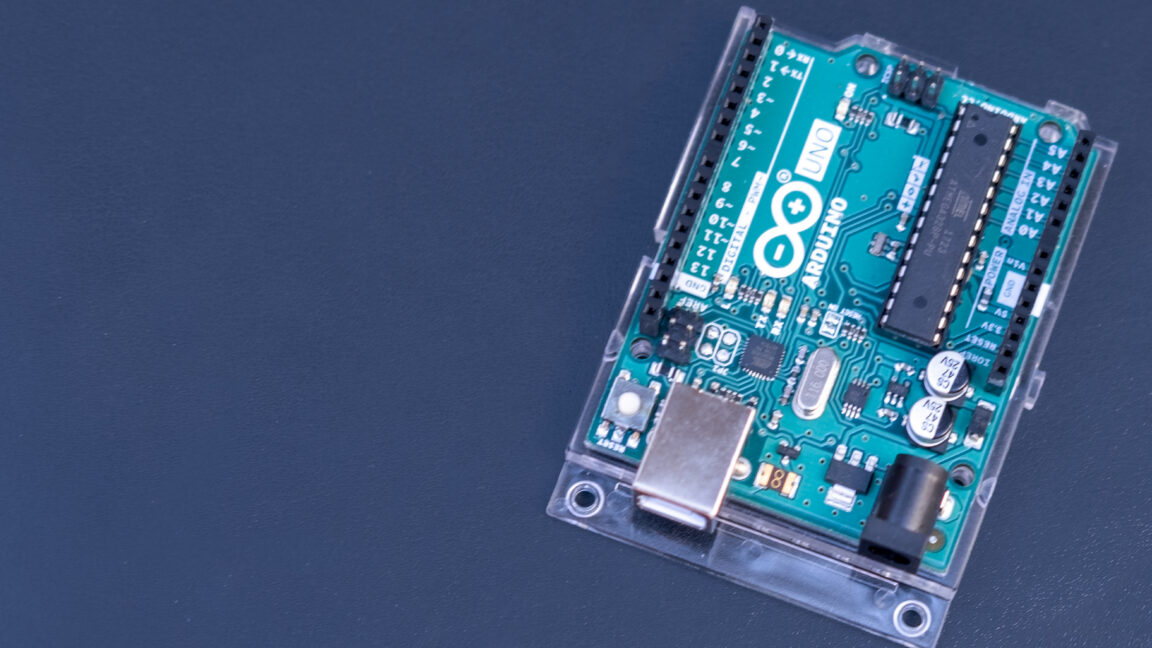
Arduino's new terms of service spark open source concerns
Arstechnica·24 November 2025·Arduino’s new terms of service worries hobbyists ahead of Qualcomm acquisition - Ars Technica - “Why is reverse-engineering prohibited… for a company built on openly hackable systems?”…
Signals:
- →Arduino's new terms ban reverse-engineering and patent identification, contradicting its open-source foundation and alarming the maker community.
- →Qualcomm acquisition raises concerns about data handling, user content rights, and potential monetization of community contributions.
- →Vague AI monitoring policies and broad content licensing threaten user privacy and Arduino's credibility in open-source hardware space.

VoxeLite patch achieves human-level touch resolution on flat screens
Interesting Engineering·19 November 2025·Ultra-thin patch delivers high-precision feel on flat screens - Engineers at Northwestern have created VoxeLite, a lightweight wearable that mimics the clarity of a human fingertip.
Signals:
- →First haptic device achieving human-level touch resolution enables realistic digital texture experiences for e-commerce applications.
- →Lightweight, wearable design allows seamless integration with existing devices without blocking natural touch interactions.
- →High accuracy rates (81-87%) in texture recognition create new accessibility and remote shopping opportunities.
Cybersecurity

TeamGroup's self-destructing SSD protects data with one button
The Verge·21 November 2025·Press a button and this SSD will self-destruct with all your data | The Verge - TeamGroup’s new T-Create Expert P35S SSD has a two-stage self-destruct button that securely wipes your data and turns the drive into e-waste.
Signals:
- →New portable SSD offers irreversible data destruction via physical chip destruction, not just encryption deletion.
- →Targets organizations handling classified data requiring guaranteed prevention of data recovery and leaks.
- →Two-stage safety mechanism reduces accidental activation risk while enabling rapid data elimination when needed.

Researchers exposed WhatsApp flaw enabling 3.5 billion account enumeration
Signals:
- →Vulnerability enabled enumeration of 3.5 billion WhatsApp accounts across 245 countries, exposing massive privacy risks.
- →Metadata analysis revealed usage patterns in banned countries and persistent risks from previous data leaks.
- →Demonstrates need for continuous security audits of critical communication infrastructure serving billions globally.

The Destroyinator wipes 60 drives simultaneously at 64 GB/s
Signals:
- →Enables secure, high-speed data destruction (64 GB/s across 60 drives) meeting strict government and enterprise compliance standards.
- →Eliminates recurring costs with zero per-wipe fees, offering significant savings for large-scale data center operations.
- →Provides eco-friendly alternative to physical drive destruction, reducing e-waste while maintaining unrecoverable data erasure.

Fake Claude Code NPM package steals credentials via C2 server
Signals:
- →Malicious NPM package steals Anthropic API credentials and enables bidirectional command-and-control server access.
- →Package overwrites legitimate Claude CLI installation, intercepting all user prompts and API communications undetected.
- →Traditional security tools fail to prevent this supply chain attack; requires proactive package analysis.
XR / Spatial Computing

PropType turns everyday objects into AR keyboards
TechXplore·New augmented reality tech can turn any surface into keyboard - Virtual keyboards are a frequent source of frustration for augmented reality (AR) users. The virtual surfaces are slow and error prone, and raising an arm to type on them can cause muscle strain known as "gorilla arm."
Signals:
- →Solves "gorilla arm" fatigue by enabling AR typing on everyday objects like bottles and books.
- →Reduces reliance on external keyboards, maintaining immersive AR experiences for mobile/hands-free work scenarios.
- →Award-winning technology demonstrates practical path forward for enterprise AR adoption and productivity applications.
Robotics
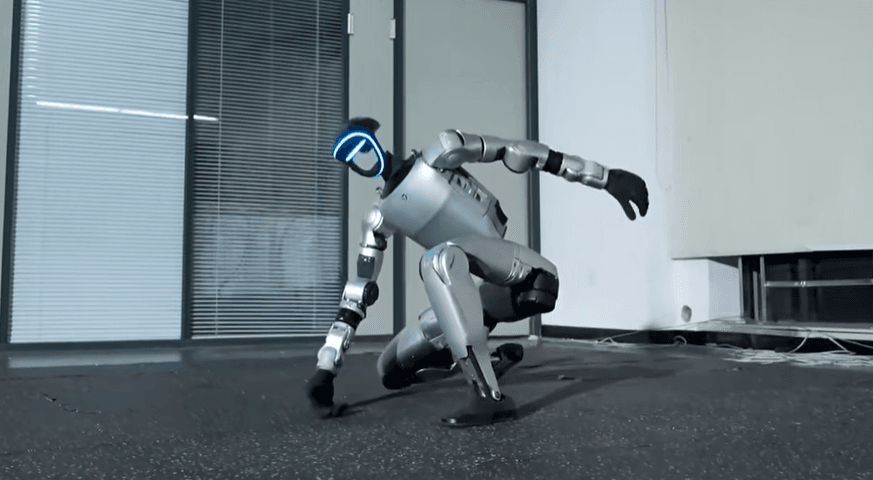
Unitree G1 robot completes world's first real-world basketball layup
Panda Daily·25 November 2025·Unitree G1 Nails a Perfect Layup: HKUST Showcases the World’s First Real-World Basketball Robot Demo - Pandaily - HKUST researchers have unveiled the world’s first real-world basketball robot demo, with a Unitree G1 completing a smooth layup using advanced imitation-learning systems.
Signals:
- →Demonstrates breakthrough in humanoid robotics achieving complex real-world athletic tasks through advanced imitation learning systems.
- →Validates rapid progression from simulation to physical deployment, reducing development time for practical robotic applications.
- →Signals maturation of physics-based AI control systems enabling robots to perform dynamic human-object interactions reliably.

Disney's lifelike Olaf robot uses AI and reinforcement learning
Interesting Engineering·Frozen's Olaf comes alive with Disney's next-gen robotic tech - Disney unveils a next-gen Olaf robot powered by AI and reinforcement learning, bringing animated motion to life in real-world parks.
Signals:
- →AI-powered reinforcement learning dramatically accelerates robot development timelines, reducing prototyping costs and time-to-market.
- →Disney's open-source Newton framework with NVIDIA/DeepMind enables scalable, GPU-accelerated character deployment across global parks.
- →Technology demonstrates commercial viability of lifelike AI robots for customer experience and entertainment industry applications.

Plant robotics harnesses living plants as sustainable robotic actuators
Signals:
- →Plant-based robotics offers fully biodegradable, self-powered alternatives to conventional robots, addressing growing environmental sustainability concerns.
- →Plants provide integrated sensing, actuation, energy harvesting, and self-healing capabilities that could revolutionize sustainable infrastructure and automation.
- →Emerging plant robotics field demonstrates practical applications from locomotion to object manipulation, opening new pathways for eco-friendly technology.

OpenMind's BrainPack gives robots plug-and-play autonomous intelligence
Interesting Engineering·22 November 2025·US OpenMind's BrainPack makes humanoid robots ‘real-world' smart - OpenMind's modular unit allows robots to perform advanced functions like self-guided patrols and real-time 3D mapping.
Signals:
- →Plug-and-play autonomous robot system democratizes advanced robotics beyond specialized research labs.
- →Self-charging, privacy-protected robots enable continuous unsupervised operation in commercial and public spaces.
- →Hardware-agnostic platform accelerates deployment timelines and reduces integration costs across robot types.

AgiBot humanoid robot walks record 106 km between cities
Panda Daily·22 November 2025·AgiBot Expedition A2 Completes World’s First 100 km Inter-City Trek by a Humanoid Robot - Pandaily - AgiBot Expedition A2 set a new Guinness World Record by completing a 106.286 km trek from Suzhou to Shanghai, the longest distance ever walked by a humanoid robot.
Signals:
- →Demonstrates significant advancement in humanoid robot endurance and real-world autonomous navigation capabilities.
- →Signals China's growing leadership in commercial robotics technology and outdoor mobility systems.
- →Validates reliability for potential deployment in logistics, delivery, and long-distance operational applications.
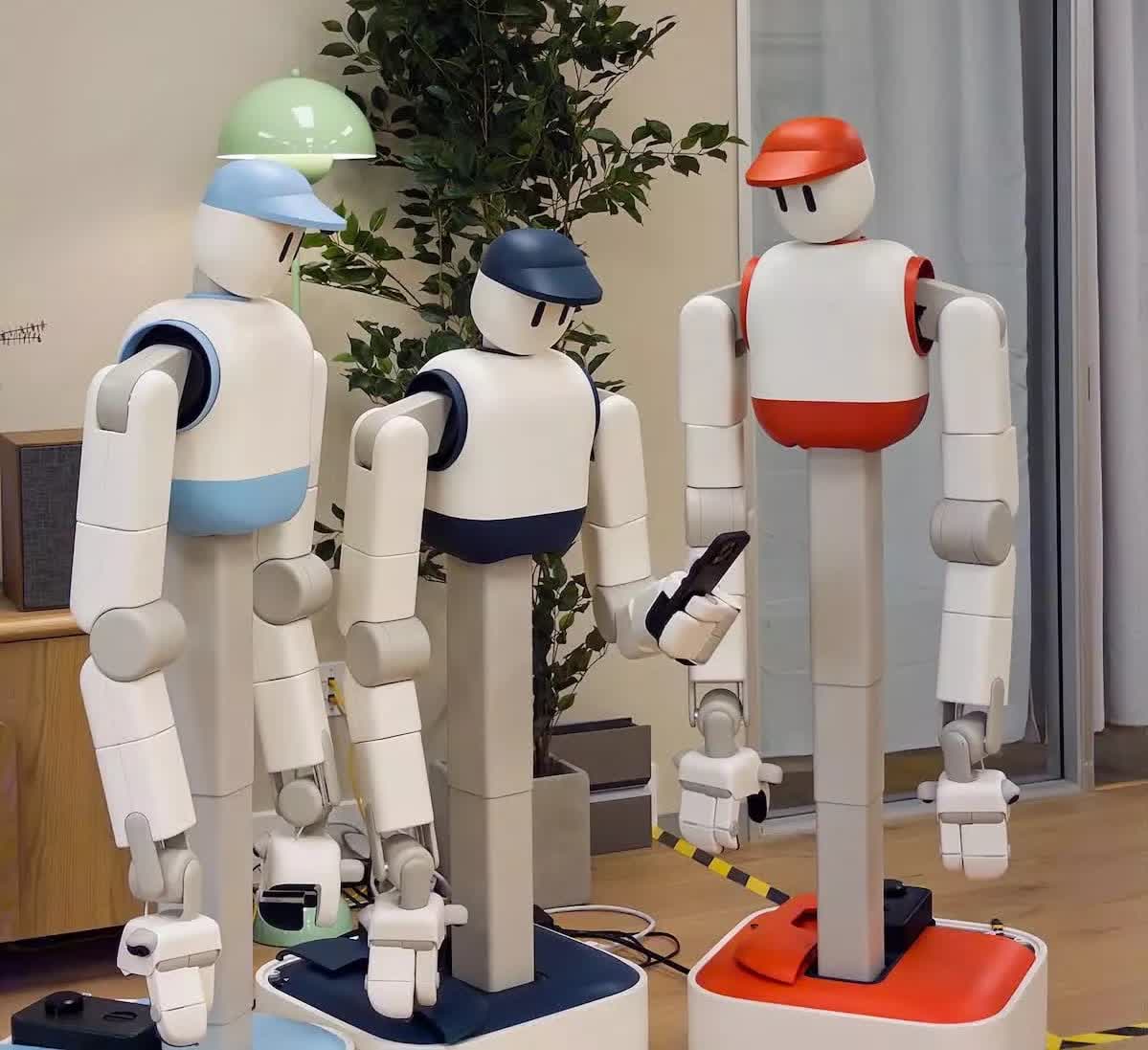
Memo robot learns household tasks through sensor glove training
Signals:
- →Domestic robots transitioning from prototypes to real-world home testing within the next year.
- →Novel glove-based training system enables more adaptable, human-like manipulation than traditional methods.
- →Integrated hardware-software approach addresses key robotics challenge: adaptability in unpredictable household environments.

Putin's awkward reaction to Russia's dancing AI robot
Signals:
- →Russia prioritizing domestic AI/robotics development due to international sanctions limiting technology access.
- →Major Russian bank (Sberbank) investing in humanoid robots for potential operational deployment.
- →Russia's technological self-sufficiency efforts showing significant implementation challenges and capability gaps.

Chinese exoskeleton cuts diver air consumption by 23%
Interesting Engineering·18 November 2025·World-first portable robotic exoskeleton slashes diver air use by 22% - A Peking University team led by Professor Wang Qining developed the exoskeleton to ease divers’ physical strain, lowering air use and muscle effort.
Signals:
- →Reduces diver air consumption by 22.7% and muscle strain by ~20%, extending operational duration and safety.
- →Enables longer, safer underwater operations for marine research, construction, and military applications.
- →China demonstrates leadership in wearable robotics, creating competitive advantage in underwater technology sector.

Chinese humanoid robot walks 65 miles nonstop, sets world record
Interesting Engineering·21 November 2025·World record: China’s humanoid robot walks 65 miles nonstop - AgiBot's A2 robot became the world's first humanoid to complete a 100km walk challenge without switching off during the trek.
Signals:
- →China's mass-produced humanoid robots demonstrate commercial readiness with 1,000+ units already shipped in 2025.
- →AgiBot A2's endurance and autonomous navigation prove humanoid robots can reliably operate in real-world conditions.
- →Chinese robotics sector rapidly advancing, potentially surpassing human physical capabilities in certain tasks soon.

Figure AI sued by whistleblower over robot safety concerns

Signals:
- →Figure AI valued at $39B faces lawsuit alleging safety concerns were ignored before major funding round.
- →Whistleblower claims robots can fracture human skulls; safety roadmap allegedly downgraded after investor presentations.
- →Case may set precedent for humanoid robot safety regulations in rapidly growing $5T market.
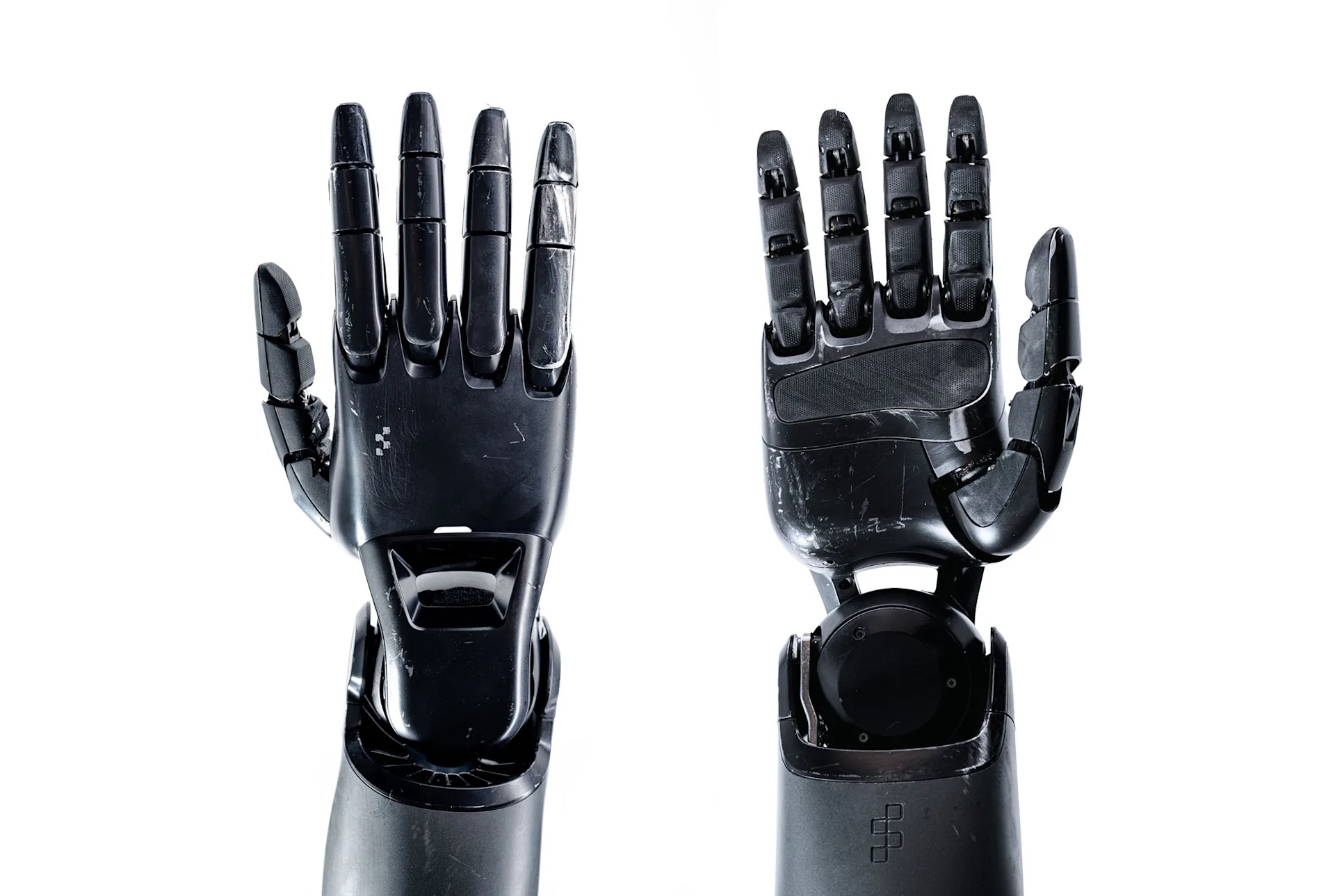
Figure 02 robot helps BMW produce 30,000 vehicles
Signals:
- →Humanoid robots achieved 1,250+ operational hours in real automotive manufacturing, proving commercial viability and scalability potential.
- →Real-world deployment data directly improved next-generation design, reducing failure points and accelerating production readiness.
- →Robots met strict automotive standards (99% accuracy, zero interventions), demonstrating reliability for high-stakes manufacturing environments.
Autonomy and Drones

Bedrock Robotics deploys autonomous excavators for mass construction projects
Interesting Engineering·22 November 2025·US firm launches construction’s largest supervised autonomy deployment - Bedrock Robotics launches the construction industry’s largest supervised autonomy project, moving 65,000+ cubic yards on a 130-acre site.
Signals:
- →Addresses critical construction labor shortage: 500,000 workers needed, 40% retiring within decade.
- →Proven commercial scale: moved 65,000+ cubic yards across multiple active sites in three states.
- →Non-disruptive adoption: reversible same-day installation maintains existing workflows and equipment compatibility.

China unveils Wing Loong X autonomous submarine-hunting drone
Interesting Engineering·22 November 2025·China unveils 'world's first' autonomous drone to hunt submarines - China has unveiled its new Wing Loong X, a drone claimed to autonomously detect and attack submarines.
Signals:
- →China's autonomous anti-submarine drone could dramatically shift naval power balance in contested waters like South China Sea.
- →Cost-effective swarm deployment threatens traditional submarine stealth advantage, forcing allied navies to adapt operational strategies.
- →AI-driven autonomous weapons raise critical ethical concerns about machine-controlled lethal force decisions in warfare.
Space

Longshot Space's 6-mile cannon aims for $10/kg launches
 New Atlas·22 November 2025·Longshot's space cannon aims to slash launch costs - Discover Longshot Space's audacious plan to build a 6-mile space cannon, firing payloads to LEO at Mach 23 and dropping launch costs to $10/kg.
Signals:
- →Longshot Space claims $10/kg launch costs versus SpaceX's $500/kg, potentially revolutionizing space economics.
- →Proof-of-concept achieved Mach 4.2; 120-foot test gun built, with operational facility planned in Nevada.
- →Ground-based infrastructure enables dozens of daily launches, transforming satellite deployment capacity and frequency.

Tech's hottest innovations depend on extreme cooling solutions
Semafor·21 November 2025·All the hottest tech needs to be so, so cold | Semafor - Startup Interlune has signed $500 million in contracts to supply helium-3 gas to help keep AI and quantum computing devices running cold. Their next helium search is in space.
Signals:
- →Critical cooling infrastructure bottleneck threatens AI, quantum computing, and fusion energy deployment at scale.
- →Helium-3 scarcity ($100K+ per quantum computer) creates geopolitical competition and supply chain vulnerabilities.
- →Cooling technology market expansion presents significant investment opportunities across multiple emerging tech sectors.

SpaceX's upgraded Starship V3 booster explodes during testing
TechCrunch·21 November 2025·SpaceX's upgraded Starship suffers explosion during testing | TechCrunch - It may not have been a massive fireball, but SpaceX now has more work to do before it can kick off this next-generation version of Starship.
Signals:
- →SpaceX's upgraded Starship V3 exploded during early testing, potentially delaying critical moon mission timelines.
- →NASA administrator already criticized SpaceX's pace and may redirect lunar contract to competitor Blue Origin.
- →Blue Origin's recent successes and larger rocket design intensify competitive pressure on SpaceX's space dominance.

Blue Origin unveils super-heavy New Glenn 9×4 rocket
Interesting Engineering·20 November 2025·New Glenn 9×4 moves Blue Origin into super-heavy rocket class - Blue Origin is pushing deeper into heavy-lift competition with the New Glenn 9×4, a larger rocket featuring nine BE-4 engines.
Signals:
- →Blue Origin's New Glenn 9×4 delivers 70+ metric tons to orbit, directly competing with SpaceX's Starship in super-heavy launch capacity.
- →Enhanced payload capabilities enable critical national security missions, lunar programs, and mega-constellation deployments for government and commercial clients.
- →Dual-variant strategy (7×2 and 9×4) provides flexible launch options, strengthening Blue Origin's competitive position in heavy-lift markets.

Blue Origin unveils super-heavy New Glenn rocket design
TechCrunch·20 November 2025·Blue Origin reveals a super-heavy variant of its New Glenn rocket that is taller than a Saturn V | TechCrunch - The nine-engine variant can carry larger payloads and more closely matches the capabilities of SpaceX's largest rocket, Starship.
Signals:
- →Blue Origin's upgraded New Glenn rocket directly challenges SpaceX's market dominance in heavy-lift launch capabilities.
- →Enhanced 70-ton payload capacity enables lucrative contracts for mega-constellations, lunar missions, and national security projects.
- →Competition intensifies for NASA moon missions and commercial space market share worth billions annually.
Crypto

Cardano Network Hit With a Temporary Chain Split, but ADA Barely Moves
CoinTelegraph·Cardano Network Hit With a Temporary Chain Split, but ADA Barely Moves - The Cardano Network suffered a temporary network split after an old code bug was triggered by a staking pool operator, who pushed an abnormal transaction.
The Cardano Network suffered a temporary network split after an old code bug was triggered by a staking pool operator, who pushed an abnormal transaction.

Private key theft becomes industrialized business, report warns
CoinTelegraph·18 November 2025·Private Key Theft Becomes Industrialized, Galaxy’s GK8 Warns - Malware infostealers and seed phrase finders are increasingly targeting crypto wallets, making strong passwords, MFA and secure custody essential, GK8 said.
Signals:
- →Private key theft has industrialized with automated black market tools scanning devices for seed phrases.
- →Malware infostealers targeting both Windows and macOS users are peaking in 2025.
- →Secure custody systems and multi-step approvals are essential to protect crypto assets from theft.
Energy

Japan restarts world's largest nuclear plant after 2012 shutdown
Semafor·21 November 2025·Japan says world’s largest nuclear plant to restart | Semafor - The Kashiwazaki-Kariwa site closed in 2012, as Japan shuttered most of its fleet in the wake of the Fukushima meltdown.
Signals:
- →Japan restarts world's largest nuclear plant, signaling major shift in post-Fukushima energy policy.
- →Nuclear power emerges as solution for energy security amid high fossil fuel prices.
- →Global momentum builds: 33 countries pledge to triple nuclear capacity by 2050.

Star Catcher sets new record for wireless power beaming
New Atlas·20 November 2025·Star Catcher Sets 1.1-kW Power Beaming Record - Star Catcher Industries sets a new record, successfully beaming 1.1 kW of power using its Star Catcher Network laser technology. Learn how this innovation will boost satellite solar efficiency 2-10x for a resilient orbital power grid.
Signals:
- →Enables 2-10x power increase for satellites using existing solar panels without costly modifications or launches.
- →Demonstrates viable orbital power grid technology with commercial agreements already secured for space operations.
- →Overcomes critical satellite power limitations, enabling expanded capabilities for space-based assets and infrastructure.
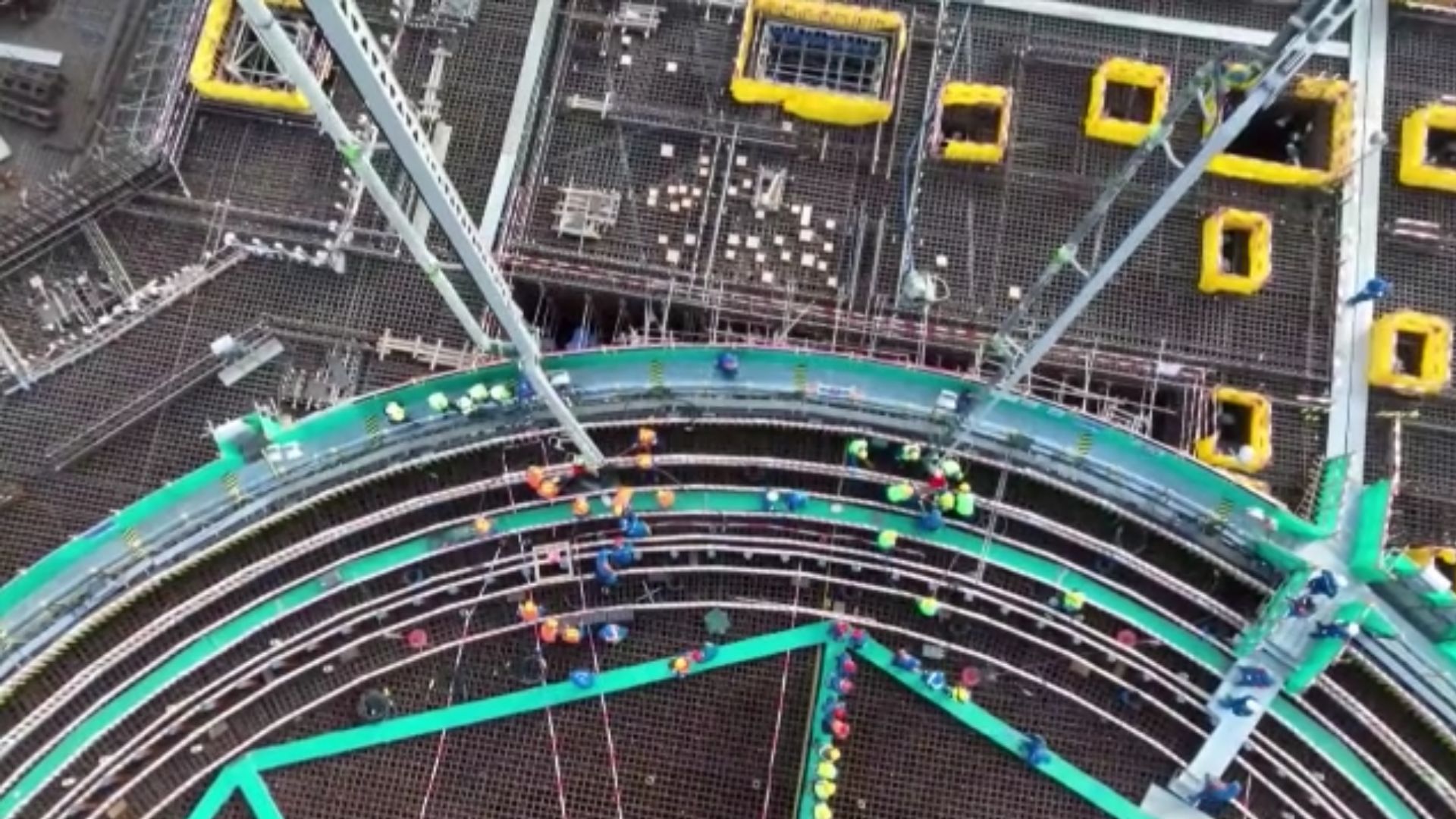
China begins construction on 7.2 GW nuclear plant
Interesting Engineering·19 November 2025·China's 7.2 GW nuclear plant to power energy needs of 5 million people - CGN’s new facility uses an industry-first "natural + mechanical" cooling system, expanding Hualong One deployment.
Signals:
- →China's 7.2 GW nuclear plant will reduce carbon emissions by 46.2 million tons annually.
- →Innovative dual-layer cooling system expands nuclear plant siting possibilities beyond coastal locations.
- →Project demonstrates China's advancing nuclear technology capabilities and clean energy infrastructure investment.

Greece advances plans for floating nuclear power plants
Interesting Engineering·19 November 2025·Floating nuclear plants at sea could soon meet Greece's energy needs - Floating Nuclear Power Plants (FNPPs) can revolutionize the way reliable and affordable nuclear energy is generated and can provide vital carbon-free energy security to islands.
Signals:
- →Greece could lead Mediterranean carbon-free energy security through floating nuclear power plants.
- →New technology offers flexible, modular solution for islands, ports, and drought-affected coastal communities.
- →Industry consortium developing safety framework and operational standards for emerging maritime nuclear sector.

Trump administration grants $1B loan to restart Three Mile Island reactor
TechCrunch·19 November 2025·Trump DOE gives Microsoft partner $1B loan to restart Three Mile Island reactor | TechCrunch - Constellation Energy will use the loan to refurbish a reactor it idled in 2019. Microsoft has agreed to buy the power once the facility reopens in 2028.
Signals:
- →Government backing $1B of $1.6B nuclear restart to meet surging AI data center power demands.
- →Tech giants paying premium rates for reliable 24/7 nuclear power despite cheaper renewable alternatives.
- →Federal loan program supporting energy infrastructure modernization under rebranded Trump administration policy.

Recycled laptop batteries power home for 8 years
Interesting Engineering·21 November 2025·Man uses 1,000 laptop batteries to power his home for eight years - DIY builder turns 1,000 discarded laptop batteries into a stable 56 kWh off-grid system that has run for eight years.
Signals:
- →Recycled laptop batteries achieved 8-year zero-failure rate, proving viability of circular economy energy solutions.
- →DIY system scaled from 7 kWh to 56 kWh storage, demonstrating accessible off-grid energy independence model.
- →Careful cell sorting and testing protocols enabled reliable power from discarded electronics at minimal cost.
Star Catcher sets record for wireless power beaming
Signals:
- →Demonstrates viable technology for wirelessly powering satellites, potentially reducing launch costs and mission constraints.
- →Enables 2-10x power increase for spacecraft using existing solar panels without costly modifications.
- →Planned 2026 orbital demonstration with existing purchase agreements shows near-term commercial viability.
Transport

Joby's hybrid eVTOL completes first autonomous military flight
New Atlas·23 November 2025·Joby Flies Autonomous Hybrid S4 VTOL for Defense - Joby Aviation successfully flies a new turbine-electric hybrid variant of the S4 VTOL aircraft, designed for long-range defense and autonomous military missions.
Signals:
- →Joby's hybrid eVTOL extends military operational range significantly beyond civilian 84-mile limit.
- →Rapid three-month development demonstrates accelerated defense technology deployment capability.
- →Autonomous uncrewed design enables Loyal Wingman and support missions in contested environments.

Baidu CEO predicts robotaxis will soon go mainstream
Semafor·21 November 2025·Robotaxis to become the new norm, Baidu CEO says | Semafor - The Chinese tech firm is among the world’s leaders in deploying autonomous vehicles.
Signals:
- →Autonomous vehicle market projected to reach $400 billion by 2035, requiring strategic investment decisions.
- →China outpacing Western competitors in robotaxi deployment, shifting global competitive landscape significantly.
- →Major tech leaders confirming mainstream adoption imminent, signaling urgent need for regulatory preparation.

Xiaomi upgrades driver-assist with reinforcement learning and emergency steering
Panda Daily·21 November 2025·Xiaomi Unveils Enhanced HAD Driver-Assist System with Reinforcement Learning, World Models, and New AES Emergency Steering - Pandaily - Xiaomi debuts a major upgrade to its HAD driver-assist system—adding reinforcement learning, world models, and AES emergency steering—while boosting its 2025 AI R&D investment to 7B RMB and expanding its autonomous driving team to 1,800 specialists.
Signals:
- →Xiaomi investing $980M in AI R&D with 1,800-person autonomous driving team signals major competitive threat.
- →New AES emergency steering system operates at highway speeds, raising safety and liability considerations.
- →End-to-end learning approach using world models represents significant technological shift in autonomous driving development.

Waymo leads trillion-dollar robotaxi race, but profitability remains elusive
Signals:
- →Robotaxi market could reach $1 trillion in America alone, attracting major tech and auto players.
- →Waymo leads with 1 million monthly users, but profitability remains elusive at $7-9 per mile costs.
- →Federal regulations under Trump administration will shape industry expansion and competitive dynamics nationwide.
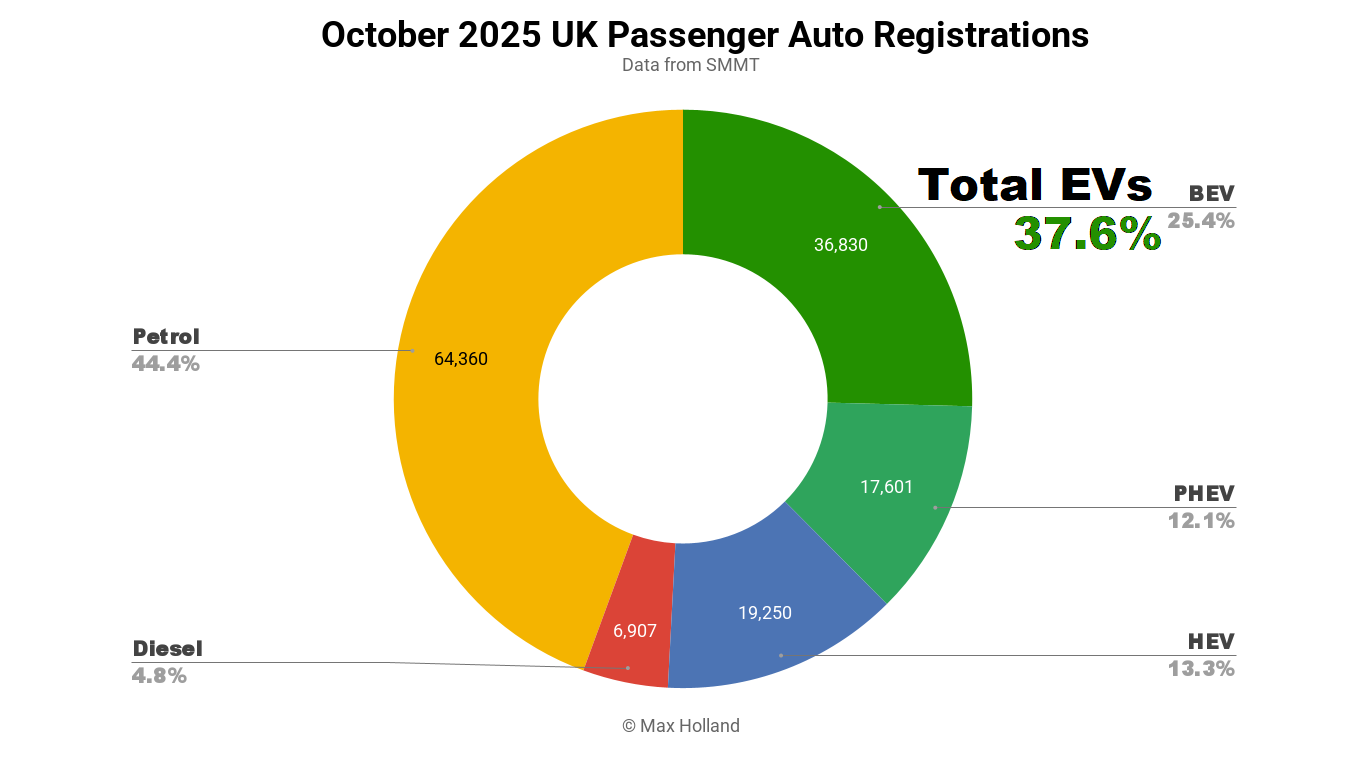
UK electric vehicles reach 37.6% market share, Ford leads
 CleanTechnica·19 November 2025·EVs At 37.6% Share In The UK — Ford Tops BEV Rankings - CleanTechnica - Support CleanTechnica's work through a Substack subscription or on Stripe. October’s auto market saw plugin EVs at 37.6% share in the UK, up from 30.2% year on year. BEVs grew volume 24% YoY, and PHEVs grew 27%. Overall auto volume was 144,948, almost flat YoY. The UK’s leading BEV brand ... [continued]
Signals:
- →UK EV market share reached 37.6%, up from 30.2% YoY, signaling accelerating electric vehicle adoption and market transformation.
- →Ford overtook Tesla in BEV rankings, indicating shifting competitive dynamics among automakers in the electric vehicle sector.
- →Proposed 3 pence/mile BEV tax could significantly impact adoption rates when EVs represent only 5% of UK fleet.
Waymo launches robotaxi service in five new cities
CleanTechnica·19 November 2025·Waymo's Rollout In 5 New Cities Begins Today - CleanTechnica - Support CleanTechnica's work through a Substack subscription or on Stripe. Waymo slow-walked its expansion for more than a decade, then it started making moves a couple of years ago and expanding its footprint in notable ways, but it wasn’t until the past year or so that Waymo started really ramping ... [continued]
Signals:
- →Waymo launches fully autonomous robotaxis in five major U.S. cities simultaneously, demonstrating rapid scalability.
- →Company reports 11 times fewer serious injury collisions than human drivers, validating safety performance.
- →Refined AI requires less customization per city, proving operational efficiency and competitive advantage over rivals.

Waymo removes safety drivers from Miami robotaxis
TechCrunch·18 November 2025·Waymo removes safety drivers in Miami ahead of 2026 launch | TechCrunch - Waymo said it will do the same in Dallas, Houston, San Antonio, and Orlando in the coming weeks -- the latest steps in the company's continued expansion across the U.S.
Signals:
- →Waymo removing safety operators signals autonomous vehicle technology maturity and regulatory confidence.
- →Aggressive expansion to 15+ cities by 2026 intensifies competition in emerging robotaxi market.
- →Target of 1 million weekly trips demonstrates significant commercial scaling potential and revenue opportunity.

Zoox opens custom robotaxis to select San Francisco riders
TechCrunch·18 November 2025·Zoox to begin offering robotaxi rides to public in San Francisco | TechCrunch - This is not a large-scale public launch, nor a commercial one. But it brings the Amazon-owned company one step closer to competing with Waymo.
Signals:
- →Amazon-owned Zoox begins public robotaxi testing, directly challenging Waymo's dominance in autonomous ride-hailing market.
- →Regulatory approval from NHTSA and California required before commercial launch, creating potential policy implications.
- →Custom-built vehicles without traditional controls represent significant autonomous vehicle technology and safety standard evolution.
3D Printing
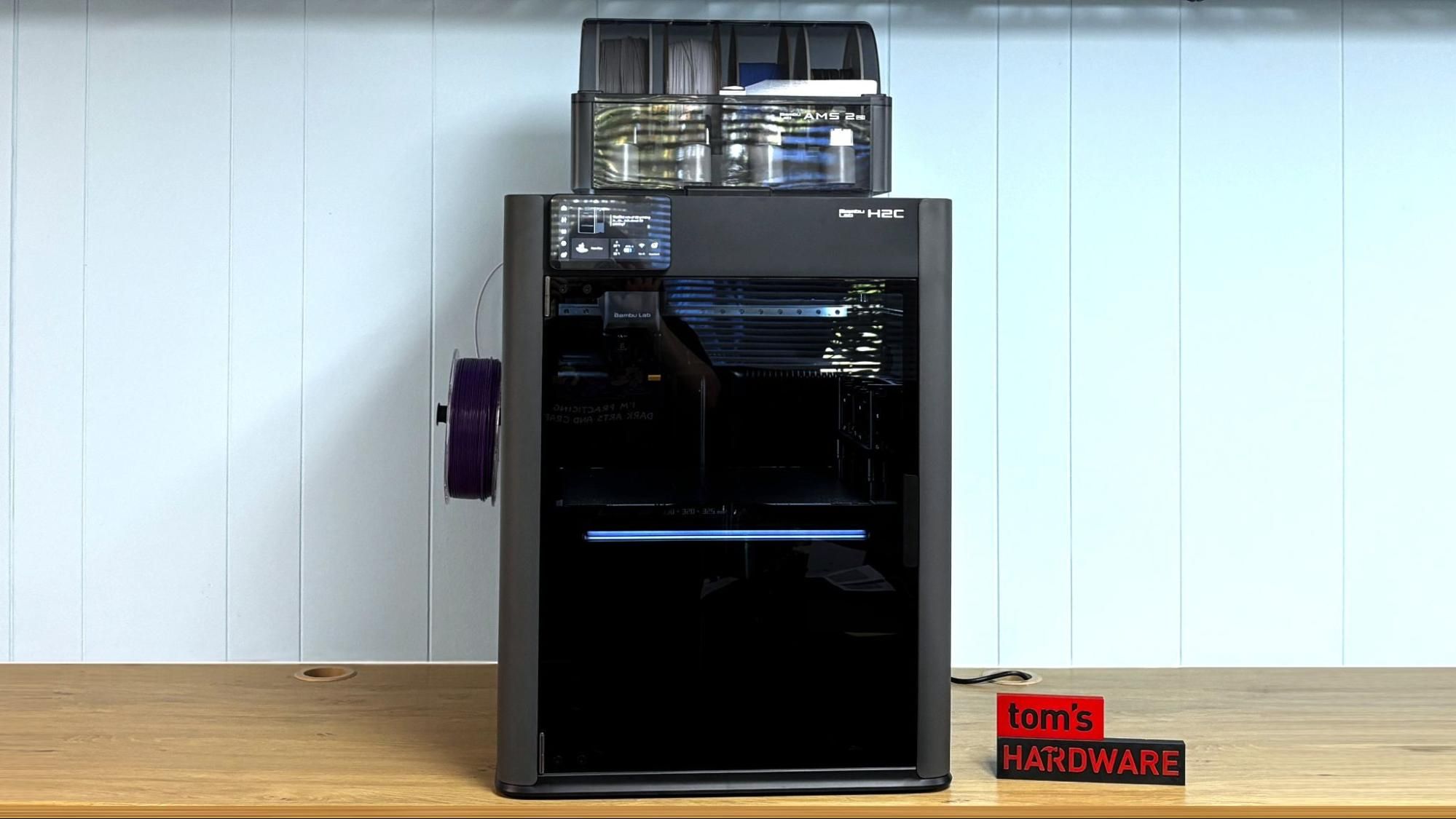
Bambu Lab's seven-nozzle H2C 3D printer delayed in US
Signals:
- →Bambu Lab's H2C seven-nozzle 3D printer delayed in U.S. market until December due to tariff-related logistics issues.
- →New printer offers significant speed improvements over previous models but still lags behind competitor tool-changer technology.
- →Price point starts at $2,399, positioning product in premium market segment with complex multi-material printing capabilities.

Mosquito proboscis becomes ultra-fine 3D printing nozzle
 NewScientist·Mosquito proboscis repurposed as a fine nozzle for 3D printing | New Scientist - When engineers struggled to make 3D printer nozzles narrow enough for their needs, they turned to nature and found the proboscis of a female mosquito had exactly the properties they needed
Signals:
- →Enables creation of ultra-fine 3D printed structures for tissue/organ transplants at drastically reduced cost.
- →Solves critical manufacturing bottleneck where commercial nozzles were too expensive and insufficiently narrow.
- →Demonstrates scalable bio-manufacturing solution: six nozzles per hour at under $1 each versus $80 commercial alternatives.
Quantum Tech

Scientists achieve first quantum teleportation between separate light sources
Signals:
- →Enables secure quantum internet infrastructure using existing fiber optic cables and technology.
- →Solves critical distance limitation in quantum communication through repeatable teleportation stations.
- →Achieves 70% success rate in maintaining data integrity without signal loss or disruption.
Health Tech

New diabetes pill orforglipron rivals Ozempic for weight loss
Signals:
- →Oral diabetes pill achieves comparable weight loss to injectable Ozempic, potentially revolutionizing treatment accessibility and patient compliance.
- →Significantly lower cost and insurance coverage expected in 2026 could democratize obesity treatment for millions of patients.
- →Double-digit weight loss in diabetic patients addresses critical unmet medical need with convenient daily pill format.

Ingestible bacterial sensors could replace colonoscopies for gut disease detection
 SciTechDaily·19 November 2025·A Glow-in-the-Gut Pill Could Make Colonoscopies Optional - Scientists have created swallowable microsphere “pills” packed with engineered bacteria that can detect signs of gut disease, without the discomfort of a colonoscopy.
Signals:
- →Non-invasive diagnostic alternative could reduce patient avoidance of uncomfortable colonoscopy procedures.
- →Magnetic retrieval system enables rapid 25-minute disease detection from stool samples.
- →Adaptable bacterial sensor technology could monitor multiple gastrointestinal conditions and treatment effectiveness.
Bio Tech

Nasal drops eliminate brain tumors in mice using nanotech
Signals:
- →Noninvasive nasal delivery eliminates need for repeated invasive brain surgeries in glioblastoma treatment.
- →Novel nanomedicine successfully eradicated deadly brain tumors in mice using immune system activation.
- →Technology could transform treatment of aggressive cancers previously resistant to immunotherapy approaches.
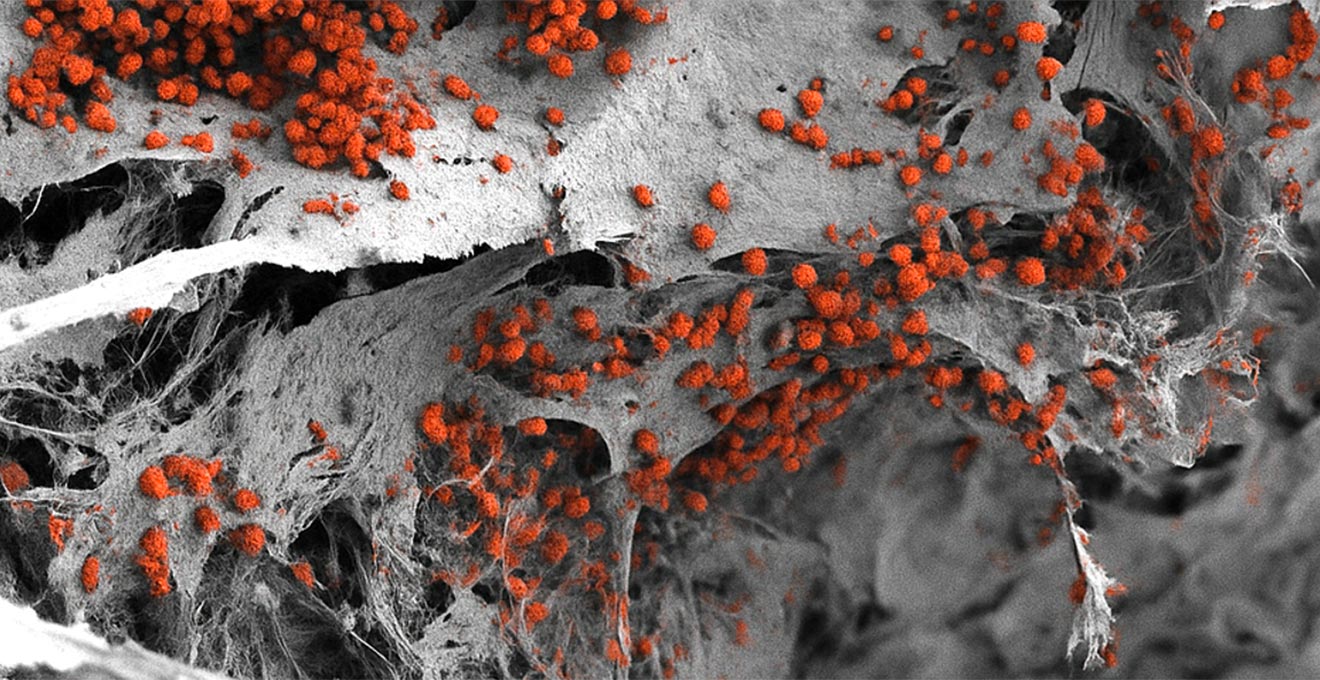
Scientists create first fully human bone marrow model
SciTechDaily·18 November 2025·Scientists Grow a Tiny Human “Blood Factory” in the Lab - Scientists have engineered the first fully human-made bone marrow system, recreating the complex mix of cells, vessels, and nerves that normally live deep within our bones. This breakthrough lets researchers study how blood is formed, and how it fails in diseases like cancer, without depending so
Signals:
- →Enables safer drug testing and personalized cancer treatments without relying on animal models.
- →Provides breakthrough platform for studying blood cancer resistance and treatment effectiveness.
- →Offers scalable technology for pharmaceutical development and patient-specific therapy selection.
Materials Science

Clarkson researchers destroy PFAS using simple ball milling method
Phys.org·Researchers find simple way to destroy PFAS on activated carbon - Researchers at Clarkson University have discovered a new way to destroy "forever chemicals," known as PFAS, using only stainless steel ball milling equipment. The method does not need added chemicals, heat, or solvents.
Signals:
- →Simple room-temperature method destroys PFAS "forever chemicals" without added chemicals, heat, or solvents.
- →Solves major waste disposal problem for activated carbon used in water treatment facilities.
- →Treated carbon shows no PFAS release in landfill conditions, enabling safe disposal.
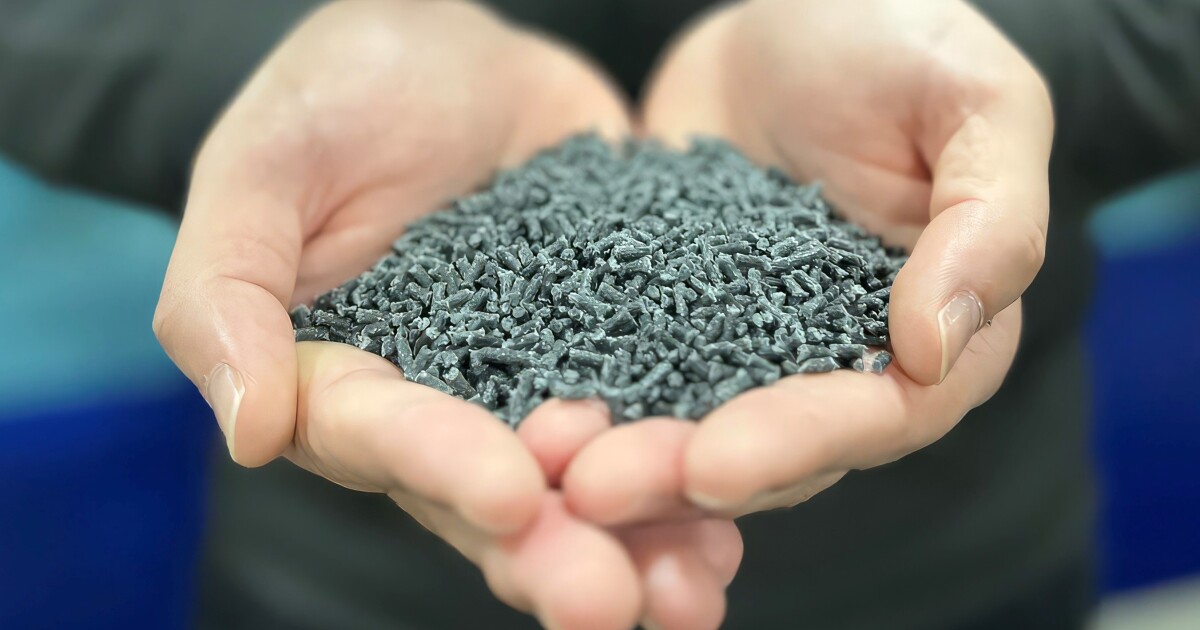
Graphene-boosted plastic makes auto parts stronger and lighter
New Atlas·18 November 2025·Graphene plastic makes car parts stronger and lighter - Learn about Gratek, a new graphene-boosted plastic that makes automotive parts 20% stronger and 18% lighter than glass-filled polypropylene.
Signals:
- →Graphene-enhanced plastic reduces vehicle weight by 18%, directly improving fuel efficiency and sustainability.
- →20% strength increase enables safer automotive components while meeting lightweighting regulations and performance standards.
- →Commercial deployment expected by year-end offers immediate competitive advantage in automotive manufacturing costs.
⏳ Zeitgeist

Moss spores survive 9 months in space outside ISS
Phys.org·Moss spores survive 9 months outside International Space Station - Mosses thrive in the most extreme environments on Earth, from the peaks of the Himalayas to the sands of Death Valley, the Antarctic tundra to the lava fields of active volcanoes. Inspired by moss's resilience, researchers sent moss sporophytes—reproductive structures that encase spores—to the most extreme environment yet: space.
Signals:
- →Moss spores survived 9 months in space with 80% viability, enabling potential extraterrestrial agriculture development.
- →Mathematical models predict spores could survive up to 15 years in space conditions.
- →Research opens possibilities for establishing sustainable ecosystems on Moon and Mars missions.

Report reveals 25% surge in global water use over two decades
Phys.org·Report reveals 25% surge in global water use over two decades - The world is rapidly losing its water supply, according to the World Bank's Global Water Monitoring Report. This global report, titled Continental Drying, highlights the water crisis using unprecedentedly detailed data. Researchers from the University of Twente made a key contribution to the section that reveals how much water we use, where it goes, and how we can use it more wisely.
Signals:
- →A 25% usage surge threatens resource stability in critical water-scarce regions.
- →Global trade dependencies create supply chain risks for water-intensive products.
- →Improving agricultural efficiency offers opportunities to save one-third of water used.

NASA Is Tracking a Vast Anomaly Growing in Earth's Magnetic Field : ScienceAlert
Signals:
- →Weakened magnetic fields expose satellites to damaging radiation and potential operational failure.
- →Spacecraft systems require protective shutdowns to avoid data loss or permanent hardware damage.
- →Rapid expansion of the anomaly demands updated risk models for orbital infrastructure.
Global water use surges 25% in two decades
Phys.org·Report reveals 25% surge in global water use over two decades - The world is rapidly losing its water supply, according to the World Bank's Global Water Monitoring Report. This global report, titled Continental Drying, highlights the water crisis using unprecedentedly detailed data. Researchers from the University of Twente made a key contribution to the section that reveals how much water we use, where it goes, and how we can use it more wisely.
Signals:
- →Global water use increased 25% in twenty years, with critical shortages in already water-scarce regions.
- →One-third of agricultural water could be saved through efficiency improvements and better management practices.
- →25% of water consumption supports global trade, requiring international coordination on production and import decisions.
Climate

Arctic microbes may prevent feared 'methane bomb' climate feedback
Signals:
- →Arctic methane-eating microbes may prevent feared "methane bomb" climate feedback loop, contradicting catastrophic warming predictions.
- →Drier Arctic conditions favor methane-consuming bacteria over methane-producing ones, potentially creating carbon sink instead of emission source.
- →Climate models need revision as microbial data shows permafrost thaw may not release expected methane levels.

Antarctica’s Fastest Glacier Collapse on Record Alarms Scientists
SciTechDaily·22 November 2025·Antarctica’s Fastest Glacier Collapse on Record Alarms Scientists - Antarctica’s Hektoria Glacier collapsed at record speed, revealing how quickly ice loss could drive sea level rise. A glacier on the eastern side of the Antarctic Peninsula has undergone the fastest ice retreat ever documented in modern times, according to a major study co-authored by Swansea Uni
Signals:
- →Fastest documented glacier retreat shows Antarctica's ice loss could accelerate dramatically and unexpectedly.
- →Small glacier's collapse demonstrates potential for larger glaciers to cause significant sea level rise.
- →Unique bedrock conditions identified help predict which Antarctic glaciers face similar catastrophic retreat risk.

US budget cuts threaten global climate and weather monitoring
Phys.org·Without US satellites, 'we go dark', tells climate monitor - US budget cuts risk creating blind spots in Earth monitoring systems that would imperil weather forecasting and climate research for years to come, the deputy chair of a key UN-backed climate monitoring body warned in an AFP interview.
Signals:
- →US budget cuts threaten critical Earth monitoring systems, creating potential decade-long gaps in satellite coverage.
- →Weather forecasting globally depends on coordinated data sharing; US reductions impact predictions worldwide.
- →Loss of ocean monitoring (50% of Argo floats) imperils climate research and agricultural planning decisions.

New framework helps coastal planners tackle sea level rise
Phys.org·A new way for coastal planners to explore the costs of rising seas - Water levels are creeping upward on shorelines across the world, and decision-making systems are not keeping up. One barrier to including sea level rise projections in adaptation plans is limited information on the full range of possible outcomes.
Signals:
- →New framework addresses critical gap in planning for worst-case sea level rise scenarios beyond current 1.9-meter UK guidance.
- →Decision-game approach enables testing adaptation strategies over time, improving long-term infrastructure protection planning.
- →Tool applicable beyond coastal flooding to other climate hazards, offering scalable risk management solution.

Cutting short-lived climate pollutants could slow warming fast
The Conversation·18 November 2025·The fast-fix for global warming that the UN climate summit can’t ignore - Removing so-called ‘short-lived climate pollutants’ from the atmosphere could reduce global warming – fast.
Signals:
- →Short-lived climate pollutants offer rapid warming reduction, unlike CO₂'s centuries-long atmospheric persistence.
- →Methane cuts provide cost-effective, immediate climate wins; major emitters aren't meeting 2030 reduction pledges.
- →Tackling SLCPs simultaneously improves air quality, public health, and agricultural productivity while slowing warming.

COP30 overlooks private sector's role in climate adaptation
Semafor·COP30 has a huge blind spot on climate adaptation | Semafor - Some Wall Street firms see a rich opportunity in financing climate resilience, but better policies are needed to draw private capital.
Signals:
- →Private sector investment in climate adaptation remains stagnant at 8% despite $1.3 trillion annual need by 2030.
- →COP30 negotiations focus on political frameworks rather than removing bottlenecks that prevent private capital deployment.
- →Wealthy countries reducing foreign aid makes private investment essential, but current talks fail to address this gap.

Iran begins cloud-seeding to fight historic drought
Semafor·18 November 2025·Iran turns to cloud-seeding to fight drought | Semafor - The practice involves spraying particles, such as salt or silver iodide, into clouds to trigger rain.
Signals:
- →Potential evacuation of Tehran signals extreme political and humanitarian instability risks.
- →Demonstrates increasing state reliance on geoengineering to mitigate catastrophic climate impacts.
- →Historic rainfall deficits threaten critical water infrastructure and national economic resilience
Health

First global H5N5 bird flu death reported in Washington state
Signals:
- →First global human infection with H5N5 strain signals potential new pandemic threat requiring monitoring.
- →Second U.S. bird flu death this year indicates increasing human transmission risk from poultry exposure.
- →Over 70 U.S. cases in 2025 suggests accelerating outbreak requiring immediate public health response planning.

Moderna becomes S&P 500's most shorted stock amid vaccine decline
Financial Times·23 November 2025·Moderna is most shorted stock in S&P 500 as Americans skip jabs - Maker of Covid-19 shots has slumped since pandemic as people turn against vaccines
Signals:
- →Moderna is S&P 500's most shorted stock with shares down 43% in 2025.
- →U.S. COVID vaccination rates dropped 24% amid anti-vaccine rhetoric from health officials.
- →Company projects break-even by 2028, pivoting to cancer treatments and international markets.

US may lose measles elimination status within months
Signals:
- →US may lose measles elimination status by January 2026 after 25 years, signaling failed disease control.
- →National vaccination rate of 92.5% falls below 95% threshold needed to prevent measles transmission.
- →45 outbreaks and 1,723 cases in 2025 demonstrate urgent need for improved vaccination coverage.
Geopolitics

China develops deep-sea cable cutters threatening internet infrastructure
Signals:
- →China has developed deep-sea cable-cutting devices capable of severing armored cables at 13,000+ feet depth.
- →Nearly all international internet traffic relies on vulnerable undersea cables connecting continents and economies.
- →Recent incidents show Chinese vessels damaged critical European cables, suggesting potential for strategic communications disruption.

Ukraine demands $44B from Russia for war carbon emissions
Semafor·20 November 2025·Ukraine seeks $44B from Russia for war-related carbon emissions | Semafor - Kyiv said the claim would cover emissions from the fossil fuels and emissions-heavy commodities like cement and steel used in fighting the war, among others.
Signals:
- →Ukraine claims $44B from Russia for 237M tons of war-related emissions, potentially setting precedent for climate-based war reparations.
- →Frozen Russian assets may be targeted for compensation, requiring allied support and creating new geopolitical financial mechanisms.
- →Carbon markets could fund Ukraine's reconstruction if regulations improve, offering alternative post-war financing strategy.
🧠Mind expanding

Spy thriller explores AI alignment in China's secret lab
 Author, Researcher·Red Heart, a novel by Max Harms - The personal website of Max Harms, science-fiction author and AI alignment researcher.
Signals:
- →Explores critical AI alignment and geopolitical tensions between China and U.S. over AGI development.
- →Written by AI alignment researcher, offering technically accurate insights into emerging AI governance challenges.
- →Examines ethical dilemmas of AI as tool versus entity with autonomous decision-making capabilities.
💭Meme stream
Windows 1.0 was originally called "Interface Manager"
Signals:
- →Windows' evolution from DOS overlay to dominant OS shaped modern computing infrastructure and enterprise standards.
- →Early GUI adoption challenges mirror current AI/emerging technology implementation decisions requiring hardware and cultural shifts.
- →Microsoft's naming strategy success demonstrates how product positioning influences market adoption and competitive advantage.

Daily Mail set to acquire UK's 170-year-old Telegraph
Semafor·24 November 2025·UK’s The Telegraph to be taken over by rival Daily Mail | Semafor - The outlet has been for sale since its previous owners ran up unsupportable debts and were removed in 2023.
Signals:
- →Major consolidation of UK conservative media creates powerful right-wing voice under Labour government.
- →Telegraph sale ends two-year ownership uncertainty, potentially stabilizing influential British news brand.
- →UK media eyes US expansion opportunities following Trump's election and rightward market shift.

Developers turn Epstein emails into searchable Gmail-style inbox
The Verge·22 November 2025·‘Jmail’ is like Gmail, but with Jeffrey Epstein’s emails | The Verge - The 20,000 pages of Epstein messages released earlier this month are now available in the style of a Gmail inbox.
Signals:
- →Epstein Files Transparency Act mandates DOJ release searchable records within 30 days, impacting ongoing investigations.
- →New searchable format enables rapid public scrutiny of powerful figures' connections to convicted offender.
- →AI-powered tool democratizes access to 20,000+ pages, potentially exposing institutional relationships and accountability gaps.